

Executive Overview
The intersection of technology, urban decay, and callous provocation reached a new flashpoint this week when Pierre-Louis Biojout, the founder of the Y Combinator-backed artificial intelligence startup NanoCorp, unveiled a web-based video game titled Tenderloin Night Shift. Developed as a weekend "vibe coding" project, the Call of Duty-style zombie shooter maps real-world geography directly onto San Francisco’s deeply impoverished and crisis-stricken Tenderloin district.
In promotional posts on social media platform X (formerly Twitter) that have since been deleted, Biojout bragged about monetizing the neighborhood’s chronic socioeconomic struggles, writing, "San Francisco couldn’t fix the Tenderloin. So I monetized it [as a] Call of Duty style zombie shooter on the real SF streets." He boasted of netting $300 in in-game ad revenue almost immediately.
The game quickly drew fierce condemnation from San Francisco residents, city leaders, and advocacy groups, who accused Biojout of gamifying human suffering, promoting racial profiling, and descending to a new ethical low in tech-industry satire. Critics highlighted that the game’s "zombie" models explicitly mimicked vulnerable, marginalized populations, including individuals grappling with severe substance use disorders and local security personnel.
While the game has since been scrubbed from NanoCorp’s website and Biojout has issued defensive denials, the digital fallout has reignited long-standing tensions between Silicon Valley’s techno-utopian elite and the urban communities that shoulder the real-world burdens of systemic poverty. This incident serves as a glaring case study in the growing empathy gap within certain tech circles, where systemic humanitarian crises are routinely abstracted into playgrounds for software experimentation.
Detailed Chronology of the Controversy
The Weekend "Vibe Coding" Experiment
The controversy began over a weekend in October, a timeframe typical for casual software tinkering and rapid prototyping within Silicon Valley’s startup ecosystem. Biojout, leveraging AI-assisted development tools and modern web-based game engines, rapidly assembled Tenderloin Night Shift. The game utilized real-world mapping data of San Francisco’s Tenderloin district—an area historically and currently plagued by extreme poverty, homelessness, and an open-air drug market fueled heavily by the synthetic opioid fentanyl.
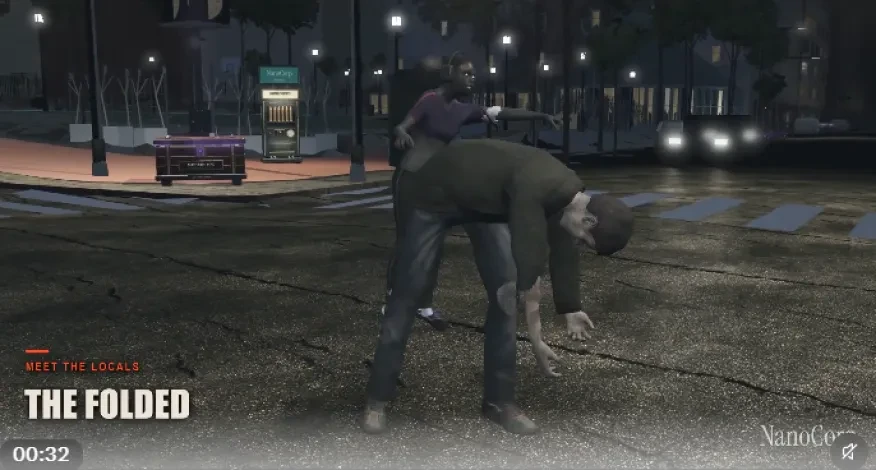
Designed as a first-person shooter, the web game cast players into the role of armed combatants navigating hyper-realistic approximations of San Francisco streets. Instead of traditional fantasy monsters, the opponents were designed to mirror the actual human demographics and physical realities of the Tenderloin. According to investigative reports by the San Francisco Chronicle and regional broadcaster KRON4, the game’s character models included figures visually coded to represent a "folded" fentanyl addict—referencing the characteristic physical posture often induced by heavy opioid use—alongside Black security guards stationed in the neighborhood.
The Amplification and Immediate Backlash
Rather than keeping the project private or sharing it within a closed developer circle, Biojout chose to market the release aggressively on X on October 13. By framing the project as a satirical takedown of municipal governance failures, Biojout sought to court viral attention.
"San Francisco couldn’t fix the Tenderloin. So I monetized it [as a] Call of Duty style zombie shooter on the real SF streets," Biojout posted, adding insult to injury by highlighting that the game had already generated $300 via integrated in-game advertisements.
The post triggered an immediate digital firestorm. Within hours, fellow tech founders, civil rights advocates, and San Francisco residents flooded the thread with condemnation. Rather than backing down initially, Biojout engaged in defensive online arguments, attempting to deflect criticism by claiming the game also featured tech workers among its character models and insisting that critics were misinterpreting a lighthearted coding exercise.
As public pressure mounted and local media picked up the story, NanoCorp quietly pulled Tenderloin Night Shift offline. Biojout deleted his original promotional posts, but screenshots, screen recordings, and archived discussions continued to circulate, cementing the controversy as a major public relations disaster for the young founder and casting an unwanted spotlight on his backers.
Supporting Context & Metrics: The Reality of the Tenderloin
To fully understand the magnitude of the public outrage, one must examine the acute socio-political context of San Francisco’s Tenderloin district. Spanning just over 50 blocks in the heart of the city, the Tenderloin has historically served as a port of entry for immigrants, low-income families, and unhoused individuals. In recent years, it has become the epicenter of San Francisco’s compounding crises of homelessness and a catastrophic public health emergency driven by synthetic opioids like fentanyl.
Human Suffering as Entertainment
For the thousands of residents, community organizers, and frontline service workers who labor daily to alleviate the suffering in the Tenderloin, Biojout’s game was not an abstract joke; it was a grotesque trivialization of human agony. Public health data indicates that hundreds of San Franciscans die of accidental drug overdoses annually, with the Tenderloin bearing a disproportionate share of this tragedy.
By modeling "zombies" after individuals suffering from severe addiction—complete with the physical manifestations of medical crises—Tenderloin Night Shift crossed a critical ethical line. It transformed living, breathing human beings experiencing the depths of trauma into pixelated targets for recreational violence.
Furthermore, critics pointed out the racial and class dynamics embedded in the game’s design. The Tenderloin is one of San Francisco’s most ethnically diverse and economically disadvantaged neighborhoods, heavily populated by Black, Brown, and immigrant residents. Gamifying the eradication of these specific demographics under the guise of satirical commentary struck community advocates as an alarming manifestation of digital dehumanization.
The Broader Silicon Valley Culture War
The incident also underscores a widening cultural rift between the San Francisco tech ecosystem and the broader civic community. In recent years, an influx of venture capital-backed founders, often aligned with libertarian or aggressively accelerationist political ideologies, have taken to social media to mock San Francisco’s progressive municipal policies, high taxes, and struggles with urban crime.
While valid policy debates exist regarding how local government manages public safety, open drug markets, and homelessness, critics argue that a toxic subculture has emerged where real-world misery is weaponized for clout. For these tech figures, the city’s urban decay functions merely as edgy meme material or a backdrop for viral marketing, devoid of any human empathy for the citizens caught in the crossfire.
Official Statements and Community Outcry
The backlash against Biojout and NanoCorp spanned across local community leadership, advocacy organizations, and peers within the technology industry.
Condemnation from City Leaders and Advocates
Jennifer Friedenbach, executive director of the San Francisco Coalition on Homelessness, offered a searing critique of the project in her statements to the San Francisco Chronicle.
"Pierre-Louis Biojout is monetizing the dehumanization and pretend killing for fun of mostly Black and Brown residents of the poorest neighborhood in San Francisco," Friedenbach stated, emphasizing the racialized harm inflicted by the game’s design choices.
Local elected officials and civic leaders similarly condemned the game, noting that it degrades the dignity of the city’s residents and undermines cooperative efforts to heal neighborhoods affected by the drug crisis. The consensus among city stakeholders was clear: turning a humanitarian disaster into a revenue-generating web game represents an ethical failure of the highest order.
Disconnected Defenses and Polarized Reactions
In correspondence with media outlets, Biojout attempted to walk back the implications of his creation, asserting that he never intended to "provoke or to depict shooting real people." He argued that the inclusion of diverse character models, including tech workers, demonstrated a broad satirical scope rather than targeted malice.
However, these explanations rang hollow to critics. When confronted directly on X by another prominent tech founder who wrote, "You made a game about shooting people in active addiction… These are human beings, not zombies. show me the positive side of this – i’m probably blind," Biojout doubled down with a baffling denial: "Why are you talking about addiction? It’s a zombie shooter."
This willful ignorance drew sharp rebukes from across the web. Yet, disturbingly, the controversy also laid bare a dark undercurrent of online support for Biojout’s creation. Certain accounts on X praised the game’s callous premise, with one user writing, "They are currently NOT human beings," and another chillingly noting that they planned to "train in bro’s game" to prepare for a physical visit to San Francisco. These responses highlighted the radicalizing effect of online echo chambers, where dehumanizing rhetoric easily metastasizes into explicit expressions of hostility toward vulnerable populations.
Future Outlook: Accountability and Industry Reflection
As the dust settles on the Tenderloin Night Shift controversy, long-term implications loom large for Pierre-Louis Biojout, NanoCorp, and the broader startup incubator ecosystem that funded them.
Scrutiny on Incubators and Venture Capital
The incident has placed renewed pressure on elite startup incubators like Y Combinator, which has historically faced questions regarding the vetting and ethical oversight of the founders it backs. While accelerators evaluate startups primarily on technical execution, market viability, and scalable growth potential, incidents like this force a reckoning regarding founder character, social responsibility, and the potential real-world harm generated by portfolio companies.
Although NanoCorp is an early-stage AI venture, the actions of its founder reflect directly upon the judgment of institutional backers. Stakeholders and limited partners are increasingly asking whether startup leadership possesses the baseline emotional intelligence and civic responsibility required to build technologies that interact with complex societal systems.
A Watershed Moment for "Vibe Coding"
The phenomenon of "vibe coding"—rapidly spinning up software projects based on loose prompts and casual AI generation without deep reflection on consequences—is facing a necessary reality check. While rapid prototyping is celebrated in Silicon Valley as a driver of innovation, the Tenderloin Night Shift fiasco demonstrates the dangers of accelerating development without ethical guardrails.
When software is built with zero friction, creators may bypass the vital moments of moral reflection that traditionally accompanied the engineering process. Moving forward, the tech industry will likely face heightened calls to implement internal ethics frameworks, particularly as AI and web development tools make it easier than ever to rapidly translate offensive impulses into public-facing digital products.
Ultimately, Tenderloin Night Shift will be remembered not as a clever piece of political satire, but as a cautionary tale of hubris, empathy deficit, and the deep disconnect between privileged technologists and the fragile communities they view through a screen. Whether this incident prompts genuine cultural introspection within Silicon Valley, or simply fades into the background noise of the next viral outrage, remains to be seen.








Belum ada komentar. Jadilah yang pertama berkomentar!