

Executive Overview
In the shifting landscape of contemporary folk music, few artists operate with the whispered gravity and ethereal precision of South London-based multidisciplinary artist Clara Mann. Emerging as a distinct, weightless voice in a lineage of spellbinding storytellers, Mann crafts songs that function less like traditional recorded tracks and more like atmospheric meteorological phenomena—prayers sculpted by the wind, stirring ghosts, and beckoning eternity.
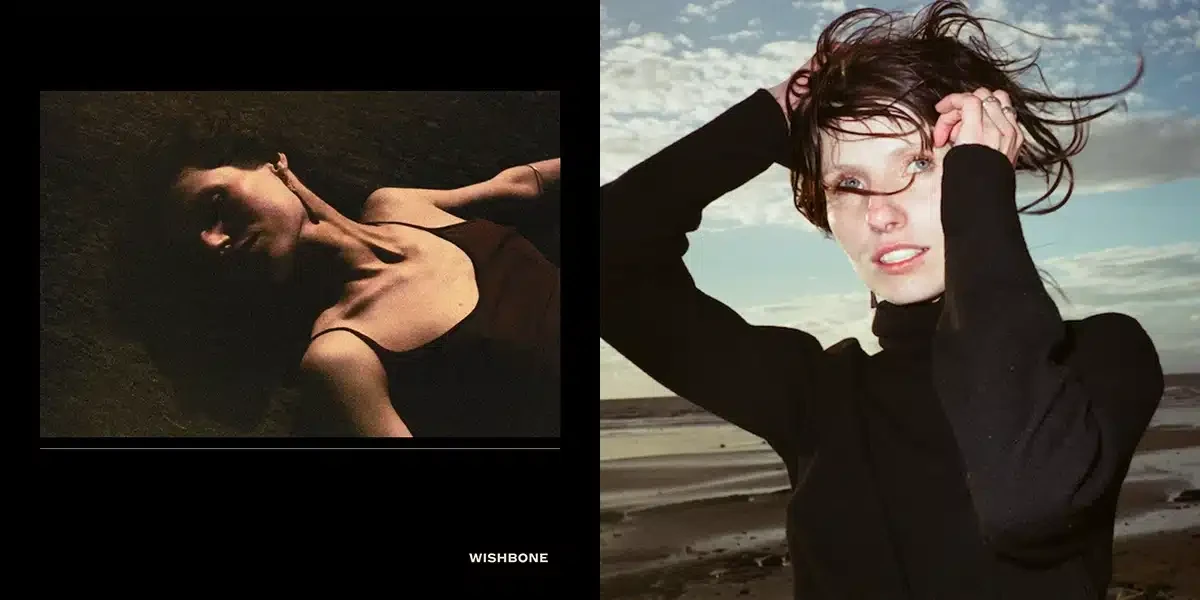
Following her critically acclaimed, unadorned debut album Rift in early 2025, Mann has returned with a bolder, more expansive sophomore statement: Wishbone. Where her debut cast her as a solitary trouvère navigating the rain-streaked country lanes of self-discovery on a rough-hewn acoustic guitar, Wishbone finds Mann stepping into a fuller sonic ecosystem. Backed by a sympathetic band providing snare-brushed drums, lachrymose violins, country fiddles, and understated banjos, Mann’s sophomore LP maintains her trademark lyrical ambiguity while injecting a newfound, sanguine sense of directness, rhythmic propulsion, and emotional blood.
Positioned alongside contemporaries like Kiki Cavazos, Natalie Wildgoose, Daisy Rickman, and Juni Habel, Mann proves herself to be an artist deeply conversant with the rich historical tapestry of folk music. Yet, rather than mimicking her forebears—echoing the haunting sensibilities of British singers Molly Drake and June Tabor, or American icons like Joan Baez—Mann filters these timeless idioms through a deeply personal, cinematic lens. Wishbone marks a critical maturation: an album that oscillates between personal confession and folk tradition, proving that when language falls short of human feeling, the voice can still map the contours of the heart.
Detailed Chronology: From the Solitary Lanes of Rift to the Orchestrated Horizons of Wishbone
The Foundations and the Shadow of Tradition
Clara Mann’s artistic identity has always been rooted in a profound reverence for folk history. This was underscored last year when she recorded a staggering rendition of "500 Miles"—frequently attributed to Hedy West. In Mann’s hands, every mile is meticulously counted and deeply felt, transformed into a valedictory plea to an absent lover, bolstered by briskly fingerpicked acoustic guitar and Owen Spafford’s see-sawing country fiddle.
Much like legendary folk interpreters of the past—Cynthia Gooding, Jean Ritchie, or Jeannie Robertson—Mann delivers traditional idioms as though the songs are moving through her with an inevitability that strips away ego. She acts as a conduit, donning folk archetypes like a mask in exchange for a visage, allowing older traditions to dictate her path.
Rift (Early 2025): The Solitary Journey
The release of her debut album, Rift, at the start of 2025 established her as a master of sparse, unadorned arrangements. A deeply internalized project, Rift followed a narrator traveling through rain-streaked country lanes, reflecting as much on the road behind as the road ahead in a relentless pursuit of self-discovery, reinvention, and freedom. The record was defined by its intimacy, relying almost entirely on Mann’s solitary acoustic guitar strumming and her singular, lithe vocal delivery.
The Evolution on Wishbone
With Wishbone, the methodology shifts dramatically. Recorded with a full ensemble, the album benefits from varied instrumentation and cordial production that bring her sparing arrangements to vivid life. Crucially, Mann’s piano playing comes into its own here, with sorrow hanging between the notes, lingering like an unshakable dream and spreading across tracks like the melancholy of winter light.
The record opens with "Fortuna," a fingerpicked acoustic guitar piece supported by mournful strings where a narrator misses a lover while riding a coach home through a city at night. This gives way to tracks like "Go Getter," which mirrors Rift’s "Remember Me (Train Song)" through the tactile imagery of a narrator wearing her lover’s shirt, though marked by a decidedly more sanguine outlook.
As the album progresses, structural and vocal shifts become more pronounced. On the titular track, "Wishbone," Mann drops her vocal register, singing with a dark, evocative delivery that channels the spirit of Fiona Apple. She draws out words, pulls them apart, and turns them over in search of hidden meanings, exposing the inherent inadequacy of language when faced with profound emotional truths.
Supporting Context & Metrics: The Anatomy of a Modern Folk Masterpiece
The artistic weight of Wishbone lies in its delicate balance between stark minimalism and rich, textural instrumentation. Below is a structural breakdown of the album’s key thematic and musical pillars:
| Track / Element | Musical Instrumentation | Lyrical & Thematic Focus | Artistic Precedent / Influence |
|---|---|---|---|
| "Fortuna" | Fingerpicked acoustic guitar, mournful strings | Urban isolation, longing, transit imagery ("cigarette in the rain") | Classical English folk troubadours |
| "Oblivion" | Plangent acoustic guitar intro, Sisyphus-esque heavy fiddle | Existential dread, memory, desire, pushing linguistic limits ("stars") | David Lindley-esque country arrangements |
| "I’m Everyone Who’s Ever Said I Love You" | Piercing acoustic guitar | Biting cynicism, universalized heartbreak, linguistic weaponry | Townes Van Zandt meets 1965 Bob Dylan |
| "All My Devotion" | Infectious backing vocals, violin, banjo | Lithe vocal arrangements, spatial mise-en-scène | Joan Baez vocal purity |
| "Connie’s Song" | Jaunty acoustic guitar, string squeaks, faint bass drum | Acerbic observation, soaring melodic ascents into "loneliness" | Connie Converse tribute |
| "Video Games" | Epilogue arrangement | Domestic contentment, peaceful resignation | Contemporary indie-folk minimalism |
The emotional apogee of the album arrives with "Oblivion," a haunting existential ballad defined by a plangent acoustic guitar intro that conjures a world of memories, desire, and love. The track features a David Lindley-esque country fiddle that brays with a heavy, philosophical weight, while Mann stretches the word "stars" past its conventional phonetic limits into an exploration of the infinite.
Meanwhile, tracks like "I’m Everyone Who’s Ever Said I Love You" showcase her biting, cynical lyrical side. Opening with an acoustic guitar line that immediately brings Townes Van Zandt to mind, the narrator flings the phrase "I love you" like a silver dagger, transforming Mann into a modern-day Bob Dylan circa 1965.
Conversely, "All My Devotion" leans into infectious backing vocals, violin, and banjo, showcasing her Joan Baez-esque vocal agility. Through her precise diction, memories are given physical shape, allowing Mann to direct the auditory mise-en-scène like a filmmaker holding down narratives that could easily slip away under lesser control.
Official Statements and Artistic Philosophy
Reflecting on her creative process, Clara Mann’s work speaks volumes about the synthesis of tradition and contemporary existentialism. While operating as a modern auteur, Mann’s relationship to her material remains deeply receptive rather than aggressively imposing.
"The songs move through them as if they have little or no say in the matter," music critics observe of folk’s greatest lineage—a sentiment that applies directly to Mann’s approach. She delivers folk tunes as though the songs are singing to her, dictating where to go or whom to be. This philosophy allows her to honor the rich tradition of musical "masks" while communicating raw, emotionally authentic stories.
Speaking on the shift between Rift and Wishbone, production notes and early reviews highlight a growing self-knowing assurance. The record does not shy away from complex emotional territory, arguing that love—much like the folk tradition itself—chooses its subjects. As expressed across the album’s thematic arcs, even when love is not predicated on random chance, it loses none of its poetic appeal; rather, that inevitability is precisely why love is poetry.
Future Outlook: The Ascendance of Clara Mann
With the release of Wishbone, Clara Mann has definitively signaled her transition from a promising underground secret to a commanding force in contemporary acoustic and folk music. By expanding her palette—incorporating a full band, lush piano arrangements, snare-brushed percussion, and subtle country idioms—she has proven that artistic growth does not require abandoning one’s core identity.
Her ability to weave laconic lyrics with deep emotional resonance positions her uniquely for the future. Tracks like "Song For Joy"—a chanson-esque journey that leaves the listener unmoored from time, arriving at a feeling that elapses meaning—demonstrate an artist stretching the boundaries of the genre. Meanwhile, epilogue tracks like "Video Games" ground her cosmic explorations in quiet, domestic intimacy.
As Mann continues to tour and share her work with international audiences, Wishbone stands as a testament to an artist coming into her full power. Blending the timeless melancholy of winter light with the hopeful prayers of a modern troubadour, Clara Mann is crafting a body of work that will echo through the folk canon for generations to come.





Belum ada komentar. Jadilah yang pertama berkomentar!