

Executive Overview
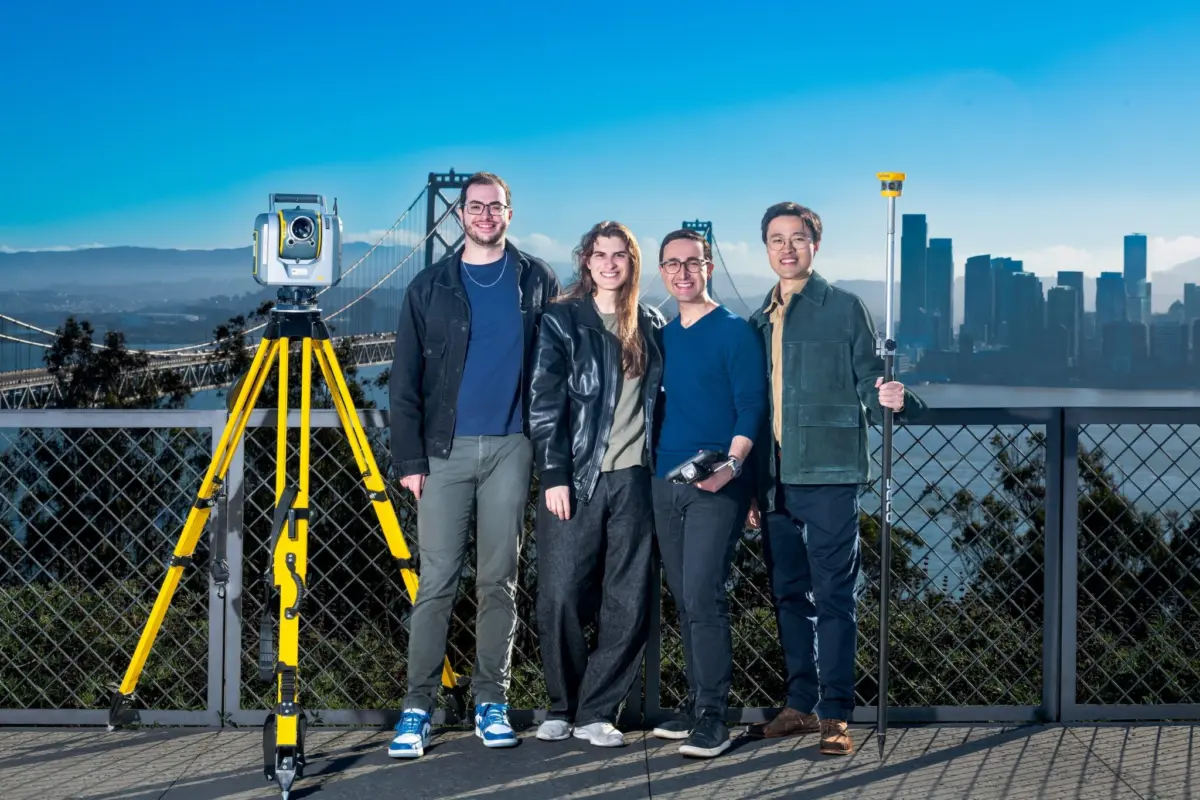
The construction and civil engineering sectors have long been recognized as bastions of tradition, heavily reliant on legacy processes, time-consuming manual workflows, and decades-old software systems. Entering this space with a fresh perspective, Alex Baikovitz co-founded Mach9 Robotics in 2021 with an ambitious objective: to build a better, faster, and more affordable way for civil engineers to conduct visual inspections. However, after several years of developing hardware solutions, Baikovitz and his team experienced a profound pivot-inducing realization. The true bottleneck holding back the industry was not the hardware used to capture reality data, but rather the tedious, labor-intensive workflows required to process that data into usable maps and surveys.
Dropping "Robotics" from its name, the startup shifted its focus toward developing proprietary, AI-powered computer-aided design (CAD) software. This strategic pivot has proven remarkably lucrative. Today, Mach9 boasts nearly 100 private beta customers who have leveraged the software across more than 2,500 projects.
This surging market traction culminated on Wednesday with a major milestone: Mach9 announced a $34 million Series A funding round. Co-led by First Round Capital and Bessemer Venture Partners—with additional participation from Prudence, a New York-based firm specializing in AI applications for construction and real estate, and returning investor Quiet Capital—the new capital underscores a broader wave of disruption sweeping through the multi-trillion-dollar infrastructure and construction technology stack.
As startups like Mach9, CivilGrid, and Blueprints AI work to dismantle friction points across the planning-to-building pipeline, the industry is poised for a massive technological upgrade. Mach9’s proprietary, centimeter-accurate AI models are cutting project delivery times down drastically, allowing civil engineers to bypass legacy incumbents like Autodesk and Bentley Systems and ushering in a new era of automated infrastructure design.
Detailed Chronology: The Evolution of Mach9
2021: The Hardware Origins
When Mach9 first burst onto the engineering technology scene in 2021 under the banner of Mach9 Robotics, the startup targeted the physical mechanisms of data collection. Armed with the goal of modernizing slow, cumbersome, and red-tape-bound visual inspections for civil engineers, the founding team engineered specialized hardware meant to streamline how projects broke ground in the United States.
The rationale seemed sound at the time. Traditional civil engineering projects routinely suffer from sluggish data collection methods, and hardware innovations promised a clear path toward speed and cost-efficiency. Yet, as the team deployed their newly built hardware into the field, interacting directly with engineers, surveyors, and project managers, a stark contradiction emerged between what the company thought the industry needed and what the market was actually crying out for.
The Realization and Pivot
The turning point came when Baikovitz and his engineers observed how civil engineering organizations handled the immense influx of information generated by modern laser scanners and high-resolution image capture systems. Capturing the data was no longer the primary hurdle; turning that raw data into a clean, actionable survey—a detailed, precise map of a site required for engineering design—was an administrative and technical nightmare.
"We saw how tedious it was for civil engineering organizations to take data from these amazing laser scanners and image data capture systems and turn that into a usable survey," Baikovitz explained in an interview with TechCrunch. "The real pain was in their workflows… how to turn all the endless amounts of data that they’re able to collect into… information that people can use to make the best design and asset management decisions across the board."
Listening to these operational pain points, leadership made a decisive choice. They dropped "Robotics" from the corporate identity and redirected all engineering efforts toward designing an intelligent, AI-powered computer-aided design (CAD) software platform.
This pivot paid immediate dividends. By directly addressing the workflow bottleneck rather than the hardware mechanism, Mach9 captured the attention of forward-thinking engineering firms. The private beta version of their AI CAD software quickly accumulated nearly 100 enterprise customers, who successfully deployed it across more than 2,500 projects globally, proving both the scalability and the high demand for automated reality-capture software.
October 2024: The Series A Inflection Point
With robust product-market fit established and a rapidly expanding client base relying on its platform for core design operations, Mach9 returned to the fundraising market. The company’s impressive trajectory culminated in a $34 million Series A funding round announced on Wednesday. Co-led by venture capital heavyweights First Round Capital and Bessemer Venture Partners, alongside strategic backing from Prudence and Quiet Capital, this influx of capital marks a transition from early-stage experimentation to hyper-growth execution.
Supporting Context & Metrics: Tackling the Legacy Bottleneck
To understand why Mach9’s software has achieved such rapid adoption, one must examine the legacy software landscape that currently dominates civil engineering. For decades, the industry has relied on traditional, labor-intensive CAD systems built by corporate giants such as Autodesk and Bentley Systems. While robust, these tools demand vast amounts of manual input.
According to Baikovitz, legacy methods require about a week of manual labor per mile of project delivery when using incumbent software solutions. Across a statewide infrastructure initiative, this translates into months of painstaking drafting, vector alignment, and manual verification.
Mach9’s AI-driven system alters this equation entirely, claiming to make the CAD drafting process up to 10 times faster while slashing overhead expenses. By automating the extraction of geometry from point clouds and imagery, the software frees engineering teams from repetitive, mundane tasks, enabling them to dramatically expand their project capacity.
"It allows customers doing surveying and civil engineering work to expand their own capacity and take on more types of work, bigger projects, and expand the reach of how reality-capture data can influence major infrastructure decisions," Baikovitz noted.
The Rise of Infrastructure Tech
Mach9 is far from alone in its quest to drag construction and civil engineering into the 21st century. The broader infrastructure tech ecosystem is currently experiencing an unprecedented wave of venture-backed innovation aimed at streamlining every phase of the planning-to-building pipeline:
- CivilGrid: In August, the startup secured $26 million to scale its platform, colloquially dubbed the "Google Maps for the underground," helping utility and engineering companies map subterranean infrastructure safely and efficiently.
- Blueprints AI: Generating code-compliant, permit-ready architectural blueprints in a matter of minutes, this generative AI startup recently earned recognition as a top 200 competitor in the Startup Battlefield at TechCrunch Disrupt.
These companies share a common thesis: that generative AI and specialized computer vision can eliminate administrative drag, reduce permitting delays, and accelerate the delivery of critical public and private infrastructure.
Official Statements and Technical Insights
Building software for civil engineering and construction is vastly different from building consumer applications. The margin for error is razor-thin, and the stakes involve public safety, massive capital budgets, and strict regulatory compliance. Off-the-shelf artificial intelligence models simply cannot deliver the required precision.
To achieve survey-grade accuracy—often measured down to the centimeter—Mach9 had to build and train its own proprietary AI models from the ground up.
"That’s not something that a lot of off-the-shelf models are able to do or deliver at in any capacity," Baikovitz emphasized. "A big part of what our development process has looked like since 2024 has been, how do we build the industry-leading models that can turn imagery or these multimodal image and laser scan datasets into survey-grade-like geometry, like tracing out the curbs, the pavement striping, all of this exactly how our customers want it to be at the accuracies that the industry demands."
The Human-in-the-Loop Safeguard
Despite the sophistication of Mach9’s machine learning architectures, the company is acutely aware of the liability inherent in engineering design. AI models are deployed not to replace licensed professionals, but to empower them.
The software ingests raw survey data and automatically generates a comprehensive first draft of a plan. Engineers then use Mach9’s toolset to interact with the output—drawing, removing elements, adjusting vertices, and auditing the quality of the AI-generated geometries.
"We are giving them all of the tools to draw, remove, adjust vertices, assess the quality of the AI-generated model, so that they can effectively put their name behind the deliverable that they’re producing," Baikovitz explained, highlighting the critical role of licensed practitioners in reviewing outputs before they are approved for construction.
Validation from the Field
Reflecting on the company’s evolution, Baikovitz harbors no regrets about starting with hardware. That initial hardware-focused phase served as a crucial market discovery mechanism, bringing the founding team face-to-face with enterprise clients who ultimately redirected them toward software.
Recalling a conversation with a skeptical enterprise executive, Baikovitz noted that prospective clients routinely dismissed the need for cheaper hardware. Instead, they stressed the urgent need for better software to streamline massive statewide transportation initiatives.
By answering that call, Mach9 has played an instrumental role in modernizing infrastructure planning in forward-thinking states like Texas, helping local departments of transportation execute safer, more cost-effective, and streamlined mapping projects.
Future Outlook: Scaling for What’s Next
With $34 million in fresh Series A funding secured, Mach9 faces a clear runway for its next phase of organizational and technological scaling. Baikovitz outlined a threefold strategy for deploying the new capital:
- Product Enhancement: Continuing to train and refine proprietary, centimeter-accurate AI models to handle increasingly complex multimodal datasets and expanding infrastructural domains.
- Talent Acquisition: Hiring top-tier industry experts, software engineers, and domain specialists who understand the complex regulatory and operational realities of civil engineering.
- Market Expansion: Scaling all internal departments to keep pace with soaring market demand and the rapid adoption of AI-native engineering tools.
The broader implications of Mach9’s trajectory point toward a fundamental transformation in how civil infrastructure is planned, designed, and constructed. As state agencies, engineering firms, and municipal governments embrace AI-powered workflows, the months-long drag of manual CAD drafting is rapidly giving way to automated, highly accurate digital workflows.
By recognizing that the true hurdle of modern construction was never the capture of physical reality, but rather the translation of data into actionable design, Mach9 has positioned itself at the vanguard of a multi-billion-dollar market transformation. Armed with fresh capital and proven enterprise validation, the company is well-equipped to reshape the backbone of civil engineering for decades to come.






Belum ada komentar. Jadilah yang pertama berkomentar!