

Executive Overview
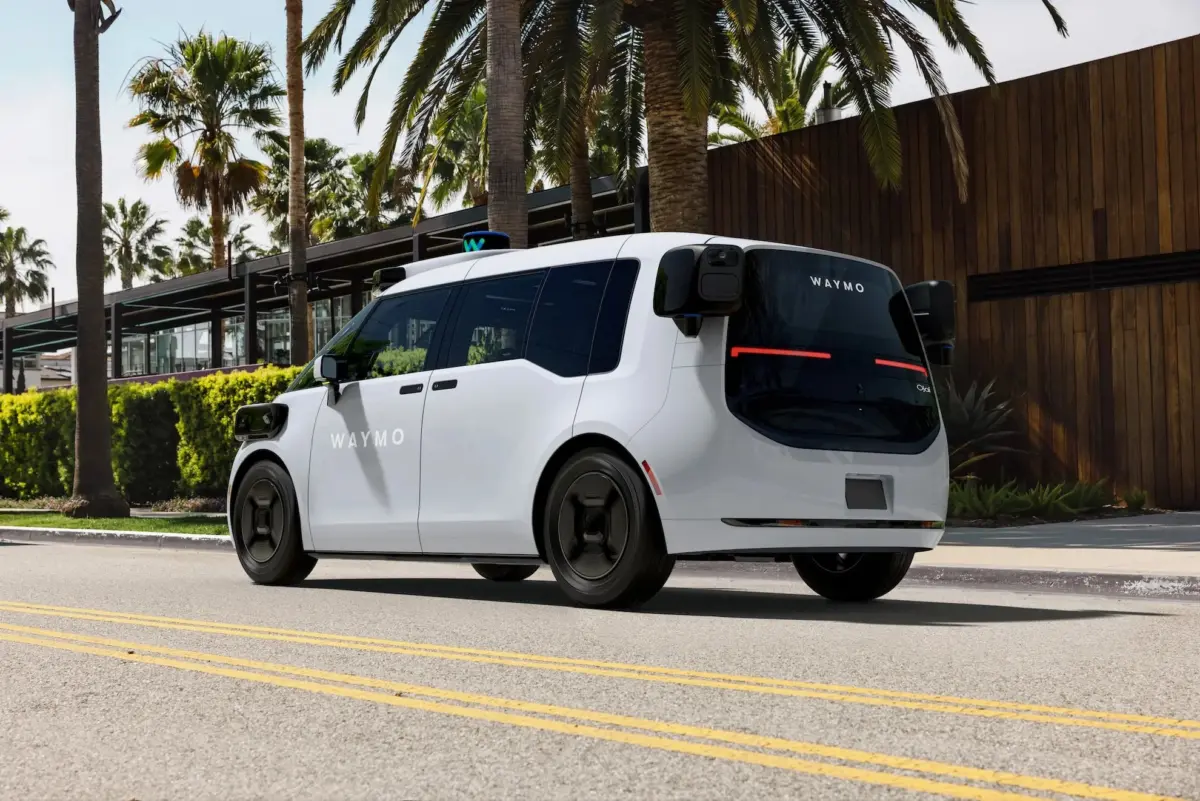
The autonomous vehicle landscape achieved another significant milestone this week as Waymo, the Alphabet-owned autonomous driving pioneer, officially launched its robotaxi service to and from Harry Reid International Airport in Las Vegas, Nevada. Announced on Wednesday, the integration allows passengers traveling through the vital transportation hub to secure fully driverless rides directly to designated "autonomous vehicle zones" located at both Terminal 1 and Terminal 3.
This expansion marks the sixth major airport service deployed by Waymo, cementing the company’s aggressive strategy to capture high-volume transit corridors. It follows closely on the heels of the company’s public launch in Las Vegas last September, which initially unlocked a sprawling 24-square-mile service zone across the city. However, true to its methodical approach to safety and operational scaling, Waymo is initiating the airport service through a phased rollout, making the option available to a restricted cohort of testers before expanding it to the general public.
The arrival of Waymo at Harry Reid International Airport does not happen in a vacuum. Sin City is rapidly transforming into the primary proving ground for autonomous transit in North America. Waymo enters an increasingly crowded and fiercely competitive market that already features Amazon-owned Zoox, which operates its own unique driverless shuttles at the airport. Furthermore, the broader regulatory ecosystem in Nevada is shifting into overdrive. Following regulatory approvals secured in August, legacy mobility giants and EV manufacturers—specifically Tesla and Uber—are poised to deploy thousands of autonomous vehicles onto Nevada streets over the coming year.
This in-depth report examines the mechanics of Waymo’s airport launch, details the rapid chronological evolution of the Las Vegas autonomous market, analyzes the competitive pressures from rivals like Zoox, Tesla, and Uber, and forecasts the future of urban mobility in one of the world’s most dynamic tourist destinations.
Detailed Chronology: From Desert Testing to Airport Integration
To fully understand the gravity of Waymo’s arrival at Harry Reid International Airport, one must trace the rapid, calculated timeline of the company’s deployment in Southern Nevada and across the broader autonomous vehicle sector.
The Groundwork: Mapping and Testing
Long before the general public could hail a Waymo vehicle without a safety driver behind the wheel, the company’s fifth- and sixth-generation hardware suites—packed with customized LiDAR, radar, and camera arrays—quietly logged millions of miles in simulation and physical testing. Las Vegas, characterized by its blinding desert sun, erratic pedestrian traffic on the Strip, complex multi-lane highway merges, and massive convention crowds, presented a uniquely rigorous testing environment.
September: The Public Unveiling
The inflection point for consumers arrived in September, when Waymo officially opened its commercial robotaxi service to the public across a sprawling 24-square-mile zone in Las Vegas. Unlike restricted pilot programs requiring specialized applications or non-disclosure agreements, this launch allowed everyday tourists and locals to open the Waymo One app, request a ride, and experience fully driverless transit across major arteries and entertainment districts.
August Regulatory Clearances
Simultaneously, the regulatory framework governing Nevada’s roads was undergoing a seismic shift. In August, state regulators greenlit pivotal permits allowing companies like Tesla and Uber to position themselves for massive autonomous deployments. While Waymo was busy securing its operational footprint, this regulatory blessing signaled that Nevada intends to remain the epicenter of the American autonomous vehicle revolution, paving the way for thousands of robotaxis to hit public roads within a twelve-month window.
Wednesday: The Airport Milestone
The culmination of these efforts arrived this week with the official integration of Harry Reid International Airport. Recognizing that airports represent the ultimate high-density, high-value choke points for urban transportation, Waymo secured dedicated pick-up and drop-off infrastructure. Working closely with airport authorities, the company established clearly marked "autonomous vehicle zones" at both Terminal 1 and Terminal 2/3 equivalents (Terminal 3), ensuring that passengers laden with luggage can easily locate their driverless rides without navigating confusing traffic lanes.
Supporting Context & Metrics: The Scale of Autonomous Transit
To appreciate the significance of Waymo servicing Harry Reid International Airport, it is crucial to analyze the metrics defining both the airport’s passenger volume and Waymo’s burgeoning national network.
Harry Reid International Airport: A Massive Transit Hub
Harry Reid International Airport is not a minor regional airstrip; it is consistently ranked among the busiest commercial airports in the United States. Handling tens of millions of passengers annually, the airport serves as the literal gateway for the millions of tourists who fuel the Las Vegas economy. By capturing even a fraction of this airport-to-hotel traffic, Waymo positions itself at the absolute center of the city’s high-margin transit ecosystem.
Waymo’s National Airport Footprint
Las Vegas is far from Waymo’s first rodeo when it comes to navigating complex airport environments. The company has methodically integrated its services into some of the most complex transportation hubs in the country. With the addition of Harry Reid, Waymo’s airport portfolio now stands at six major locations:
- Phoenix Sky Harbor International Airport (PHX): One of the earliest testing grounds for autonomous airport pickups.
- Nashville International Airport (BNA): Expanding the company’s footprint into the American Southeast.
- San Antonio International Airport (SAT): Bringing robotaxis to the heart of Texas.
- San Francisco International Airport (SFO): Navigating the dense, highly regulated Bay Area airspace and transit hubs.
- San José Mineta International Airport (SJC): Serving Silicon Valley’s primary air corridor.
- Harry Reid International Airport (LAS): The newest addition, catering to global entertainment and convention travelers.
The Phased Rollout Strategy
In alignment with its foundational corporate ethos—safety first, scale second—Waymo is deliberately throttling the availability of its Las Vegas airport service. Initially, rides to and from Harry Reid will be restricted to a carefully curated cohort of early testers and trusted riders. This controlled environment allows engineers to monitor algorithmic performance in airport traffic geometries, curb-space management, and geofenced zones before flipping the switch for the general public.
Official Statements and Industry Landscape
The rapid escalation of autonomous vehicle deployment in Las Vegas has drawn commentary from industry leaders, regulators, and competitors alike.
Waymo’s Strategic Vision
In its official announcement, Waymo emphasized the seamless convergence of everyday urban transit and long-haul travel. "Bringing our service to Harry Reid International Airport represents a natural evolution of our mission to make mobility safer and more accessible," a company representative noted. By streamlining the notoriously stressful airport-to-hotel transition, Waymo aims to build brand loyalty among business travelers and vacationers alike who visit Las Vegas repeatedly throughout the year.
The Competitive Crucible: Zoox and the Rest
Waymo is by no means operating in a vacuum on the tarmac of Las Vegas. Amazon-owned Zoox has already established an operational presence at the airport, utilizing its unconventional, bi-directional, carriage-style autonomous pods that feature no steering wheels or pedals. Zoox’s distinct vehicle architecture represents a different design philosophy compared to Waymo’s retrofitted Jaguar I-PACE SUVs, offering a glimpse into diverging engineering schools of thought.
Furthermore, the horizon is crowded with impending heavyweights. The August regulatory approvals in Nevada paved the way for a massive influx of vehicles backed by Tesla’s Full Self-Driving (FSD) ambitions and Uber’s massive rideshare dispatch network. While Tesla and Uber have historically approached autonomy through software licensing and hybrid network models, their impending activation means Waymo will soon face competition not just from dedicated robotaxi startups, but from entrenched mobility giants possessing immense capital and consumer reach.
Future Outlook: The Road Ahead for Sin City and Beyond
As the ink dries on Waymo’s airport launch agreements, the broader implications for urban planning, transportation economics, and consumer behavior are coming into sharp focus.
Transforming the Las Vegas Strip Experience
For decades, navigating Las Vegas meant choosing between traditional taxicabs, rideshare services like Uber and Lyft, crowded public buses, or rental cars. The introduction of pervasive, reliable robotaxis—particularly for the airport commute—fundamentally alters this dynamic. Passengers can now step off a commercial flight, walk to a designated autonomous zone, and enter a vehicle that requires no human driver, offering a quiet, private, and increasingly predictable commute to their hotel destination.
Regulatory and Technical Hurdles
Despite the celebratory tone of the launch, challenges remain. Autonomous vehicles must continue to prove their mettle against unpredictable human behavior, sudden severe weather (such as desert flash floods or extreme heatwaves that can stress onboard computing hardware), and edge-case scenarios on busy thoroughfares. Additionally, local union groups, traditional taxi operators, and municipal stakeholders continue to monitor the rapid expansion of robotaxis, raising questions about labor impacts, traffic congestion, and curb management.
The National Horizon
Las Vegas serves as the ultimate test kitchen for the future of American transportation. If Waymo can successfully scale its airport operations amidst the chaotic, high-volume environment of Harry Reid International Airport while managing a phased public rollout, the blueprint will be exported to dozens of other metropolitan areas globally.
The robotaxi future is no longer a distant sci-fi projection; it is idling at the terminal curb, waiting for passengers to step inside, lock the doors, and ride into a fundamentally redefined automotive era.




Belum ada komentar. Jadilah yang pertama berkomentar!