

Executive Overview
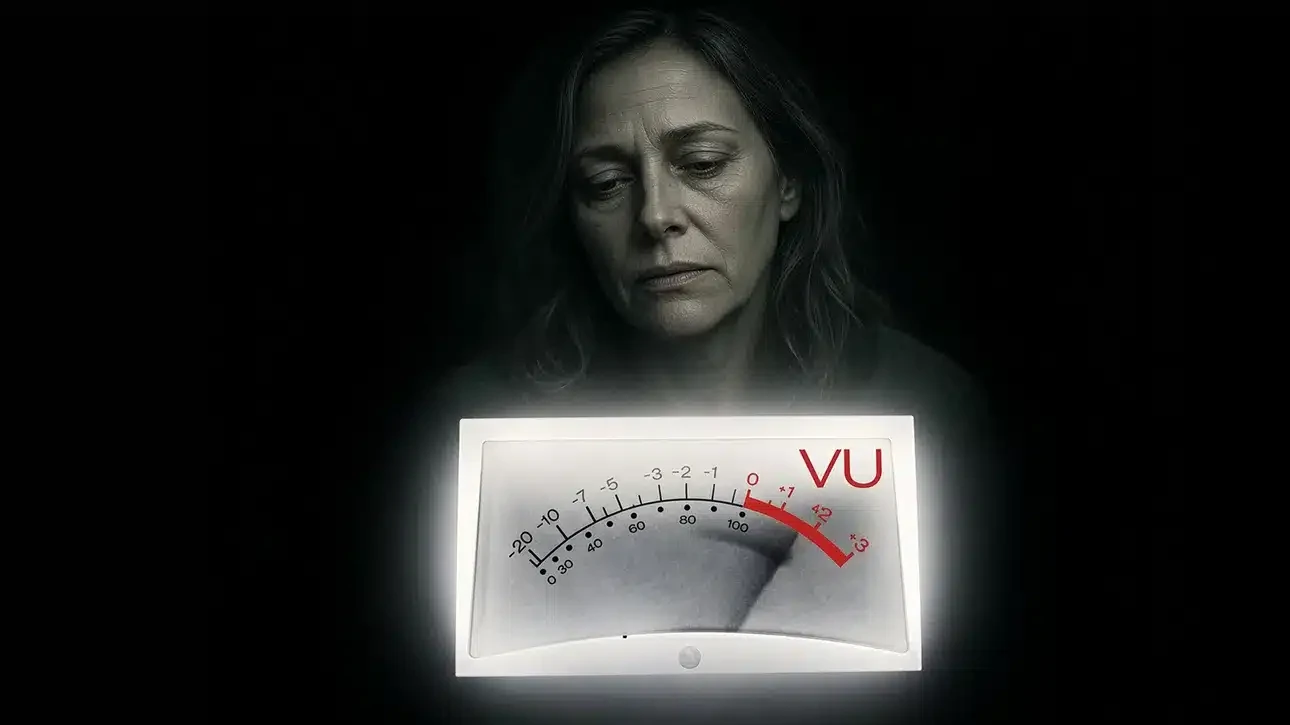
In the Velvet Underground’s haunting 1968 composition, “Stephanie Says,” an unnamed woman measures the coordinates of her existence against the people who have consumed it. The song offers no easy geopolitical map, no clear address for her mounting anger, and no clean route out of her domestic entrapment. Instead, as the decades accumulate, the quiet alienation of a life circumscribed by others transforms into a much larger, more urgent sociological question: Who is mandated to give care? Who is permitted to withdraw it? And who notices when the room has finally grown too small to breathe in?
Recorded during the height of the band’s experimental zenith and eventually released decades later on the 1985 archival collection VU, the track has taken on a strange, compounding resonance as its primary audience—particularly members of Generation X—enters middle age and late life. What once felt like a piece of downtown, avant-garde disaffection now reads as an uncanny premonition of modern burnout, chronic caregiving labor, and the invisible architecture of familial exhaustion.
By tracing the song’s lineage alongside Lou Reed’s subsequent 1973 solo track “Caroline Says II” and contemporary reporting on domestic care crises, this investigation examines how art captures the psychological narrowing of a life organized entirely around the needs of others. Ultimately, the song’s lingering questions challenge our cultural mythologies surrounding independence, family structure, and the urgent necessity of shared community support before private endurance tips over into crisis.
Detailed Chronology: From the Factory Floor to the Archives and Beyond
To understand the longevity of “Stephanie Says,” one must trace its strange, fractured timeline through the history of rock music and cultural archiving.
- May 1968: The Velvet Underground enters the studio to record a batch of new material, including “Stephanie Says.” Featuring John Cale’s plaintive, descending viola line and Lou Reed’s detached yet tender vocal delivery, the track captures a moment of transition for the band as they move away from the abrasive feedback loops of The Velvet Underground & Nico toward a more melancholic, pastoral lyricism.
- 1969: The band releases their self-titled third album, The Velvet Underground, which features “Candy Says.” Sung by Doug Yule and inspired by Warhol superstar Candy Darling, the track establishes a thematic template: the displacement of female interiority through male narration, leaving a distinct silence around the women at the center of the songs.
- 1973: Lou Reed releases his landmark solo concept album Berlin. Within its harrowing narrative arc, he radically transforms “Stephanie Says” into “Caroline Says II.” Placing the track directly after “Oh Jim,” Reed strips away the bittersweet ambiguity of the 1968 recording, dragging domestic violence, addiction, and psychological abuse violently toward the surface. The rewrite acts as a dark shadow cast backward over Stephanie’s quiet room.
- Verve Records, 1985: Nearly two decades after its recording, “Stephanie Says” is officially released on VU, an album carefully assembled from previously unreleased material. This delay fundamentally alters the cultural framing of the song. It no longer belongs exclusively to the late 1960s counterculture; instead, it enters a new Reagan-era landscape, asking a post-industrial generation to hear its echoes from an entirely different vantage point.
- The 2026 Horizon: As Generation X—defined by the Pew Research Center as those born between 1965 and 1980—spans ages 46 to 61, the song’s themes of enforced independence (“latchkey” self-reliance) collide with the realities of aging. The old recording undergoes a structural mutation, shifting from a portrait of countercultural alienation into a mirror for contemporary middle-age caregiving fatigue.
Supporting Context & Metrics: The Weight of Invisible Labor
The durability of “Stephanie Says” does not rest solely on its melancholic chord progressions; it persists because it mirrors systemic fractures in modern labor, family structures, and mental health support networks.
The Generation X Trajectory and "Enforced Independence"
Pop-cultural shorthand often reduces Generation X to the "latchkey kid" fable—a romanticized narrative of early self-sufficiency and resilience. However, as sociological tracking indicates, early competence frequently hardens into a structural trap later in life. The individual who learned early how to manage alone is perpetually designated as the person who makes the emergency call, fills out the bureaucratic forms, remembers the medical appointments, and absorbs domestic shocks.
Data from sociological studies on domestic labor consistently demonstrates that caregiving remains radically asymmetrical. While families and institutions rely heavily on the invisible, unpaid labor of women to keep households functioning, the social, financial, and psychological costs are borne disproportionately. When that labor becomes a 24-hour baseline, the psychological "room" available to an individual contracts until their entire existence is reduced to a series of incoming demands.
Case Studies in Modern Domestic Entrapment
Recent reporting on community mental health and domestic friction highlights the physical and psychological toll of this narrowing space:
- The Driveway Pause: Sociological snapshots of contemporary motherhood frequently capture micro-moments of resistance—such as a mother sitting in her parked car in the driveway for eleven minutes with the engine off and her phone face down, simply because the vehicle represents the only physical enclosure that does not issue an immediate demand for her labor.
- The Braced Door: Investigative reporting by local news outlets on the intersection of housing security and severe substance abuse (such as the devastating impacts of methamphetamine addiction) reveals harrowing domestic realities. Accounts of parents—often mothers—pushing heavy furniture against their bedroom doors every night to secure a fragile perimeter against adult children suffering from unmanaged addiction illustrate a terrifying truth: love is present, but structural protection is entirely absent.
These vignettes underscore the dark underbelly of the Velvet Underground’s lyricism. Stephanie’s quiet room is not an aesthetic abstraction; it is a clinical description of a life where ordinary spaces have been eroded by external crises.
Official Perspectives and Expert Analysis
Cultural critics, musicologists, and urban planners have long wrestled with the implications of the Velvet Underground’s minimalist aesthetic and its broader social commentary.
Musical Architecture and the Poetics of Withholding
Music critics and platform notes (such as those compiled by Apple Music and AllMusic) have frequently noted the structural genius of John Cale’s arrangement on “Stephanie Says.” The descending viola harmonies do not resolve; they drift, suspending the listener in a state of unresolved tension.
Cultural critic Hilton Als, writing on the mechanics of visibility through his analysis of figures like Candy Darling, notes the profound cultural cost placed on marginalized individuals expected to perform as images rather than human beings with internal depths. Similarly, “Stephanie Says” relies on mediation: Stephanie reaches the listener exclusively through Lou Reed’s third-person narration. We are granted intimacy at a distance, akin to a lit window glimpsed from a dark road. Her loneliness is palpable, but its source and remedy remain permanently outside the frame.
Redefining Community Care
Moving from the private agony of a locked bedroom to systemic solutions requires a fundamental reimagining of public infrastructure. Pasadena civic leader and urban strategist Rick Cole has frequently championed a vision of community mental health rooted in a simple yet radical metric: "Community is a place where they notice when you’re born and care when you die."
Experts point out that this philosophy widens the frame far beyond the traditional nuclear family. Expecting the household—and specifically women within the household—to act as the sole barrier between a vulnerable loved one and absolute catastrophe is an unsustainable model of social organization. True public health requires robust, proactive institutional services that intervene long before a crisis makes human need undeniable.
Future Outlook: Opening the Door Both Ways
As listeners age alongside the music of the late 1960s and 1970s, the questions posed by Lou Reed, John Cale, and their spectral subjects have only grown more urgent. The modern landscape—characterized by fracturing social safety nets, eldercare burdens, and the mental health fallout of economic precarity—demands an honest reckoning with how we distribute the labor of human survival.
The trajectory of the next decade will depend heavily on whether society continues to treat caregiving as an individual inconvenience to be managed in isolation, or transitions toward collective models of communal support. We must ask:
- Institutional Reform: How can public health systems alleviate the crushing burdens placed on domestic caregivers before psychological and physical collapse occurs?
- Economic Redefinition: What policy frameworks are necessary to properly value and support the invisible labor that sustains both families and municipal institutions?
- Cultural Narratives: How can public discourse move away from romanticizing self-reliance toward fostering environments where individuals do not have to hide in cars or brace doors to find a moment of peace?
“Stephanie Says” offers no tidy resolution. There is no rescue party waiting at the end of the master tape, no summer afternoon arriving to settle the emotional account. But in its refusal to close the book on its subject, the song preserves a vital space for contemplation. It reminds us that love and boundaries are not mutually exclusive, and that a room can remain lit from within even when the world outside has forgotten how to knock.






Belum ada komentar. Jadilah yang pertama berkomentar!