

Executive Overview
The rules of the game are changing for the final time. This December, Sony Pictures is set to deliver what may be the most ambitious installment in its modern reinvention of a beloved cinematic property. Jumanji: Open World, slated for an exclusive theatrical release on Christmas Day, marks the third and final chapter in the contemporary trilogy spearheaded by director Jake Kasdan.
For nearly a decade, the modern Jumanji franchise has functioned as a cornerstone of holiday box office dominance, expertly blending nostalgia with high-concept comedic adventure. Beginning with 2017’s runaway hit Jumanji: Welcome to the Jungle and continuing through 2019’s Jumanji: The Next Level, the series redefined how Hollywood could reboot a 1990s classic without strictly remaking it. Instead of a board game trapped in an attic, the franchise pivoted to video game culture, replacing wooden pieces and rolling drums with digital consoles, avatar selections, and finite "lives."
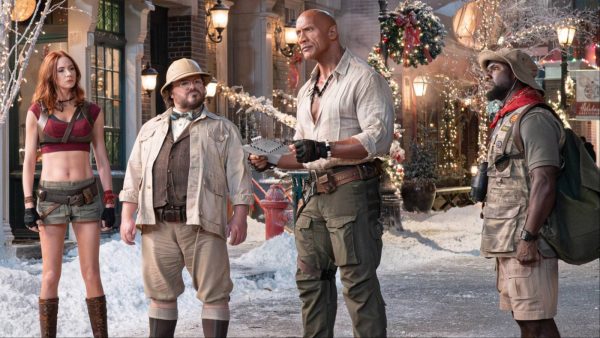
Now, the premise that captivated global audiences is flipping entirely on its head. In Jumanji: Open World, the video game breaks free of its console confines, spilling raw, unbridled digital chaos into the real world. This narrative inversion brings the beloved avatars—Dr. Smolder Bravestone, Ruby Roundhouse, Professor Shelly Oberon, and Franklin “Mouse” Finbar—out of the digital wilderness and squarely into our everyday reality.
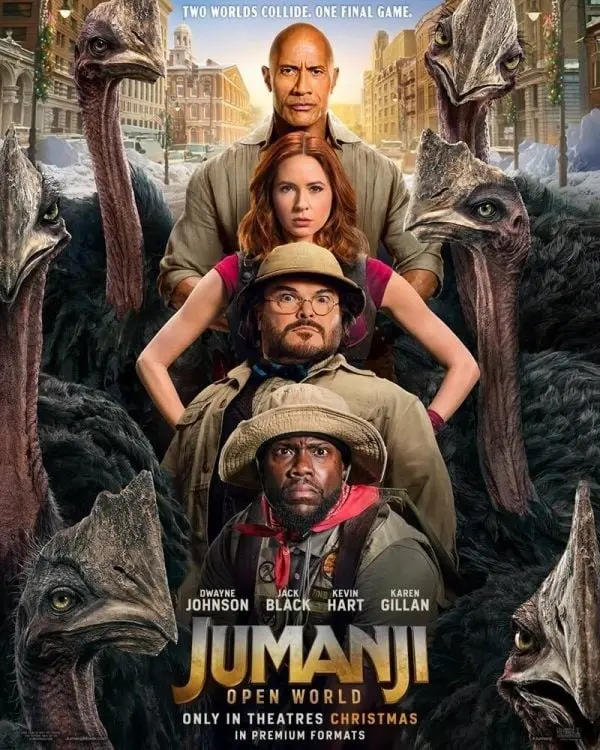
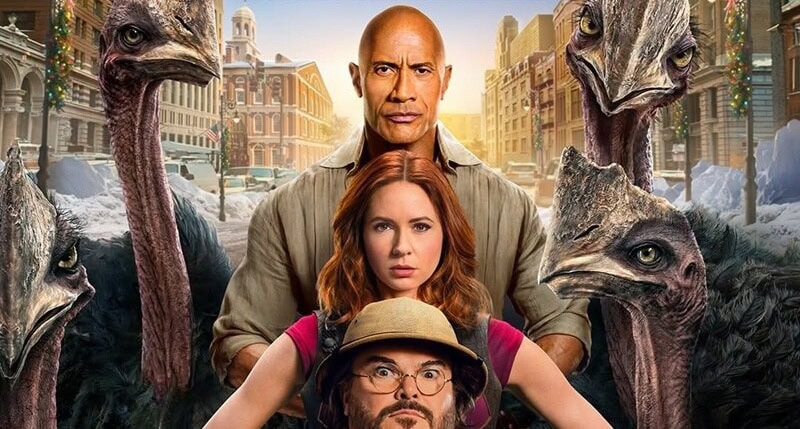
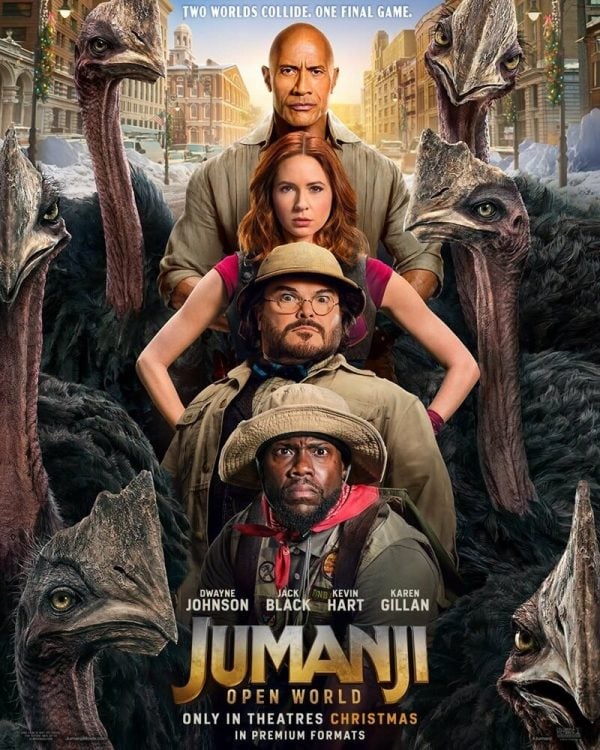
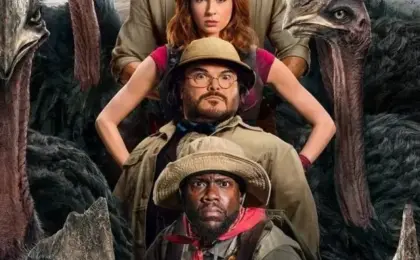
Promotional campaigns have officially kicked off with the release of a striking new theatrical poster and an introductory trailer. The marketing materials tease an eclectic mix of high-stakes action, signature comedic friction, and bizarre real-world anomalies, highlighted most prominently by a pride of ostriches stampeding through an urban landscape. Backed by a massive ensemble cast blending A-list star power with the franchise’s core teen and veteran actors, Jumanji: Open World is poised to be one of the defining cinematic events of the 2026 holiday season.
Detailed Chronology: From Board Games to Open-World Chaos
To understand the magnitude of Jumanji: Open World, it is essential to trace the evolutionary arc of the franchise over the past three decades. The journey began in 1995 with director Joe Johnston’s adaptation of Chris Van Allsburg’s acclaimed children’s book. Starring the late Robin Williams, the original Jumanji was a dark, suspenseful adventure that explored what happened when a magical board game dragged the jungle into a quaint New England town. It was a visual effects pioneer for its era and grossed over $262 million worldwide, cementing itself as a cherished 90s classic.
For over twenty years, the property lay dormant, viewed by many executives as a sacred cow best left untouched. That perspective shifted in the mid-2010s when Sony Pictures calculated that modern audiences—heavily steeped in gaming culture—were ripe for a meta-textual update.
Welcome to the Jungle (2017)
Released in December 2017, Jumanji: Welcome to the Jungle defied skeptical pre-release tracking to become a monumental cultural and financial phenomenon. The film introduced a brilliant narrative subversion: four high school teenagers serving detention are sucked into an old video game console, trapped inside the bodies of avatars that are the exact opposite of their real-world personalities. Dwayne Johnson played the nerdy Spencer as a muscular adventurer (Dr. Smolder Bravestone), while Kevin Hart played the high school football star as a diminutive zoologist (Franklin Finbar). Paired with Jack Black as a shallow teenage girl trapped in the body of a middle-aged male cartographer (Prof. Shelly Oberon) and Karen Gillan as an awkward wallflower playing a fierce martial artist (Ruby Roundhouse), the film generated lightning-in-a-bottle chemistry. It went on to gross a staggering $962 million globally.
The Next Level (2019)
Capitalizing on this goodwill, Sony fast-tracked Jumanji: The Next Level for a December 2019 release. This sequel expanded the sandbox by introducing older characters into the mix—specifically Danny DeVito’s grumpy grandfather and Danny Glover’s estranged business partner—who accidentally get sucked into the game alongside the original teens. The film complicated the avatar dynamic by shuffling who controlled whom, introducing new playable characters, and revealing more of the game’s frozen mountain and desert landscapes. Despite facing stiff box office competition, the sequel raked in over $800 million worldwide, proving that the IP had legs well beyond a single lucky outing.
Open World (2026)
Following a seven-year hiatus—extended by industry-wide disruptions and the busy schedules of its mega-watt ensemble—the franchise is returning for its grand finale. Jumanji: Open World takes the thematic concepts of its predecessors and reverses them entirely. Instead of ordinary humans venturing into the digital heart of Jumanji to survive trials and save the game, the game itself breaches the containment barrier. The digital ecosystem bleeds into our world, forcing the avatars and their real-world adolescent controllers to navigate the surreal consequences of video game mechanics manifesting in everyday society.
Supporting Context & Metrics: The Box Office Heavyweight
When analyzing the modern cinematic landscape, few franchises have been as reliably lucrative for their studio as the modern Jumanji trilogy. In an era dominated by superhero cinematic universes and established intellectual property fatigue, the Jumanji sequels carved out a distinct space as premier four-quadrant family entertainment.
Box Office Performance Analysis
The financial trajectory of the modern series underscores its rare staying power:
- Jumanji: Welcome to the Jungle (2017): Produced on an estimated budget of approximately $90–$100 million, the film grossed $404.5 million domestically and $557.7 million internationally, totaling an extraordinary $962.2 million worldwide. It famously legged out through the holidays, outperforming Star Wars: The Last Jedi over several weekly frames late in its theatrical run.
- Jumanji: The Next Level (2019): With a slightly increased budget of roughly $132 million, the sequel demonstrated remarkable consistency, earning $320 million domestically and $800.5 million globally.
- Combined Gross: Together, the two films have pulled in nearly $1.77 billion worldwide, making it one of Sony Pictures’ most successful and reliable live-action properties.
The Strategic Value of the Christmas Window
Sony’s decision to release Jumanji: Open World on Christmas Day 2026 is a calculated tactical maneuver. The late-December holiday corridor is traditionally the most fiercely contested release window of the year, historically dominated by Disney’s Star Wars or James Cameron’s Avatar epics. By planting its flag firmly on Christmas Day, Sony is telegraphing extreme confidence in the film’s ability to capture family audiences seeking lighthearted, action-packed escapism during the school winter break.
Production and Ensemble Logistics
Assembling the core four leads—Dwayne Johnson, Kevin Hart, Jack Black, and Karen Gillan—alongside director Jake Kasdan is no small feat given their respective, perpetually packed Hollywood calendars. Furthermore, the film boasts a massive supporting cast that bridges every era of the modern franchise.
The official cast list confirms the return of the real-world teenage counterparts and expanded ensemble members:
- Alex Wolff, Madison Iseman, Morgan Turner, and Ser’Darius Blain return as the original high schoolers (Spencer, Bethany, Martha, and Fridge).
- Rhys Darby reprises his role as Nigel Billingsley, the game’s non-player character (NPC) guide.
- Nick Jonas returns as Jefferson "Seaplane" McDonough, the avatar trapped in the game for decades.
- Danny DeVito and Bebe Neuwirth add comedic and dramatic heft, anchoring the grounded human elements.
- Lamorne Morris joins the ensemble as a notable new addition, though details regarding his specific role are currently under tight wraps by the studio.
Official Statements & Creative Vision
Behind the visual effects, high-octane stunts, and comedic banter lies a tightly coordinated creative team that has steered the ship since 2017. Director Jake Kasdan, who took over the reins for the modern iteration, has consistently emphasized that the key to the franchise’s success is emotional resonance masked as high-energy comedy.
While promotional tours and formal press junkets for Jumanji: Open World are still ramping up, early promotional materials and loglines released by Sony offer clear insight into the film’s thematic core. The official logline reads:
"Our heroes have escaped the ever-changing jungles of Jumanji before, but this time the game comes to us — as Jumanji breaks free of its console, unleashing its chaos into our world."
This shift addresses the logical evolution of the story. In the 1995 original, the board game leaked into a suburban neighborhood (Brantford, New Hampshire), bringing stampedes, monsoon rains, and giant spiders into reality. By having the modern video game break out of its console, the filmmakers are paying direct homage to the original Robin Williams classic while maintaining the modern mechanics, video game tropes, and avatar identities that audiences have grown to love over the past decade.
In past interviews regarding the trajectory of the series, Dwayne Johnson and his producing partners at Seven Bucks Productions have highlighted the unique challenge of playing characters who are essentially playing other characters. Johnson’s portrayal of Dr. Smolder Bravestone requires him to channel the timid, insecure demeanor of a teenage asthma sufferer trapped inside the physique of an unstoppable action hero. Sustaining this high-concept performance dynamic across three feature films has been cited by critics as a masterclass in physical and comedic acting.
Future Outlook: The End of an Era and Legacy
As Jumanji: Open World gears up for its December 2026 release, industry analysts and pop culture historians are already looking at what this film means for the broader legacy of the property. Sony Pictures has explicitly framed Open World as a "third and final adventure" in this specific trilogy arc. While Hollywood is rarely shy about rebooting or spinning off profitable intellectual property in perpetuity, the closure of this current narrative chapter marks the definitive end of an era for this specific ensemble.
What’s at Stake for Sony Pictures?
For Sony, the stakes are substantial. The studio has navigated a shifting theatrical landscape where mid-to-high budget live-action comedies and family-adventure hybrids have become increasingly rare. Most studios have pivoted almost exclusively to superhero fare or animated features for family audiences. Jumanji stands as a unique outlier: a live-action, star-driven blockbuster that relies on practical charisma, high-concept world-building, and broad comedic appeal. A strong showing for Open World will validate Sony’s strategy of nurturing self-contained, finite franchises rather than dragging out cinematic universes past their expiration dates.
The Fan Expectation and Speculation
Fandom spaces are currently hyper-fixated on the logistical implications of the game entering the real world. Questions abound:
- Will non-player characters (NPCs) like Nigel wander around modern cities?
- How will the video game’s rules—such as the three-life system and specific avatar weaknesses—apply when the boundaries of the digital realm dissolve?
- Will there be a direct narrative nod or cameo connecting the events back to the 1995 Alan Parrish (Robin Williams) timeline?
With the first trailer already generating millions of views across digital platforms and the newly revealed poster highlighting the absurd juxtaposition of video game heroes and real-world wildlife (such as the aforementioned pride of ostriches), audience anticipation is tracking at a fever pitch.
Conclusion
When the credits roll on Jumanji: Open World this Christmas Day, it will close the book on one of the most unexpected and successful modern box office comebacks in studio history. By trusting a creative team that understood the balance between paying homage to a 90s touchstone and injecting fresh, video-game-inspired meta-humor, Sony managed to turn a risky legacy sequel into a multi-billion-dollar crown jewel. Now, as Dr. Smolder Bravestone, Ruby Roundhouse, Professor Shelly Oberon, and Franklin Finbar prepare for their final roll of the dice in the real world, audiences are invited to experience one last game before the console is powered down for good.




Belum ada komentar. Jadilah yang pertama berkomentar!