

Executive Overview
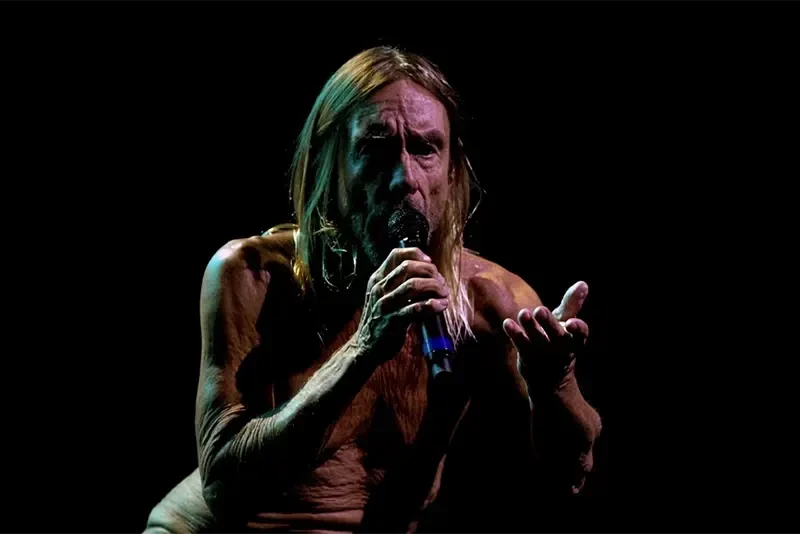
On August 21, 2026, a singular chronological inversion played out across the diamond of Detroit’s Comerica Park. There, under the fading Midwestern summer sky, punk rock pioneer Iggy Pop—at 79 years of age—was listed as the opening act for My Chemical Romance. The New Jersey emo-theatrical titans were in town to celebrate the 20th anniversary of their landmark 2006 concept album, The Black Parade. On paper, the pairing was a masterstroke of cross-generational curation. Both acts had built empires on the foundational aesthetics of theatricality, alienation, melodrama, death, and the comforting sanctuary of community found among society’s outsiders.
Yet, as the evening unfolded, it became immediately clear that this was not merely a heritage-act supporting a stadium-filling headliner. My Chemical Romance was visiting the past, meticulously resurrecting a monument of 2000s alternative culture with grandiosity, marching bands, and uniforms. Iggy Pop, conversely, was standing before them as the living, bleeding architecture of punk’s deep history.
Instead of an orderly warming-up exercise, the audience was confronted with a force of nature that refused to behave like a museum piece. Pop delivered a masterclass in primal, concussive rock and roll that stripped away the theatrical safety net of stadium pop-punk, proving that while My Chemical Romance made alienation theatrical, The Stooges had originally made it dangerous. For roughly 46 minutes, a baseball stadium in the heart of Michigan belonged entirely to a man who helped invent the very concept of rock-and-roll rebellion, turning an anniversary spectacle into a terrifying, vital confrontation with time itself.
Detailed Chronology: The Night Comerica Park Collapsed Under Raw Power
The evening’s trajectory was established instantly, bypassing any polite pleasantries or introductory banter. There was no cushion to ease thousands of My Chemical Romance fans into the performance, no self-deprecating jokes about age, and no explanation required as to why a septuagenarian proto-punk icon was commanding a stadium stage.
The Setlist as a Concentrated Statement
The opening notes of "T.V. Eye" cut through the Comerica Park air like a buzzsaw, setting strict, uncompromising terms for the night. The setlist that followed was not designed to span every nuanced era of Pop’s sprawling career; rather, it was a concentrated, relentless missile targeting the primal core of his catalog:
- "T.V. Eye"
- "Raw Power"
- "I Got a Right"
- "Gimme Danger"
- "The Passenger"
- "Lust for Life"
- "I Wanna Be Your Dog"
- "Search and Destroy"
- "1970"
- "1969"
This was the foundational architecture of the performance: repetition, deafening volume, raw physicality, and an overarching sense of menace. Moving seamlessly from his incendiary Stooges material into the more expansive, theatrical swagger of his late-70s solo records, Pop offered a living demonstration of source material. He was not just playing old songs; he was showing the thousands in attendance precisely where the DNA of modern alternative rock originated.
The Breakdown of Barriers
The emotional and physical peak of the set arrived with "I Wanna Be Your Dog." Rather than treating the composition as a static relic, Pop utilized it as an invitation to breach the formidable barrier between stage and spectator. True to form, he descended into the crowd.
The power of "I Wanna Be Your Dog" has never relied on polite musical development. Its genius lies in its obsessive repetition and escalating tension—a monolithic guitar riff that insists, creates a suffocating physical environment, and dares the listener to resist. Nearly six decades after first unleashing those chords with the Stooges in damp Michigan basements and underground clubs, Pop was still using the song to collapse vast stadiums into intimate spaces of shared transgression.
By the time he closed out his allotted time with the dual temporal punches of "1970" and "1969," the air in Comerica Park had changed. The audience, largely comprising fans who had discovered The Black Parade either upon its 2006 release or through subsequent digital excavation, had witnessed history transform from a Wikipedia entry into a physical, bruising reality.
Supporting Context & Metrics: The Lineage of Alienation
To fully grasp the historical weight of the August 21 concert, one must examine the sociological and geographical roots that bound these two seemingly disparate artists together.
The Detroit Connection
Detroit is a city with a perpetually complex, bruised relationship with its own musical mythology. Frequently reduced in popular discourse to convenient genre boxes—Motown soul, garage rock, techno, and punk—Detroit’s true sonic identity is forged in transformation. Its artists have historically converted industrial decline, socio-economic pressure, and political strife into aggressive new art forms.
Iggy Pop was born James Newell Osterberg Jr. in Muskegon and raised in Ann Arbor, while The Stooges became inextricably linked with the gritty, industrial underbelly of southeastern Michigan. When Pop performed "1969" and "1970" in his home state in the summer of 2026, those songs ceased to be mere historical documents. They resonated directly with a city whose historical scars remain visible and unresolved. The years cited in those song titles are not abstract; they evoke the Vietnam era, racial conflict, municipal bankruptcy, and the volatile fraying of the American dream. Iggy Pop’s music did not offer academic explanations for these contradictions; it made them viscerally audible.
The Bridge Between Generations
The generational makeup of the audience at Comerica Park highlighted a fascinating sociological bridge. My Chemical Romance’s fanbase spans decades. Some fans were teenagers when The Black Parade dropped in 2006, trading eyeliner and trench coats for safety and community; others discovered the record years later through streaming algorithms, TikTok revivals, or older siblings.
For these younger cohorts, Iggy Pop initially registered as a distant, almost mythical historical figure. Yet, the emotional resonance connecting The Stooges to My Chemical Romance is profound:
- The Stooges gave alienation the sound of unbridled distortion, feedback, and bodily sacrifice.
- My Chemical Romance gave alienation the sound of marching bands, theatrical character studies, grand orchestration, and cinematic narrative.
Both entities engineered sanctuaries for the disaffected. While Gerard Way and company wrapped their despair in black-and-white melodrama and rock-opera pageantry, Iggy Pop tore the skin off the drum kit and bled on the floor. One approach is a grand parade; the other is a riot. Together, they mapped out the complete spectrum of alternative catharsis.
Official Statements & Critical Reception
Music critics and cultural commentators immediately recognized the profound irony and triumph of the Detroit pairing, noting that Pop’s performance transcended the typical parameters of a supporting slot.
Writing in The Detroit News review, "Iggy Pop Warms Up My Chemical Romance Crowd with Blast of ‘Raw Power’" (August 21, 2026), critics underscored that Pop’s refusal to slow down fundamentally altered the evening’s narrative arc. Rather than serving as a polite, nostalgic curtain-raiser, Pop weaponized his legacy.
Biographer and cultural historian Paul Trynka, author of the definitive Iggy: Open Up and Bleed, has long argued that Pop’s genius lies in his absolute rejection of self-parody. In interviews surrounding his late-career renaissance—including triumphant festival appearances at Coachella earlier that same year—Pop has consistently maintained that his art is driven by an unquenchable, kinetic impulse rather than a desire to curate a museum exhibit.
Industry analysts noted that while stadium tours featuring 20th-anniversary album playthroughs (such as My Chemical Romance’s Black Parade celebration) run the severe risk of feeling sterile and overly rehearsed, the inclusion of a chaotic, unpredictable variable like Iggy Pop injected raw electricity back into the arena economy.
"My Chemical Romance didn’t just hire a legendary musician to fill an empty slot on their rider," observed one backstage observer. "They invited their founding father into the tent, knowing full well he might tear the canvas down."
Future Outlook: The Legacy of Unfinished Noise
As the sun fully set on Comerica Park and the stage crew cleared away the remnants of Pop’s brief, devastating assault, the atmosphere shifted. The house lights dimmed, the iconic opening notes of "Welcome to the Black Parade" rang out, and Gerard Way took the stage in full military regalia.
Yet, the emotional context of the evening had been permanently altered. The preceding 46 minutes ensured that the audience could not view The Black Parade as a closed, self-contained historical artifact from 2006. Instead, it was brilliantly reframed as part of a continuous, unbroken continuum of rock-and-roll defiance.
What Lies Ahead for Live Music Architecture
The Detroit concert serves as a blueprint for how legacy tours can evolve. As foundational punk, alternative, and emo artists continue to age into milestone anniversaries through the late 2020s and beyond, the temptation to retreat into safe, predictable nostalgia will remain high. However, the Iggy Pop paradigm demonstrates that true rock history is best preserved not by wrapping it in glass, but by setting it on fire.
Pop’s ongoing refusal to let his material become polite or comfortable proves that age is secondary to intent. At 79, his rendition of "Raw Power" is no longer just a youthful declaration of rebellion; it is a profound, defiant confrontation with time itself. The human body changes, but the song remains a jagged, unfinished threat.
When the final notes of the evening faded into the Detroit night, the overarching takeaway was clear: the parade was never just about looking backward. It was a testament to what happens when the righteous noise of one generation becomes the vital, beating heart of the next. For one unforgettable night in Michigan, the past did not look old—it looked dangerously alive.






Belum ada komentar. Jadilah yang pertama berkomentar!