

Executive Overview
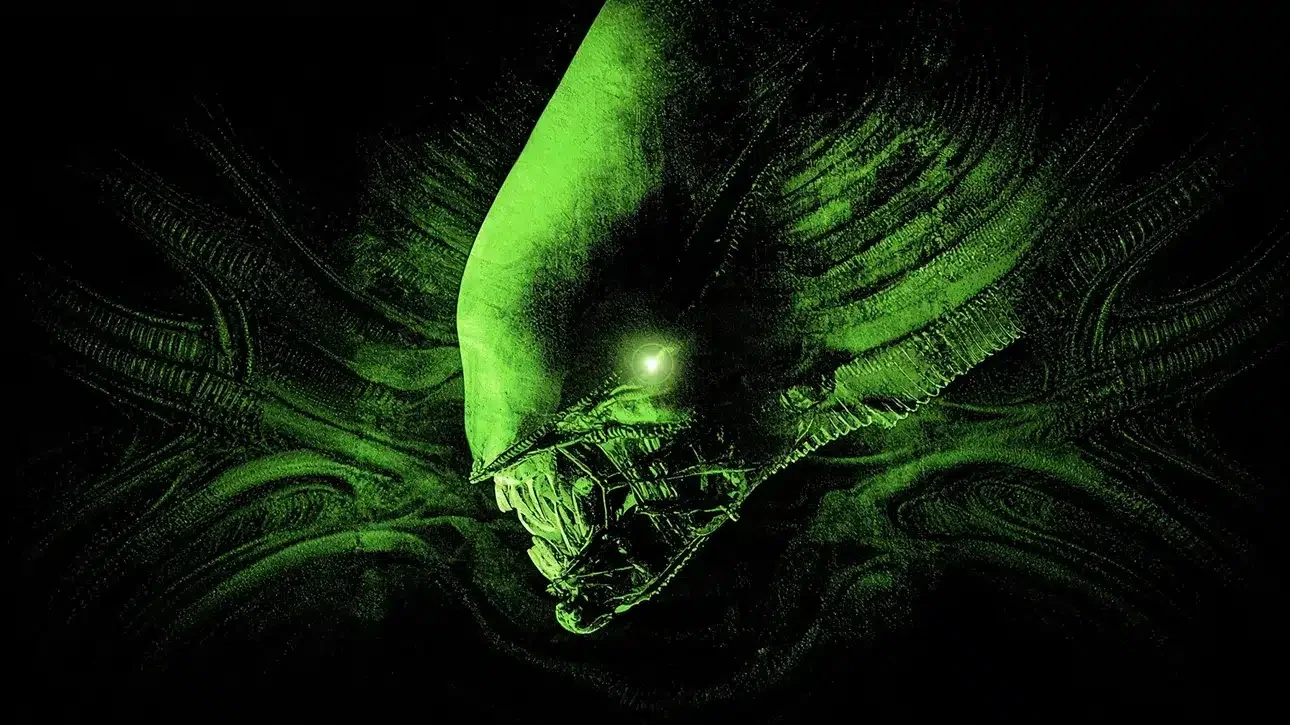
When Ridley Scott’s Alien premiered in 1979, it delivered an immediate, visceral shock to global audiences, largely orchestrated by a singular, unyielding aesthetic vision. At the center of this cinematic milestone was not merely a monster, but a comprehensive design philosophy conceived by Swiss surrealist artist H.R. Giger.
“I had never been so sure of anything in my life.” — Ridley Scott, recalling his reaction to H.R. Giger’s creation for Alien.
Giger did not merely design a creature to populate a haunted house in space; he constructed an entire visual grammar. In this universe, the distinctions between biology and technology completely collapsed. Bone became structural support, industrial conduits doubled as intestines, and mechanical armor stretched across anatomical foundations without revealing where an organism ended and architecture began.
This deep integration of flesh and machine—known as biomechanics—fundamentally disrupted the clean, compartmentalized categories that had defined science fiction design for decades. While previous cinematic monsters belonged strictly to biology and spaceships to engineering, Giger’s creations suggested that the environment had existed long before humans entered the room, operating under an ancient, terrifying logic that entirely bypassed human sovereignty.
Almost half a century after its release, the cultural and design footprint of Giger’s work continues to mutate. Its influence extends far beyond the film’s multi-million-dollar box office returns, shaping everything from modern industrial design and video game architecture to tattoo culture and high fashion. This report examines the historical trajectory, structural mechanics, cultural metrics, and ongoing legacy of the biomechanical horror that redefined visual culture.
Detailed Chronology: From Zurich Surrealism to the Nostromo
To understand the emergence of the Xenomorph on the silver screen, one must trace a timeline of avant-garde artistic disruption meeting commercial filmmaking in the late 1970s.
- 1940–1960s (The Genesis of a Nightmare): Hans Rudolf Giger develops his signature artistic style in Chur, Switzerland, heavily influenced by industrialization, atomic anxiety, recurring night terrors, and the surrealist integration of human anatomy with mechanical apparatuses. His airbrushed works cement a monochromatic, eroticized, and terrifyingly cold palette.
- 1977 (The Publication of Necronomicon): Giger publishes his art book Necronomicon, featuring haunting plates of biomechanical entities, skeletal machinery, and fusion life forms. Screenwriter Dan O’Bannon happens upon the book while struggling to find a visual designer for a fledgling sci-fi horror script originally titled Memory. Recognizing that Giger’s work possesses the exact alien quality required, O’Bannon brings the book to director Ridley Scott.
- 1978 (The Collaboration in Shepperton): Ridley Scott immediately halts ongoing creature development and hires Giger to design the lifecycle of the creature (egg, facehugger, chestburster, adult xenomorph), the derelict spacecraft, and the fossilized pilot known as the "Space Jockey." Giger relocates to Shepperton Studios outside London, meticulously sculpting the creatures by hand using fiberglass, resin, real human bones, and industrial scrap.
- 1979 (The Theatrical Premiere): Alien opens in theaters worldwide, stunning audiences and critics alike with its relentless, atmospheric dread. The film upends standard cinematic monster tropes by making the environment itself complicit in the violation of the human body.
- 1980 (Critical and Academy Validation): Alien wins the Academy Award for Best Visual Effects. Giger shares the honor alongside Brian Johnson, Nick Allder, and Dennis Ayling, cementing biomechanical art in the annals of Hollywood history.
- 1986–Present (The Evolution of a Franchise and Universal Aesthetic): The visual grammar established in 1979 expands across multiple sequels (Aliens, Alien 3, Resurrection, Prometheus, Alien: Covenant, Alien: Romulus), interactive media (Alien: Isolation), and global industrial subcultures, proving that Giger’s constructed architecture could outlive its creator.
Supporting Context & Metrics: The Anatomy of Biomechanical Horror
To quantify the profound impact of Alien and Giger’s aesthetic framework, it is necessary to examine the structural principles that separate high-grade biomechanical design from conventional cinematic monster effects.
The Breakdown of Traditional Boundaries
In standard industrial design, machines are deliberately built to hide their internal mechanics behind smooth, hygienic casings, reassuring humans that technology remains an external, manageable tool. Giger systematically dismantled this psychological comfort zone:
- The Erasure of the Face: The Xenomorph’s elongated cranium and featureless visage deny the audience the primary evolutionary tool for empathy and prediction—eyes. Without visible eyes to track attention or intent, the creature operates with cold, absolute efficiency.
- The Weaponization of Reproduction: The life cycle of the Xenomorph—featuring the Facehugger, Chestburster, and adult form—converts culturally intimate processes (sex, pregnancy, birth) into stages of absolute biological invasion. The human body ceases to be an individual entity and is relegated to a temporary biological incubator.
- Immaculate Horrors: Unlike traditional horror tropes that rely on decay, rot, and asymmetry to signal danger, Giger’s surfaces are frequently polished, architectural, and precise. This strange elegance creates a disturbing psychological conflict: attraction survives inside disgust, pulling the eye inward rather than driving it away.
| Design Element | Conventional Sci-Fi (Pre-1979) | Giger’s Biomechanical Model |
|---|---|---|
| Spaceship Interiors | Clean lines, white bulkheads, exposed computer panels. | Fossilized, grown structures; bone-like pillars and organic conduits. |
| Technology/Cables | Concealed behind walls, organized in bundles. | Exposed tendons, pulsing veins integrated directly into metal. |
| The Monster | Distinct biological entity separable from its environment. | An extension of the surrounding ecosystem; architecture as anatomy. |
| Psychological Trigger | Fear of violence, pain, and death. | Fear of lost bodily sovereignty, environmental engulfment, and category collapse. |
Official Statements and Industry Reflections
The sheer magnitude of Giger’s influence has been documented extensively by the filmmakers, designers, and artists who inherited his aesthetic territory.

Director Ridley Scott on the initial encounter with Giger’s work:
"I had never been so sure of anything in my life. I saw Necronomicon, and I knew that this was the man. I didn’t want to look at anybody else. His work was dark, disturbing, and possessed an undeniable, hypnotic elegance that completely bypassed standard Hollywood monster tropes."
Late Artist H.R. Giger on the philosophy behind his biomechanical creations:
"My paintings appear to make the most impression on people who are, well, crazy themselves. If they like my work, they are creative or they are mad. The creatures I make are born from my own nightmares, but they strike a chord because they reflect the hidden, repressed mechanical reality of modern human existence."
Production insights from the 1979 set design teams:
Industry historians note that Giger’s physical application of airbrushed paints, KY jelly, and industrial machinery parts created an entirely new tactile vocabulary for special effects. Long before the advent of computer-generated imagery (CGI), the tangible, oozing reality of the Xenomorph set a benchmark for physical-effects realism that modern studios still strive to replicate.
Future Outlook: The Endless Mutation of a Visual Universe
As the Alien franchise continues to expand through modern cinematic iterations like Alien: Romulus and immersive media such as Alien: Isolation, the longevity of Giger’s vision faces an intriguing paradox.
Modern consumer technology has evolved in the opposite direction of Giger’s nightmares. Today’s devices are increasingly frictionless, wireless, quiet, and visually hygienic. Interfaces vanish behind sleek glass panels, and internal mechanisms are permanently sealed away from the user. Yet, precisely because modern environments have grown so sterile, the raw, exposed, and vulnerable tactility of biomechanical art retains an intense psychological pull.
Furthermore, the proliferation of Giger’s visual grammar across video games, high fashion, and tattoo culture confirms that his work has transcended the boundaries of traditional intellectual property. It has achieved the rare status of a cultural architecture—a foundational system of signs and symbols that subsequent generations of creators can inhabit, subvert, and expand upon.
H.R. Giger passed away in 2014, but the biomechanical universe he forged continues to live, mutate, and breathe independently of its original architect. As long as humanity grapples with the uneasy friction between organic vulnerability and technological dominance, the chilling elegance of the Xenomorph and its ancient, unreadable world will remain an inescapable fixture of our collective imagination.








Belum ada komentar. Jadilah yang pertama berkomentar!