

Executive Overview
Despite the pedestrian-friendly allure of historic European city centers and the continent’s sprawling networks of walking paths, the automobile remains the undisputed king of urban and suburban mobility. For decades, urban planners, policymakers, and environmental advocates have tried to dethrone the car, yet commuters cling to four-wheeled transit for one fundamental, often overlooked reason: utility. Cars possess trunks, glove boxes, and backseats capable of swallowing a week’s worth of groceries, bulky sports equipment, weekend luggage, and unexpected purchases.
Enter Any, an ambitious Belgian startup that has diagnosed this "missing link" in alternative transportation. Rather than attempting to convince drivers to adopt bicycles, which often require sacrificing carrying capacity for eco-friendliness, Any is introducing an entirely new category of vehicle: the Life Utility Vehicle (LUV).
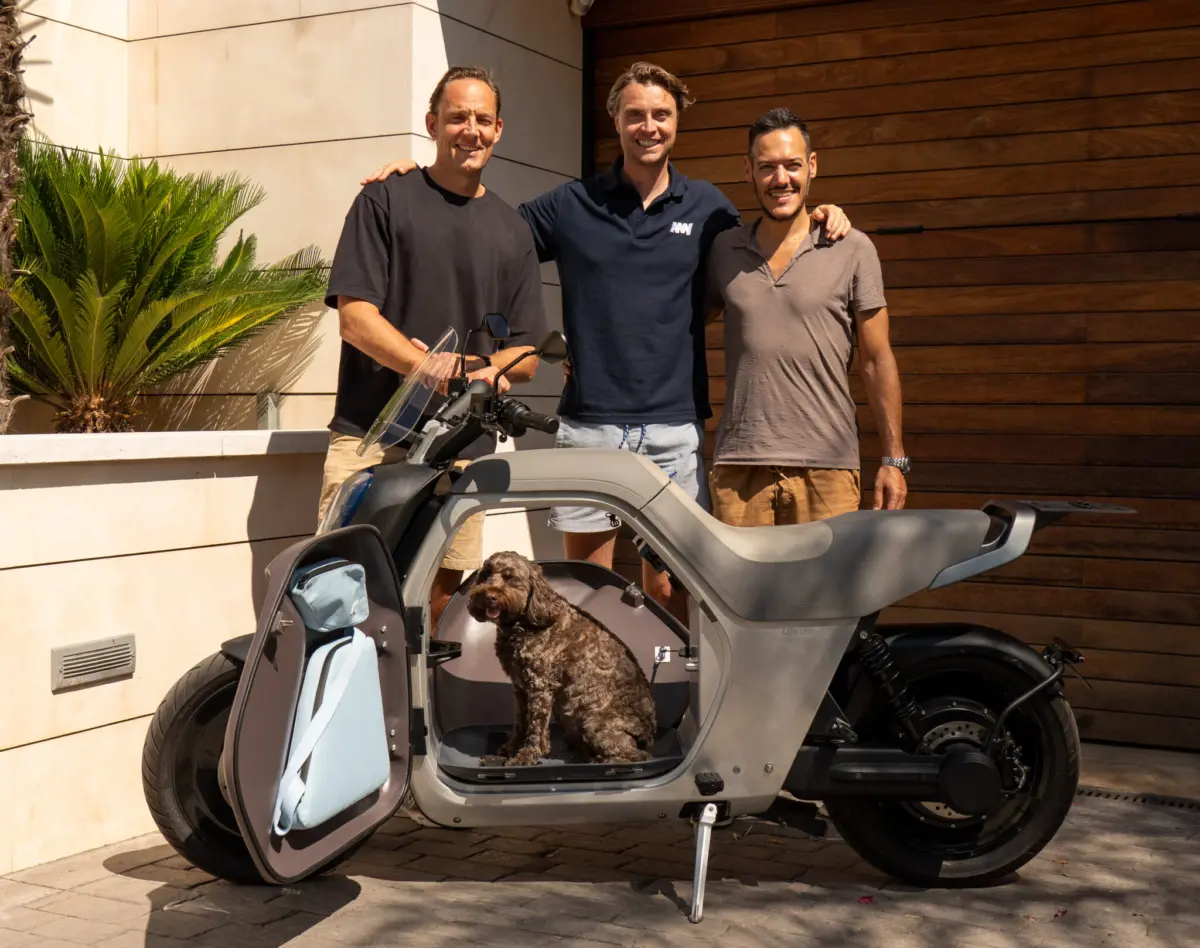
Fronted by a seasoned team of mobility veterans, automotive designers, and venture capitalists, Any’s debut vehicle, the LUV1, is a modular electric motorcycle that merges the nimble, high-speed performance of a two-wheeler with the cavernous storage capacity of a cargo bike or a compact car trunk. Boasting a staggering 120 liters of integrated storage, a top speed of 100 km/h (62 mph), an impressive 87-mile range from dual swappable batteries, and a customizable chassis designed for pets, gear, and families, the LUV1 aims to make leaving the car behind a painless transition.
With over 600 preorders secured within its first 100 days following a high-profile debut at Milan Design Week, €2.75 million ($3.2 million) already secured in early funding, and an upcoming €10 million ($11.65 million) Series A round on the horizon, Any is positioning itself at the vanguard of Europe’s electric vehicle revolution. As major manufacturers rush to electrify their two-wheeler lineups ahead of the European Union’s 2030 sustainability targets, Any is betting that the secret to killing the car isn’t building a better bike—it’s building a motorcycle with a trunk.
Detailed Chronology: From Concept to Milan Stardom
The genesis of Any’s flagship vehicle did not begin in a sterile corporate boardroom, but rather with a pragmatic, everyday question: What does a real week actually require?
When urban residents evaluate switching from a car to a motorcycle or scooter, they frequently run into a logistical brick wall. Groceries, gym bags, briefcases, and weekend luggage cannot easily be balanced on a traditional scooter or strapped precariously to a standard bicycle. This friction point became the foundational thesis for Any.
The Lowie Vermeersch Connection
To solve this spatial dilemma without compromising on aesthetics or performance, the startup enlisted the expertise of Lowie Vermeersch, the former design director of legendary Italian design house Pininfarina and founder of Granstudio. Vermeersch’s philosophy centers on human-centric design that honors both utility and emotional resonance.
Vermeersch’s involvement shifted from a standard design commission to a deeply vested partnership; he stepped in as Any’s creative director and an early financial backer. Together with CCO and co-founder Erik de Winter—previously known for his work with Dutch e-cargo bike-sharing pioneer Cargaroo—and CEO Pieter Van de Velde, who joined the executive ranks a year ago after a successful career in venture capital, the team set out to engineer a paradigm shift in two-wheeled transportation.
The Milan Design Week Breakthrough
The culmination of this collaborative engineering and design sprint broke cover in May during Milan Design Week. Unveiled as an eye-catching prototype, the LUV1 immediately captured the attention of the international design and transportation press, generating significant buzz and positioning Any as a serious contender in the future of urban transit.

Capitalizing on this momentum, Any launched an interactive online configurator alongside a pre-order campaign. Customers were invited to reserve their LUV1 units with a fully refundable €49 ($57) deposit that credits directly toward the final purchase price. The response surpassed internal expectations: the startup secured over 600 reservations in its first 100 days alone, proving that consumer demand for high-utility, two-wheeled alternatives is remarkably robust.
Supporting Context & Metrics: Engineering the "Life Utility Vehicle"
Building a vehicle that bridges the gap between a high-performance motorcycle and a cargo carrier requires meticulous engineering, automotive pedigree, and rigorous modularity.
Powerhouse Leadership and Engineering Pedigree
Any’s leadership team reads like a masterclass in mobility and venture scaling. Beyond Vermeersch, de Winter, and Van de Velde, the startup fortified its technical leadership by hiring Head of Engineering Alessandro Mangano, whose impressive resume includes engineering stints at iconic Italian brands such as Aprilia, Ferrari, and the Piaggio Group.
This deep automotive background ensures that the LUV1 is not merely a novelty tech-gadget, but a robustly engineered machine built to automotive standards of safety, durability, and handling dynamics.
Anatomy of the LUV1: Specs and Modularity
The LUV1 is built around a central premise: versatility without compromise.
- Storage Capacity: The vehicle features a massive 120-liter internal storage compartment—purpose-built to replicate the utility of a car trunk.
- Performance: Unlike traditional electric cargo bikes that top out at 25 km/h (15.5 mph), the LUV1 achieves a highway-capable top speed of 100 km/h (62 mph).
- Range & Power: Powered by two swappable lithium-ion batteries, the LUV1 delivers a combined range of up to 87 miles (approx. 140 km) per charge, making daily commutes and weekend getaways entirely feasible.
- Licensing Requirements: Despite its motorcycle-level performance, the LUV1 is engineered to fall under regulatory classifications that typically require only an A1 driver’s license, which is significantly easier and cheaper to obtain across Europe than an unrestricted motorcycle license.
- Pricing: Base models start at €7,000 (roughly $8,150), placing the vehicle well below the cost of a new passenger car and competitively aligned with high-end electric cargo bikes and mid-tier motorcycles.
Unprecedented Customization
Modularity is the cornerstone of the LUV1’s physical architecture. Through Any’s digital configurator, buyers can customize their vehicle using either an open frame or enclosed panels tailored to specific lifestyles.
Whether a user needs a secure transport box for a family pet, specialized racks for trade tools and construction equipment, or rugged storage modules for camping gear and outdoor exploration, the LUV1 adapts. Additional modular accessories include an optional windshield, specialized racks, and an integrated rain poncho, making the vehicle deeply appealing to daily urban commuters, suburban families, and outdoor enthusiasts alike.
Official Statements and Industry Alignment
The timing of Any’s market entry coincides with massive regulatory and structural shifts across Europe. The European Association of Motorcycle Manufacturers (ACEM) has formally projected that the powered two-wheeler market will transition to a predominantly electric ecosystem by 2030.
Traditional automotive and powersports giants—including Piaggio and Harley-Davidson (through its LiveWire pivot)—have rushed to release electric models, signaling a frantic race to capture urban and suburban riders. However, Erik de Winter emphasizes that Any is carving out a distinct lane that transcends traditional motorcycle demographics.

"It came from asking a simple question: what does a real week actually need? Groceries, weekend bags, suitcases—the stuff you don’t want to leave behind just because you’re on two wheels, not four," the startup explained in a company statement on LinkedIn.
According to de Winter, the LUV1’s exceptional cargo capacity has already attracted inbound interest from unexpected sectors, including last-mile delivery and logistics companies seeking nimble fleet vehicles capable of navigating congested urban cores without sacrificing payload capacity.
Furthermore, the startup’s early fundraising milestones—raising €1.5 million in November followed by a €1.25 million top-up in May, bringing total seed funding to €2.75 million ($3.2 million)—reflect strong conviction from angel investors and automotive sector veterans who recognize the commercial viability of the "life utility vehicle" category.
Future Outlook: Production Scaling and the Road to Series A
While the pre-order numbers and design accolades from Milan validate Any’s initial concept, the startup faces the ultimate crucible for any hardware venture: scaling manufacturing and executing timely deliveries.
Expanding the Portfolio
The LUV1 is intended to be just the tip of the iceberg. Any’s long-term product roadmap envisions a comprehensive "portfolio of vehicles" designed to systematically dismantle the dominance of the private passenger car in urban and suburban environments. Reports from European business press indicate that the startup is already exploring additional form factors, including a potential three-wheeled variant designed for enhanced stability and even greater load-bearing capabilities.
The €10 Million Series A Horizon
Before Any can expand its product lineup or tackle international markets outside Europe, it must successfully transition from prototype validation to mass production.
To finance this critical operational phase, Any is actively preparing a major Series A funding round, targeting €10 million ($11.65 million) or more, with a projected close by the end of the year. This capital infusion will be dedicated to tooling, supply chain stabilization, manufacturing facility buildout, and preparing the factory floors for the first wave of customer deliveries.
Conclusion: Can a Motorcycle Replace the Car Trunk?
The urban mobility landscape is littered with failed startups that underestimated the psychological and practical comfort of the automobile. Yet, Any’s calculated blend of Italian automotive design pedigree, pragmatic cargo engineering, approachable pricing, and accessible licensing requirements positions the LUV1 as a uniquely formidable challenger.
By refusing to force consumers to choose between the practicality of a car trunk and the agility of a two-wheeler, Any is not merely selling a motorcycle—it is offering a credible, lifestyle-compatible exit strategy from car dependency. As the 2030 electric transition deadline looms over European cities, vehicles like the LUV1 may well prove to be the missing link that finally gets the continent out of cars and onto two wheels.









Belum ada komentar. Jadilah yang pertama berkomentar!