


Executive Overview
In the rapidly evolving landscape of contemporary pop culture and digital illustration, few creators have managed to capture the public imagination with the vivid vibrancy, intricate detailing, and distinct chromatic philosophy of Mika Pikazo. Renowned for her unmistakable aesthetic—characterized by a kaleidoscopic explosion of neon highlights, hyper-saturated color palettes, and striking character designs—Mika Pikazo has firmly established herself as a titan in modern Japanese illustration.
The excitement within the global otaku community reached a fever pitch when it was announced that one of her most celebrated original illustrations was being translated into a three-dimensional collectible figure. This milestone release bridges the gap between two-dimensional digital mastery and tangible, collectable art. For collectors, art enthusiasts, and devoted followers of Mika Pikazo’s extensive portfolio, this figure represents far more than mere merchandise; it is a meticulously crafted physical embodiment of an artistic philosophy that challenges traditional boundaries of color and form.

This comprehensive report delves into the intricate details of the Mika Pikazo original character figure, exploring its design origins, the masterful execution of its sculpt, the vibrant application of its color theory, and its broader implications for the future of designer collectibles and contemporary Japanese illustration.
Detailed Chronology: From Digital Canvas to Physical Form
The journey of this remarkable figure begins years prior to its physical realization, rooted in the prolific output of Mika Pikazo’s digital art career. Known widely for her character designs in major multimedia franchises—most notably Fate/Grand Order (FGO), where her contributions as a sub-character designer and illustrator have won critical acclaim—Pikazo has consistently pushed the envelope of digital illustration.

The Genesis of the Illustration
The physical figure is directly inspired by one of Mika Pikazo’s signature original character illustrations, first shared across her digital platforms and social media channels (notably commemorated around May 2020). Even in its initial two-dimensional format, the artwork commanded immediate attention. It featured a dynamic young woman adorned in futuristic, cyberpunk-adjacent attire, set against a backdrop of explosive visual motifs.
The digital artwork was celebrated for its breathtaking complexity. Every element—from the cascading strands of hair to the intricate layering of futuristic accessories—was rendered with a sense of kinetic energy. Translating such a composition into a three-dimensional PVC/ABS statue presented an astronomical challenge for sculptors and manufacturers alike.

The Announcement and Development Cycle
When the announcement dropped that the illustration was officially greenlit for a commercial figure release, industry insiders and fans immediately recognized the high stakes involved. Replicating Mika Pikazo’s signature style—which relies heavily on optical illusions of light, bleeding color gradients, and overlapping neon hues—required unprecedented innovation in sculpting and painting techniques.
Throughout the development phase, prototype reveals showcased the immense dedication of the manufacturing team. Rather than dampening the striking color schemes to make the figure more "realistic," the production team doubled down on the hyper-vibrant aesthetic. The result is a collectable that honors the source material with uncompromising fidelity, capturing the ephemeral magic of digital lighting in a solid, tactile medium.

Supporting Context & Metrics: The Anatomy of a Masterpiece
To fully appreciate the significance of this release, one must examine the specific specifications and structural metrics that define the figure. Standing at an impressive 150mm in height, the figure achieves a delicate balance between shelf-friendly compactness and commanding visual presence.
Material Specifications and Construction
- Product Name: Mika Pikazo Original Character Figure
- Height: Approximately 150mm (15 cm / ~5.9 inches)
- Materials: ATBC-PVC, ABS, and specialized translucent plastics
- Sculptor: Shintaku / Design Production
- Paintwork: Nanae Tokumaru (Climax)
- Release Manufacturer: Good Smile Company / Max Factory
The choice of materials is particularly critical. By incorporating high-grade ATBC-PVC and ABS for the structural integrity of the body and base, the manufacturers ensured durability. However, the true technical triumph lies in the liberal use of translucent (clear) plastics throughout the hair, accessories, and special effects parts. This material choice allows light to pass through the figure, mimicking the backlit, luminous quality of a glowing computer monitor or digital illustration.

Official Statements and Design Breakdown
The creative synergy between the original illustrator and the production team is evident in every square millimeter of the finished product. In promotional materials and official designer commentary, several key areas of the figure have been highlighted for their groundbreaking execution.
1. The Hair: A Symphony of Translucent Color
One of Mika Pikazo’s most recognizable traits is her approach to hair design. Rather than utilizing flat tones or simple gradients, her illustrations feature hair that seems to refract light internally.

For the physical figure, the sculpting team utilized multi-layered translucent PVC for the cascading locks. As light hits the figure from various angles, the hair appears to shift in color, reflecting pinks, cyans, yellows, and purples. This deliberate choice successfully translates the digital "glow" of Pikazo’s brushstrokes into the physical realm, creating an ethereal halo effect around the character’s head.
2. Dynamic Expression and Posture
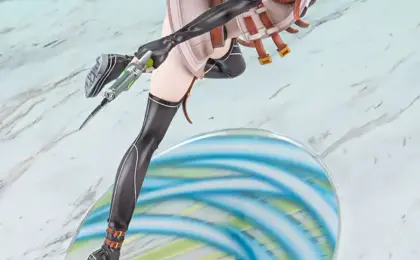
The character’s pose is a masterclass in controlled motion. Capturing a split-second of dynamic action in a static medium is notoriously difficult, yet the sculptors achieved this by orchestrating a delicate balance of tension and release.

The limbs are positioned in a way that suggests sudden acceleration, while the clothing and floating accessories trail behind in a frozen wake of wind and energy. This sense of momentum draws the viewer’s eye across the entire silhouette, ensuring that every angle offers a new visual discovery.
3. The Attire: Futuristic Cyberpunk Meets Streetwear
The clothing is an intricate fusion of futuristic streetwear and cybernetic fashion. The asymmetrical jacket, laden with buckles, straps, and glowing insignia, has been faithfully recreated with meticulous panel-lining and matte-versus-gloss paint applications.

The contrast between the matte textures of the fabric and the high-gloss finishes of the metallic hardware and glowing accents adds a layer of tactile realism. Furthermore, the intricate decals and typography printed across the clothing match the cryptographic, neon-drenched motifs found in Mika Pikazo’s original concept art.
4. The Base and Special Effects Parts
No figure of this caliber is complete without a suitably elaborate base. Rather than opting for a standard plastic disc, the manufacturers designed a custom, multi-tiered diorama base that mimics a digital grid or holographic interface.

Translucent energy effects swirl upward from the base, weaving around the character’s legs and anchoring her visually to the environment. This integration of base and figure creates an immersive storytelling element, making it appear as though the character is actively materializing out of a digital dimension.
Future Outlook: The Legacy of Mika Pikazo in Collectible Art
The release of the Mika Pikazo Original Character Figure marks a watershed moment in the intersection of digital illustration and the figures industry. As illustrators increasingly transcend traditional galleries to build global digital empires through social media and gaming collaborations, the demand for high-end, artist-collaborative figures is skyrocketing.

Setting a New Industry Standard
Historically, commercial figures were heavily dominated by anime, manga, and video game adaptations. Original illustrations by independent or freelance artists were rarely afforded the luxury of a premium, mass-market scale figure unless they achieved unprecedented viral status.
Mika Pikazo’s success paves the way for a new era where master illustrators are treated with the same curatorial reverence as traditional fine artists. The meticulous attention paid to translating her complex color theory proves that modern manufacturing technology has finally caught up with the boundless imagination of digital creators.

Collector Reception and Market Impact
Early indicators from hobby shops and pre-order metrics suggest that this release will become a highly sought-after grail for collectors worldwide. The secondary market value for limited-run artist figures of this tier historically appreciates significantly, driven by the crossover appeal between traditional figure collectors and contemporary art enthusiasts.
Moreover, this release sets a high bar for future collaborations. As fans and collectors demand more fidelity, dynamism, and artistic integrity from their purchases, manufacturers will inevitably look to the success of the Mika Pikazo figure as a blueprint for how to bridge the 2D-to-3D divide successfully.

Conclusion
The Mika Pikazo Original Character Figure is far more than a commercial product; it is a physical manifestation of a modern artistic revolution. By successfully translating the complex, neon-drenched, hyper-chromatic world of Mika Pikazo into a tangible collectible, Good Smile Company and Max Factory have delivered a masterclass in figure engineering.
From its luminous translucent hair and dynamic, wind-swept posture to its intricate cyberpunk attire and immersive diorama base, every aspect of this release reflects an uncompromising dedication to craft. For collectors fortunate enough to secure a piece, this figure stands as a vibrant testament to the enduring power of digital illustration brought brilliantly to life.






Belum ada komentar. Jadilah yang pertama berkomentar!