

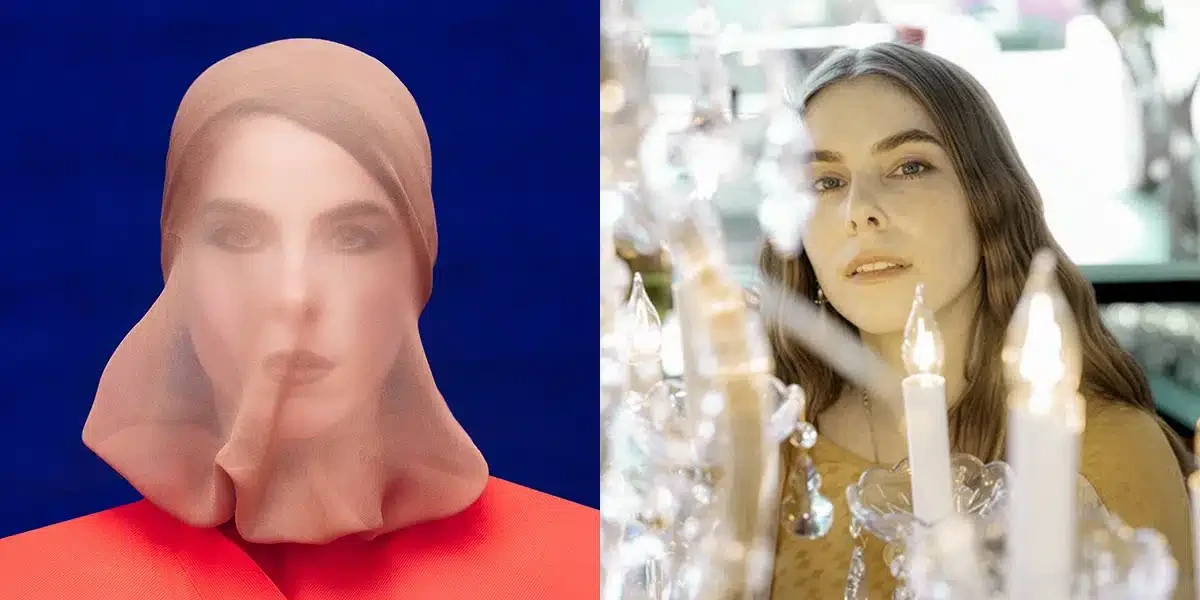
Tucson-based polymath and sonic architect Renée Kladzyk—performing under the moniker Ziemba—has returned with The Braid, her first full-length album since her critically acclaimed 2020 release, True Romantic. Released independently on October 2, 2026, The Braid represents a monumental leap forward in contemporary art-pop, defying easy categorization while synthesizing decades of stylistic touchstones into a cohesive, breathtaking masterwork.
What makes the creation of The Braid an extraordinary feat of artistic endurance is its genesis: Kladzyk wrote and recorded the album entirely while working a demanding, high-stakes full-time job as an investigative reporter covering the United States immigration system and the Department of Defense. Despite the psychological weight and rigorous schedules demanded by her journalistic beat, there is no trace of fatigue or rushed compromises on the record. Instead, The Braid radiates an immaculate, novelistic level of detail, boasting pristine arrangements, sophisticated lyricism, and a stylistic breadth that positions Ziemba as one of the most compelling and singular voices in independent music today.
Co-produced alongside multi-instrumentalist Don Godwin, who anchors much of the album’s intricate instrumentation, The Braid moves fluidly between driving sophisti-pop, dramatic art-rock, cinematic singer-songwriter epics, and gauzy Americana. It is an album that demands close, analytical listening while offering an immediate, visceral emotional release. Through eight meticulously crafted tracks, Ziemba maps the crystalline caverns of the human soul, proving that genre boundaries are merely suggestions for an artist operating at the peak of her creative powers.
Detailed Chronology: The Making of The Braid
The Interregnum: From True Romantic to the Frontlines
Following the release of her 2020 album True Romantic, which established Ziemba as a deft hand at synth-laced, emotionally resonant pop, Kladzyk’s life took a sharp pivot. Immersed in the high-pressure world of investigative journalism, she spent her days navigating the labyrinthine, emotionally taxing realities of the U.S. immigration apparatus and the Department of Defense.
For many artists, the cognitive load of investigative reporting would completely crowd out creative pursuits. Yet, for Kladzyk, the intense demands of her day job paradoxically fueled a subterranean creative drive. Working in stolen moments—late nights after filing reports and fragmented weekends—she began conceptualizing the material that would eventually become The Braid. Far from sounding like a patchwork project cobbled together in spare hours, the album’s meticulous performances and immaculate mixing suggest the full-time focus of an artist with a singular, unyielding vision.
The Sonic Architecture: Collaboration and Craft
The realization of The Braid hinged heavily on the creative partnership between Kladzyk—who helms lead vocals and keyboards—and co-producer/multi-instrumentalist Don Godwin. Together, they constructed an eclectic sonic palette that avoids the digital sterility often associated with modern bedroom-studio recordings. Instead, the album breathes with organic warmth, utilizing a vast array of instrumentation that stretches from classic soul horn sections to cascading acoustic pianos, sweeping strings, and retro-futuristic synthesizers.
Track-by-Track Evolution and Stylistic Exploration
The chronological and thematic journey of The Braid is marked by abrupt yet seamless stylistic shifts, turning the listening experience into an unpredictable, high-stakes adventure.
- "The Pleasure Seekers": The album opens with a galloping roar of drums on "The Pleasure Seekers," immediately plunging the listener into a piano-heavy groove. Kladzyk’s soaring vocals deliver lines of ecstatic vulnerability: "Running like a faucet / Full blast / Letting it wash over me / Recklessly / Recklessly / Feeling it all." Described by the artist on social media as the sonic equivalent of "sprinting through the pouring rain with total abandon, tits out," the track sets a tone of dramatic exuberance.
- "We Implode": Shifting gears entirely, the record moves into the driving, new wave bop of "We Implode." Evoking the sharp-edged coolness of foundational post-punk alongside contemporary indie-pop sensibilities, the track balances rhythmic urgency with lyrical introspection.
- "Winter of My Heart": This pristine pop symphony showcases the band’s crisp perfection. With soaring arrangements that evoke a hypothetical collaboration between Aimee Mann and the Beatles, it highlights Kladzyk’s knack for crafting timeless, structurally flawless pop hooks.
- "The Perfect Rose": Serving as the gleaming centerpiece of the album, this long-form singer-songwriter epic opens with a daunting, dramatic piano introduction. Kladzyk navigates a terrain that bridges the confessional, poetic depth of Joni Mitchell’s Hejira with the wistful, windswept breezes of Fleetwood Mac.
- "Utopia": Leaning into retro arrangements, "Utopia" integrates classic soul horns and a Burt Bacharach-esque atmosphere, creating a lush, orchestrally rich landscape.
- "All of It": Demonstrating her versatility, Kladzyk dives into ethereal art-rock on "All of It." The track evokes both the hushed, avant-garde wonder of Laurie Anderson and the atmospheric, instrumental progressive-rock flourishes characteristic of 1970s Pink Floyd.
- "Boneflute": In this luxurious, novelistic ballad, the album’s lyrical maturity shines brightest. Kladzyk contemplates memory and permanence with haunting poeticism: "When was it we danced to the boneflute melody? / When was it you lay on the hardwood floor with me? / Boneflute, wood grain, think that if I say the names / I can live forever, but the magic’s making me."
- "The Only Forever": The album closes with a gauzy, melancholic country ballad. Summarizing the core philosophy of the record, Kladzyk sings, "Change, never not changing," encapsulating the restless, exploratory spirit that defines The Braid.
Supporting Context & Metrics
The Independent Music Landscape in 2026
The release of The Braid arrives at a fascinating juncture for independent music. In an era dominated by algorithmic homogenization, hyper-compressed streaming masters, and rigid micro-genres, Ziemba’s refusal to stay in one lane marks her as an outlier. Operating outside the major-label machinery, Kladzyk has retained total creative autonomy, a factor that undeniably contributes to the uncompromising artistic integrity of the record.

Stylistic Genealogies
Critics and musicologists tracing The Braid’s sonic lineage will find a dizzying array of reference points. The record comfortably inhabits the realm of sophisti-pop—a genre defined by its lush arrangements, jazz-inflected chord progressions, and polished production values—while drawing clear stylistic parallels to several iconic antecedents:
- The Beautiful South: For the biting yet melodic lyrical framing and conversational vocal cadence.
- Annie Lennox & Alison Moyet: For the commanding, rich vocal power and dramatic emotional delivery.
- The Pretenders & Aimee Mann: For the marriage of rock grit with cerebral, literary songwriting.
Quantitative Overview of The Braid
- Release Date: October 2, 2026
- Label: Independent
- Primary Creators: Renée Kladzyk (vocals, keyboards, songwriting); Don Godwin (co-production, multi-instrumental arrangement).
- Preceding Album: True Romantic (2020)
- Primary Geographic Base: Tucson, Arizona
- Lyrical Themes: Transformation, memory, emotional abandon, psychological endurance, and temporal flux.
Official Statements & Artist Perspectives
The conceptual framework of The Braid is deeply rooted in Renée Kladzyk’s lived experiences—balancing the stark, bureaucratic cruelty of her reporting beat with the boundless imaginative potential of musical composition.
While Ziemba’s music has long been praised for its intellectual depth, The Braid represents a conscious shedding of inhibitions. In promotional notes and social media commentary surrounding the release of the lead single "The Pleasure Seekers," Kladzyk explicitly rejected the notion of polite, restrained art. By characterizing the track as "sprinting through the pouring rain with total abandon," she signaled a deliberate embrace of physical and emotional catharsis.
Furthermore, Ziemba’s official artist biography provides a remarkably apt distillation of her methodology, noting that the music "dances through genres while plumbing the crystalline caverns of the soul." This duality—the kinetic, playful movement across musical traditions paired with a fearless descent into psychological depths—serves as the guiding ethos of The Braid. Rather than treating her music as a passive escape from her rigorous journalistic work, Kladzyk approaches songwriting as a parallel form of truth-seeking, one where emotional facts are investigated with the same meticulous rigor she applies to the geopolitical apparatus.
Future Outlook
With The Braid, Ziemba has raised her own artistic ceiling significantly, delivering a record that rewards repeated, deep listening and positions her at the forefront of contemporary independent pop. As the album circulates through critical circles and gains traction among discerning music lovers, several key trajectories emerge for the project’s future:
Live Performance Adaptations
Translating the sprawling, multi-instrumental grandeur of The Braid to the live stage will present an exciting challenge for Kladzyk and her touring personnel. Songs like "The Perfect Rose" and "Winter of My Heart" demand a dynamic live band capable of navigating abrupt tempo changes, dense vocal harmonies, and shifting stylistic gears from delicate acoustic arrangements to soaring art-rock crescendos. If Ziemba’s past performance history is any indication, her upcoming tour dates will likely treat audiences to immersive, theatrical sonic environments.
Continued Cross-Disciplinary Artistry
Kladzyk’s unique positioning as both an investigative journalist covering heavy sociopolitical systems and an avant-pop auteur opens up compelling avenues for future creative output. The sharp observational skills honed in her reporting clearly bleed into her lyricism, granting her songs a novelistic eye for detail and character study. Whether she continues to balance both fields or leans increasingly into her musical endeavors, The Braid proves that her creative well is exceptionally deep.
Long-Term Cultural Impact
In a cultural landscape increasingly obsessed with micro-trends and rapid content cycles, The Braid stands as an antidote—a deliberately constructed, richly textured album designed to withstand the test of time. By refusing to compromise on complexity, refusing to settle into a single genre, and investing every track with meticulous craftsmanship, Ziemba has crafted a masterwork that will undoubtedly be parsed, celebrated, and analyzed by music critics and fans for years to come. The Braid is not merely a successful follow-up to True Romantic; it is a definitive artistic statement from a musician who is completely, fearlessly in command of her craft.




Belum ada komentar. Jadilah yang pertama berkomentar!