The video game industry is no stranger to subcultures, rapid innovations, and paradigm shifts that redefine what interactive media can achieve. However, the release of the Real-Time Attack (RTA) speedrun-themed RPG tentatively titled "Bad Kids" (published across PC via Steam, PlayStation 5, and Nintendo Switch) has shattered conventional boundaries. Developed by an independent team that has kept its origins heavily veiled, this title is not merely a game; it is an analytical deconstruction of modern gaming culture, speedrunning ethics, and the psychological weight of repetition.
At its core, "Bad Kids" translates the high-pressure, meticulously timed world of competitive RTA speedrunning into a narrative-driven role-playing experience. Players take on the role of a desperate protagonist trapped within a time-looping simulation, forced to relive a finite number of days over and over again. The objective? To master the exact mechanics, exploit glitches, optimize routing, and ultimately rewrite the rules of a rigged system.
What makes "Bad Kids" truly remarkable is its fusion of mechanical execution and philosophical commentary. The game satirizes the absurdity of modern speedrunning communities—highlighting toxicity, gatekeeping, and the relentless pursuit of frame-perfect perfection—while simultaneously celebrating the dedication of players who treat games as canvases for mastery. As the title continues to dominate streaming platforms and spark intense debates across forums, the industry is forced to ask a fundamental question: When a game is explicitly designed to be broken, what happens to the player trying to fix it?
Detailed Chronology: From Concept to Global Phenomenon
The journey of "Bad Kids" from an obscure indie concept to a globally recognized phenomenon is a masterclass in modern viral marketing and organic community growth.
The Whisper Network and Early Teasers (Late 2023 – Mid 2025)
Long before any official trailers were released, whispers began circulating through closed Discord servers and underground gaming forums. Rumors pointed toward a secretive project being developed by industry veterans known only by placeholder monikers such as "Project S." Initial speculation suggested a psychological horror-adjacent RPG, drawing comparisons to classic mind-bending indie titles.
As early gameplay footage began to leak—often disguised as corrupted video files or broken speedrun attempts—interest skyrocketed. The developers maintained absolute radio silence, letting community speculation fuel the hype engine. Major gaming influencers and speedrunning icons began noticing subtle inconsistencies in the leaked footage: animations that didn’t match standard game engines, UI elements referencing real-world speedrun terminology, and timestamps that pointed to impossible optimization curves.
The Official Reveal and the Demo Phase (Late 2025 – Early 2026)
The veil of secrecy was finally lifted in late 2025 when a cryptic teaser trailer dropped during a major digital showcase. The trailer introduced the game’s official "Bad Kids: The Chrono-Broken RTA RPG."
The premise was immediately captivating. Set within a satirical recreation of an infamous speedrunning marathon, the game placed players in the shoes of a nameless runner competing in a high-stakes, day-long event. The catch? The event is governed by an oppressive, authoritarian governing body known as the "RTA Regulatory Commission," which strictly monitors glitches, exploits, and routing strategies.
Shortly after the reveal, a limited-time playable demo was released on PC. The demo served as a crucible for the community. It challenged players to complete a single "run" of a fictional game within an in-game time limit of two hours. The catch was that death or failure resulted in a complete reset of the simulation, forcing players to retain their knowledge from past loops to progress further.
Supporting Context & Metrics: The Mechanics of Exploitation
To fully appreciate "Bad Kids," one must understand the unique mechanics that govern its world. Traditional RPGs reward exploration, leveling up, and linear progression. "Bad Kids," however, rewards the exact opposite: rule-breaking, exploitation, and structural subversion.
Core Gameplay Loop
The gameplay loop of "Bad Kids" is built around a multi-tiered time loop. Players are equipped with an interface that tracks real-world time alongside in-game time. Every action—whether it is talking to an NPC, engaging in combat, or executing a known glitch—consumes precious seconds.
Exploiting the Engine: Unlike traditional RPGs where bugs are patched out, "Bad Kids" treats glitches as core gameplay features. Players must actively seek out collision errors, out-of-bounds areas, and memory manipulation vulnerabilities to bypass mandatory encounters.
The RTA Clock: The game features a persistent, un-pausable RTA timer that runs concurrently with in-game events. If the player spends too time lingering in menus, the timer punishes them by triggering harsher environmental hazards or locking off specific routes.
Meme Integration: The game’s script heavily incorporates speedrunning culture, referencing famous community memes, historical speedrun controversies, and the distinct jargon used by runners (e.g., "frame-perfect inputs," "sub-pixel positioning," "RNG manipulation").
Critical Reception and Community Impact
Upon its full release across PC, PS5, and Nintendo Switch in October 2026, "Bad Kids" received universal critical acclaim. Critics praised its audacious concept, sharp writing, and deep mechanical complexity. Major gaming publications lauded the game for successfully translating the anxiety and euphoria of live-streamed speedruns into a single-player narrative format.
Streaming platforms like Twitch and YouTube saw an immediate surge in viewership. Streamers who specialize in RTA speedruns began treating "Bad Kids" as both a game and a meta-commentary on their own professions. Interestingly, the speedrunning community quickly adopted "Bad Kids" as an actual speedgame, with players competing to achieve the fastest "Real-Time Attack" of a game about Real-Time Attack speedrunning—a delightfully recursive layer of meta-gaming that the developers likely anticipated.
Official Statements and Developer Philosophy
Despite the massive success of "Bad Kids," the development team—credited under the collective pseudonym "Team Glitch"—has remained remarkably private. In one of the few written communications released via their official channels, a spokesperson explained the philosophy behind the project:
"We didn’t set out to make a game about heroes saving the world. We wanted to make a game about people who look at a world built by someone else, find the seams, and rip them open. Speedrunning is an art form of rebellion. It’s about taking a system designed to be experienced in a specific way and bending it to your will. ‘Bad Kids’ is a tribute to everyone who has ever stared at a loading screen and wondered, ‘How can I break this?’"
Industry analysts have noted that this philosophy resonates deeply with a generation of gamers who grew up watching speedrun marathons like Games Done Quick (GDQ). By framing the player not as a hero of prophecy, but as an optimization-obsessed hacker within a fictionalized game engine, "Bad Kids" bridges the gap between passive viewing and active participation.
Future Outlook: What’s Next for Bad Kids?
As "Bad Kids" continues to climb sales charts and cement its status as a cultural touchstone, the inevitable question of future content has arisen.
Planned Updates and Expansions
Team Glitch has confirmed that post-launch support will focus heavily on community-driven features. In upcoming patches, the developers plan to introduce:
Custom Route Builder: A tool that allows players to design their own mini-games within the engine, setting custom parameters, glitch tolerances, and time limits.
Global Leaderboards: Integrated directly into the game’s UI, tracking not just completion times, but specific glitch categories (e.g., Any%, Glitchless, 100%).
New Game+ Modes: Featuring randomized glitch placement and dynamic NPC behavior that reacts to the player’s historical run data.
Long-Term Industry Influence
The success of "Bad Kids" signals a potential shift in how developers view player agency. For decades, game developers have fought against speedrunners, patching out creative skips and unintended shortcuts in the name of "intended play." "Bad Kids" flips this paradigm on its head, suggesting that letting players break the game is often more rewarding than forcing them to play it straight.
Whether "Bad Kids" will inspire a new sub-genre of "metaspeedrun RPGs" remains to be seen. However, its impact on the current landscape is undeniable. It has turned the quiet, obsessive art of breaking video games into a loud, celebrated, and deeply engaging narrative experience—proving that sometimes, being a "bad kid" is the only way to win.


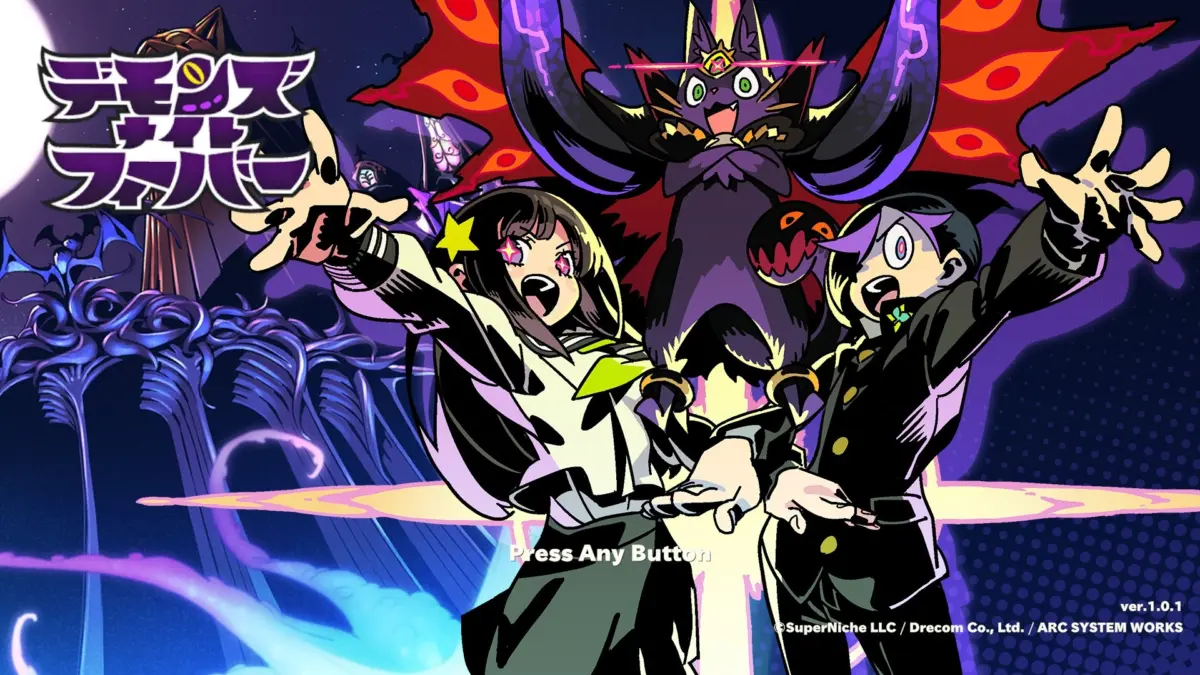
![[プレイレポ]敵も味方も片っ端からキルする育成RTAシミュレーションRPG「デモンズナイトフィーバー」。あらゆる悪事を働いて邪神を復活させよう!](https://www.4gamer.net/games/924/G092453/20260911023/SS/001.jpg)
![[プレイレポ]敵も味方も片っ端からキルする育成RTAシミュレーションRPG「デモンズナイトフィーバー」。あらゆる悪事を働いて邪神を復活させよう!](https://www.4gamer.net/games/924/G092453/20260911023/TN/001.jpg)
![[プレイレポ]敵も味方も片っ端からキルする育成RTAシミュレーションRPG「デモンズナイトフィーバー」。あらゆる悪事を働いて邪神を復活させよう!](https://www.4gamer.net/games/924/G092453/20260911023/TN/002.jpg)
![[プレイレポ]敵も味方も片っ端からキルする育成RTAシミュレーションRPG「デモンズナイトフィーバー」。あらゆる悪事を働いて邪神を復活させよう!](https://www.4gamer.net/games/924/G092453/20260911023/TN/003.jpg)
![[プレイレポ]敵も味方も片っ端からキルする育成RTAシミュレーションRPG「デモンズナイトフィーバー」。あらゆる悪事を働いて邪神を復活させよう!](https://www.4gamer.net/games/924/G092453/20260911023/TN/006.jpg)
![[プレイレポ]敵も味方も片っ端からキルする育成RTAシミュレーションRPG「デモンズナイトフィーバー」。あらゆる悪事を働いて邪神を復活させよう!](https://www.4gamer.net/games/924/G092453/20260911023/TN/007.jpg)
![[プレイレポ]敵も味方も片っ端からキルする育成RTAシミュレーションRPG「デモンズナイトフィーバー」。あらゆる悪事を働いて邪神を復活させよう!](https://www.4gamer.net/games/924/G092453/20260911023/TN/008.jpg)
![[プレイレポ]敵も味方も片っ端からキルする育成RTAシミュレーションRPG「デモンズナイトフィーバー」。あらゆる悪事を働いて邪神を復活させよう!](https://www.4gamer.net/games/924/G092453/20260911023/TN/009.jpg)
![[プレイレポ]敵も味方も片っ端からキルする育成RTAシミュレーションRPG「デモンズナイトフィーバー」。あらゆる悪事を働いて邪神を復活させよう!](https://www.4gamer.net/games/924/G092453/20260911023/TN/010.jpg)
![[プレイレポ]敵も味方も片っ端からキルする育成RTAシミュレーションRPG「デモンズナイトフィーバー」。あらゆる悪事を働いて邪神を復活させよう!](https://www.4gamer.net/games/924/G092453/20260911023/TN/011.jpg)
![[プレイレポ]敵も味方も片っ端からキルする育成RTAシミュレーションRPG「デモンズナイトフィーバー」。あらゆる悪事を働いて邪神を復活させよう!](https://www.4gamer.net/games/924/G092453/20260911023/TN/012.jpg)
![[プレイレポ]敵も味方も片っ端からキルする育成RTAシミュレーションRPG「デモンズナイトフィーバー」。あらゆる悪事を働いて邪神を復活させよう!](https://www.4gamer.net/games/924/G092453/20260911023/TN/013.jpg)
![[プレイレポ]敵も味方も片っ端からキルする育成RTAシミュレーションRPG「デモンズナイトフィーバー」。あらゆる悪事を働いて邪神を復活させよう!](https://www.4gamer.net/games/924/G092453/20260911023/TN/014.jpg)
![[プレイレポ]敵も味方も片っ端からキルする育成RTAシミュレーションRPG「デモンズナイトフィーバー」。あらゆる悪事を働いて邪神を復活させよう!](https://www.4gamer.net/games/924/G092453/20260911023/TN/015.jpg)
![[プレイレポ]敵も味方も片っ端からキルする育成RTAシミュレーションRPG「デモンズナイトフィーバー」。あらゆる悪事を働いて邪神を復活させよう!](https://www.4gamer.net/games/924/G092453/20260911023/TN/016.jpg)
![[プレイレポ]敵も味方も片っ端からキルする育成RTAシミュレーションRPG「デモンズナイトフィーバー」。あらゆる悪事を働いて邪神を復活させよう!](https://www.4gamer.net/games/924/G092453/20260911023/TN/017.jpg)
![[プレイレポ]敵も味方も片っ端からキルする育成RTAシミュレーションRPG「デモンズナイトフィーバー」。あらゆる悪事を働いて邪神を復活させよう!](https://www.4gamer.net/games/924/G092453/20260911023/TN/018.jpg)
![[プレイレポ]敵も味方も片っ端からキルする育成RTAシミュレーションRPG「デモンズナイトフィーバー」。あらゆる悪事を働いて邪神を復活させよう!](https://www.4gamer.net/games/924/G092453/20260911023/TN/019.jpg)
![[プレイレポ]敵も味方も片っ端からキルする育成RTAシミュレーションRPG「デモンズナイトフィーバー」。あらゆる悪事を働いて邪神を復活させよう!](https://www.4gamer.net/games/924/G092453/20260911023/TN/022.jpg)






Belum ada komentar. Jadilah yang pertama berkomentar!