

Executive Overview
Japan’s convenience store (konbini) ecosystem is globally renowned for its culinary versatility, efficiency, and relentless innovation. Among the titans of this multi-billion-dollar industry, 7-Eleven Japan has consistently pushed the envelope. While its countertop automated kiosks for freshly brewed coffee, artisanal teas, and blended fruit smoothies are ubiquitous fixtures of daily urban life, a far more clandestine culinary experiment has been quietly unfolding away from the capital’s glaring neon lights.
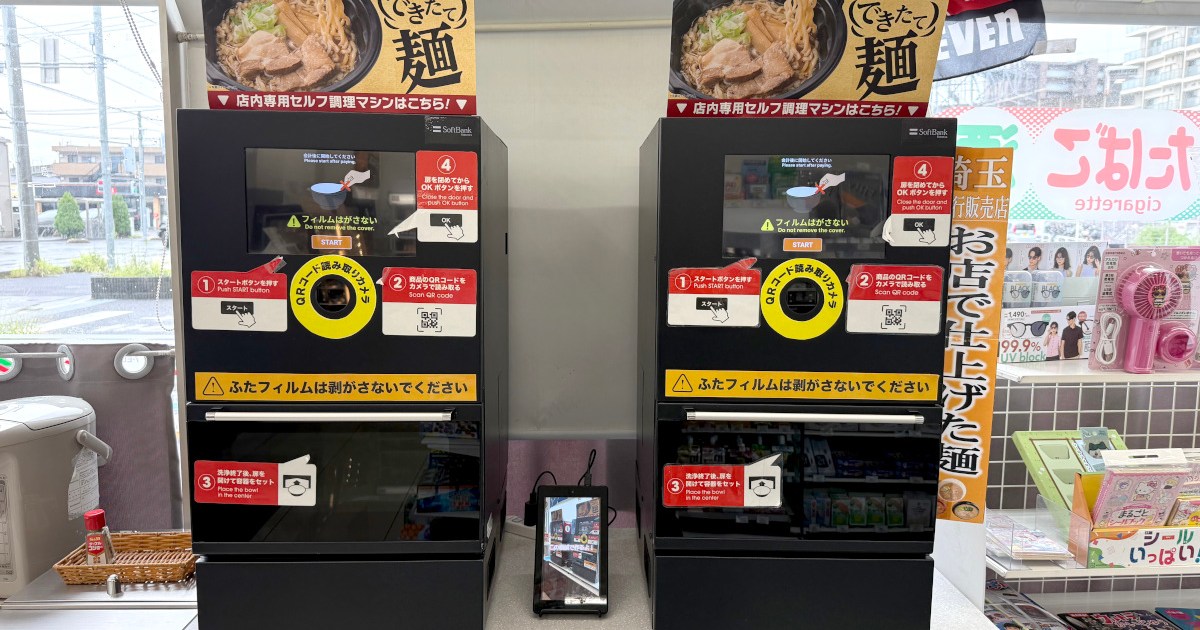
Enter 7-Eleven’s automated countertop ramen machines—a technological marvel capable of transforming frozen blocks of ramen into piping-hot, restaurant-quality bowls in roughly 60 seconds. Initially introduced to considerable fanfare, with introductory social media promotional videos racking up over seven million views, these robotic vending units promised to revolutionize the fast-casual dining experience.
Yet, despite their viral acclaim and the high-tech fascination surrounding their operation, the machines remain startlingly elusive. As of late 2026, they are restricted to exactly 40 locations—all sequestered within Saitama Prefecture, just north of Tokyo.
This investigative report examines the mechanics, culinary merits, and underlying logistical bottlenecks of 7-Eleven’s high-speed ramen machines. Beyond the novelty of automated food preparation, a deeper systemic challenge has come to light: the curious dilemma of where urban consumers are actually supposed to consume their steaming, freshly extruded meals. As consumer demand surges, industry analysts are left asking why this viral sensation remains confined to a regional footprint, and whether structural hurdles will prevent its nationwide rollout.
Detailed Chronology: A Field Test in Saitama
To understand the operational reality of 7-Eleven’s automated ramen dispensers, SoraNews24 senior reporter P.K. Sanjun undertook a field expedition to Saitama Prefecture. Having monitored the deployment of these units since their initial regional trials, Sanjun sought to evaluate both the culinary output and the user experience firsthand.
The journey began at a suburban 7-Eleven branch in Saitama—one of the select fortresses housing the automated machinery. The process is designed to be seamless for the consumer, bridging the gap between traditional retail transactions and unattended food service automation:
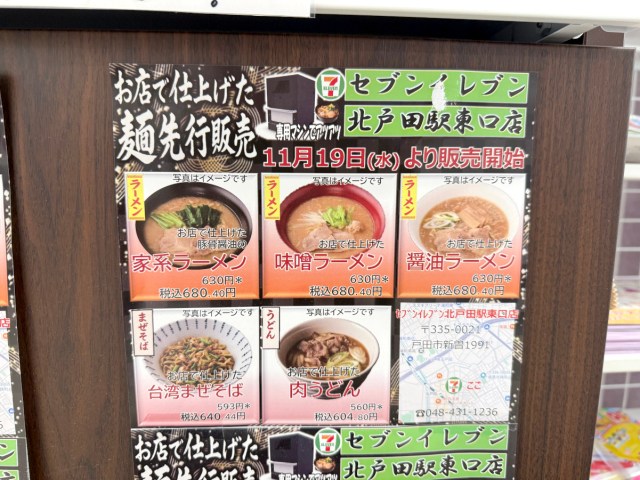
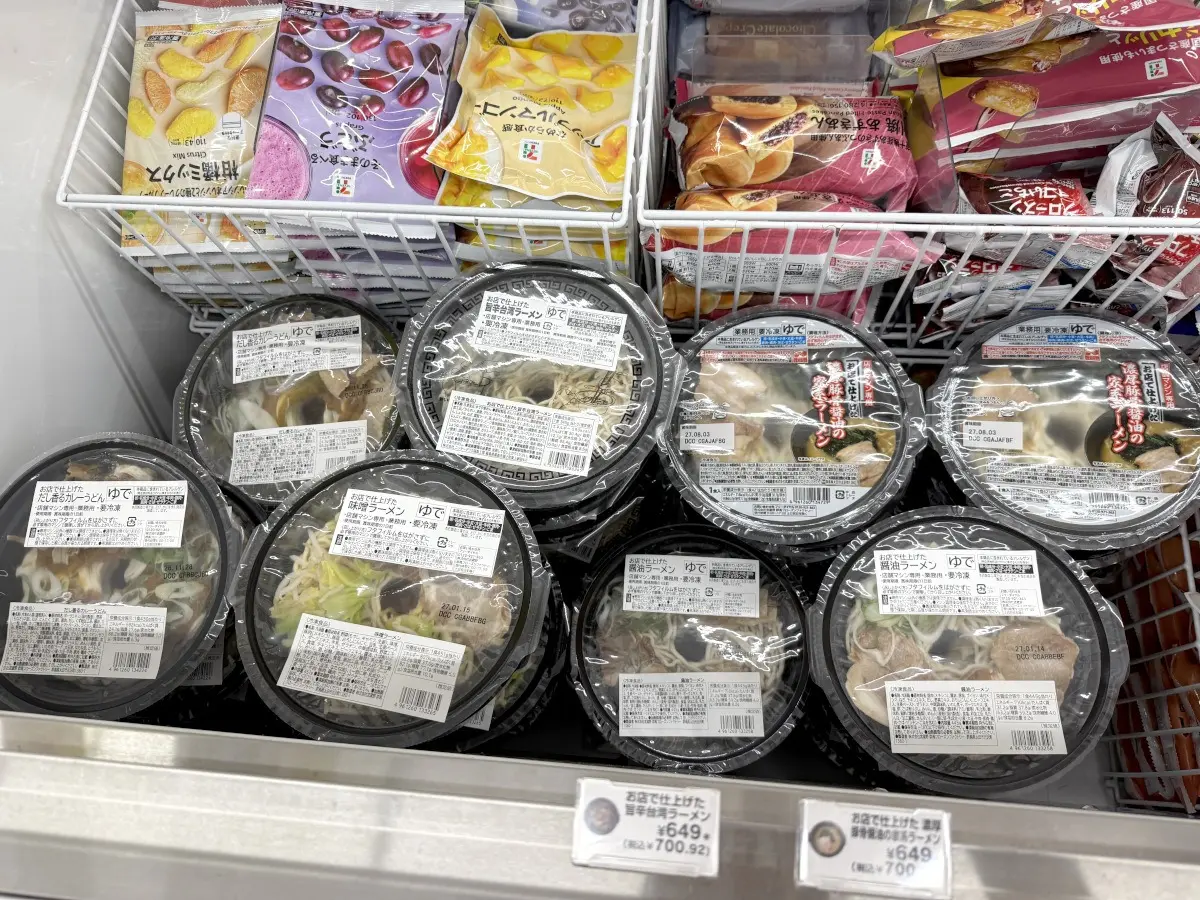
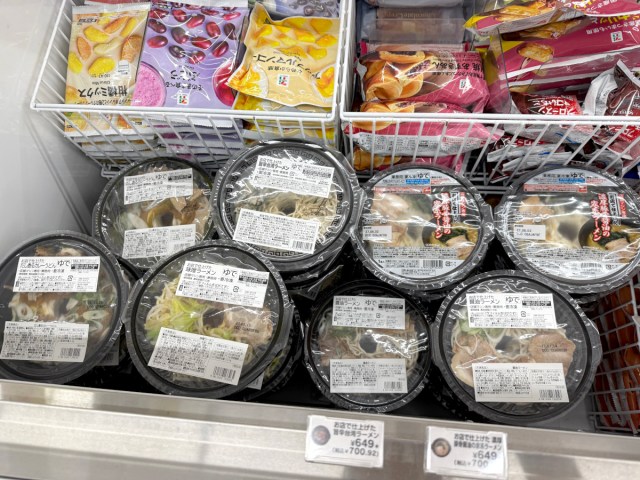
- Selection and Purchase: The consumer navigates the store’s open-air refrigerated freezers, selecting from an expanded menu that now features classic ramen variants alongside recently introduced specialties such as Taiwanese Mazesoba (brothless mixed noodles) and Beef Udon. The selection is then brought to the cash register for standard point-of-sale payment, priced at approximately 700 yen (US$4.38).
- Machine Integration: Armed with the paid, frozen tub of noodles, the customer approaches the countertop automated unit. The interface is intentionally minimalist, relying on clear, intuitive visual prompts.
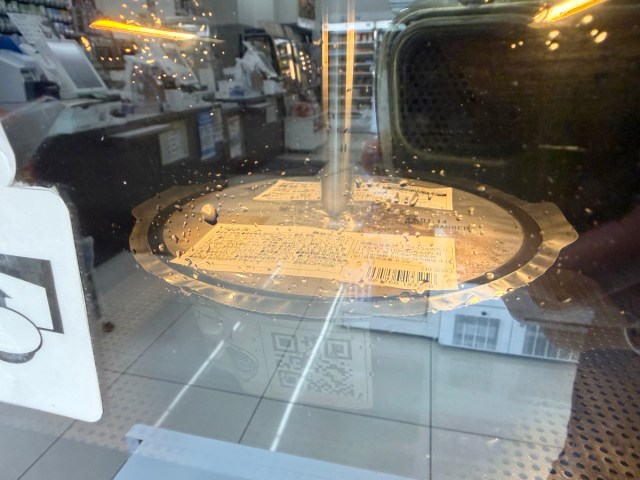
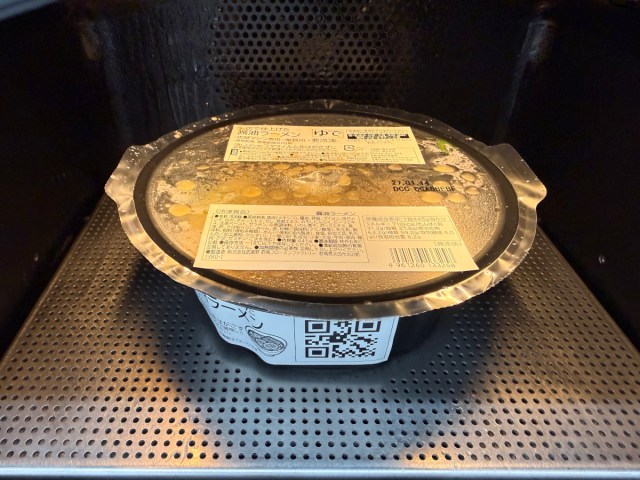
- The Extraction Phase: Upon placing the container into the machine’s chamber and pressing the activation button, the automated cycle initiates. In less than 60 seconds, a heavy-duty mechanical metal rod descends, piercing the plastic sealing lid of the container to inject precise thermal energy and water streams, rapidly cooking and reconstituting the frozen ingredients.
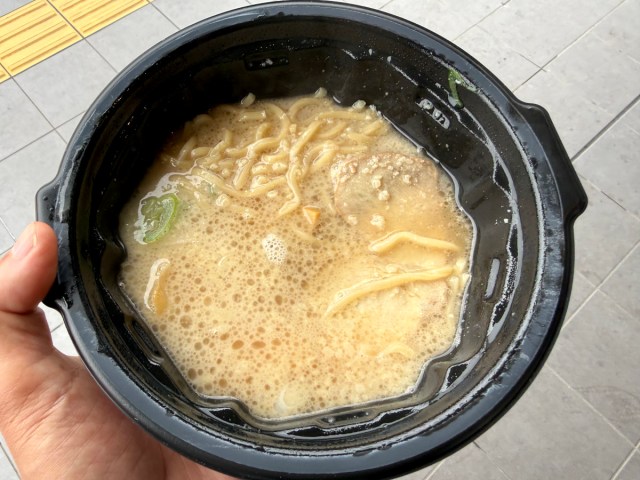
- Service: The unit dispenses a boiling, aromatic bowl of noodles with remarkable efficiency—a stark contrast to traditional domestic preparation methods, which typically require three minutes in a microwave or up to five minutes on a stovetop.
However, it was precisely at this juncture of rapid culinary delivery that Sanjun encountered a fundamental friction point in the service design: the glaring absence of designated consumption space.
Supporting Context & Metrics: The Spatial Paradox of Modern Retail
The predicament faced by Sanjun highlights a major architectural evolution—and occasional regression—in Japanese convenience store design. Over the past decade, many major chains, including 7-Eleven, Lawson, and FamilyMart, introduced designated eat-in counters (eat-in spaces or iten-supeisu) complete with power outlets, allowing customers to consume bento boxes and hot foods immediately after purchase.
However, space constraints in high-density urban developments, coupled with municipal zoning adjustments and post-pandemic retail shifts, have led many suburban and urban branches to phase out or omit these seating areas entirely.
The Urban vs. Suburban Logistical Divide
| Metric / Feature | Suburban Saitama Locations | Major Metropolitan Tokyo Stores |
|---|---|---|
| Machine Availability | 40 localized units | Zero units deployed |
| Primary Customer Transit | Predominantly automotive | Pedestrian and public transit |
| On-Site Seating Availability | Extremely limited / Non-existent | Rare / Eliminated to maximize retail floor space |
| Consumption Environment | Vehicle interiors, curbside | Dense pedestrian thoroughfares, moving trains (impractical) |
During Sanjun’s field test, the operational mismatch became starkly apparent. Upon receiving his piping-hot bowl of ramen from the machine, a store clerk offered an apologetic assessment of the store’s layout:
"Sorry, we don’t have anywhere for you to sit! I guess everyone eats theirs in their cars?"
For motorists utilizing Saitama’s extensive suburban road networks, the vehicle interior serves as a functional, albeit cramped, dining room. For a pedestrian commuter relying on public transit—compounded further by inclement weather requiring an umbrella in one hand and a scalding bowl of noodles in the other—the experience transformed from a high-tech convenience into an exercise in endurance. Forced to stand outside the storefront in the rain, navigating incoming traffic and curious glances from passersby, the consumer faced a classic design failure: a product optimized for speed of production, but completely decoupled from the realities of consumption spaces.
Official Statements & Industry Perspectives
While 7-Eleven Japan has maintained corporate discretion regarding the precise financial metrics and expansion timelines for the countertop ramen units, retail strategists and convenience store franchising experts have offered valuable insight into the pilot program’s trajectory.
Industry analysts note that automated food kiosks represent a critical pillar of 7-Eleven’s strategy to offset chronic labor shortages within Japan’s retail sector. By offloading food preparation—traditionally handled via complex backend kitchen equipment or extensive microwave cycles managed by staff—onto automated countertop units, stores can expand their hot-food menus without increasing labor overhead.
Nevertheless, the decision to bottleneck the rollout exclusively to 40 Saitama locations over an extended period speaks to deliberate corporate caution. A franchise consultant familiar with Japanese retail automation remarked:
"The technology itself is robust, and consumer reception on social media has proven that the demand for high-grade instant food is immense. However, convenience store footprints are fundamentally optimized for grab-and-go retail. Introducing hot, liquid-heavy dishes like ramen into environments lacking dedicated seating creates severe customer friction. Until a scalable solution for on-site consumption is integrated—or until deployment is strictly targeted toward drive-through style or suburban highway-adjacent locations—a nationwide rollout carries operational risks regarding public littering, customer discomfort, and store cleanliness."
Furthermore, the expansion of the product catalog—incorporating complex regional specialties like Taiwanese Mazesoba and robust Beef Udon—indicates that corporate research and development teams remain confident in the culinary quality of the frozen base products. Taste-test evaluations consistently praise the noodles for maintaining a satisfyingly firm (katame) bite alongside a deeply complex, richly seasoned broth that rivals traditional brick-and-mortar ramen shops, all at a highly competitive price point of roughly 700 yen.
Future Outlook: Will Automated Ramen Conquer Tokyo?
As the pilot program in Saitama enters its next phase, the central question for consumers and industry watchers alike is whether these machines will ever breach the metropolitan confines of Tokyo.
The appetite is unequivocally there. For urban desk workers, late-night revelers, and time-pressed students navigating Japan’s hyper-fast-paced cities, the prospect of a 24-hour, freshly reconstituted gourmet bowl of ramen ready in 60 seconds is immensely attractive. The viral engagement—surpassing millions of views across digital platforms—proves that the novelty has not worn off.
However, bridging the gap between viral internet curiosity and everyday utility will require strategic adjustments from 7-Eleven’s corporate leadership. Potential pathways for wider adoption include:
- Targeted Suburban Expansion: Prioritizing suburban hubs, highway service areas, and transit-adjacent locations where vehicle-based consumption or standing outdoor counters are culturally and logistically viable.
- Store Layout Redesigns: Incorporating micro-dining stands or covered outdoor verandas in new store construction blueprints to solve the spatial paradox that hindered Sanjun’s field test.
- Spill-Resistant Packaging Evolution: Enhancing container designs to ensure safe, secure transit for pedestrians who must carry hot noodle dishes away from the premises.
For now, 7-Eleven’s robotic ramen dispensers remain a fascinating, highly localized culinary expedition—a hidden gem waiting for the rest of Japan to catch up to its technological ambition. Until then, intrepid foodies making the pilgrimage to Saitama would do well to check the weather forecast, secure a vehicle, and prepare for an unforgettable alfresco dining experience.







Belum ada komentar. Jadilah yang pertama berkomentar!