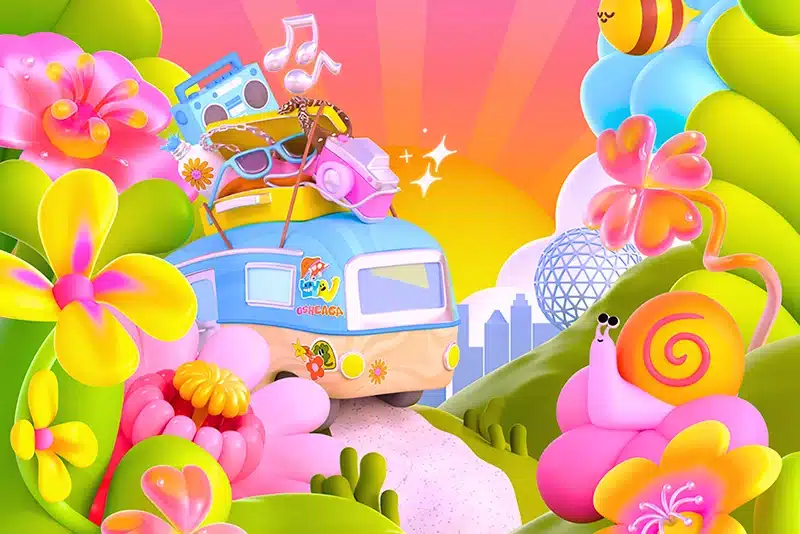
Against a backdrop of late-stage economic volatility, geopolitical contraction, and an architectural shift toward the sterile and the authoritarian, the 19th annual Osheaga Festival at Montreal’s Parc Jean-Drapeau emerged as a sprawling ideological battleground. Over three sun-drenched and storm-swept days in August 2026, the festival played host to a profound cultural friction: a clash between the calculated, algorithm-optimized monochromaticism of mainstream corporate pop and the messy, defiant, technicolor counter-narratives delivered by independent rock, post-punk, hip-hop, and experimental artists.
The festival’s overarching thesis arrived early on Saturday afternoon, embodied by Tate McRae’s immaculate, clinical headlining display of pristine whiteness and gilded tropes—a performance that starkly mirrored the socio-economic anxieties and class stratification of 2026. Yet, as the weekend unfolded, this calculated bid for viral ubiquity was steadily dismantled by a diverse roster of performers. Acts such as Wet Leg, Lorde, Turnstile, CMAT, and Geese reclaimed the festival grounds through sheer emotional vulnerability, visceral musicianship, and an unapologetic explosion of color. Ultimately, Osheaga 2026 offered a vital cultural verdict: in an era increasingly defined by design systems of risk-aversion and societal rigidity, authentic human connection and vivid artistic expression remain the ultimate acts of protest.
Detailed Chronology: A Weekend of Contrast
Friday: British Invasion and Post-Punk Resurgence
The festival’s opening day established a breakneck tempo, driven largely by the resilience of contemporary British guitar music and genre-bending auteurism. Riding the enduring wave of their 2025 release The Clearing, UK art-rock stalwarts Wolf Alice commanded the Mountain Stage. Frontwoman Ellie Rowsell balanced ethereal passages with blistering aggression, culminating in a politically charged run through "Smile"—complete with a bullhorn—before dissolving into a massive, unifying singalong of their defining anthem, "Don’t Delete the Kisses."
Simultaneously, non-binary trailblazer Rhian Teasdale led Wet Leg through a high-octane 45-minute set supporting their acclaimed 2025 LP, Moisturizer. Outfitted in pink hair, angel wings, and a neon green acrylic guitar, Teasdale cut a magnetic figure against the band’s ferocious post-punk grooves. Tracks like "Catch These Fists" and the cultural touchstone "Mangetout"—cemented in the public consciousness by the series Heated Rivalry—drew rapturous responses from the festival crowds.
As Dev Hynes delivered a brooding, texturally rich Blood Orange set and Leon Bridges infused the Valley Stage with retro-soul warmth, a millennial pilgrimage gathered for the long-awaited return of The xx. Fronted by Romy, whose vocal purity remains remarkably intact, the trio offered a masterclass in minimalist intimacy, though afternoon sunlight occasionally threatened to dilute the nocturnal mystique of their catalog.
Saturday: The Gilded Spectacle and the Math-Rock Inversion
Saturday brought the festival’s most glaring ideological dichotomy. Tate McRae stepped onto the main stage before 50,000 expectant fans as the standard-bearer for a clean, efficient, and detached iteration of modern pop. Outfitted in bespoke Ludovic de Saint Sernin all-white attire against imposing, neo-classical Parthenon-inspired columns, McRae delivered an astonishingly athletic, sharply choreographed set. The performance culminated in her 2024 single "Sports Car," during which McRae coated herself in gold paint, striking a statuesque, transactional pose that played directly to the aspirations of tech-bro capital and algorithmic influencers in the VIP tiers, while general admission fans endured hours in the heat for fleeting digital validation.
Yet, the day’s true cultural pivot belonged to francophone math-rock sensation Angine de Poitrine. Stepping onto the Mountain Stage just hours before McRae’s set, the papier-mâché-masked duo delivered an unrelenting barrage of microtonal loops and driving rhythms. Drawing an estimated crowd of thousands—including deeply confused McRae campers who quickly yielded to the infectious grooves—Angine de Poitrine proved the unifying power of localized, eccentric brilliance, setting the stage for subsequent heavy-hitters like Little Simz, Viagra Boys, and Franz Ferdinand.
Sunday: Catharsis, Rain, and the Triumph of Vulnerability
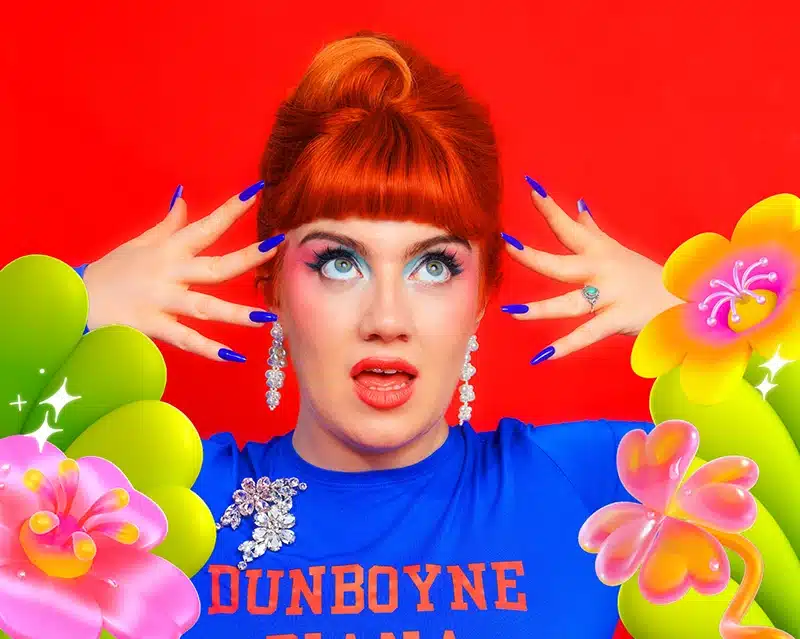
If Saturday exposed the fissures of late-stage capitalist pop culture, Sunday served as its comprehensive palate-cleanser. Irish country-rock firecracker CMAT kicked off the day overcoming a morning of lost gear and missing personnel to deliver a triumphant, high-fiving charge through the audience.
Electronic music fans found sanctuary as drag icon Trixie Mattel and later the equine-masked hyperpop auteur HorsegiirL transformed the Electronic Stage into mud-splattered, euphoric raves. Zara Larsson followed with an explosive performance supporting her expanded 2025 album Girls Trip, pairing an all-women backing band with an emotionally charged stage invitation to a young fan during "Lush Life."
Hip-hop representation remained fierce, anchored by Atlanta MC JID’s rapid-fire technical precision, Clipse’s rain-soaked delivery of "Grindin’", and Gunna’s bass-heavy main stage dominance. Meanwhile, Baltimore hardcore icons Turnstile and Brooklyn art-rockers Geese staged masterclasses in guitar-driven catharsis at the smaller stages, defying algorithmic pop molds with dynamic, unpredictable musicianship.
The weekend closed with a towering, emotionally raw headlining set by Lorde. Rejecting sterile perfectionism in favor of kinetic staging, live heart-rate monitoring, and profound vulnerability, the New Zealand artist guided tens of thousands of fans through a rain-drenched mass-singalong of "Green Light." It was an emphatic reminder that raw human connection will always outlast boardroom-engineered viral moments.
Supporting Context & Metrics
To fully contextualize the cultural temperature of Osheaga 2026, one must examine the socio-political design shifts of the mid-2020s.
The Chromatic Shift: Sociological design trends in 2026 point directly away from the vibrant, expressive palettes of past decades (such as the 1990s Global Village Coffeehouse aesthetic) toward stark whites, blacks, greige, and ostentatious gold accents. This chromatic austerity mirrors corporate risk-aversion, mass-market efficiency, and authoritarian structural preferences.
Demographic Polarization: The festival vividly mapped the 2026 class divide. VIP enclosures occupied by tech executives, venture capitalists, and celebrities contrasted sharply with general admission zones where younger demographics—particularly Gen Alpha and younger millennials—endured hours of physical discomfort for proximity to digital icons.
Streaming and Cross-Media Catalysts: Key performances were heavily buoyed by cross-media phenomena, notably the cultural saturation of streaming series like Heated Rivalry, which propelled catalog tracks by Wet Leg ("Mangetout") and Wolf Parade ("I’ll Believe in Anything") into immediate festival-wide singalongs.
Official Statements & Critical Reception
Critical reception across the three-day event highlighted a growing fatigue with manufactured, algorithmic perfection. Industry analysts and cultural commentators noted a distinct bifurcation in festival booking strategies:
"When times are optimistic, you get warm, vivid themes… When times are bleak, colour disappears. You don’t want something like a knitted pink hat to anger up the public’s blood." — Festival Dispatch Analysis
While headliners like Tate McRae drew immense commercial praise for their athletic precision and high-production visual branding, independent critics widely heralded the festival’s smaller-stage curation—specifically the inclusion of boundary-pushing acts like Geese, CMAT, and Angine de Poitrine—as the true heartbeat of Osheaga 2026. Commentators emphasized that artists who leaned into organic imperfection and community engagement left far more enduring impressions than those prioritizing short-form video metrics.
Future Outlook
As the music festival landscape looks toward the late 2020s, Osheaga 2026 serves as a predictive case study for the entertainment industry at large. The tension between hyper-monetized, algorithmically smoothed pop products and raw, human-centric indie performance is reaching a critical inflection point.
Future iterations of major international festivals will likely see an accelerated pushback against clinical uniformity. As audiences grow increasingly fatigued by economic instability and corporate sanitization, artists who champion radical authenticity, diverse sonic palettes, and genuine communal catharsis will define the cultural vanguard. Osheaga 2026 proved definitively that no amount of gold paint or architectural staging can permanently replace the enduring power of color, community, and human vulnerability.








Belum ada komentar. Jadilah yang pertama berkomentar!