


Executive Overview
The Yu-Gi-Oh! Trading Card Game is experiencing a complex, transitional period. While core tournament attendance remains robust, general market sentiment is weighed down by player fatigue, widespread frustration with dominant "Pile Decks" and exhaustive Link Combos, and an expanding migration toward alternative and legacy playstyles. Formats such as Edison, Genesys, and Time Wizard have captured the imaginations—and wallets—of competitors seeking refuge from the modern metagame’s hyper-linear sequencing.
Consequently, the TCG secondary market is undergoing a bifurcated shift. Highly sought-after competitive staples are experiencing price corrections as players liquidate inventories or take tactical breaks from the game. Simultaneously, overlooked engine pieces, retro-format staples, and newly supported archetypes are surging, driven by a mix of regional competitive innovation and anticipation of upcoming product drops like Beyond the Brave.
This week’s Market Watch explores the macroeconomic forces steering the secondary market, analyzes pivotal card movements across current and historical formats, evaluates the fallout of recent product releases, and sets the stage for the weekend’s marquee event: YCS Paris.
Detailed Chronology: Week-by-Week Market Movements
Early-Month Divergence: Engine Adoption vs. Meta Fatigue
As the competitive calendar rolled through the month, the initial wave of player burnout became visible on major trading platforms. Frustration with oppressive combo paths bottlenecked the standard competitive landscape, leading to a noticeable sell-off of premier meta cards. However, ingenuity prevailed in localized tech choices, particularly as players began experimenting with emerging engines to bypass traditional design constraints.
Mid-Month Spikes: The Rise of Engine Flexibility
During the middle weeks of the month, attention sharply pivoted toward hyper-efficient engines capable of functioning inside multi-archetype builds. Angelechy emerged as a prime example. The engine’s signature activation card, Angelechy Opening to e4, saw aggressive buyouts as duelists realized its unique property: it can be activated directly from the hand during the Standby Phase of an opponent’s first turn (provided the opponent went first).
This card alters standard opening sequences by letting players place 1 Angelechy Field Spell from the hand, Deck, or Graveyard face-up, immediately Special Summoning a Level 2 or 7 Angelechy monster from the Extra Deck, and cycling another Angelechy Extra Deck monster into the Spell & Trap Zone as a Continuous Spell. While this locks the player into Synchro Summons until the end of their next turn, it synergizes seamlessly with Decks already reliant on Synchro paths, such as Elfnote, Primite, Synchron, and Light and Darkness Ritual.
The standard loop typically involves summoning Angelechy Enlisted, deploying Angelechy Bastion, placing Angelechy Shatranga into the backrow to fetch an Angelechy Trap, and generating overwhelming early-game presence. With a second wave of support slated for Beyond the Brave, market actors are aggressively hoarding these components ahead of time.
Late-Month Corrections: The Pendulum Swings for Rituals and Branded
As major tournament weekends approached, distinct winners and losers crystallized. Powerful contemporary pieces like Black Chaos saw downward pricing pressure. While Black Chaos remains a cornerstone for deploying Continuous Traps tied to Light and Darkness Ritual, facilitating formidable board removal by banishing two opponent cards while protected by Graveyard Ritual Spells, its price cooled as players fine-tuned their ratios.
Similarly, Fallen of the White Dragon suffered a market contraction. As Branded variants and pure builds steadily phase out of top-tier consideration, this flexible Fallen of Albaz counterpart—known for its ability to send Extra Deck monsters to the GY and summon Ecclesia variants like Incredible Ecclesia, the Virtuous or Dogmatika Ecclesia, the Virtuous—saw its value drop. Savvy traders, however, view this dip as a prime accumulation window for future flexibility.
Supporting Context & Metrics: Format Nostalgia and Modern Synergy
The Edison Renaissance and Dark Grepher’s Supply Crunch
While modern formats grapple with fatigue, historical formats continue to command serious economic gravity. Edison Format has solidified its status as a permanent fixture of the community, and its ripple effects on card pools are undeniable.
A glaring case study is Dark Grepher, which has steadily climbed in price over the past few months due to an acute lack of modern reprints. Last printed in 2018’s Dark Saviors—over eight years ago—the card’s secondary market value underscores a desperate need for fresh supply. Market analysts express astonishment that such an iconic card, a staple of DARK strategies since its debut in Phantom Darkness, was bypassed for a Quarter Century Secret Rare printing.
For legacy veterans, Dark Grepher evokes memories of classic graveyard-loading combos: discarding a high-level DARK monster to Special Summon the Grepher, discarding a second DARK monster to dump Plaguespreader Zombie from the Deck to the GY, and banishing a Destiny HERO – Malicious to land precisely three DARK monsters in the GY. This sequence enabled the swift deployment of the legendary Dark Armed Dragon, clearing opposing boards and fueling Dimension Fusion for game-ending pushes. Today, its scarcity highlights the friction between Konami’s reprint schedules and retro format demand.
Salamangreat Circle and the Persistent Value of Consistency
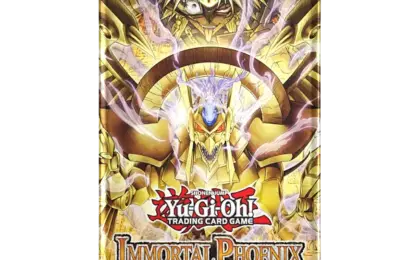
In the modern landscape, consistency remains king. Salamangreat is receiving direct support in the upcoming Immortal Phoenix expansion, keeping Salamangreat Circle firmly in the market spotlight. Functioning as an in-archetype Reinforcement of the Army, Circle permits players to search any Salamangreat monster or protect a Link Monster from opposing effects if a same-named material was used.
The card serves as the ultimate engine oil, accessing Salamangreat Gazelle or the translation-previewed Salamangreat Markhor. Upon Normal or Special Summon, Markhor recovers a Salamangreat Spell/Trap from the Deck or GY, effectively recycling used copies of Salamangreat Circle for continuous follow-up plays. Players are universally treating Circle as a bulletproof investment, with community members actively petitioning for its inclusion in future Tournament Packs.
Dark Magician Infrastructure and Regional Disparities
The infusion of new Dark Magician support into the TCG has injected fresh volatility into classic spells and searchers. Cards like Magician’s Rod have seen continuous price hikes across their various Common and Super Rare printings as players slot them into Light and Darkness Ritual Pile Decks. Magician’s Rod acts as a universal key to any Spell/Trap referencing Dark Magician, granting direct access to tools like The Gaze of Timaeus, Dark Magical Circle, and the explosive Dark Magical Curtain.
However, regional discrepancies continue to frustrate collectors and competitors alike. While the recent European-exclusive Demo Progression Set provided much-needed reprints of high-demand assets like Magicians’ Souls and Magician’s Rod, North American and other TCG territories remain starved of these accessible printings, leaving players heavily reliant on primary market secondary values until a broader TCG-wide port occurs.
Side Decking Trends: Pulling the Rug
In side-deck economics, staple interactive cards continue to dictate localized metagame shifts. Pulling the Rug, historically a cornerstone of Edison Format sideboards, has found a second wind in the modern Genesys Format. As a Counter Trap capable of negating a monster’s Normal Summon and destroying it, the card has proven to be devastating tech against modern archetypes featuring prominent on-summon effects, such as Fairy Tail, Vanquish Soul, and Red Dragon Archfiend variants. Its ability to simultaneously shut down legacy pests like Monarchs and Blackwings ensures its enduring presence in competitive sideboards.
Official Statements and Industry Insights
The divergence between Konami’s official product pipeline and the community’s immediate formatting desires has become a central talking point among content creators, judges, and high-level competitors. Industry analysts point out that while historical format support (such as Time Wizard and Edison initiatives) has successfully retained player engagement, the TCG’s premier tier suffers from delayed banlist interventions.
Speaking on the eve of YCS Paris, competitive figures and tournament organizers have noted an unprecedented level of player anxiety regarding the status of the Forbidden & Limited list.
"When players are actively migrating to alternative formats in droves because standard competitive play feels bottlenecked by repetitive combo sequences, it sends a clear signal to product planners," noted one prominent community analyst. "We are seeing iconic cards trapped behind archaic reprint intervals while modern engines dominate the fiscal landscape. Addressing accessibility isn’t just about secondary market economics—it’s about tournament health."
Konami’s recent design philosophy—leaning heavily into cross-generational archetypal synergy, as seen with the integration of classic Spellcasters into modern Ritual strategies—has succeeded in driving experimental deck-building. However, without proactive communication regarding format rotations and timely supplementary reprints, market volatility will likely remain high through the transition into the Beyond the Brave era.
Future Outlook: Navigating the Road Ahead
As the dust settles on this week’s market fluctuations and the global competitive community turns its eyes toward the conclusion of YCS Paris, the TCG stands at a critical juncture.
Key Factors to Watch in the Coming Months:
- Banlist Interventions: Competitors remain hopeful that an updated Forbidden & Limited list will drop either at the conclusion of Day 2 in Paris or immediately following the event, setting a fresh competitive baseline for upcoming releases.
- Reprint Integration: With high-profile cards like Dark Grepher and Salamangreat Circle commanding steep prices, future product slots—such as upcoming Mega-Tins or regional special sets—will face intense scrutiny over whether they adequately alleviate supply bottlenecks.
- Alternative Format Expansion: The sustained financial momentum of Edison and Genesys staples suggests that secondary market demand will increasingly decouple from solely modern competitive viability, rewarding collectors who diversify into historical formats.
- Upcoming Meta Shifts: As Beyond the Brave approaches, the integration of second-wave engines like Angelechy will test whether modern hybrid builds can establish a healthier, more diverse metagame or if further structural intervention will be required.
For duelists navigating the secondary market, caution and strategic foresight remain paramount. Whether picking up dip-low engine pieces like Fallen of the White Dragon for future potential or securing staple consistency tools before seasonal reprints, the modern TCG rewards those who read between the lines of the market watch.
To all competitors attending YCS Paris this weekend: may your draws be true, your disruptions land, and may the best Duelist emerge victorious.







Belum ada komentar. Jadilah yang pertama berkomentar!