

Executive Overview
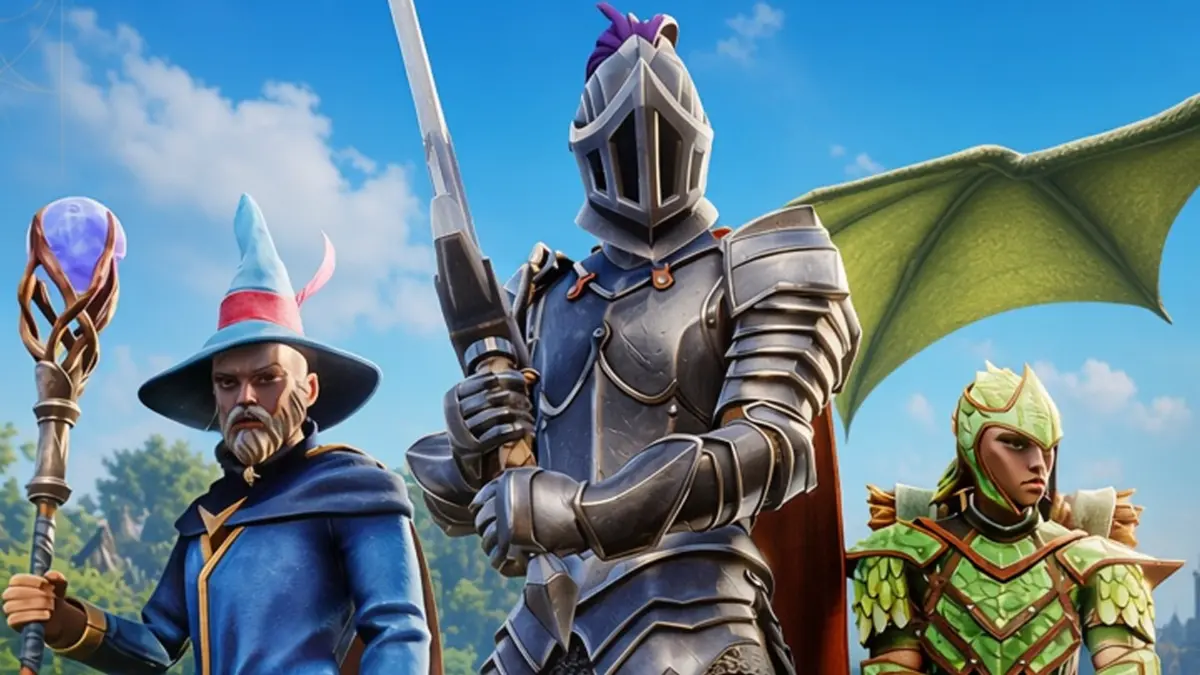
Jagex’s long-standing flagship franchise has undergone one of its most radical transformations in its 25-year history with the release of RuneScape Dragonwilds. Departing from the iconic point-and-click mechanics that defined Old School RuneScape (OSRS) and RuneScape 3, Dragonwilds re-imagines Gielinor’s sprawling lore through the lens of a third-person, open-world survival-crafting action RPG. Drawing clear inspiration from titles such as Valheim and Dune: Awakening, while embedding Soulslike combat mechanics, the title delivers a deeply satisfying blend of exploration, base construction, and organic character progression.
Available at a price point of $29.99 / £24.99 across PC, PlayStation 5, and Nintendo Switch 2, RuneScape Dragonwilds earns a critical score of 9/10. The title successfully translates decades of world-building into a modern Unreal Engine 5 framework, offering an accessible yet complex ecosystem for both franchise veterans and newcomers. While technical caveats exist—most notably image resolution softening on the Nintendo Switch 2, temporary crossplay suspensions during patch deployments, and an absence of cross-progression—the core gameplay loop provides an immensely rewarding survival experience that honors its MMO roots while establishing a compelling new framework.
Detailed Chronology: Narrative Foundations and Gameplay Architecture
The Narrative Prelude: Stranded on Ashenfall
The narrative kickstarts a new chapter in RuneScape lore. A high-stakes expedition of adventurers sets sail toward the newly discovered continent of Ashenfall, aiming to claim unmapped territory and ancient wealth. Disaster strikes mid-voyage when a ferocious dragon assault obliterates the fleet, stranding a tiny remnant of survivors on the mysterious landmass.
Upon repairing an ancient magical lodestone, the survivors make contact with the mainland, prompting the iconic Wise Old Man to dispatch reinforcements. Players arrive on Ashenfall as one of these recruits, stepping off the boat with empty inventories and immediate survival imperatives. While the overarching story takes a secondary role to emergent gameplay, the looming presence of regional dragon bosses—led by the primary antagonist, the colossal dragon Velgar—provides clear structural goals that drive players deeper into hostile biomes.

[ Expedition Fleet Destroyed ] ➔ [ Stranded on Ashenfall ] ➔ [ Lodestone Restored ]
                                                                      │
[ Mainline Campaign / Bossing ] ◄─ [ Metroidvania Crafting Loop ] ◄───┘
Core Loop and Metroidvania-Inspired Progression
Rather than relying solely on quest markers, Dragonwilds utilizes a Metroidvania-style gating mechanism rooted in resource acquisition and tool progression. The game’s map is divided into distinct, interconnected biomes, including:
- Bramblemead Valley: The initial, relatively safe starting region containing basic crafting materials and introductory quest NPCs.
- Bloodblight Swamp: A toxic hazard zone filled with poisonous vapor and high-tier ores requiring specialized gear, such as a Bronze Pickaxe and Iron Axe, to harvest.
- Fractured Plains & Whispering Swamp: Intermediate regions containing critical tier-two crafting components required to advance regional progression.
- Stormtouched Highlands & Fellhollow: High-level, high-risk biomes dominated by extreme weather phenomena and undead threats.
Players frequently backtrack through previously visited zones once new tools and equipment tiers are unlocked, transforming early-game bottlenecks into trivial gathering runs.
Skill Systems and Organic Mastery
In keeping with classic RuneScape principles, Dragonwilds eschews conventional pre-allocated skill trees or class restriction points. Character progression is entirely action-driven:
- Combat Practice: Engaging enemies repeatedly elevates core attack and defensive attributes.
- Resource Harvesting: Felling trees elevates Woodcutting mastery, directly unlocking advanced timber recipes.
- Crafting & Utility: Constructing tools, smelting metals, and cooking food organically enhances player efficiency.
To cushion the steep early-game learning curve—where accidental deaths caused by falling, hostile wildlife, or aggressive ambient mobs occur frequently—Jagex implemented an emergency teleport feature that returns players to their initial spawn point. Upon death, players respawn at their player-built bed, prompting a gear-retrieval run ("corpse run") that actively trains players to navigate regional hazards more cautiously.

+-----------------------------------------------------------------------+
|                   CLASSIC PRACTICE-BASED LEVELING                     |
+-----------------------------------------------------------------------+
|  [ Chop Trees ]    ───>  Woodcutting Level Up  ───>  Advanced Recipes |
|  [ Engage Mobs ]   ───>  Combat Skills Level Up───>  Equip Tier Gear  |
|  [ Mine Ores ]     ───>  Mining Skill Level Up ───>  Smelt Fine Alloys|
+-----------------------------------------------------------------------+
Combat Dynamics and Base-Building Engineering
Combat in Dragonwilds adapts modern third-person action standards, featuring stamina management, dodge-rolling, parry windows, and targeted lock-on functionality reminiscent of Soulslike titles. Mastery of enemy move sets allows under-geared players to overcome dangerous encounters, yielding a pronounced sense of player growth.
Complementing the combat system is an intuitive base-building system:
- Freeform Placement: Players can erect structures anywhere in Ashenfall, provided the territory isn’t over-concentrated with high-level hostile spawns like Fellhollow’s undead.
- Architectural Utility: A specialized building spell allows players to detach the perspective camera, enabling precise placement of walls, roofing, crafting stations, and storage units from a free-flying overhead view.
- Base Raids: Bases are periodically subjected to atmospheric invasions from regional fauna and hostile factions, encouraging players to construct defensive perimeters and strategic choke points.
Supporting Context & Technical Metrics: Performance and Infrastructure
Audio-Visual Synergies under Unreal Engine 5
Jagex successfully modernizes the classic RuneScape aesthetic by applying Unreal Engine 5 rendering capabilities over low-poly architectural designs. Environmental highlights include dynamic volumetric lighting, localized weather storms in the Stormtouched Highlands, and visual particle effects surrounding spiritual landmarks like the Grim Reaper’s church.
The visual overhaul is paired with a musical score composed by Peter Michael Davison and Ashton Mills. The soundtrack blends warm, acoustic guitar arrangements for tranquil biomes with somber piano motifs and intense orchestral arrangements during boss encounters and undead zone explorations.

| Feature / Metric | Implementation & Detail |
|---|---|
| Graphics Engine | Unreal Engine 5 (Stylized Low-Poly Hybrids) |
| Composers | Peter Michael Davison, Ashton Mills |
| Base Player Co-Op | Up to 4 Players (Drop-in / Host-based) |
| Dedicated Server Capacity | Up to 6 Players (Persistent PC/Server Host) |
| Switch 2 Target Frame Rate | 30 FPS (Stable across Handheld & Docked) |
| Switch 2 Display Output | Dynamic Scaling with noticeable soft reconstruction |
| Base Price | $29.99 USD / £24.99 GBP |
Platform Benchmarks: Nintendo Switch 2 Optimization
Evaluation of the Nintendo Switch 2 port reveals a solid operational foundation with specific visual trade-offs:
[ PS5 / PC Version ] ──> High Resolution Sharpness / Dynamic UE5 Effects / 60+ FPS
[ Switch 2 Version ] ──> Stable 30 FPS Target / Softer Image Resolution / Portable Play- Frame Rate Stability: Holds a consistent 30 FPS target during both dock-mounted play and handheld operation, even during weather events and multi-mob encounters.
- Image Clarity: The Switch 2 variant outputs a lower reconstruction resolution compared to PC and PS5 versions, resulting in a noticeably softer image that slightly dampens the sharpness of Unreal Engine 5’s foliage and texture work.
- Control Mapping: Native support for joy-con and pro-controller inputs, including dedicated hotkeys for building-camera manipulation and quick-slot consumable usage.
Network Infrastructure, Crossplay, and Cross-Progression
Multiplayer support is designed around small-group cooperation:
- Standard Sessions: Host-driven worlds allow up to four players to explore, build, and complete quests concurrently.
- Dedicated Servers: PC-hosted or rented dedicated servers scale session caps to six players, keeping the world active even when the host is offline.
- Server Customization: World administrators can modify parameters, adjusting XP multipliers, resource drop rates, or death penalties to tailor the difficulty.
Critical Network Caveats
- Temporary Crossplay Suspension: While full crossplay between PC, PS5, and Switch 2 is built into the game’s core architecture, technical bugs led Jagex to temporarily disable crossplay on the Switch 2 platform pending a stabilizing patch.
- Absence of Cross-Progression: Characters and world saves are currently locked to the platform of origin. A character built on PlayStation 5 cannot be transferred to the Nintendo Switch 2 or PC, requiring separate progression tracks for multi-platform owners.
Official Statements and Community Ecosystem
The Community-Driven Knowledge Base
In keeping with the 25-year legacy of RuneScape, Jagex relies heavily on community discovery rather than overt hand-holding. The game provides a basic in-game recipe encyclopedia that unlocks entries as materials are discovered, but leaves complex crafting chains and optimization strategies for the community to document.
This approach has generated strong engagement across community channels, where players collaborate to map out resource locations, ideal base locations, and boss mechanics.

Pricing and Value Proposition
Positioned as a mid-tier release at $29.99 / £24.99, RuneScape Dragonwilds presents a high value-to-cost ratio. By avoiding aggressive microtransactions and focusing instead on a self-contained survival experience backed by continuous free content updates, Jagex has positioned Dragonwilds competitively against rival titles in the survival-crafting genre.
Future Outlook & Strategic Roadmap
Year-One Content Pipeline
Jagex has committed to a structured post-launch support plan throughout the game’s first year. Planned updates include:
- Expanded Biomes: Unlocking uncharted sectors of the Ashenfall continent beyond the initial launching zones.
- Tiered Dragon Bosses: Additional apex encounters featuring unique mechanical challenges and legendary crafting drops.
- Expanded Crafting Tiers: High-level metallurgic and magical recipes designed to expand endgame base customization and character builds.
   [ Year-One Roadmap ]
   ├── Biome Expansions (Uncharted Ashenfall Regions)
   ├── Apex Dragon Encounters (High-Tier Boss Mechanics)
   ├── Technical Parity Patches (Restoring Switch 2 Crossplay & Visual Tuning)
   └── Infrastructure Upgrades (Evaluating Cross-Progression Solutions)
Technical Patch Priorities
The immediate focus for the development team centers on resolving platform parity issues. Restoring crossplay functionality for Nintendo Switch 2 players remains a top priority, along with performance optimizations aimed at sharpening image quality on hybrid hardware. While Jagex has not officially confirmed cross-progression implementation, community feedback continues to push the request to the top of the developer roadmap.
Final Verdict
RuneScape Dragonwilds successfully breathes fresh life into Jagex’s flagship IP. By integrating survival mechanics, intuitive construction, and Soulslike combat into the rich lore of Gielinor, Jagex has created an addicting, highly rewarding experience. Despite minor technical drawbacks on hybrid consoles and missing quality-of-life features like cross-progression, Dragonwilds stands as an essential title for survival fans and RuneScape enthusiasts alike.





Belum ada komentar. Jadilah yang pertama berkomentar!