

Executive Overview
After two decades of dormancy, Capcom’s premier samurai-horror franchise has returned with remarkable force. Onimusha: Way of the Sword marks both a triumphant revival for a classic intellectual property and a technical milestone for Nintendo’s next-generation hardware, the Nintendo Switch 2. Earning a critical verdict of 9/10, the title successfully bridge the gap between legacy action-game design and modern action-RPG mechanics.
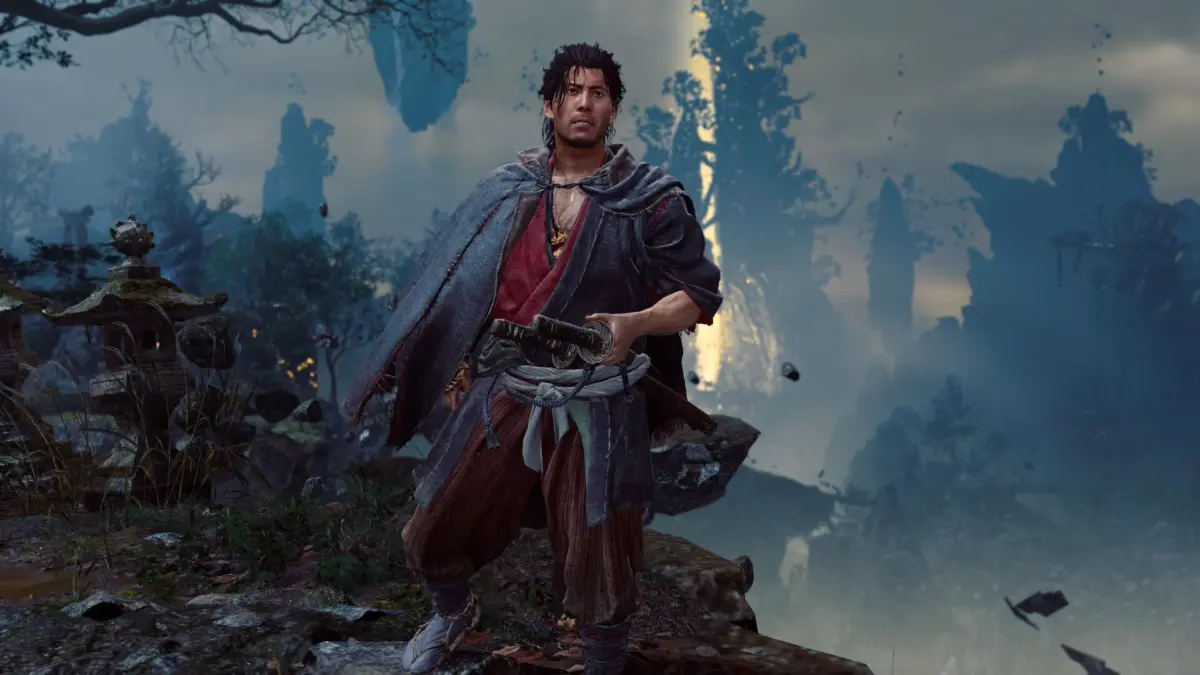
Set against the atmospheric backdrop of a dark-fantasy Kyoto overrun by demonic forces, Onimusha: Way of the Sword introduces Musashi—a charismatic, reluctant protagonist resurrected by a sentient gauntlet—to a new generation of players. Through razor-sharp combat, intricate environmental design, and aggressive technical optimization on Nintendo Switch 2, Capcom demonstrates its absolute mastery over current-generation development. This analysis delves into the game’s narrative structure, combat architecture, hardware performance, and broader strategic implications for Capcom’s portfolio.
===================================================================
                       CRITICAL SCORE CARD
===================================================================
 Game        Onimusha: Way of the Sword
 Developer/Pub:    Capcom
 Platform:         Nintendo Switch 2
 Final Score:      9 / 10 (Editor's Choice)
 Key Strengths:    - Elite protagonist writing and character chemistry
                   - Ultra-responsive parry and combat mechanics
                   - Flawless hardware optimization on Switch 2
                   - Flexible accessibility without trophy penalties
===================================================================
Narrative Architecture and Character Dynamics
The Resurrection of Musashi and the Sentient Gauntlet
At the core of Onimusha: Way of the Sword lies a narrative foundation that balances dark feudal fantasy with sharp character writing. The game bypasses convoluted lore dumps, establishing a lean, compelling premise: Musashi, an extraordinarily gifted swordsman, suffers a fatal defeat at the hands of invading demon hordes. Upon entering the afterlife, his fate is altered by a mysterious, sentient Oni gauntlet. This parasitic artifact returns him to the land of the living as an empowered Oni warrior, forging a reluctant bond between man and weapon.
 +---------------------------------------------------------------+
 |                       NARRATIVE LOOP                          |
 +---------------------------------------------------------------+
 |  1. Musashi Dies in Battle against Demon Horde                |
 |  2. Resurrected by Sentient Oni Gauntlet in Afterlife         |
 |  3. Granted Oni Powers to Save Dark Fantasy Kyoto             |
 |  4. Harvests Demon Souls to Upgrade Abilities & Weapons       |
 |  5. Seeks Liberation from the Parasitic Gauntlet              |
 +---------------------------------------------------------------+
Musashi stands apart from traditional stoic action protagonists. He is written as a profoundly reluctant hero whose primary motivation—removing the parasitic gauntlet keeping him alive—runs counter to his duty as Kyoto’s defender. This internal friction is elevated by a dry, sarcastic humor that infuses early scenes with personality without undercutting the narrative’s stakes.
Character Interactions and Worldbuilding
The narrative strength is further bolstered by a dynamic supporting cast. Most notably, Musashi’s interactions with Shizuka provide a compelling emotional anchor. Their dialogue features a spirited back-and-forth; Shizuka matches Musashi’s sardonic detachment with sharp resolve, pushing him to honor his role as protector.
       +---------------------------------------------------+
       |                 CHARACTER MATRIX                  |
       +---------------------------------------------------+
       |  MUSASHI           <--->  SHIZUKA                 |
       |  - Reluctant Hero         - Determined Ally       |
       |  - Dry Sarcasm            - Sharp Wit & Purpose   |
       |  - Seeks Liberation       - Seeks Salvation       |
       +---------------------------------------------------+
The setting itself serves as a crucial storytelling element. Capcom’s reimagining of historical Kyoto presents a haunting, shadow-drenched metropolis under siege. The level design encourages exploration beyond primary path markers, rewarding players with vital survival resources, combat enhancements, and lore entries that flesh out the invasion.

Gameplay Mechanics: The Precision of the Blade
Rhythmic Combat: Block, Parry, and Soul Harvest
Onimusha: Way of the Sword delivers a high-stakes combat system built around reaction time, pattern recognition, and tactical adaptability. Rather than relying on mindless button-mashing, the game requires precise offensive and defensive execution:
- Defensive Layering: Mastering time-window parries, directional blocking, and evasion maneuvers is required to survive high-density enemy encounters.
- Counter-Attack Windows: Reading enemy animations opens up critical vulnerability frames, allowing players to execute devastating counter-strikes.
- Soul Harvesting: The sentient gauntlet acts as a live combat siphon. Sucking in defeated enemies’ souls provides the vital currency required to unlock new skill trees, enhance weapon lethality, and purchase consumable items.
         +---------------------------------------------------+
         |                  COMBAT TRIAD                     |
         +---------------------------------------------------+
         |                                                   |
         |                   [READ & DEFEND]                 |
         |                   Block / Parry                   |
         |                        /                         |
         |                       /                          |
         |                      /                           |
         |          [PUNISH]   <------->   [HARVEST]         |
         |       Counter-Attack          Absorb Souls        |
         |                                                   |
         +---------------------------------------------------+
Boss Encounters and Combat Systems
Boss fights represent the ultimate test of combat mastery. These multi-phase encounters demand complete utilization of mechanics introduced in earlier tutorial sections. Bosses feature expansive movesets, sudden speed shifts, and heavy punish windows designed to test even veteran Souls-like players. The progression loop remains satisfying throughout: dying reveals pattern data, allowing players to refine their timing until executing a clean victory.
===================================================================
                     CORE COMBAT SPECIFICATIONS
===================================================================
 Mechanic          Function                       Skill Floor
-------------------------------------------------------------------
 Timed Parry       Negates damage, opens frame    High
 Evasive Dodge     Repositioning vs AOE attacks   Moderate
 Soul Extraction   Resource acquisition mid-fight Moderate
 Counter-Strike    High-damage punishes           High
 Skill Trees       Moveset customization          Systemic
===================================================================
Uncompromised Accessibility Design
While Onimusha: Way of the Sword offers high-level mechanical challenge, Capcom has introduced exemplary accessibility options. The game features an granular Easy difficulty setting that significantly lowers enemy aggressiveness and relaxes parry windows, allowing players to focus primarily on narrative engagement.
Crucially, Capcom actively avoids demotivating difficulty restrictions. Unlike competing titles—such as the recently released Mortal Shell 2, which restricts achievements and trophy unlocks when playing on lower difficulty modes—Onimusha treats all difficulty levels equally. Players can adjust settings at any point without forfeiting game completion rewards or meta-achievements, setting a welcome benchmark for modern action-RPG design.
Technical Performance and Optimization on Nintendo Switch 2
Hardware Benchmarks and Optimization
Capcom continues to lead technical performance on Nintendo’s upgraded hybrid console. Onimusha: Way of the Sword runs at an exceptionally stable framerate, delivering high image clarity without compromising fluid performance during intense multi-enemy sequences.
===================================================================
              CAPCOM SWITCH 2 PERFORMANCE METRICS
===================================================================
 Title                        Framerate Stability  Visual Fidelity
-------------------------------------------------------------------
 Resident Evil Requiem        High (Minor Drops)   Very High
 Dragon's Dogma 2: DA         High (Preview)       High
 Onimusha: Way of the Sword   Flawless             High
===================================================================
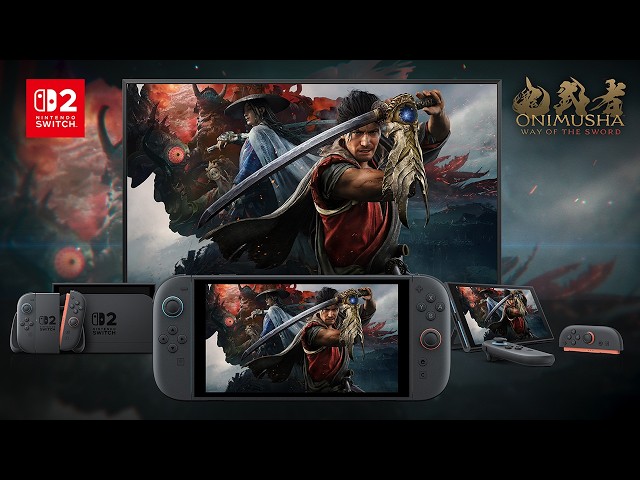
Utilizing an advanced evolution of the RE Engine optimized for Nintendo Switch 2, the game features dynamic resolution scaling, refined texture filtering, and precise lighting effects that bring Kyoto’s atmospheric environments to life. The performance profile confirms Capcom’s position as a premier third-party developer capable of wringing high performance out of portable next-generation hardware.
Industry Context and Critical Reception
Bridging a Two-Decade Gap
Revisiting a legacy franchise after 20 years poses significant narrative and design risks. However, Onimusha: Way of the Sword successfully accommodates both franchise veterans and total newcomers. The story functions completely independently, requiring no baseline knowledge of previous entries while maintaining the atmospheric identity that made the original titles iconic.
 +---------------------------------------------------------------+
 |                 CAPCOM IP REVIVAL STRATEGY                    |
 +---------------------------------------------------------------+
 |  1. Preserve Core IP Identity (Samurai Horror / Action)       |
 |  2. Modernize Mechanics (Souls-inspired Parry/Evasion systems)|
 |  3. Accessible Onboarding (No prior lore knowledge required)  |
 |  4. Hardware Showcase (Maximized for Nintendo Switch 2)       |
 +---------------------------------------------------------------+
Critical reaction has praised Capcom’s strategic direction, highlighting how the title honors classic action-adventure roots while integrating modern mechanical refinements. The 9/10 review score reflects a execution across narrative writing, technical performance, and combat mechanics.
Future Outlook: The New Benchmark for Action RPGs
Onimusha: Way of the Sword sets a strong standard for action-RPG revivals. Its success signals several key industry trends moving forward:
- Capcom’s Switch 2 Dominance: Following strong performances from Resident Evil Requiem and promising early looks at Dragon’s Dogma 2: Dark Arisen, Capcom has established a clear template for high-performance third-party development on Nintendo Switch 2.
- Legacy IP Revivals: The acclaim surrounding Musashi’s journey paves the way for Capcom to revisit other dormant properties using modern engine tech and refined accessibility standards.
- Modernized Accessibility: By eliminating achievement penalties for lower difficulty settings, Onimusha offers a model that balances intense mechanical depth with inclusive design for all player skill levels.
As year-end awards approach, Onimusha: Way of the Sword stands as a defining action game of 2026—a masterclass in combat precision, character writing, and platform-specific engineering that demands every gamer’s attention.








Belum ada komentar. Jadilah yang pertama berkomentar!