

Executive Overview
For decades, the foundational playbook for launching a high-growth startup remained stubbornly consistent. A visionary founder assembled a small, scrappy band of believers—often numbering fewer than ten individuals—who would pull all-nighters to write code, handle customer support tickets, grind through cold outreach, and build the initial cultural bedrock of the company. These early hires did not merely execute tasks; they defined the company’s trajectory, embodying its identity and absorbing its existential risks.
Today, that paradigm is undergoing a structural fracture.
With the rapid maturation of autonomous AI agents capable of executing complex, multi-step workflows across engineering, customer support, research, and revenue operations, the question facing early-stage founders has fundamentally shifted. No longer is the primary strategic dilemma simply "Who do we hire next?" Instead, founders must grapple with a far more profound architectural choice: "What work needs to be done, and is a human being the optimal vehicle to do it?"
This evolution transcends mere productivity tooling. Traditional software assisted employees in executing tasks; autonomous agents now own entire workflows from end to end. As a result, the traditional startup org chart is being rewritten from the ground up. The first ten "people" on a startup’s roster may no longer all be human.
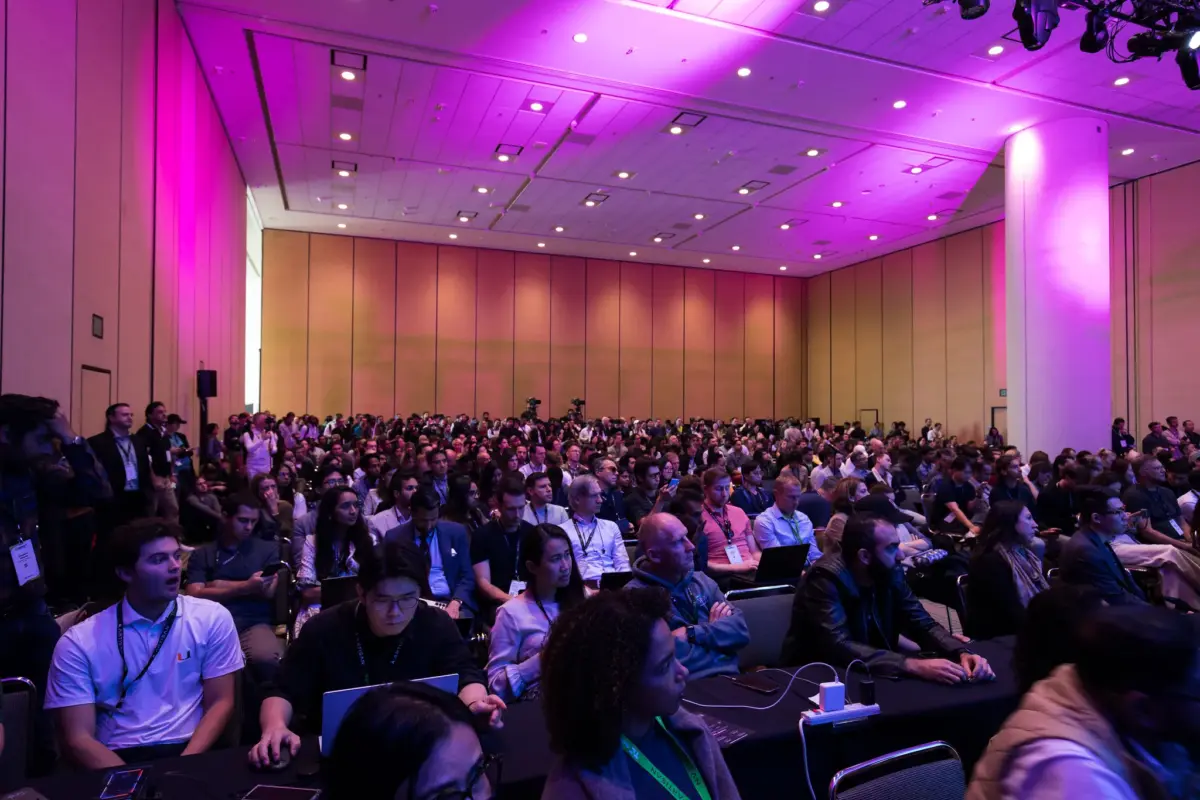
To unpack this paradigm shift, TechCrunch Disrupt 2026 is bringing together three premier voices in technology, venture capital, and talent development for a high-stakes session on the Builders Stage titled “Hiring When AI Is a Co-Founder.” Josh Reeves, CEO and co-founder of Gusto; Michelle Johnson, senior vice president at Insight Partners; and John Koelliker, CEO and co-founder of Leland, will explore how early-stage companies are architecting hybrid human-agent teams without sacrificing operational speed, accountability, or company culture.
Detailed Chronology: The Evolution from AI-Assisted Tooling to Autonomous Co-Founders
To understand how we arrived at the era of the AI co-founder, it is necessary to trace the rapid escalation of artificial intelligence capabilities within the startup ecosystem over the past several years.
Phase 1: The Assistant Era (2022–2023)
When generative AI first burst into mainstream consciousness with the advent of large language models, its utility was primarily assistive. Software engineers used early coding copilots to autocomplete lines of code, while customer support teams deployed rudimentary chatbots to deflect repetitive queries. In this phase, humans remained firmly in the driver’s seat. AI was an accelerant, cutting down execution time but leaving the fundamental division of labor untouched. A startup still needed a dedicated junior engineer, a full-time support rep, and an operations specialist to stitch these disjointed tools together.
Phase 2: The Workflow Automation Wave (2024–2025)
As model architectures advanced and API integrations deepened, AI transcended simple text generation to enter the realm of workflow automation. Systems began executing multi-step tasks across disparate SaaS platforms. An AI tool could pull data from a CRM, draft personalized outreach sequences, analyze customer sentiment, and update internal databases with minimal human intervention. However, these systems still required constant supervision, check-ins, and manual triggers. They were powerful utilities, but they lacked agency.

Phase 3: The Autonomous Agent Paradigm (2026 and Beyond)
We have now entered an era defined by autonomous agents. These systems do not merely assist; they own outcomes. Given a high-level objective—such as "debug this microservice and deploy a patch" or "qualify inbound enterprise leads and schedule discovery calls"—modern agents can plan, execute, evaluate, and iterate independently over hours or days.
This leap in autonomy has broken the traditional scaling model for early-stage startups. Founders can now achieve product-market fit and scale initial revenues with a fraction of the headcount previously required. Yet, this newfound leverage introduces an unprecedented set of operational, ethical, and organizational dilemmas. If an agent writes the code, handles the customer onboarding, and manages the initial sales funnel, what is the actual role of the human team? And more importantly, how do founders maintain accountability when the lines between human employee and autonomous software blur?
Supporting Context & Metrics: The Changing Economics of Early-Stage Teams
The shift toward AI-native organizational structures is not occurring in a vacuum; it is being driven by fundamental economic pressures and empirical shifts across the venture capital landscape.
The Cost-to-Capability Ratio
Historically, early-stage capital efficiency was measured by burn rate relative to engineering output and customer acquisition velocity. In 2026, capital efficiency is increasingly defined by "revenue per human employee." Startups leveraging autonomous agents are routinely achieving revenue milestones that previously required 20 to 30 employees with a core team of five humans augmented by specialized agents.
This structural shift alters venture math. Seed and Series A rounds stretch significantly further, reducing early dilution for founders while raising the bar for what venture capitalists expect from a lean team. Investors no longer reward bloated headcounts; they scrutinize how effectively a founding team orchestrates software leverage.
The Breakdown of Functional Silos
In a traditional startup, functional silos are established early: an engineering lead, a product manager, a growth marketer, and a customer success manager. In an AI-native startup, these traditional boundaries dissolve.
- Engineering: Routine bug fixes, boilerplate code generation, and regression testing are offloaded to agents, allowing human engineers to focus entirely on architectural integrity, novel core algorithms, and system security.
- Go-To-Market (GTM): Prospect research, market mapping, and initial outbound messaging are largely automated, forcing human sales professionals to pivot from volume-based outreach to high-touch relationship building and complex enterprise negotiation.
- Operations & Compliance: HR onboarding, benefits administration, and regulatory compliance checks—areas where platforms like Gusto operate—are streamlined via automated compliance agents, reducing administrative overhead for early teams.
Official Perspectives: Industry Leaders on the Builders Stage
The complexities of navigating this transition require deep operational insight. The panel assembled for TechCrunch Disrupt 2026 brings three distinct, highly complementary vantage points to the conversation.
Josh Reeves: The Enterprise and Small Business Reality
As the CEO and co-founder of Gusto, Josh Reeves sits at a unique vantage point within the modern economy. Gusto supports more than 500,000 companies across the United States, managing critical operational pillars including payroll, benefits, compliance, onboarding, HR, and retirement.

Having spent over a decade observing the lifecycle of small businesses and high-growth startups, Reeves understands the operational friction points that founders face as they transition from a two-person garage operation to a structured organization. His perspective bridges the gap between raw technological capability and the messy, day-to-day realities of compliance, employee management, and organizational growth. For Reeves, the integration of AI into the workplace is not just an engineering puzzle; it is an organizational transformation that impacts how companies hire, retain, and scale their human talent.
Michelle Johnson: Scaling Go-To-Market Engines
Michelle Johnson, senior vice president at Insight Partners, brings a rigorous scaling and go-to-market (GTM) lens to the discussion. At Insight Partners, Johnson works directly with CEOs and Chief Revenue Officers across North America and Europe, helping them optimize revenue organizations, refine GTM strategies, and integrate AI into their operational workflows.
Before her tenure at Insight, Johnson was instrumental in scaling Flock Safety from under $1 million to a staggering $90 million in Annual Recurring Revenue (ARR) as an early sales and revenue operations leader. Her frontline experience gives her acute insight into how sales and marketing organizations are evolving.
If AI agents can independently research prospects, prepare hyper-personalized outreach, analyze complex customer data pools, and manage the preliminary stages of the sales funnel, Johnson asks, what should human revenue professionals concentrate on? And more critically, how must hiring criteria shift when organizations no longer need armies of junior sales development reps (SDRs) to grind through cold call lists?
John Koelliker: The Talent and Skills Crossroads
Sitting squarely at the intersection of human capital and artificial intelligence is John Koelliker, CEO and co-founder of Leland, a modern career and talent platform built for the AI era. With an impressive background spanning product and growth roles at industry giants like LinkedIn, Curated, and Uber, Koelliker has spent his career studying how professionals develop, adapt, and apply their skills in rapidly shifting labor markets.
Leland’s mission centers on helping individuals navigate career transitions in a world transformed by automation. Koelliker brings vital answers to the existential questions facing modern job seekers and founders alike: If technical and operational execution can be outsourced to agents, what human skills command the highest premium? How do early-career professionals build foundational expertise if entry-level tasks are absorbed by software? And how can founders identify and nurture talent that thrives alongside autonomous systems?
Future Outlook: What Should Humans Still Own?
As autonomous agents assume greater operational responsibility, the defining question for the next generation of startups will not be what agents can do, but rather what humans must retain absolute ownership over.
Certain foundational pillars of company building resist automation because they cannot be reduced to a deterministic workflow:

- Strategic Judgment and Conviction: When data points in conflicting directions, algorithms compute probabilities; humans exercise conviction. Deciding when to pivot a company, how to interpret ambiguous market signals, and when to challenge consensus dogma requires human intuition and risk tolerance.
- Empathy and Relationship Architecture: While agents can draft emails or summarize customer tickets, they cannot build authentic trust with a skittish enterprise client, motivate an exhausted engineering team through a missed deadline, or align a room full of co-founders around a shared vision.
- Moral and Ethical Accountability: Agents do not take responsibility when things fail. Accountability is an exclusively human burden. Founders and early team members must own the downstream consequences of automated decisions—whether in product safety, data privacy, or customer trust.
- Cultural DNA: A startup’s culture is forged in the crucible of shared struggle, informal interactions, and collective values. While agents can optimize operational velocity, they cannot embody or transmit the cultural ethos that binds a founding team together.
Redefining the Early Employee
Ultimately, the role of the early startup employee is undergoing a profound mutation. Future team members will be defined less by their capacity to execute high volumes of tactical work and more by their capacity for judgment, cross-functional orchestration, and meta-governance. The modern startup employee acts less like an individual contributor and more like a manager of systems—directing a fleet of specialized AI agents while maintaining human accountability at the core.
Secure Your Place at TechCrunch Disrupt 2026
The startup org chart has been permanently rewritten. Founders who cling to legacy hiring models risk being outpaced by lean, agent-augmented competitors, while those who rush into automation without a clear operational framework risk sacrificing culture, speed, and accountability.
To master this transition, join Josh Reeves, Michelle Johnson, and John Koelliker live on the Builders Stage for “Hiring When AI Is a Co-Founder” at TechCrunch Disrupt 2026.
Taking place at Moscone West in San Francisco from October 13–15, Disrupt brings together more than 10,000 founders, investors, and tech decision-makers to explore what it takes to build and scale the next generation of category-defining companies.
Secure your pass now and save up to $200 before rates increase on September 25 at 11:59 p.m. PT. Bring your co-founders, team members, or startup community to unlock up to 30% in additional group savings.
The future of company building is arriving fast. Learn how to design your team for what comes next, only at Disrupt 2026.







Belum ada komentar. Jadilah yang pertama berkomentar!