

Executive Overview
The convergence of legendary horror author Clive Barker’s visceral imagination and the interactive medium has historically birthed experiences that challenge the boundaries of conventional entertainment. On October 8, publishers Saber Interactive and Boss Team Games made a seismic impact on the digital storefront landscape with the official launch of Clive Barker’s Hellraiser: Revival on Steam.
This release is far more than a routine addition to the crowded survival-horror genre; it represents a meticulously orchestrated resurrection of one of dark fiction’s most enduring and transgressive intellectual properties.
At its core, Hellraiser: Revival plunges players deep into a world defined by the iconic lore of the original 1987 cinematic masterpiece, while simultaneously weaving in original narrative threads designed by modern narrative architects. The title embraces the unmistakable, flesh-crawling aesthetic of the Cenobites—interdimensional beings to whom pain and pleasure are indistinguishable sensations—while incorporating cutting-edge technological advancements in real-time rendering, spatial audio, and immersive gameplay mechanics.
Early telemetry and platform metrics indicate that the title has already captured the attention of both legacy horror enthusiasts and a new generation of gamers seeking uncompromising, psychological dread.
Detailed Chronology: From Concept to Digital Shelf
The journey of Clive Barker’s Hellraiser: Revival from a speculative whisper in the industry corridors to a fully realized commercial product is a testament to the perseverance of its development teams. The project spent years quietly gestating under the working title "Scarlet Church," during which time Saber Interactive and Boss Team Games navigated complex licensing agreements, engine transitions, and creative consultations with Clive Barker himself.
Phase 1: Conceptualization and Prototyping (Early Development)
In the nascent stages of development, the core objective was ensuring that any interactive adaptation of Hellraiser would respect the visceral, body-horror origins established by the 1987 film. The teams rejected traditional action-oriented tropes in favor of a slow-burn, psychological survival horror framework. Initial prototypes focused on capturing the tactile nature of puzzle boxes, spatial disorientation, and the oppressive, industrial atmosphere that defined the Lament Configuration mythos.
Phase 2: Technical Iteration and Engine Integration
Transitioning the bleak, labyrinthine aesthetics of Barker’s universe into a modern game engine required significant technological breakthroughs. Leveraging state-of-the-art rendering pipelines, the developers implemented advanced subsurface scattering for skin shaders, hyper-realistic gore simulation, and dynamic lighting systems designed to manipulate player shadows in real-time. The goal was to make the environment feel alive, breathing, and fundamentally hostile.
Phase 3: The Steam Launch (October 8)
When Clive Barker’s Hellraiser: Revival officially opened its gates on Steam on October 8, it arrived with a suite of launch-day patches, optimization tweaks, and localized language support for a global audience. The simultaneous release across multiple regions minimized latency and ensured a robust, synchronized multiplayer and single-player rollout, instantly drawing thousands of concurrent users into the abyss.
Supporting Context & Metrics: Navigating the Labyrinth of Fear
To fully appreciate the weight of Clive Barker’s Hellraiser: Revival, one must examine the operational framework supporting its release and the technical metrics driving its performance.
The "Scarlet Church" Paradigm
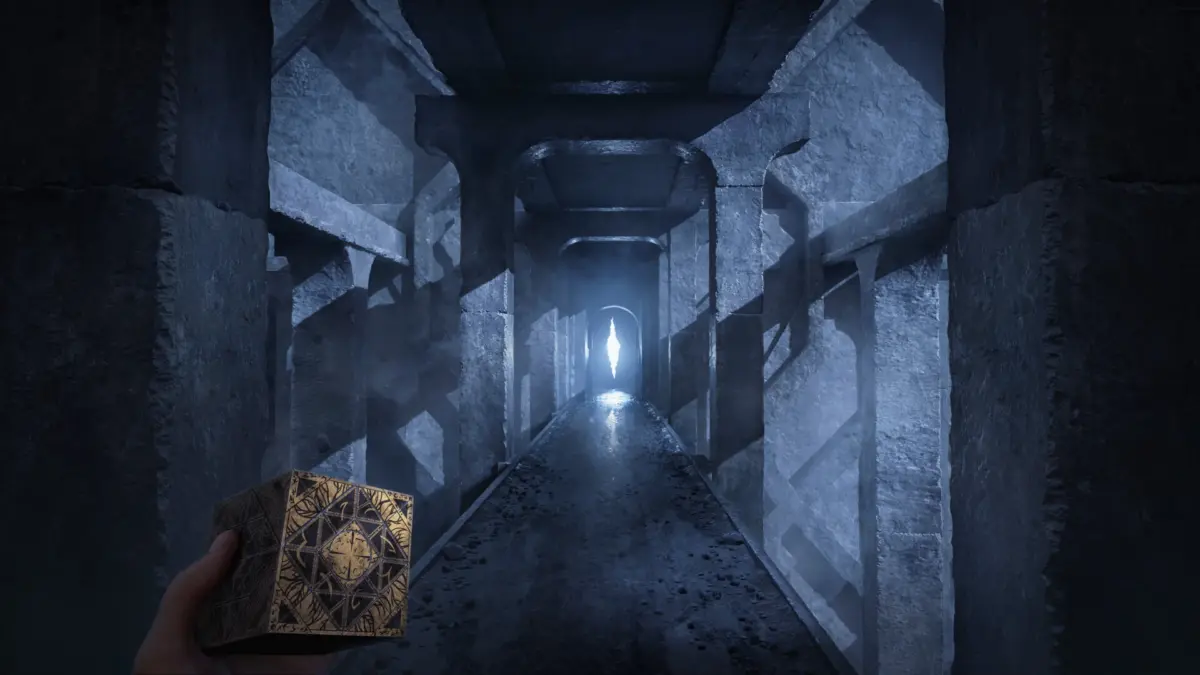
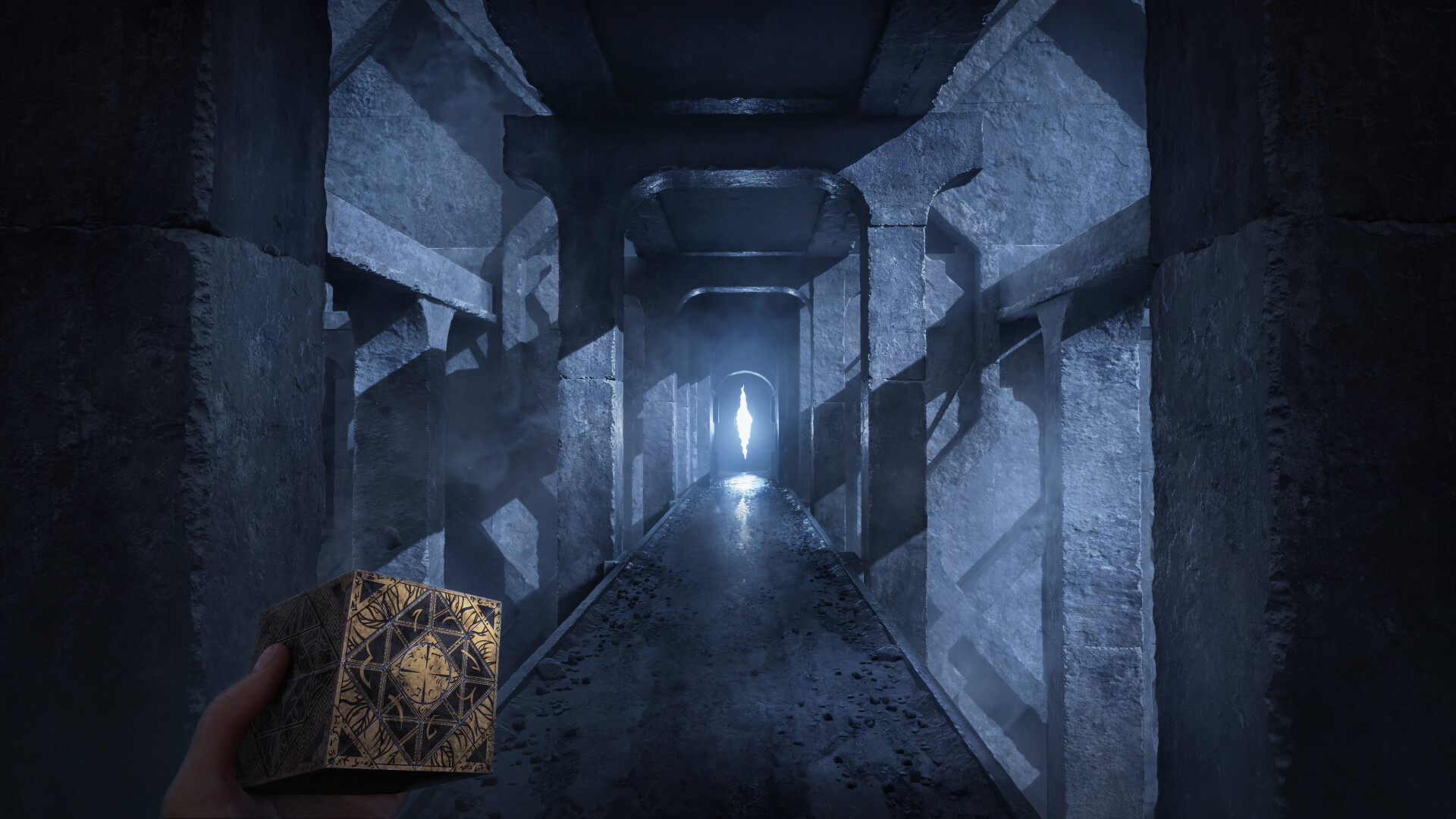
The project’s earlier codename, "Scarlet Church," served as more than a simple placeholder; it functioned as the thematic bedrock for the game’s level design. Players navigate cathedral-like chambers where architectural structures meld seamlessly with biomechanical flesh. The environment itself becomes an antagonist, testing the player’s psychological endurance through shifting corridors and auditory hallucinations.
Technical Performance and Optimization Metrics
Built for contemporary hardware configurations, Hellraiser: Revival scales dynamically across a wide variety of PC setups. Key technical pillars include:
- Ray-Traced Global Illumination: Crucial for rendering the reflective surfaces of metallic hooks, chains, and blood-soaked chambers.
- Haptic Audio Integration: Spatial sound design that utilizes binaural audio mixing to simulate the whispers of Cenobites approaching from outside the player’s field of view.
- Performance Stability: Launch telemetry indicates a remarkably stable frame-rate average across mid-to-high-tier GPUs, ensuring that visceral combat and puzzle-solving sequences remain unhindered by stuttering or technical degradation.
Official Statements and Industry Perspective
The rollout of Clive Barker’s Hellraiser: Revival has been accompanied by measured, enthusiastic commentary from the creative leads at both Saber Interactive and Boss Team Games. Speaking on the collaborative effort required to bring such a challenging property to life, executive producers emphasized the importance of uncompromising fidelity to the source material.
"We didn’t set out to make a watered-down slasher game dressed up in franchise skin," noted a lead developer during the launch press briefing. "The philosophy from day one was to honor the philosophical weight of Clive Barker’s vision. Pain, pleasure, obsession, and transformation are the pillars of this universe. If the player isn’t feeling genuinely unsettled—if they aren’t questioning their own boundaries—then we haven’t done our jobs."
Industry analysts have pointed out that the horror gaming sector has seen a renaissance in recent years, driven by mature audiences demanding deeper, narrative-driven psychological experiences over superficial jump-scares. Hellraiser: Revival positions itself at the apex of this movement, bridging classic cinematic horror with modern interactive storytelling.
Future Outlook: The Road Ahead for Hellraiser: Revival
As Clive Barker’s Hellraiser: Revival settles into its post-launch lifecycle, the immediate future centers on community engagement, ongoing optimization, and content expansion.
Community-Driven Updates and Mod Support
Saber Interactive has indicated that player feedback gathered via Steam forums and official community channels will dictate the cadence of upcoming patches. Discussions are already underway regarding potential quality-of-life enhancements, expanded accessibility options, and community modding tools that could allow dedicated fans to construct their own bespoke chambers of torment.
Expansion Potential and Lore Deepening
Given the vast, multidimensional nature of the Hellraiser universe, the base game serves merely as a gateway. Industry insiders speculate that future downloadable content (DLC) could explore unexplored Cenobite lineages, alternate dimensions, and expanded multiplayer modes that pit desperate mortals against player-controlled disciples of the Leviathan.
In conclusion, Clive Barker’s Hellraiser: Revival stands as a monumental achievement for horror gaming in the modern era. By refusing to compromise on its dark, transgressive roots while embracing state-of-the-art gaming technology, Saber Interactive and Boss Team Games have delivered an experience that will haunt players long after they close the application and step away from the screen. The box has been opened; the journey into the labyrinth has only just begun.








Belum ada komentar. Jadilah yang pertama berkomentar!