

Executive Overview
In the dynamic and fiercely competitive landscape of modern cooperative video game development, few subgenres command the dedicated following—or present the rigorous design challenges—of asymmetrical two-player experiences. Announced for a planned 2026 release, It Takes Paws, developed by Awoo Studio and published by 2P Games, has quickly emerged as one of the most anticipated titles in the indie co-op ecosystem.
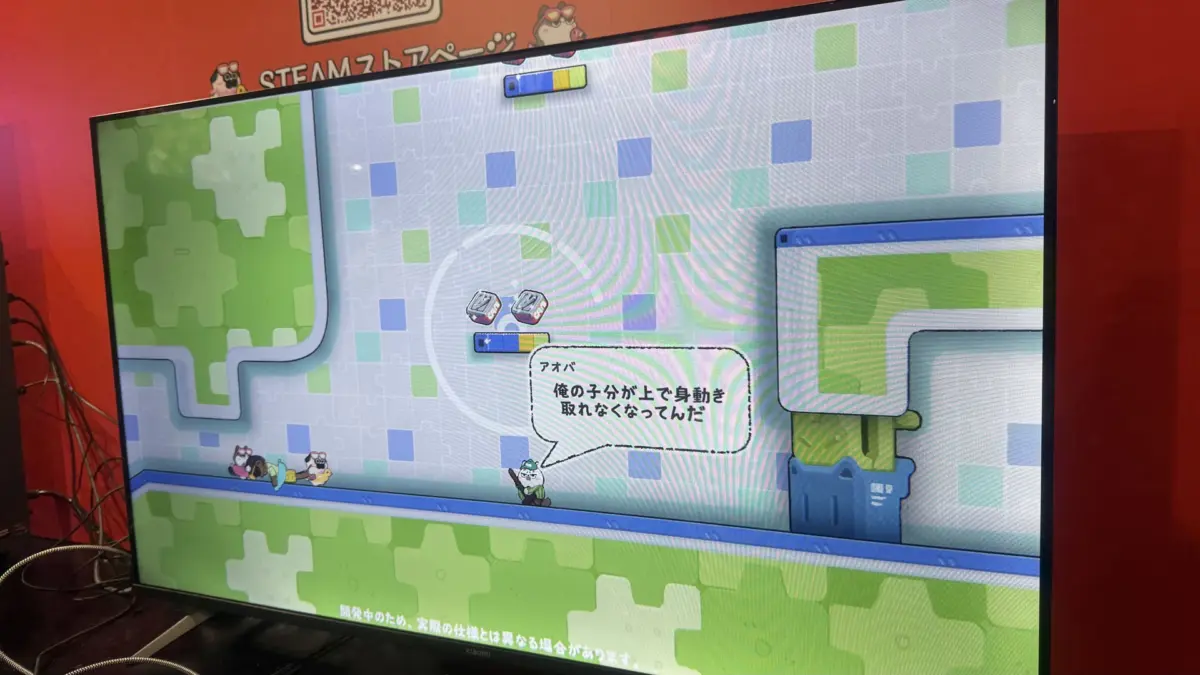
At its core, It Takes Paws revolves around an intricate narrative premise: two distinct pets navigating a series of whimsical, hazard-laden household environments. The twist, however, lies in its strict mechanical execution. Eschewing the symmetrical gameplay loops typical of standard split-screen or online multiplayer titles, It Takes Paws demands absolute synchronization, forcing two players into an asymmetrical dance of mutual dependency. One player takes control of a nimble, acrobatic feline capable of scaling vertical surfaces and squeezing through narrow gaps, while the other commands a robust, grounded canine equipped with brute-force mechanics, heavy lifting capabilities, and specialized utility tools.
This investigative report examines the mechanical philosophy, design architecture, development background, and future market outlook of It Takes Paws. By analyzing developer insights, gameplay reveals, and structural mechanics, we explore how Awoo Studio is attempting to redefine what it means to play cooperatively in a shared digital space.
Detailed Chronology & Development Origins
The genesis of It Takes Paws traces back to a growing industry-wide appetite for games that bridge social divides through tightly coupled shared-screen mechanics. While couch co-op enjoyed a golden era in the early days of console gaming, the modern gaming landscape has leaned heavily toward online matchmaking, remote play-together features, and solitary single-player narratives. Awoo Studio recognized a distinct vacuum in the market: players were hungry for experiences that forced physical or digital proximity, replicating the magic of sitting side-by-side on a couch, communicating verbally, and solving tactile puzzles together.
![2匹のペットが,飼い主をロープ代わりにして大冒険! 「It Takes Paws」は,プレイヤー2人の協力が必須だ[TGS2026]](https://www.4gamer.net/games/024/G102451/20260919081/SS/001.jpg)
Conceptualization and Early Prototyping
Initial development began quietly within Awoo Studio as an experimental physics-based prototype. The core concept was simple: take the familiar, chaotic dynamic of domestic pets—specifically the timeless rivalry and begrudging cooperation between cats and dogs—and translate it into an intricate puzzle-platformer.
Unlike traditional puzzle games where players possess near-identical toolsets, the team at Awoo Studio made a deliberate design choice early on: radical asymmetry.
- The Feline Blueprint: Agile, vertical-oriented, and fragile. The cat character was engineered for high-altitude exploration, tight space navigation, and precision leaping.
- The Canine Blueprint: Grounded, heavy, and structurally impactful. The dog character was designed to manipulate heavy objects, break down structural barriers, and act as a mobile platform or shield for its feline counterpart.
As the prototype matured, Awoo Studio partnered with publisher 2P Games, an entity renowned for championing distinct, high-concept indie titles. This partnership provided the development bandwidth necessary to scale It Takes Paws from a localized indie experiment into a globally anticipated 2026 multi-platform release.
Supporting Context & Mechanical Metrics
To truly understand the brilliance—and the potential frustration—of It Takes Paws, one must analyze its underlying mechanical architecture. The game’s design relies heavily on what game theorists call "forced interdependence."
![2匹のペットが,飼い主をロープ代わりにして大冒険! 「It Takes Paws」は,プレイヤー2人の協力が必須だ[TGS2026]](https://www.4gamer.net/games/024/G102451/20260919081/TN/001.jpg)
The Mechanics of Asymmetrical Co-Op
In standard cooperative games, if one player falters, the other can often pick up the slack, complete a platforming section independently, or resurrect their fallen teammate. It Takes Paws rejects this safety net. The game’s design philosophy dictates that progress is mathematically impossible without simultaneous, complementary actions from both participants.
+-------------------------------------------------------------------+
|                        THE ASYMMETRICAL LOOP                      |
|                                                                   |
|   +-------------------+                +----------------------+   |
|   |   The Feline      | <------------> |   The Canine         |   |
|   |   - High Agility  |  Interlocking  |   - Brute Force      |   |
|   |   - Verticality   |    Mechanics   |   - Heavy Lifting    |   |
|   |   - Tight Spaces  |                |   - Environmental    |   |
|   +-------------------+                |     Manipulation     |   |
+-------------------------------------------------------------------+
For instance, a standard puzzle room may require the feline to leap across precarious high-altitude furniture to reach a switch that deactivates a hazard. However, that switch is enclosed behind a heavy mechanical door that only the canine’s brute-strength mechanics can pry open. Conversely, the canine cannot advance through a flooded corridor or a maze of narrow shelving units without the cat activating elevated environmental bypasses.
Level Design and Spatial Puzzles
Awoo Studio’s level designers have crafted environments that mimic everyday human spaces—kitchens, living rooms, backyards, and workshops—scaled up to the perspective of domestic animals. A standard coffee table becomes an insurmountable mountain range for the dog, requiring a carefully coordinated boost from the cat, while a fallen stack of books serves as a seesaw puzzle demanding precise weight distribution and timing.
Metrics released in early developer briefings highlight the game’s focus on pacing:
![2匹のペットが,飼い主をロープ代わりにして大冒険! 「It Takes Paws」は,プレイヤー2人の協力が必須だ[TGS2026]](https://www.4gamer.net/games/024/G102451/20260919081/TN/002.jpg)
- Puzzle-to-Platform Ratio: Approximately 60% environmental puzzle-solving to 40% kinetic platforming.
- Communication Dependency Index (CDI): Rated at maximum tier, signifying that silent play or uncoordinated rushing will inevitably result in failure.
- Environment Scale Factor: 1:10 relative object scaling, making ordinary household objects feel monolithic and imposing.
Official Statements & Developer Insights
In recent promotional materials and developer deep-dives released ahead of major gaming exhibitions like Tokyo Game Show (TGS), representatives from Awoo Studio and 2P Games have elaborated on their creative vision.
"We didn’t just want to make another cooperative puzzle game where two players do the same thing side-by-side," explained the lead game director during a TGS preview panel. "We wanted to explore the psychological texture of genuine teamwork. When you play It Takes Paws, you aren’t just controlling a character; you are entrusting your progress entirely to your partner. If the dog doesn’t hold the platform steady, the cat falls. If the cat doesn’t scout ahead, the dog walks straight into a household trap."
2P Games echoed this sentiment, emphasizing the publishing house’s commitment to fostering unique indie titles that prioritize social interaction. "The modern gaming industry is saturated with solitary experiences or hyper-competitive multiplayer titles designed to isolate the player," noted a 2P Games spokesperson. "It Takes Paws is an antidote to that isolation. It forces you to look at your partner, communicate clearly, and share in the triumph of a hard-earned victory."
Furthermore, technical directors have highlighted the optimization efforts being poured into the game’s physics engine. Because the interactions between the cat and dog—such as carrying, pushing, and riding—rely heavily on real-time physics calculations, ensuring a seamless, lag-free netcode for online play has been a primary developmental hurdle. Awoo Studio has confirmed that both local couch co-op and robust online cross-play will be fully supported at launch, ensuring that players can experience the game regardless of geographical distance.
![2匹のペットが,飼い主をロープ代わりにして大冒険! 「It Takes Paws」は,プレイヤー2人の協力が必須だ[TGS2026]](https://www.4gamer.net/games/024/G102451/20260919081/TN/003.jpg)
Future Outlook & Market Potential
As the industry marches toward 2026, the anticipation surrounding It Takes Paws continues to compound. In a market where blockbuster budgets often overshadow innovative design, titles like It Takes Paws prove that creative mechanics, charming aesthetics, and a deep understanding of human psychology can carve out a massive, devoted audience.
Challenges on the Horizon
Despite the overwhelmingly positive early reception, Awoo Studio faces notable challenges leading up to the 2026 launch window:
- The Communication Barrier: Because the game relies so heavily on verbal coordination, designing accessible matchmaking systems for random players (without built-in voice chat or reliable ping systems) will be a critical hurdle.
- Replayability and Content Depth: Puzzle-platformers often struggle with post-launch engagement once the solutions to specific riddles are discovered. Awoo Studio will need to ensure that the campaign offers sufficient length, varied mechanics, or alternative gameplay modes to justify long-term player retention.
- Market Competition: The co-op space—popularized by breakout hits like It Takes Two—sets an exceptionally high bar for narrative and mechanical integration. It Takes Paws must deliver not only on its mechanical promises but also on its emotional and comedic core to stand shoulder-to-shoulder with industry giants.
Conclusion
It Takes Paws stands as a testament to the power of imaginative, friction-based cooperative design. By turning the mundane architecture of a human household into an epic, high-stakes playground for a cat and a dog, Awoo Studio and 2P Games have crafted an indie darling-in-the-making. As development enters its final phases toward the 2026 release, the gaming community watches with bated breath—ready to leap, push, pull, and purr their way through one of the most promising co-op experiences of the decade.






Belum ada komentar. Jadilah yang pertama berkomentar!