

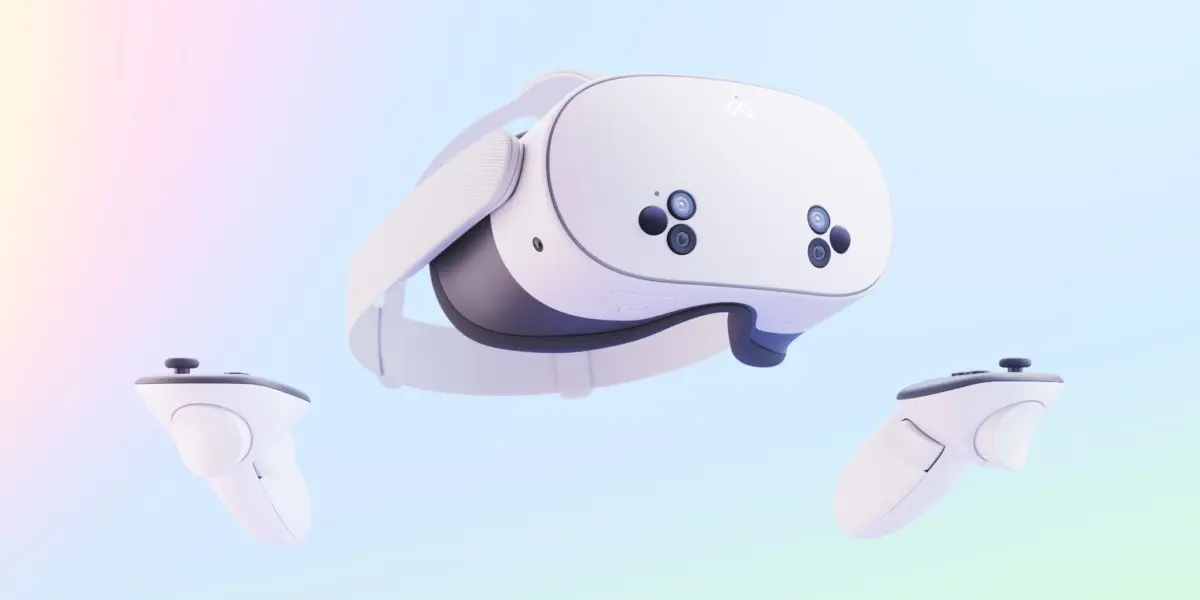
In a sudden and unexpected pivot that highlights the volatile nature of the spatial computing market, Meta has officially reversed its decision to shut down the Virtual Reality (VR) iteration of Horizon Worlds. The flagship social VR platform, which first launched in closed beta in 2021 before expanding publicly, had faced a looming executioner’s axe as Meta leadership increasingly shifted its strategic focus toward mobile platforms and alternative growth vectors.
The reversal was announced by Andrew “Boz” Bosworth, Meta’s Chief Technology Officer, during a spontaneous Instagram “Ask Me Anything” (AMA) session. Responding directly to public outcry and passionate fan feedback, Bosworth revealed that management had decided—literally hours before the public announcement—to spare the VR version of the platform from being sunsetted.
While this represents a massive temporary victory for the dedicated core community of VR creators and gamers who built worlds inside Horizon Worlds, the platform’s long-term roadmap remains deeply fragmented. Meta is making it abundantly clear that its primary development energy, consumer acquisition strategies, and creator incentives are pivoting away from dedicated VR headsets and heavily toward mobile devices and the Meta Horizon engine ecosystem.
This decision provides a fascinating case study into the economics of the metaverse. It demonstrates the stark reality that building a sustainable, mass-market virtual world requires balancing legacy hardware enthusiasts against the scalable economics of mobile devices—all while aggressive competitors like Apple and Nvidia reshape the boundaries of immersive entertainment on rival hardware.
Detailed Chronology: From Metaverse Ambitions to Mobile Pivots
To understand the weight of Meta’s recent reversal, one must look back at the trajectory of Horizon Worlds. When Mark Zuckerberg rebranded Facebook as Meta in late 2021, betting the company’s future on the concept of an interconnected, immersive digital universe, Horizon Worlds was positioned as the crown jewel of that vision. It was designed as a social playground where users could build spaces, hang out, play games, and attend virtual events using Meta Quest headsets.
However, the path to mainstream adoption was paved with technological and cultural hurdles. Early iterations of the platform famously drew mockery across social media for their lack of legs on avatars, primitive graphics, and occasional sterile atmospheres. Despite billions of dollars poured into Reality Labs—Meta’s hardware and metaverse R&D division—user retention and active engagement struggled to meet the lofty internal metrics set by executives.
Realizing that requiring a dedicated, relatively expensive VR headset was an inherent bottleneck to user acquisition, Meta executed its first major strategic shift in April 2022 by announcing plans to bring Horizon Worlds to mobile web and app ecosystems. The logic was simple: lower the barrier to entry. Anyone with a smartphone could access the social spaces without needing to strap a heavy headset to their face.
As development resources were funneled into scaling the mobile infrastructure and the underlying Meta Horizon engine, the original VR version began to feel the pinch. Rumors and internal friction mounted over the viability of maintaining dual, divergent ecosystems. By early 2026, the writing appeared to be on the wall for the VR implementation of Unity runtime-based games within Horizon Worlds, leading to the quiet consensus among leadership that the plug should eventually be pulled to streamline operations.
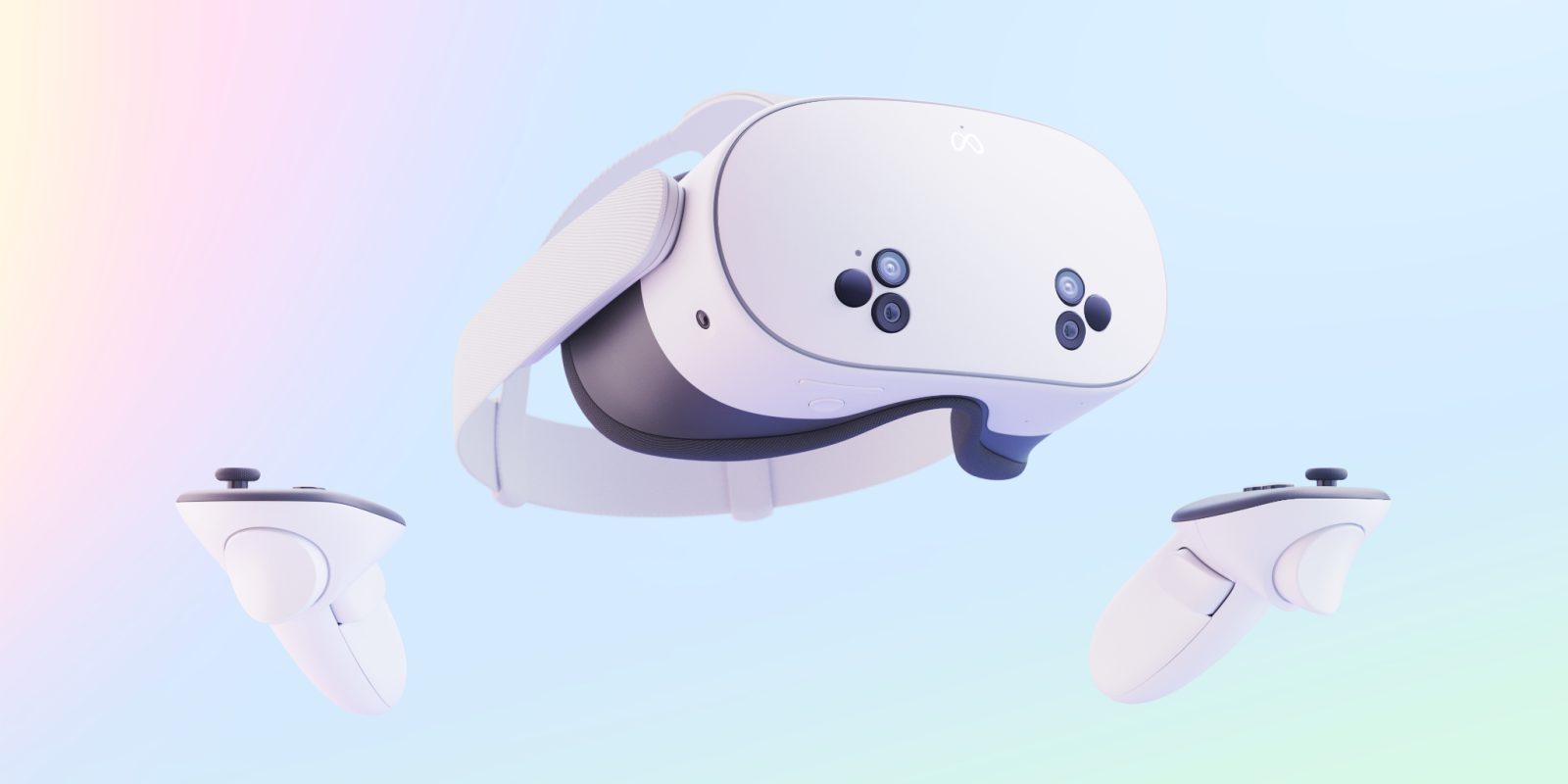
Yet, the abrupt about-face delivered by Bosworth during his Instagram AMA completely disrupts this narrative. After receiving an influx of direct messages from passionate users and creators who had poured years of effort into building VR-native experiences, leadership reconsidered. In an unprecedentedly candid moment, Bosworth noted that the decision to keep the VR servers running for existing games was finalized "just today in fact," saving a vital pocket of the VR community from sudden displacement.
Supporting Context & Metrics: The Quest Hardware Ecosystem vs. Mobile Strategy
Meta’s hardware dominance in the consumer VR space cannot be understated. Headsets like the Meta Quest 2, Quest 3, and the more budget-friendly Quest 3S have captured the vast majority of the standalone VR market share. For millions of consumers, a Quest device remains the quintessential entry point into virtual reality gaming.
Yet, hardware sales do not automatically translate to daily active engagement in social metaverse applications. While Quest users frequently log in for high-octane action games, fitness apps, and immersive multiplayer shooters, social sandbox environments like Horizon Worlds have historically struggled to maintain a sticky, daily active user (DAU) base that justifies their immense maintenance costs.
This financial and operational reality explains why Meta is ruthlessly prioritizing mobile. Consider the metrics of accessibility:
- The Global Mobile Market: There are billions of active smartphones globally, creating an immediate, frictionless funnel for user acquisition.
- Frictionless Onboarding: Downloading an app from the Apple App Store or Google Play Store requires zero hardware investment beyond what the user already owns in their pocket.
- Creator Momentum: Meta’s internal data revealed that consumer and creator energy was naturally aggregating around the mobile ecosystem and the flexible Meta Horizon engine, pulling resources away from the rigid confines of standalone VR headsets.
By shifting development focus away from VR-native Horizon Worlds expansion, Meta is effectively treating the VR version of the platform as a "legacy product." The existing ecosystem—specifically the games built on the Horizon Unity runtime—will continue to function for those who access them via the downloaded Horizon Worlds app in VR. However, no new content updates, features, or VR-exclusive titles are slated for development. It is a classic maintenance-mode compromise: keep the lights on for the loyalists, but spend the R&D budget where the scalable growth is predicted to happen.
Official Statements and Industry Implications
The transparency displayed by Andrew Bosworth during his Instagram AMA offers a rare glimpse into the corporate decision-making process at the highest levels of Big Tech. Rather than issuing a sanitized press release, Bosworth directly addressed the tension between community passion and corporate strategy.
"We have decided, just today in fact, that we will keep Horizon Worlds working in VR for existing games to support the fans who’ve reached out, like yourself, who really care about that. Those, the Horizon Unity runtime games, they’re not gonna work on mobile. They’ll just be working on VR."
Bosworth’s admission underscores a critical challenge for platform holders: balancing the emotional attachment of early adopters against cold economic calculations.

"We’re not bringing new games. Again, most of our energy is going towards mobile and the Meta Horizon engine there. The reason for that is because that’s where most of the consumer and creator energy already was, and so we’re kind of leaning into that. But yeah, you know, for people who already have games that they like that they’re using in Horizon Worlds, will be able to download the Horizon Worlds app and use it in VR for the foreseeable future."
Industry analysts point out that this move signals a maturation—and perhaps a scaling back—of Meta’s utopian metaverse ambitions. The company is no longer trying to force every single user into an all-encompassing virtual reality social network. Instead, Meta is behaving more like a pragmatic software publisher, segmenting its audience: keeping high-end gaming as a core pillar of Meta Quest hardware while cultivating a more casual, accessible social ecosystem via mobile apps.
Future Outlook: The Competitive Landscape of Spatial Computing
While Meta recalibrates its metaverse strategy, the broader spatial computing and VR ecosystem is evolving at a breakneck pace, driven by fierce competition from industry heavyweights like Apple and enterprise technology leaders like Nvidia.
Even as Meta shifts its internal focus away from VR social platforms, gaming remains the lifeblood of the Meta Quest hardware lineup. Users continue to look to Quest headsets for cutting-edge standalone experiences, fitness tracking, and immersive multiplayer sessions. However, the hardware paradigm is rapidly expanding beyond standalone gaming loops.
On the premium end of the spectrum, Apple continues to push the boundaries of enterprise and high-end immersive computing with the Apple Vision Pro. The device is receiving significant capability boosts, particularly in high-end gaming and professional simulation software. Recent announcements reveal that Nvidia is bringing its powerful CloudXR technology to visionOS, allowing applications like Autodesk VRED to run with breathtaking fidelity. Furthermore, software updates like visionOS are unlocking support for ultra-advanced professional simulation tools—such as the world’s most advanced flight simulator—directly on the Apple Vision Pro.
This creates a fascinating bifurcation in the market:
- The Mass-Market Mobile/Budget VR Approach: Meta is capturing the broad, casual audience by bridging the gap between mobile devices and legacy Quest hardware, prioritizing accessibility and ease of use over deep, hardware-exclusive immersion.
- The High-End Spatial Computing Approach: Competitors like Apple and Nvidia are targeting professionals, enthusiasts, and high-net-worth consumers with ultra-high-resolution displays, cloud-rendered graphics, and hyper-realistic industrial and gaming applications.
For the community of creators who fought to save the VR version of Horizon Worlds, Meta’s eleventh-hour reversal is a welcome reprieve. They can continue exploring, building, and socializing in their favorite virtual spaces. Yet, the broader writing on the wall is clear: the frontier of virtual and spatial computing is shifting rapidly. As Meta doubles down on mobile efficiency and competitors race toward cloud-powered photorealism, the metaverse of tomorrow will look vastly different—and far more fragmented—than the unified virtual universe Zuckerberg originally promised in 2021.








Belum ada komentar. Jadilah yang pertama berkomentar!