

Executive Overview
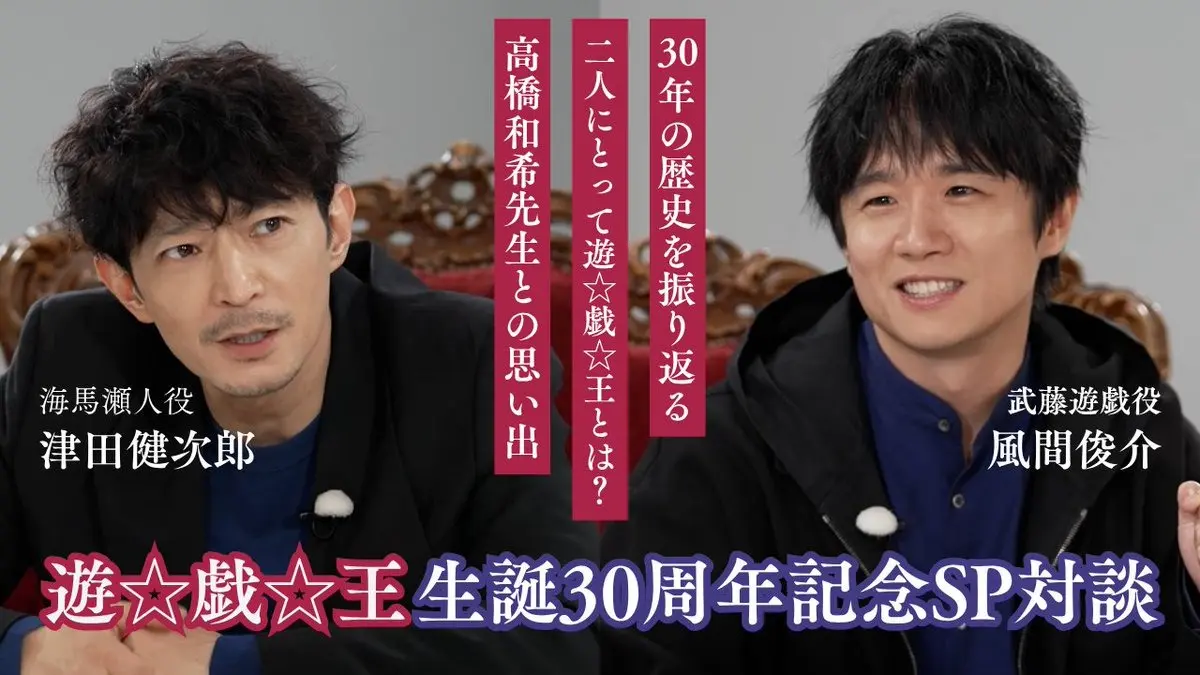
Three decades after Kazuki Takahashi first penned the panels of what would become a global cultural juggernaut, the Yu-Gi-Oh! franchise continues to command the reverence of millions. In a momentous celebration honoring the 30th anniversary of the franchise, iconic voice actors Shunsuke Kazama—the definitive voice of Yugi Muto and Yami Yugi—and Kenjiro Tsuda—the unmistakable, commanding presence behind Seto Kaiba—have reunited for a special roundtable discussion.
Broadcast via the official streaming channels, this commemorative conversation offers fans a rare, deeply personal look into the behind-the-scenes realities of recording the legendary anime series. Beyond nostalgia, the event serves as a platform for reflection on the profound cultural footprint left by Takahashi, who tragically passed away in 2022. As the community tunes in to hear these two titans of the industry reminisce, anticipation has reached a fever pitch regarding a teased "major announcement" slated for the conclusion of the broadcast.
While the exact nature of this announcement remains tightly guarded, industry analysts and editorial insiders are parsing through recent convention schedules, copyright filings, and historical patterns to temper expectations while acknowledging the sheer magnitude of the milestone. Whether the reveal points toward a commemorative home-video box set, a major art exhibition, or an entirely unannounced animation project, the reunion of Kazama and Tsuda underscores the enduring vitality of a franchise that transcended manga and anime to become an immortal pillar of pop culture.
Detailed Chronology: From Weekly Shonen Jump to Global Phenomenon
To truly understand the weight of a 30-year anniversary, one must trace the winding trajectory of Yu-Gi-Oh! from its modest beginnings in the pages of Shueisha’s Weekly Shonen Jump to its status as a multi-billion-dollar multimedia empire.
The 1996 Genesis: Takahashi’s Dark Fantasy
When Kazuki Takahashi introduced Yu-Gi-Oh! to the world in September 1996, the series bore little resemblance to the card-game behemoth it would eventually become. Initially, Takahashi conceived the manga as a darker, horror-tinged anthology about games in general. Yugi Muto, a timid high-school student who solves the ancient Millennium Puzzle, becomes possessed by an enigmatic, ruthless spirit of an ancient Egyptian pharaoh. In these early chapters, the "Shadow Games" (Yami no Gēmu) punished wrongdoers with twisted psychological penalties.
Card games were merely one component of Takahashi’s diverse repertoire of tabletop and street challenges. However, the unexpected, explosive popularity of a specific fictional card game featured in the manga—initially called "Magic & Wizards"—altered the course of publishing history. Fans clamored for real-world rules, leading to the creation of the Official Card Game (OCG) in Japan by Konami in 1999, followed shortly by the Trading Card Game (TCG) internationally.
The 2000s Animation Boom and the Voices that Defined an Era
While Toei Animation produced a short-lived, distinct adaptation in 1998 (often referred to by fans as season zero), the definitive adaptation—Yu-Gi-Oh! Duel Monsters, produced by Studio Gallop—premiered in Japan in April 2000. This is the adaptation that launched a thousand playground duels and introduced Shunsuke Kazama and Kenjiro Tsuda to the global stage.
Kazama, then a young and relatively untested actor, imbued Yugi with an earnest, fragile humanity while seamlessly transitioning into the deep, resonant, and commanding authority of the Pharaoh. Opposite him stood Tsuda, whose gravelly, intense, and utterly unforgettable portrayal of Seto Kaiba elevated the wealthy corporate rival from a standard antagonist into one of the most iconic anti-heroes in anime history. Their dynamic—a volatile mixture of mutual respect, ideological conflict, and dramatic tension—anchored the emotional core of the series through its grueling tournament arcs, from Duelist Kingdom to Battle City and beyond.
Supporting Context & Metrics: The 30-Year Footprint
The endurance of Yu-Gi-Oh! over three decades is not merely a matter of nostalgic affection; it is backed by staggering commercial and cultural metrics that place it among the most successful intellectual properties in human history.
Financial and Commercial Dominance
According to comprehensive industry valuations, Yu-Gi-Oh! ranks comfortably within the top 25 highest-grossing media franchises of all time. Having generated well over $20 billion in total revenue across its lifetime, the franchise’s financial engine is driven by three primary pillars:
- The Trading Card Game (TCG/OCG): Recognized by Guinness World Records as the top-selling trading card game in history, having distributed tens of billions of cards worldwide.
- Video Games: Spanning dozens of titles across nearly every gaming platform from the Game Boy Color to modern mobile devices and consoles, with Yu-Gi-Oh! Master Duel alone drawing millions of active digital duelists.
- Merchandise, Manga, and Home Video: Endless runs of figures, apparel, manga volumes, and Blu-ray box sets that continue to fly off shelves.
The Cultural Resonance of Kazuki Takahashi
At the center of this vast commercial empire remains the artistic vision of Kazuki Takahashi. When Takahashi passed away in July 2022 under heroic circumstances while attempting to rescue a drowning swimmer in Okinawa, the global anime and manga community plunged into mourning. Tributes poured in from creators, fans, and competitors alike.
For Kazama and Tsuda, the 30th-anniversary roundtable is as much a commemoration of Takahashi’s creative genius as it is a celebration of the franchise itself. The two actors spent years collaborating with Takahashi, interpreting his written words and transforming ink on paper into living, breathing television history. Their memories and reflections offer a deeply personal lens through which fans can process the loss of the master creator while celebrating the world he left behind.
Official Statements and Industry Analysis: Decoding the "Major Announcement"
As the 8:00 PM JST streaming window approaches, the primary focal point of discussion within fan communities—such as specialized Discord servers, Reddit forums, and X (formerly Twitter) spaces—is the teased "major announcement" promised at the conclusion of the roundtable.
Editorial Analysis: Managing Expectations for Jump Festa
While the temptation is high to speculate about an entirely new anime season, film, or massive franchise reboot, experienced industry analysts advise caution. A prominent editorial voice within the community, often designated as "Ark," has pointed out a glaring omission in current convention schedules:
"I would note editorially that Yu-Gi-Oh! has not yet been listed as one of the series/franchises to have an anime-related stage show at Jump Festa, Shueisha’s yearly convention for their brands. This doesn’t mean it couldn’t mean something anime wise gets announced, but I would err on the side of caution and expect something, say, related to the Art Exhibition to be announced, or a Blu-Ray Set of Yu-Gi-Oh! Duel Monsters."
This analytical perspective grounds the hype. Jump Festa, organized by Shueisha, serves as the premier showcase for titles currently serialized or heavily backed by the publisher’s modern ecosystem. Because Yu-Gi-Oh! operates under complex licensing structures involving Shueisha, Konami, and various production committees, its presence at general Shueisha events can occasionally fluctuate.
Therefore, plausible candidates for the major announcement include:
- The Global Expansion of the Kazuki Takahashi Art Exhibition: Following successful runs in Japan celebrating his artwork, a traveling international exhibition or a definitive art book release could be unveiled.
- Remastered Home-Video Box Sets: High-definition Blu-ray releases of Yu-Gi-Oh! Duel Monsters featuring pristine audio tracks and collectible packaging have long been requested by collectors.
- Specialized OCG/TCG Product Announcements: High-end commemorative card sets designed in collaboration with Kazama and Tsuda, featuring unique art variants or voice lines.
Regardless of the specific announcement, the mere fact that Kazama and Tsuda are sharing a stage to discuss the legacy of the series guarantees that the broadcast will be treated as an essential historical document by the fandom.
Future Outlook: The Next Decade of Dueling
As Yu-Gi-Oh! transitions past its third decade, the franchise faces the unique challenge of maintaining relevance in an entertainment landscape vastly different from the year 2000. Yet, the foundational strengths of the property—complex strategic gameplay, unforgettable character designs, and timeless themes of friendship, destiny, and rivalry—continue to insulate it against the passage of time.
The Convergence of Nostalgia and Modernity
Konami and the various production entities steering the ship have successfully bifurcated the franchise’s strategy. On one hand, modern iterations of the anime and the continuous evolution of the digital and physical card games keep younger generations engaged through shifting mechanics and dynamic metagames. On the other hand, nostalgia-driven events like the Kazama-Tsuda roundtable cater to the aging demographic of fans who grew up watching Duel Monsters on afternoon television blocks around the world.
This duality ensures that Yu-Gi-Oh! is not merely preserved as a museum piece of 90s and 2000s pop culture, but functions as a living, breathing ecosystem. When Shunsuke Kazama steps up to the microphone to utter the iconic chant, "Sore wa dou kana?" ("What do you think about that?" or "Not so fast!"), and Kenjiro Tsuda unleashes Kaiba’s signature laugh, time seems to fold in on itself.
Conclusion
The 30th-anniversary roundtable is more than a marketing milestone; it is a testament to the bonds forged between creators, performers, and an intensely loyal global audience. As fans gather on Discord and social media platforms to dissect every word uttered during the stream, the spirit of Kazuki Takahashi’s creation burns as brightly as ever. Whether the final minutes of the broadcast reveal a modest home-video collection or a groundbreaking new project, one truth remains absolute: for the millions who learned the heart of the cards, the game is far from over.




Belum ada komentar. Jadilah yang pertama berkomentar!