

Executive Overview
The landscape of contemporary weekday K-dramas has long relied on the intricate dynamics of familial obligation, societal expectations, and generational friction. However, the hit new series Mommy to Mi Mi manages to carve out a distinct niche by examining these themes through the divergent philosophies of two very different mothers. Starring seasoned actresses Kim Hee Jung and Kang Kyung Hun, the drama explores the profound—and often tumultuous—lengths to which parents will go to shape, protect, or interfere in the lives of their adult children.
As the narrative unfolds, viewers are pulled into a world where maternal instinct clashes with harsh economic realities and calculated social ambition. Jo Mi Mi (portrayed by Kim Hee Jung) represents the traditional archetype of a mother who has sacrificed her personal identity entirely for the wellbeing of her household. Yet, her foundation is continuously rocked by a cascade of unexpected crises, culminating in severe financial turmoil brought on by her seemingly dependable children. Conversely, Jeon Jin Hee (portrayed by Kang Kyung Hun) approaches motherhood through a lens of self-preservation and calculated orchestration. Rather than reacting to domestic emergencies, Jin Hee proactively engineers her son’s future, playing the role of a meticulous matchmaker with hidden motives.
Recent episodes have heightened the narrative stakes, thrusting both women into pivotal turning points. While Mi Mi confronts the painful reality of her second son’s devastating financial missteps, Jin Hee stages a high-stakes anniversary dinner designed to corner her son into a romance of her choosing. This comprehensive analysis examines the structural narrative of Mommy to Mi Mi, detailing the escalating conflicts, the underlying motivations of its principal characters, and the broader thematic implications of how two contrasting maternal strategies yield dramatically different consequences.
Detailed Chronology of Conflict: Unraveling the Lives of Two Families
Jo Mi Mi’s Escalating Domestic Crisis
The narrative trajectory of Jo Mi Mi has been defined by a relentless series of disruptions to her quiet, albeit self-sacrificing, domestic life. Known for pouring her heart, soul, and resources into her family, Mi Mi’s world was first thrown into profound chaos with the unexpected return of her eldest son, Kang Kang Nam (played by Kang Eun Tak). Returning home alongside his daughter, Kang Soo Ah, following a painful divorce, Kang Nam instantly shifted the household’s equilibrium, forcing Mi Mi to adapt to the sudden responsibilities of shared childcare and emotional rehabilitation.
Just as Mi Mi began to steady the ship, a far more ominous threat materialized. For years, her second son, Kang Dae Chi (played by Kim Jong Hoon), had been regarded as the golden child—the unwavering pride and joy of the family. However, this illusion of perfection was shattered when Mi Mi discovered a foreclosure notice hidden within Dae Chi’s home. The legal warning signaled an impending financial catastrophe that threatened to uproot the family’s stability entirely.
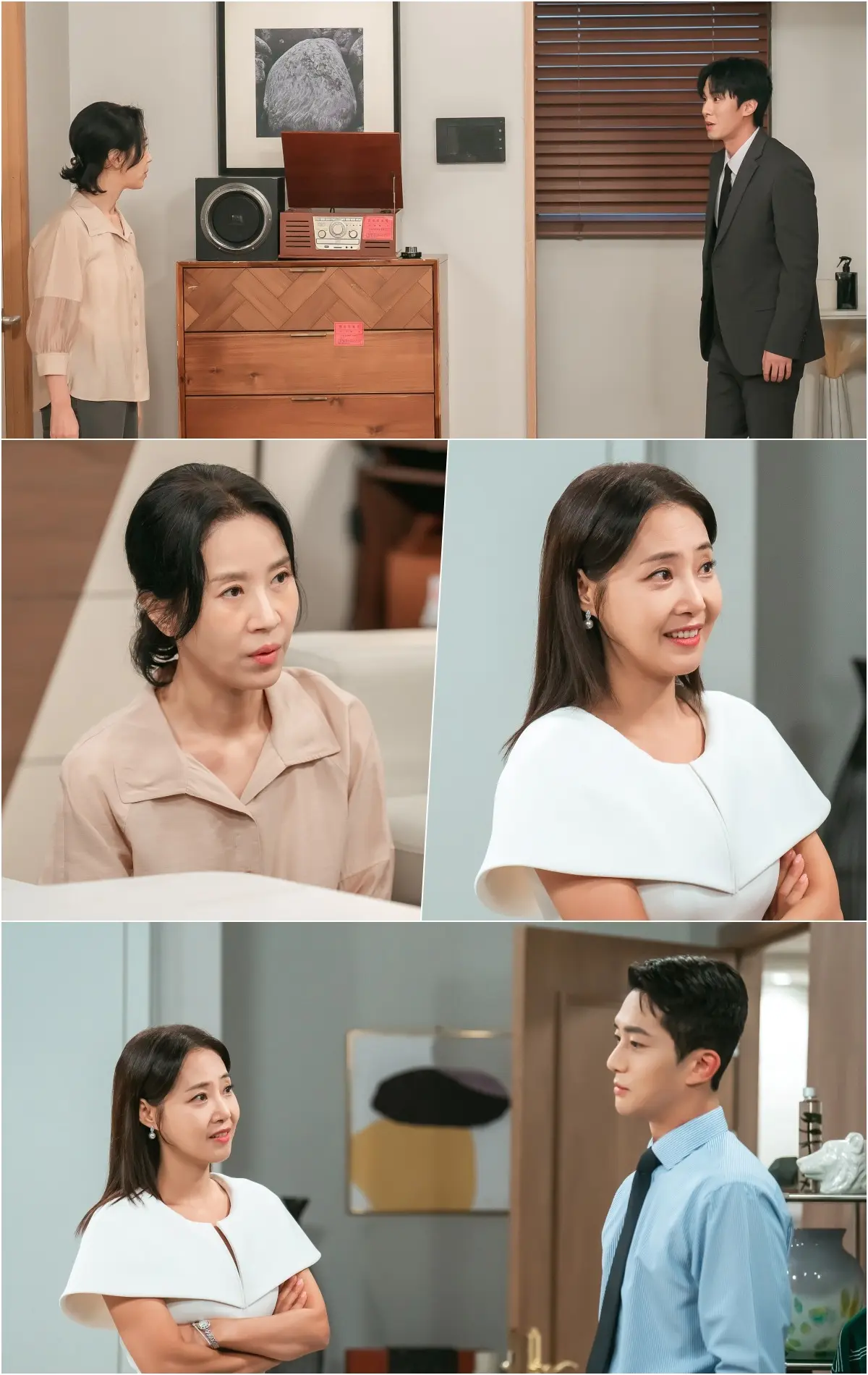
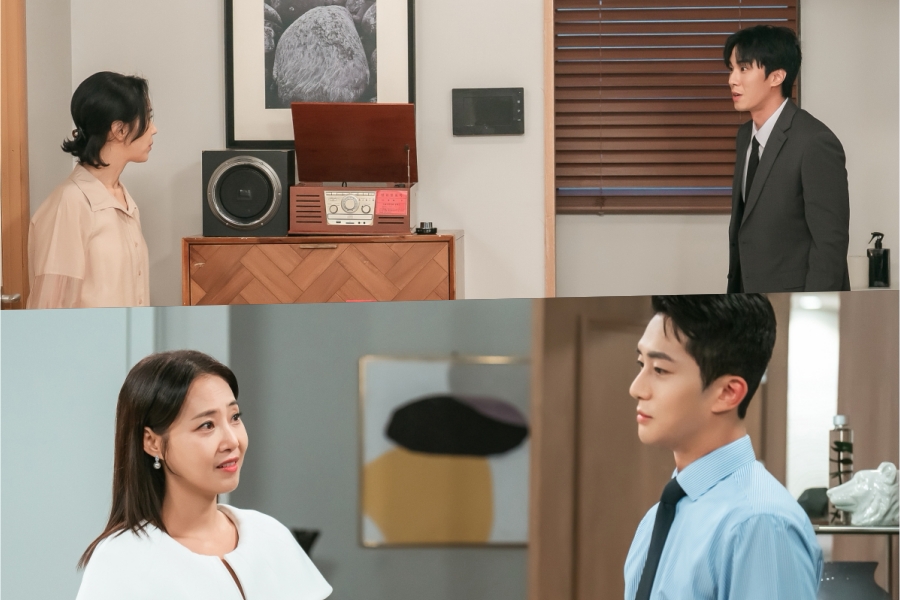
Driven by a mother’s urgency, the upcoming episodes see Mi Mi directly confronting Dae Chi to unearth the truth behind the ominous notice. Cornered by his mother, Dae Chi breaks down and confesses a devastating secret: persuaded by a senior colleague at his workplace, he poured his savings into high-risk investments that ultimately collapsed, wiping out his finances and landing him in a severe debt spiral.
The revelation leaves Jo Mi Mi visibly stunned, stripped of her characteristic composure. For a woman who has spent decades acting as the shock absorber for her family’s burdens, this financial betrayal represents a breaking point. Viewers are left to question what measures Mi Mi will take next as she struggles to salvage her family from a compounding series of personal and economic disasters.
Jeon Jin Hee’s Calculated Matchmaking Agenda
In stark contrast to Mi Mi’s reactive firefighting, Jeon Jin Hee operates with the cool, calculated precision of a chess master. While Mi Mi battles the ghosts of financial ruin, Jin Hee focuses her energy on the romantic and professional trajectory of her son, Cha Do Yoon (played by Bae Ji Wan).
Jin Hee’s maternal intervention takes the form of aggressive matchmaking. Setting her sights on Kang Ye Ri (played by Kim Na Eun), a subordinate at her workplace, Jin Hee becomes utterly determined to engineer a union between Ye Ri and her unwitting son. Jin Hee’s strategy is not merely a whim of maternal anxiety; behind her matchmaking efforts lies a specific, carefully guarded motivation that hints at deeper narrative secrets yet to be fully uncovered.
The tension peaks when Jin Hee invites Kang Ye Ri to attend her wedding anniversary dinner. Under the guise of a celebratory gathering, Jin Hee orchestrates a series of subtle maneuvers designed to draw Ye Ri and Cha Do Yoon into closer proximity. Meanwhile, Do Yoon attends the dinner entirely oblivious to his mother’s underlying agenda. As the evening progresses, Do Yoon is caught completely off guard when he finally decodes the subtle cues and realizes his mother has turned a family milestone into a covert blind date.
This calculated intervention highlights the ideological chasm between the two mothers: while Mi Mi’s life is dictated by chaos management, Jin Hee’s life is defined by premeditated control.
Supporting Context & Metrics: The Cultural and Structural Impact of Mommy to Mi Mi
Character Dynamics and Casting Precision
The success of Mommy to Mi Mi largely hinges on the chemistry and contrasting energy of its lead actresses. Kim Hee Jung, celebrated for her emotional depth in dramatic roles—such as her memorable performance in Pearl in Red—brings a raw, visceral vulnerability to Jo Mi Mi. Her ability to portray exhaustion layered with fierce, unconditional love anchors the drama’s emotional core.
On the other end of the spectrum, Kang Kyung Hun delivers a sharp, sophisticated performance as Jeon Jin Hee. Kang’s portrayal deftly avoids turning Jin Hee into a caricature of the overbearing television mother; instead, she imbues the character with a chilling pragmatism and an enigmatic depth that keeps audiences guessing about her true intentions.
Broadcast Metrics and Accessibility
As a flagship weekday drama, Mommy to Mi Mi occupies a crucial programming block designed to capture daily viewers who follow serialized domestic narratives. Airing at 8:30 p.m. KST, the series has successfully captured a dedicated viewership base. Furthermore, the drama’s distribution via global streaming platforms like Viki has allowed it to transcend domestic borders, garnering an international audience fascinated by its universal themes of familial dysfunction, financial anxiety, and generational expectations.
| Character | Actor | Primary Conflict / Goal | Approach to Motherhood |
|---|---|---|---|
| Jo Mi Mi | Kim Hee Jung | Managing eldest son’s divorce and second son’s hidden financial ruin. | Unconditional self-sacrifice; reactive crisis management. |
| Jeon Jin Hee | Kang Kyung Hun | Orchestrating a strategic marital match for her son, Cha Do Yoon. | Premeditated control; calculated social engineering. |
| Kang Kang Nam | Kang Eun Tak | Rebuilding his life and raising his daughter after divorce. | Dependent on maternal support. |
| Kang Dae Chi | Kim Jong Hoon | Concealing catastrophic investment failures and impending foreclosure. | Evasive; yielding to workplace peer pressure. |
Official Statements and Production Insights
While traditional press releases for Mommy to Mi Mi have focused primarily on plot teasers, statements from the production team shed light on the deeper psychological explorations driving the narrative. Producers have emphasized that the central conflict of the drama is not merely about domestic spats, but rather an exploration of identity through the lens of motherhood.
"Mommy to Mi Mi asks a fundamental question: When does a mother’s dedication cross the line into intrusion, and how do the choices of parents fundamentally shape the destinies of their children? Through Mi Mi and Jin Hee, we wanted to showcase two vastly different ways women reclaim—or lose—themselves within the matrix of family obligations," noted a representative from the production crew.
Furthermore, the actors themselves have highlighted the emotional intensity required to bring these complex family dynamics to life. Kim Hee Jung reportedly expressed deep empathy for Jo Mi Mi’s plight, noting that the character’s journey mirrors the silent sacrifices made by countless parents who shoulder their children’s burdens without complaint. Similarly, Kang Kyung Hun has discussed the challenge of playing Jeon Jin Hee, a character whose maternal love is wrapped in layers of strategy and ambition, making her motivations both fascinating and morally ambiguous.
Future Outlook: What Lies Ahead for the Mothers of Mommy to Mi Mi
As Mommy to Mi Mi charges past its latest pivotal episodes, the narrative momentum is reaching a boiling point. The divergent paths chosen by Jo Mi Mi and Jeon Jin Hee are bound to converge in dramatic fashion, setting the stage for high-stakes fallout in the coming weeks.
For Jo Mi Mi, the immediate future demands a painful reckoning with financial reality. Now that Kang Dae Chi’s disastrous investments and the threat of foreclosure have been dragged into the light, Mi Mi can no longer afford to simply absorb her children’s shocks. The financial damage requires structural solutions, and her attempts to bail out her second son while managing her eldest son’s post-divorce reintegration threaten to push her past her breaking point. Will Mi Mi be forced to make a hard boundary with her adult children, or will her maternal instincts once again override her self-preservation?
Meanwhile, Jeon Jin Hee’s calculated matchmaking scheme is poised for disruption. Now that Cha Do Yoon has caught onto his mother’s clandestine setup with Kang Ye Ri, the dynamic between mother and son is set to undergo severe friction. Moreover, the hidden "specific reason" driving Jin Hee’s choice of Ye Ri as a daughter-in-law promises to unleash a wave of unforeseen consequences once it comes to light. If Jin Hee’s underlying motives are tied to professional ambition or past secrets, the fallout could jeopardize not only her relationship with Do Yoon but also her standing at work.
Ultimately, Mommy to Mi Mi is shaping up to be a masterclass in domestic suspense. As both mothers navigate the treacherous waters of their children’s adult lives, viewers are reminded that intervention—whether driven by selfless devotion or calculated ambition—rarely goes according to plan. The unfolding episodes will undoubtedly test the resilience of both families, solidifying the drama’s status as a standout title in the current K-drama landscape.









Belum ada komentar. Jadilah yang pertama berkomentar!