

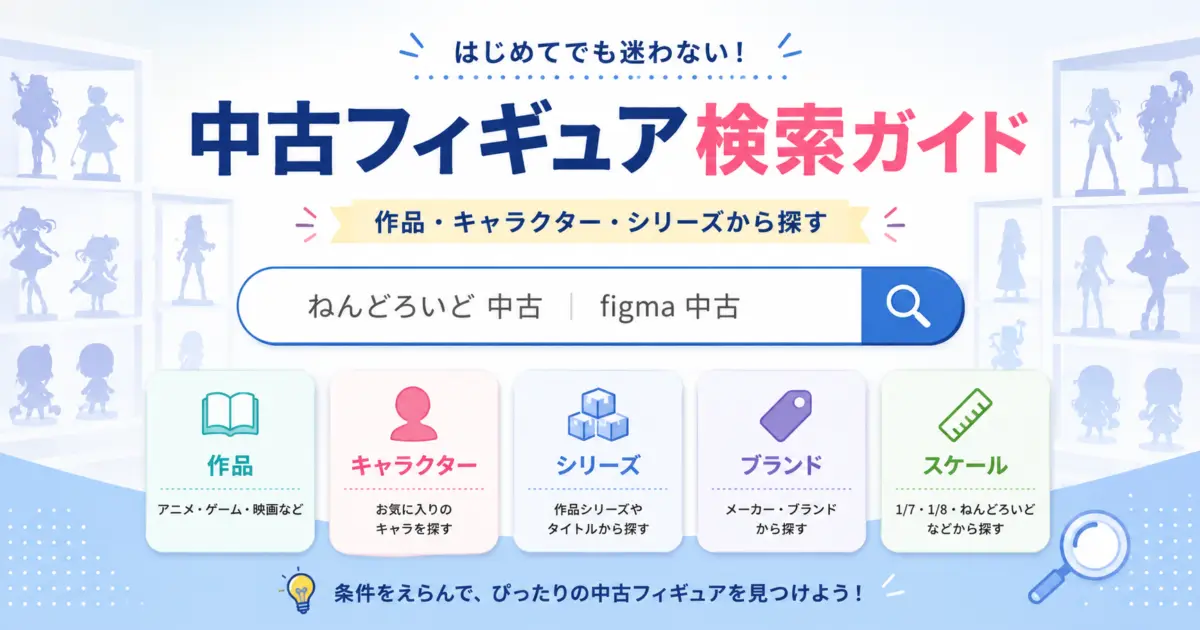
Executive Overview
The secondary market for anime figures, character merchandise, and collectible goods has grown from a niche, subcultural hobby into a multi-billion-dollar global economic powerhouse. Driven by surging international demand, limited production runs, and the increasing mainstream acceptance of pop culture and otaku art forms, acquiring pre-owned collectibles has evolved into a sophisticated commercial landscape.
Once confined to physical hobby shops in Tokyo’s Akihabara district or obscure, text-based internet message boards, the trade of secondary figures is now heavily digitized. Platforms such as Yahoo! Auctions, Mercari, Mandarake, and global proxy shopping services have democratized access, allowing collectors worldwide to participate in a dynamic, high-stakes marketplace. This report provides an exhaustive examination of the ecosystem surrounding pre-owned anime figures, analyzing the mechanics of valuation, the impact of platform-based authentication, and the future outlook for both veteran collectors and casual enthusiasts.
Detailed Chronology: The Evolution of Figure Collecting
To understand the current state of the secondary market, one must examine its historical trajectory. The ecosystem has transformed drastically over the past three decades, shifting from localized peer-to-peer exchanges to a streamlined, tech-driven retail environment.
[1990s - Early 2000s] ──> [Mid 2000s - 2010s] ──> [2010s - 2020] ──> [2021 - Present]
Local Hobby Shops         Rise of Specialized Forums   Global E-Commerce Boom   Algorithmic Pricing & Proxies
& Conventions             & Early Online Auctions      & Direct Import Services   & Automated Authentication
1. The Era of Physical Exclusivity (1990s – Early 2000s)
In the early days of anime figure collecting, items were predominantly acquired through physical retail stores, garage kit conventions (such as Wonder Festival), or specialized import shops. Information regarding upcoming releases was sparse, relying heavily on monthly print magazines like Hobby Japan and Dengeki Hobby Magazine. The secondary market was hyper-localized; finding a rare PVC figure meant physically browsing through secondhand bins in Akihabara or relying on trusted international middlemen who shipped catalogs overseas.
2. The Digital Shift and Forum Trading (Mid-2000s – 2010s)
As internet adoption accelerated, early online communities and enthusiast forums became the primary hubs for figure trading. Platforms allowed collectors to bypass traditional retail boundaries, facilitating direct peer-to-peer transactions across international borders. However, this era was fraught with risks, including high shipping costs, unreliable payment methods, and an absence of formal consumer protection frameworks.
3. The E-Commerce and Proxy Expansion (2010s – 2020)
The establishment of dedicated secondhand retail giants—such as Mandarake, Surugaya, and AmiAmi’s pre-owned section—professionalized the market. Concurrently, proxy services like From Japan, Buyee, and ZenMarket bridged the language and logistical barriers between Japanese domestic auction sites (like Yahoo! Auctions Japan) and international buyers. During this period, the valuation of figures began to stabilize, supported by transparent historical sales data and standardized grading systems.
4. The Modern Tech-Driven Marketplace (2021 – Present)
Today, the secondary market is characterized by instantaneous global connectivity, algorithmic pricing models, and sophisticated authentication measures. Marketplace platforms utilize advanced data analytics to track pricing trends in real time, while buyers benefit from integrated translation tools, secure escrow services, and verified seller ratings.
Supporting Context & Metrics: Understanding Valuation and Market Drivers
Valuation in the secondary market is governed by classic economic principles of supply and demand, heavily influenced by the specific characteristics of the anime and gaming industries. Several core metrics determine whether a pre-owned figure appreciates or depreciates in value:
1. Scarcity and Production Runs
Limited-edition releases, exclusive convention variants, and items produced via made-to-order manufacturing models inherently command higher resale prices. Manufacturers often close pre-order windows months before production begins, creating artificial scarcity. If a series experiences a sudden surge in popularity—often triggered by a viral anime adaptation or a cinematic release—the secondary market value of related figures can spike exponentially within days.
2. Manufacturer Reputation and Craftsmanship
The pedigree of the manufacturer plays a critical role in secondary market liquidity. Figures produced by industry giants such as Good Smile Company, Alter, Kotobukiya, and Max Factory consistently retain their value better than mass-market prize figures (such as those won in Japanese UFO catcher arcade crane games). High-end scale figures (1/7th and 1/8th scale) featuring intricate sculpting, complex paint applications, and dynamic poses are viewed by many as appreciating assets rather than mere toys.
3. Condition Grading Systems
Unlike brand-new retail items, secondary market transactions rely heavily on standardized grading systems to assess the condition of both the figure and its original packaging (the "box condition"). Professional secondhand retailers classify items meticulously:
- Grade A (Mint / Unopened): Factory-sealed items with pristine box packaging.
- Grade B (Opened / Excellent Condition): Figures displayed in controlled environments with minimal dust or wear; packaging may show slight shelf wear.
- Grade C (Damaged / Missing Parts): Items with noticeable paint transfer, sun bleaching, broken pegs, or missing accessories, sold at a steep discount for customizers or budget-conscious collectors.
Official Statements and Industry Perspectives
Major stakeholders within the collectibles industry have increasingly focused on stabilizing and securing the secondary market to protect consumer confidence. Representatives from prominent recycling and secondhand retail enterprises have noted a distinct shift in consumer behavior.
"The secondary market is no longer just a place for bargain hunters; it is a vital ecosystem that sustains the entire anime merchandise pipeline," states a senior logistics coordinator for a major Japanese pre-owned retailer. "When collectors know that a high-end scale figure retains or gains value over time, they are far more willing to invest in premium pre-orders directly from manufacturers upon release."
Furthermore, consumer protection advocates emphasize that the integration of automated translation, secure international escrow, and transparent pricing histories has drastically reduced fraud rates. Industry reports indicate that cross-border transactions via proxy services now account for over 40% of total secondary market volume for high-end PVC figures, highlighting the truly globalized nature of modern otaku culture.
Future Outlook: Trends Shaping the Next Decade
As the secondary market continues to mature, several emerging trends are poised to redefine how collectors buy, sell, and trade anime figures:
1. Anti-Counterfeiting and Authentication Technologies
The proliferation of bootleg figures—particularly from overseas manufacturers copying high-end scale designs—remains a persistent challenge. In response, primary manufacturers and secondary platforms are exploring blockchain-based provenance tracking, holographic serial numbers, and near-field communication (NFC) tags embedded in packaging to guarantee authenticity.
2. Sustainability and the Circular Economy
With growing global emphasis on sustainable consumption, the pre-owned figure market is increasingly viewed through an environmental lens. Buying and selling secondhand figures extends the lifecycle of petroleum-based PVC and ABS plastics, aligning with the broader corporate sustainability goals of major entertainment conglomerates.
3. Predictive Pricing and Data Transparency
Advanced data analytics tools are beginning to offer predictive pricing models for collectors. By analyzing historical search volume, social media engagement metrics, and completed auction data, platforms can provide real-time valuation estimates, transforming casual collectors into strategic market participants.
In conclusion, the secondary market for anime figures and character merchandise has evolved into a sophisticated, transparent, and globally integrated financial and cultural exchange. By understanding the underlying metrics of scarcity, manufacturer reputation, and condition grading, enthusiasts can successfully navigate this dynamic landscape, ensuring that their collections remain both a source of personal joy and a sound investment for the future.








Belum ada komentar. Jadilah yang pertama berkomentar!