

Executive Overview
Electric vehicle manufacturer Lucid Motors continues to face severe headwinds as it attempts to steady its operations amid a broader cooling in luxury EV demand. According to figures released by the company, Lucid built 2,954 electric vehicles during the third quarter of this year, representing a stark 54% drop compared to the same period a year prior. This reduction is not merely a byproduct of supply chain failure or component shortages; rather, it reflects a deliberate strategy by company leadership to throttle production to better align with sluggish consumer demand.
The third-quarter results mark the third consecutive quarter of declining production output for Lucid. This performance represents the lowest quarterly output since the first quarter of 2025—a period immediately following the commercial rollout of its second vehicle, the Gravity SUV. Compounding these manufacturing metrics are ongoing inventory challenges: Lucid delivered 3,806 EVs in the third quarter. While roughly flat compared to the second quarter, this figure represents a drop of approximately 200 vehicles year-over-year.
For the better part of its commercial existence, Lucid has struggled to secure sufficient market share for its luxury offerings. In five of the past six quarters, the company has manufactured more vehicles than it has successfully delivered to buyers. This persistent overhang points to a widening chasm between the company’s lofty initial aspirations and the harsh financial and consumer realities of the modern automotive landscape.
The strain of these market conditions has triggered sweeping corporate restructuring. Under the guidance of newly appointed CEO Silvio Napoli, Lucid has embarked on an aggressive turnaround initiative aimed at flattening organizational hierarchies, cutting costs, and preserving capital. Yet, as competitors like Rivian surge ahead on the back of lower-priced, high-volume offerings, Lucid faces an uphill battle to regain investor confidence and establish profitability.
Detailed Chronology: The Road to the Third Quarter
To understand Lucid’s current predicament, one must examine the timeline of strategic shifts, product rollouts, and executive decisions that have shaped the company over the past several years.
The 2021 SPAC Merger and Initial Projections
Lucid’s journey into the public markets began in 2021 via a high-profile merger with a special purpose acquisition company (SPAC), a transaction that netted the automaker a massive $4 billion in capital. Buoyed by Wall Street’s boundless enthusiasm for clean-tech startups at the time, Lucid management painted an exceptionally optimistic picture of the future. During its public debut, company leadership forecasted that it would manufacture and ship as many as 90,000 EVs by the year 2024 alone.
Those early projections proved wildly detached from reality. Manufacturing high-end electric luxury sedans at scale proved far more complex and capital-intensive than anticipated. Supply chain bottlenecks, macroeconomic inflation, and constrained consumer demand for six-figure vehicles quickly derailed those initial forecasts, forcing consecutive rounds of guidance downgrades.
The Gravity SUV Launch and Production Plateaus
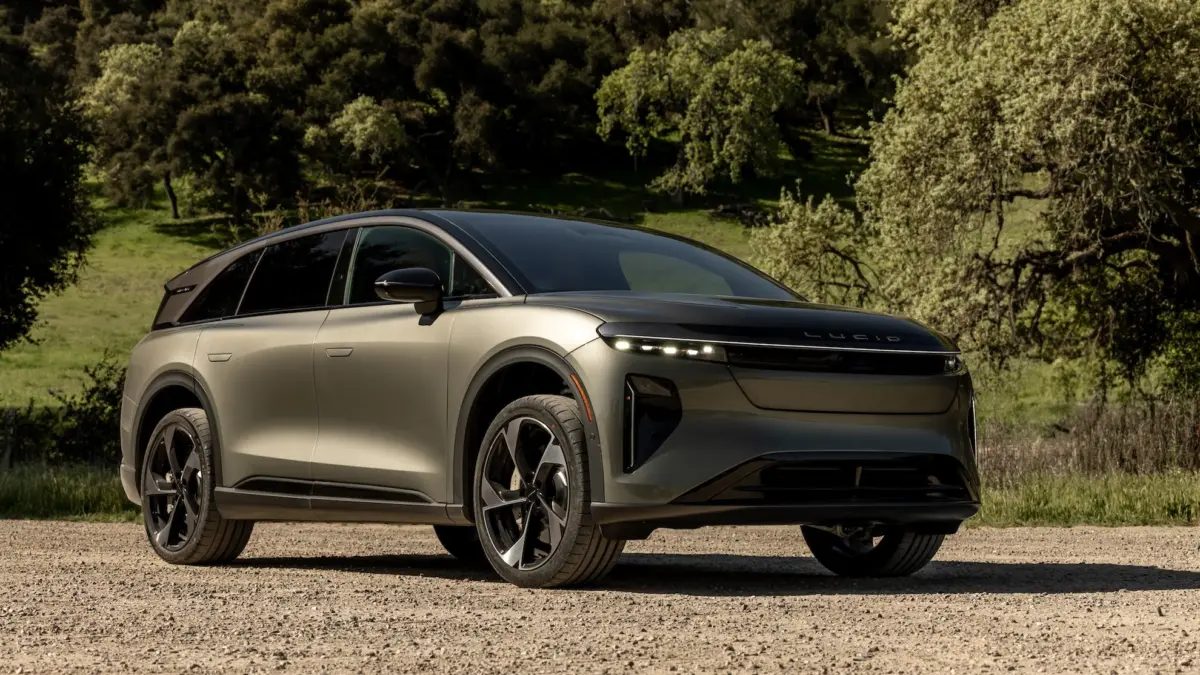
Following the introduction of its flagship Lucid Air sedan, the company pinned its volume growth hopes on the Gravity SUV, which officially entered production in late 2024. While the vehicle garnered critical praise for its engineering and design, it failed to trigger the massive wave of consumer adoption necessary to absorb high-volume production.
By the first quarter of 2025, production numbers began a steady downward trajectory as factory lines adjusted to actual sales velocity rather than projected targets. Over subsequent quarters, the mismatch between inventory build-up and retail deliveries became glaringly apparent, forcing management to step in and drastically curb factory output.
The Napoli Turnaround: Restructuring and Cost-Saving
Recognizing the unsustainable trajectory of the business, the board brought in Silvio Napoli as CEO to engineer a comprehensive turnaround. Over the past several months, Napoli has spearheaded a campaign internally characterized as an effort to "simplify the company."
This restructuring has not come without significant human and operational costs. Napoli’s turnaround plan has included:
- Workforce Reductions: Laying off approximately 1,500 employees (roughly 18% of the total workforce) to trim overhead expenses.
- Organizational Streamlining: Cutting layers of middle management to accelerate decision-making processes.
- Operational Scale-Backs: Eliminating the second shift at the company’s manufacturing facility in Casa Grande, Arizona.
- Capital Preservation: Pausing or slowing down capital-heavy projects to preserve a vital cushion of cash savings, which target a total reduction of $1.4 billion in spending.
As part of this cost-reduction strategy, Lucid also announced a delay in the release of its third major vehicle line: the Cosmos. Intended to be a much more affordable EV starting at under $50,000, the Cosmos is critical to unlocking a broader consumer base—yet leadership has opted to delay its debut to ensure it avoids the costly missteps of previous launches.
Supporting Context and Metrics
A deeper dive into financial and operational metrics reveals the extent of the gap between Lucid and its industry peers.
| Metric | Q3 2025 / Comparison | Q3 2026 Performance | Strategic Context |
|---|---|---|---|
| Vehicles Built | ~6,420 (Prior Year) | 2,954 | Down 54% YoY; intentional cuts to manage excess inventory. |
| Vehicles Delivered | ~4,006 (Prior Year) | 3,806 | Roughly flat QoQ, down ~200 YoY; demand continues to lag production capacity in historical terms. |
| Workforce Adjustments | Baseline | -1,500 employees (~18%) | Part of Napoli’s plan to achieve $1.4B in structural cost savings. |
| Target Capital Savings | N/A | $1.4 Billion | Targeted through staffing cuts, operational streamlining, and factory shifts. |
The Competitive Contrast: Rivian’s Milestone Quarter
Lucid’s struggle to find a broad market of buyers stands in sharp contrast to the momentum experienced by rival EV maker Rivian. Just days before Lucid published its sobering third-quarter metrics, Rivian reported the most successful quarter in its corporate history.
Fuelled by the introduction of the R2—its new, lower-cost SUV aimed at the mass-market segment—Rivian shipped nearly 20,000 vehicles in the third quarter. This marked Rivian’s first full quarter with the R2 in active production, a massive leap from the 12,194 vehicles it delivered in the second quarter.
While Rivian has faced its own financial pressures as a young EV upstart, its successful pivot toward a more affordable vehicle class highlights the steep barrier to entry that high-end luxury startups face when attempting to scale beyond early adopters. Lucid’s reliance on luxury sedans and premium SUVs has left it vulnerable to a segment that is rapidly becoming saturated.
Official Statements and Leadership Accountability
During Lucid’s second-quarter earnings call in August, CEO Silvio Napoli offered a remarkably candid assessment of why the company has struggled to capture meaningful market share in the global electric vehicle space. Rather than blaming macroeconomic conditions entirely, Napoli pointed directly to internal missteps and execution failures.
"While there is no question that Lucid brought leading innovations and outstanding products to the market, we have disappointed on several fronts, and for far too long," Napoli told analysts and shareholders. "We have not executed consistently. We missed commitments, launched products before they were ready, underinvested in service, responded too slowly to quality issues, and allowed complexity to slow decisions down."
This blunt critique marks a distinct cultural shift within Lucid Motors. For years, executive commentary tended to lean heavily on technological superiority while downplaying commercial friction. Napoli’s willingness to air operational shortcomings underscores the urgency of the current turnaround phase.
Addressing the delayed Cosmos model—the lower-cost vehicle designed to expand Lucid’s total addressable market—Napoli emphasized that the company cannot afford to rush development simply to chase top-line volume growth.
"We will not repeat the mistakes of the past by bringing a product to market before it is ready," Napoli cautioned.
Future Outlook
Lucid Motors stands at a critical crossroads. The decision to deliberately suppress production down to 2,954 vehicles per quarter demonstrates a mature, pragmatic approach to capital management, preventing unsold inventory from overwhelming storage lots and draining cash reserves. However, production restraint is merely a defensive posture; it is not a long-term growth strategy.
The success of Lucid’s turnaround hinges entirely on two major variables:
- Execution of the Cost-Reduction Plan: The company must successfully realize its targeted $1.4 billion in savings through organizational efficiency and operational streamlining without fatally compromising its product quality or engineering talent.
- The Eventual Launch of the Cosmos: To transition from a low-volume niche manufacturer into a viable, self-sustaining automotive enterprise, Lucid must successfully bring its sub-$50,000 Cosmos EV to market.
If management can avoid the pitfalls of premature launches and poor quality control that plagued the rollouts of the Air and the Gravity, the Cosmos could provide the volume engine the company has desperately lacked since its inception.
Yet, the competitive landscape has evolved aggressively. With established automakers refining their EV portfolios and competitors like Rivian capturing significant market share with competitively priced utility vehicles, Lucid’s window of opportunity is narrowing. The next twelve months will test whether CEO Silvio Napoli’s strategy of radical simplification and cautious restraint can successfully salvage one of the most technologically ambitious startups of the electric vehicle era.








Belum ada komentar. Jadilah yang pertama berkomentar!