

When international fast-food chains cross the Pacific to establish a presence in the Japanese culinary landscape, they frequently adapt their offerings to match local preferences. Often, this results in smaller, carefully proportioned menu items designed to appeal to modest appetites. However, every so often, a culinary anomaly emerges that completely shatters expectations, favoring hyper-indulgence over restraint.
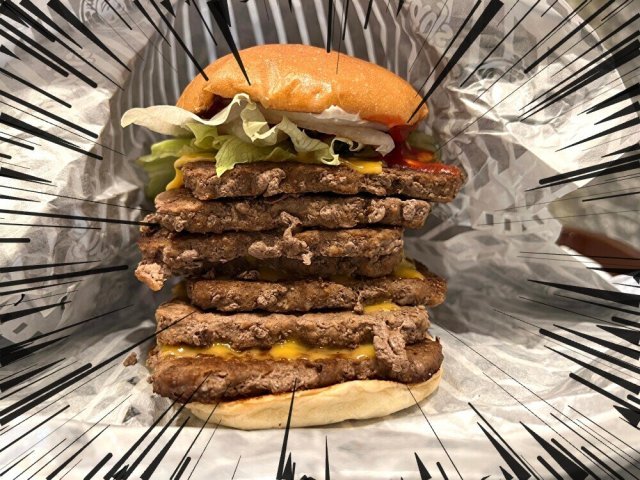
Enter the MEGA Wendy’s—a towering, gravity-defying edifice of beef and cheddar that has recently taken Japanese social media and television by storm. While Wendy’s is occasionally overlooked in Tokyo’s fiercely competitive fast-food market, this limited-time promotional item towers—literally and figuratively—over the competition. Boasting an unprecedented seven beef patties and four slices of melted cheddar cheese, the MEGA Wendy’s delivers a staggering 2,614 kilocalories in a single package.
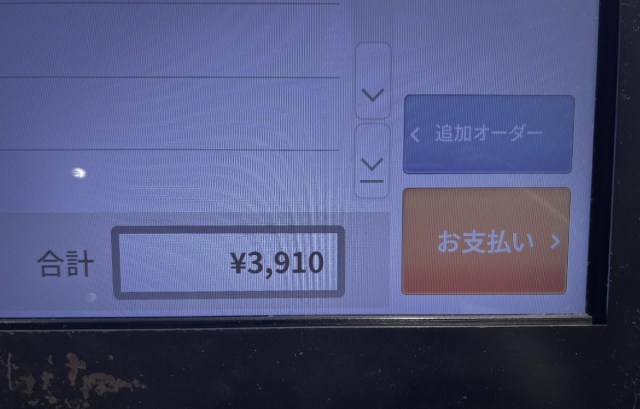
Surpassing standard international heavyweights like the U.S. triple-patty iterations and overshadowing local rivals such as Burger King Japan’s famous "Crown The One Pounder," the MEGA Wendy’s occupies an entirely separate weight class. Priced at a notable 3,670 yen (approximately $23.36 USD) for the burger alone, or 3,910 yen as part of a drink set, this release transcends the boundaries of standard fast food. It is not merely a meal; it is a high-stakes, calorie-dense gastronomic endurance test.
In this comprehensive report, we examine the anatomy of the MEGA Wendy’s, trace our intrepid reporter Kouhey’s tactical battle against the meat tower at the Iidabashi Ramla branch, analyze the nutritional and economic metrics of Japan’s most extreme fast-food offering, and evaluate what this monumental release signals for the future of extreme dining trends.
Detailed Chronology: The Battle at Iidabashi Ramla
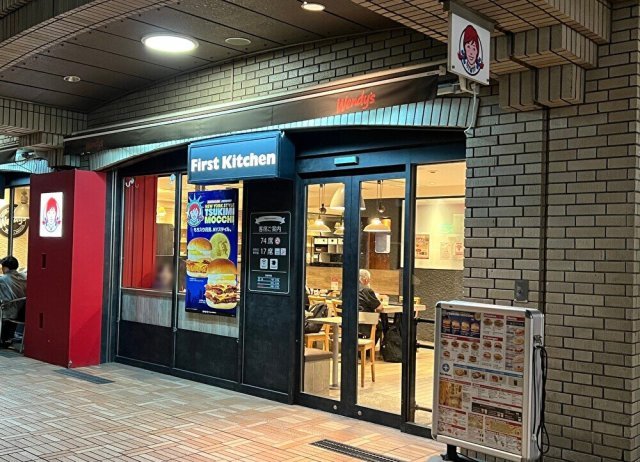
To truly understand the scale of the MEGA Wendy’s, one must witness it being conquered. Our seasoned food reporter, Kouhey—a veteran of numerous legendary fast-food challenges across Japan—faced initial hesitation upon learning of the burger’s nationwide release, which was launched to commemorate a special television appearance. Recognizing that an opportunity to face such a heavyweight contender might never present itself again, he cast aside his reservations and journeyed to the Wendy’s First Kitchen branch at Iidabashi Ramla, situated within the bustling commercial complex adjacent to JR Iidabashi Station in Tokyo.
Phase 1: Encountering the "Meat Ball" at the Kiosk
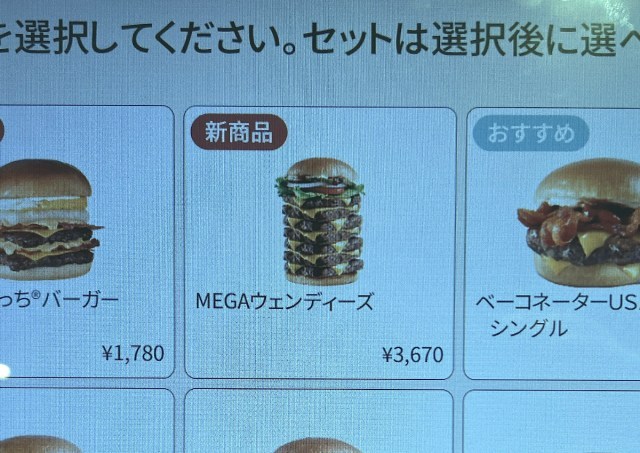
Stepping into the bright, modern interior of the Iidabashi branch, Kouhey approached the digital self-service ordering kiosk. There, gleaming under the bright display lights, was the promotional banner for the MEGA Wendy’s, adorned with an official "New Product" tag.
As his eyes drifted down to the price tag, reality set in. At 3,670 yen (US$23.36) for the standalone burger—pushing nearly 4,000 yen with a beverage set—this marked a historic milestone. It was the highest price Kouhey had ever encountered for a single menu item at a mainstream fast-food chain in Japan. A quick wallet inspection confirmed sufficient funds, and with a swift tap of the screen, the order was locked in.
Phase 2: The Five-Minute Wait and First Contact
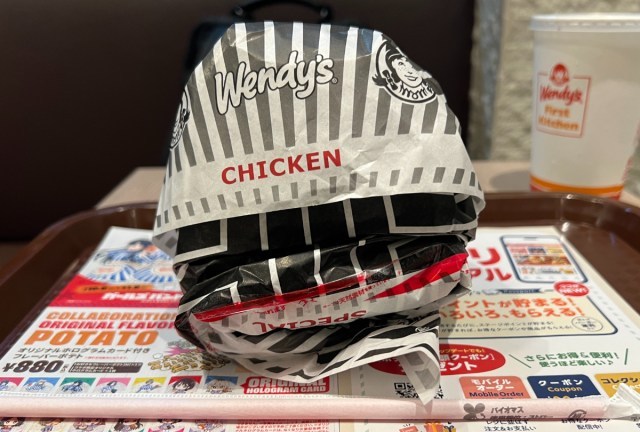
After a brief five-minute wait, the order number echoed through the restaurant. Kouhey walked to the counter to collect his tray, instantly feeling his musculoskeletal system activate under the sudden, unexpected heft of the meal.
"What the heck is this?!" he recalled thinking. "Is it an iron ball?"
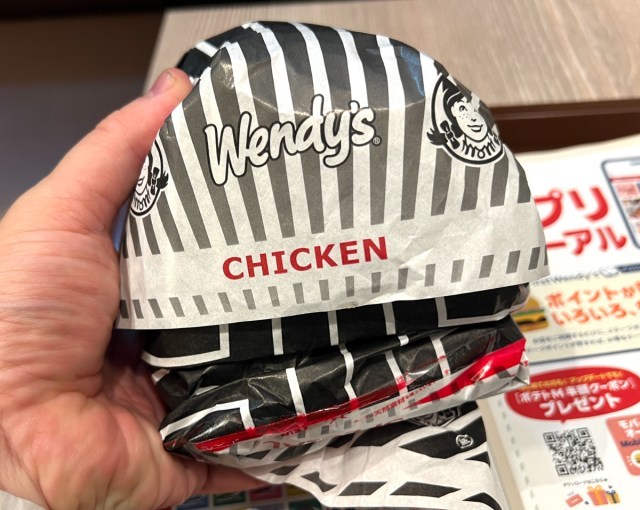
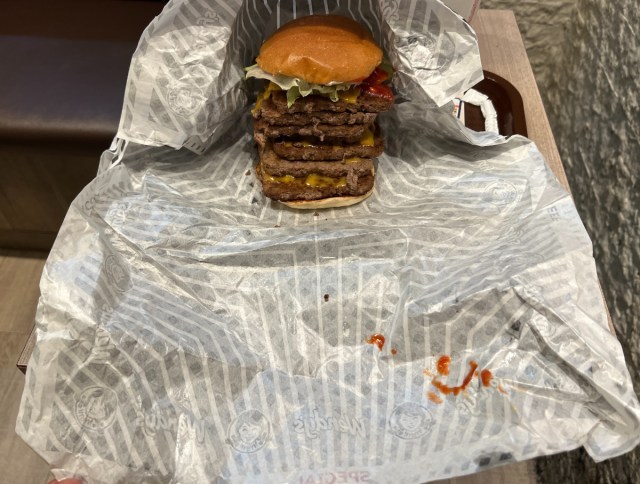
Even encased within its multi-layered protective wrapping—which proudly bore printed labels reading "CHICKEN" and "SPECIAL" out of sheer packaging necessity—the burger felt dense, heavy, and structurally intimidating. Weighing in at approximately 900 grams (1.98 pounds) and stretching roughly 14 centimeters (5.5 inches) in height, picking it up felt akin to grabbing a dumbbell for strength training.
Phase 3: Unveiling the Wall of Meat
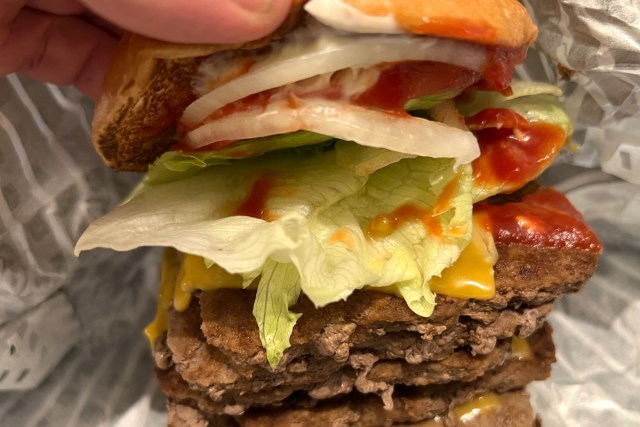
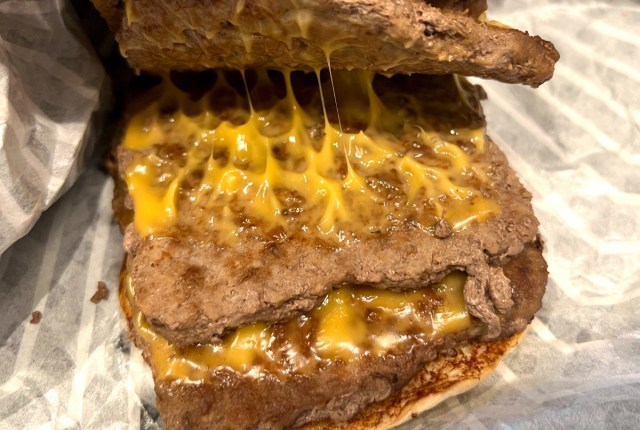
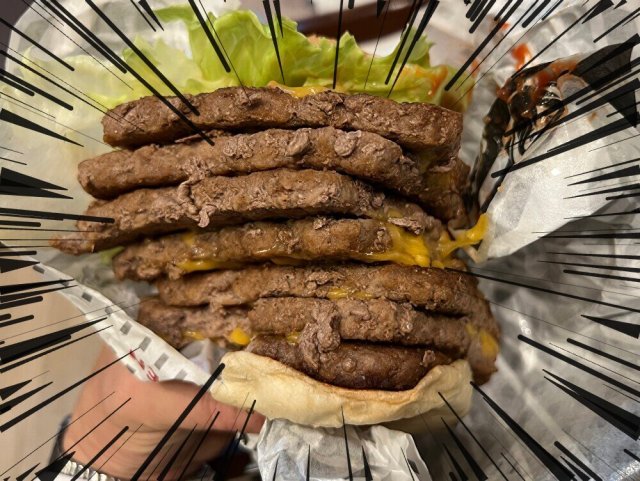
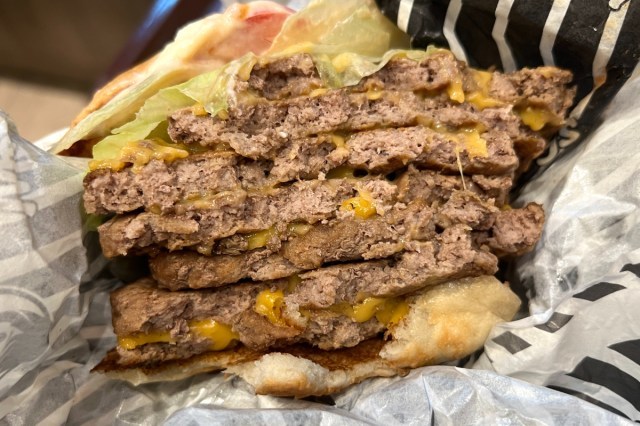
Upon carefully unpeeling the expansive wrapping paper, the true magnitude of the monster was revealed. It was an unadulterated wall of protein: meat, meat, meat, meat, meat, meat, meat!
Seven thick beef patties were stacked meticulously upon one another, forcing the top bun upward into a precarious perch. Peeling back the crown revealed a modest dusting of chopped onions, a slick of classic ketchup, and a single leaf of lettuce, which looked hopelessly diminutive against the sprawling mountain of beef. Hidden between the searing-hot patties were generous pockets of melted cheddar cheese, acting as an adhesive holding the towering vertical structure together.
Phase 4: The Tactical Consumption & The "Flavor-Change Zone"
At 14 centimeters tall, attempting a traditional bite was structurally impossible. When Kouhey gripped the burger and brought it to his mouth, his teeth met only beef and cheese. The bread buns were entirely neutralized by the sheer volume of the meat stack. Bite after bite delivered a monotonous, albeit rich, wave of savory beef and melted fat. Occasional glimpses of onion or bun offered fleeting reminders that this was technically a hamburger, but the eating experience felt much closer to consuming a solid block of seasoned beef.
Approximately halfway through the ordeal, Kouhey entered what veteran competitive eaters call the "flavor-change zone"—that critical juncture where palate fatigue threatens to halt progress entirely. Recognizing the danger of stalling out against the remaining mountain of food, he executed a tactical maneuver. Returning to the condiment station near the register, he acquired a bottle of habanero hot sauce.
Drizzling the fiery, acidic sauce across the exposed cross-section of the remaining patties breathed new life into the meal. The sharp kick of the habanero cut cleanly through the dense richness of the beef and cheddar, enlivening his fatigued taste buds and restoring his momentum.
Phase 5: K.O. and Final Reflections
Buoyed by the spicy intervention, Kouhey pushed through the final stretches of the meat tower. Slowly, the impossibly tall structure shrunk down until it could comfortably fit in the palm of his hand.
With one final, triumphant bite, the battle concluded: K.O.!
Checking the timestamps on his photo documentation, Kouhey calculated that the entire ordeal—from lifting the tray to folding away the greasy wrapper—took precisely 18 minutes. Though he had to pause repeatedly to capture photographic evidence, he completed the challenge in commendable time. Ultimately, he concluded that the MEGA Wendy’s was less of a conventional hamburger and more of a definitive, unforgiving meat-eating trial.
Supporting Context & Metrics: How the MEGA Wendy’s Stacks Up
To appreciate the sheer extremity of the MEGA Wendy’s, one must contextualize its specifications within the broader fast-food landscape of Japan and North America.
| Metric | MEGA Wendy’s (Japan) | Burger King "Crown The One Pounder" | Standard U.S. Wendy’s Triple |
|---|---|---|---|
| Total Beef Patties | 7 Patties | 4 Patties | 3 Patties |
| Cheese Slices | 4 Slices | Varies | Varies |
| Caloric Load | 2,614 kcal | ~1,500–1,600 kcal | ~1,150 kcal |
| Total Weight | ~900 grams (1.98 lbs) | ~499 grams (1.1 lbs) | ~350 grams |
| Height | ~14 cm (5.5 inches) | ~10–12 cm | ~8 cm |
| Price (Standalone) | 3,670 Yen (~$23.36 USD) | ~1,900–2,300 Yen | ~$7.00–$9.00 USD |
The Economic and Dietary Impact
At 3,670 yen, the pricing strategy reflects the niche, high-risk nature of the product. Fast-food chains in Japan rarely price standalone burgers above the 3,000-yen threshold, reserving such tiers for premium wagyu or seasonal luxury collaborations. By pricing the MEGA Wendy’s at nearly 3,700 yen, Wendy’s First Kitchen is explicitly positioning the item as a novelty challenge rather than an everyday menu staple.
Furthermore, the caloric load of 2,614 kilocalories represents roughly the entirety of the recommended daily caloric intake for an average adult male compressed into a single sitting. Consuming this magnitude of sodium, saturated fats, and animal protein requires careful physiological preparation—making the warning to arrive with an empty stomach an absolute necessity rather than hyperbole.
Official Statements & Industry Reception
While Wendy’s corporate offices in Japan originally introduced the concept to leverage television broadcast momentum, the cultural ripple effect has been profound. Food bloggers, Japanese culinary influencers, and international fast-food enthusiasts have flocked to select metropolitan branches—such as Iidabashi Ramla—to test their limits against the seven-patty titan.
Industry analysts note that extreme menu items of this caliber serve a specific marketing function. Known colloquially as hoka-hoka or buzz-marketing items, products like the MEGA Wendy’s are not designed to drive baseline daily revenue. Instead, they act as viral anchors that capture public imagination, drive social media engagement, and encourage foot traffic as curious consumers venture into restaurants to witness the physical reality of the viral items firsthand.
Future Outlook: The Escalating Arms Race of Fast-Food Giants
The debut of the MEGA Wendy’s underscores an ongoing, high-stakes arms race among international fast-food chains operating within the Japanese market. Competitors such as Burger King Japan, McDonald’s Japan, and Wendy’s First Kitchen have increasingly engaged in a game of culinary one-upmanship, continually pushing the boundaries of weight, height, and caloric density through limited-time campaigns like the "One Pounder" series.
As consumer appetites for experiential dining continue to evolve, the demand for high-impact food challenges shows no signs of slowing down. However, given the logistical complexities, high ingredient costs, and specialized preparation required for a seven-patty monster, the MEGA Wendy’s remains strictly a limited-time menu offering.
For adventurous foodies currently residing in or traveling through Japan, the window of opportunity to conquer this towering monument of beef is finite. Those brave enough to take up the gauntlet are advised to head to their nearest participating Wendy’s branch immediately—armed with an empty stomach, a robust appetite, and perhaps a bottle of habanero sauce to survive the journey.








Belum ada komentar. Jadilah yang pertama berkomentar!