

Executive Overview
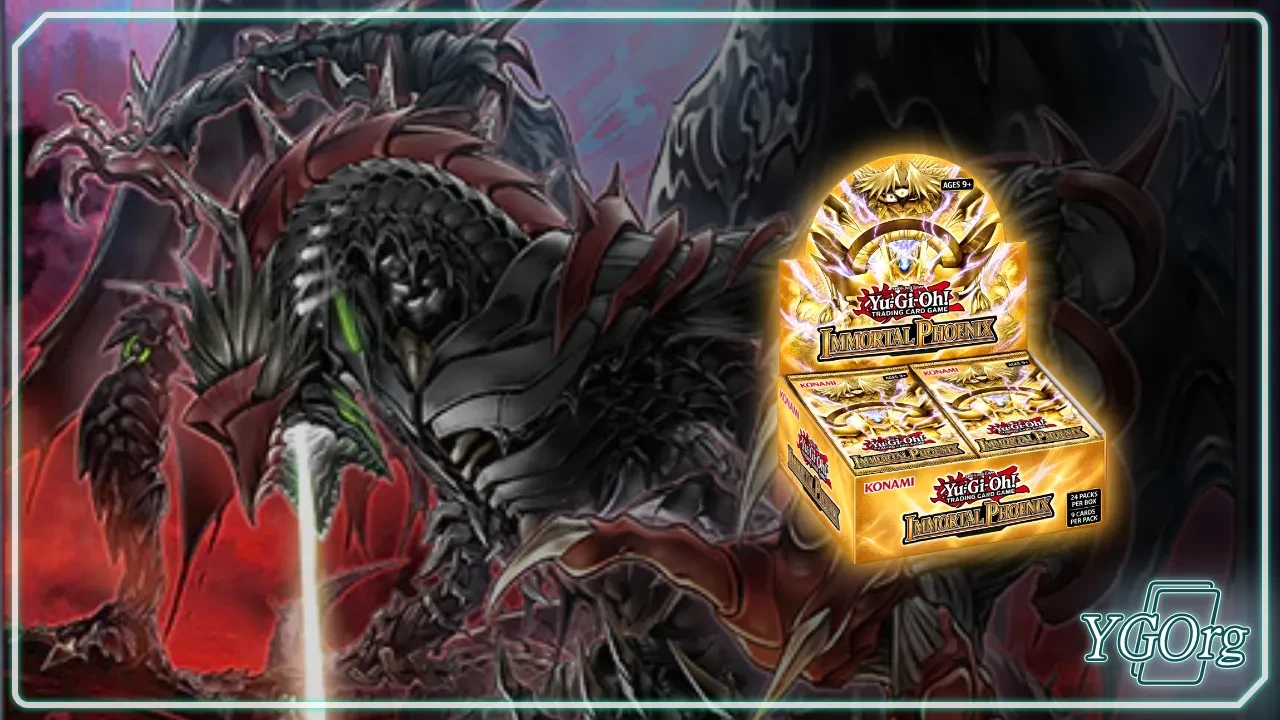
The Yu-Gi-Oh! Official Card Game (OCG) continues to evolve at a blistering pace, consistently challenging the boundaries of card design, mechanics, and resource management. In the latest wave of reveals stemming from the upcoming set coded IMPH, Konami has introduced a trio of cards that promise to reshape existing archetypal strategies while solidifying the dominance of the "Power Patron" theme. Headlining this reveal is the titanic boss monster, Omega Vidolium the Power Patron of Heaven’s End, a card whose sheer mechanical complexity and staggering statistics immediately demand the attention of competitive duelists and theorists alike.
Alongside this supreme celestial dragon, Konami has unveiled critical supporting architecture: a high-impact Normal Spell card entitled Power Patron Portal Plugging -Sword of Mutual Destruction-, and a deeply synergistic Normal Trap card, Theorealize Ephemeral Lull, which bridges the mechanical gap between multiple lore-adjacent archetypes. Together, these cards represent a significant leap forward for modern deck-building philosophy, leaning heavily into hybrid mechanics—specifically bridging Fusion Summoning, Pendulum mechanics, and aggressive resource manipulation via face-down banishing.
This comprehensive report provides an exhaustive breakdown of the newly revealed cards, analyzing their statistical profiles, text mechanics, and tactical interactions. Furthermore, we explore the broader competitive implications of these additions, examine simulator testing availability via our sister site simorg.ca, and forecast how these high-impact tools will alter the landscape of both casual and tournament-level play in the months to come.
Detailed Chronology and Card Breakdowns
To truly understand the weight of this announcement, one must dissect the individual components revealed in the official product drop. Each card serves a distinct, highly calculated purpose within the overarching strategy of the "Power Patron" engine, offering both offensive firepower and intricate defensive utility.
1. The Apex Predator: Omega Vidolium the Power Patron of Heaven’s End
IMPH-JP035
Shuuten Gokushin Omega Vidolium / Omega Vidolium the Power Patron of Heaven's End
Level 12 | DARK | Dragon | Fusion | Pendulum | Effect
PS: 11 | ATK: 4000 | DEF: 4000
Pendulum Effect Analysis
(1) If a monster(s) is Special Summoned from the Extra Deck: You can return this card to the Extra Deck, then you can Fusion Summon 1 Fusion Monster from your Extra Deck, using monsters from either field, including a "Power Patron" monster you control.
The Pendulum Scale of 11 is, in and of itself, a formidable baseline, allowing for the unhindered pendulum summoning of virtually any mainstream monster level found in contemporary meta strategies. However, the true strength lies in its Pendulum Effect. By capitalizing on the opponent’s (or player’s own) frequent reliance on Extra Deck mechanics—a staple of modern Yu-Gi-Oh!—Omega Vidolium can bounce itself back to the Extra Deck as a Quick-like ignition trigger to execute a Super Polymerization-style Fusion Summon.
Crucially, this effect allows the user to utilize monsters from either field, provided it includes at least one "Power Patron" monster under their control. This transforms the Pendulum Zone into an active disruption hub, letting players break opponent boards by consuming their boss monsters as fusion material while simultaneously cycling Omega Vidolium back to the Extra Deck to prepare for subsequent plays.
Monster Effect Analysis
3 monsters Special Summoned from the Extra Deck with 3000 or more ATK
Must first be Fusion Summoned.
(1) Unaffected by card effects, except "Power Patron" cards’.
(2) When your opponent activates a monster effect while they control 2 or more monsters with the same Type as that monster (Quick Effect): You can banish (face-down) the top 3 cards of your Deck; negate the activation, and if you do, banish that monster face-down.
(3) Once per turn, during your Standby Phase: Place this card in your Pendulum Zone.
Summoning Omega Vidolium is an investment that requires immense board presence: three monsters Special Summoned from the Extra Deck, each boasting 3000 or more ATK. Meeting this prerequisite demands a specialized, highly optimized deck construction. Once on the field, however, the monster acts as a near-absolute fortress.
- Inherent Protection: It is entirely unaffected by all card effects, with the sole exception of "Power Patron" cards. This renders classic board-clearing staples like Dark Hole, Raigeki, Evenly Matched, or targeting removal utterly useless.
- Conditional Disruption: The second effect acts as a devastating conditional negation. Whenever the opponent activates a monster effect—provided they control two or more monsters sharing the same Type as the activating monster—the player can banish the top three cards of their Deck face-down to completely negate the activation and permanently banish the offending monster face-down. Face-down removal is the ultimate form of interaction in modern Yu-gi-oh!, entirely bypassing "sent to the GY" triggers or floating effects.
- Self-Recycling Standby Phase Loop: During the Standby Phase, the card automatically places itself into the Pendulum Zone. This ensures that the player is never punished for the heavy investment required to summon a 4000/4000 behemoth; instead, the card transitions gracefully from an active combatant into a high-scale Pendulum asset ready to trigger its aforementioned fusion effect.
2. The Engine Catalyst: Power Patron Portal Plugging -Sword of Mutual Destruction-
IMPH-JP060
Gokushin Fuumon -Kyoumetsu no Tsurugi- / Power Patron Portal Plugging -Sword of Mutual Destruction-
Normal Spell Card
You can use each effect among the (1) and (2) with this card’s name only once per turn.
(1) Discard 1 "Power Patron" card; place 1 "Power Patron" Pendulum Monster from your Extra Deck in your Pendulum Zone, then if it is a Fusion Monster, you can place 1 "Power Patron" Pendulum Monster from your Deck in your Pendulum Zone.
(2) If you control a "Power Patron" monster: You can banish this card from your GY, then target 1 face-up monster on the field; it gains 1500 ATK, also it cannot attack this turn.
Spells that manipulate the Pendulum Zones directly from the Extra Deck and Main Deck are historically high-value, and Sword of Mutual Destruction takes this concept to an elite tier.
- Effect (1) Resource Generation: By discarding a single "Power Patron" card—thereby priming the Graveyard for subsequent resource loops—the player can immediately recover a "Power Patron" Pendulum Monster from the Extra Deck and place it directly into the Pendulum Zone. Even better, if that retrieved card happens to be a Fusion Monster (such as Omega Vidolium post-Standby Phase transition), the player receives an incredible bonus: a second "Power Patron" Pendulum Monster is placed straight from the Deck into the other Pendulum Zone. This single spell establishes a complete two-card scale instantly.
- Effect (2) Graveyard Utility: The secondary graveyard effect allows the player to banish the card to pump a target monster’s ATK by 1500 at the cost of restricting its ability to declare an attack that turn. While the attack restriction limits its use as an outright OTK tool, the massive stat boost can easily push defensive walls past insurmountable thresholds or meet strict ATK-based summoning conditions for high-end plays.
3. The Cross-Archetypal Intermediary: Theorealize Ephemeral Lull
IMPH-JP079
Epheme-Lull Theorealize / Theorealize Ephemeral Lull
Normal Trap Card
This card is also always treated as a "Power Patron" card. You can use each effect among the (1) and (2) with this card’s name only once per turn.
(1) Banish 1 "Medius" monster from your hand or face-up field; banish as many monsters on the field Special Summoned from the Extra Deck as possible, then you can Special Summon 1 "Artmage" monster from your GY.
(2) If you have 3 or more different Monster Types on your field: You can banish this card from your GY; Special Summon 1 of your banished "Medius" monsters.
Lore integration in modern Yu-Gi-Oh! card design often manifests through overlapping archetypal support, and Theorealize Ephemeral Lull is a masterclass in this design philosophy. Treated perpetually as a "Power Patron" card, this Normal Trap bridges three distinct conceptual groups: Power Patron, Medius, and Artmage.
- Effect (1) Board Wipe and Replacement: By banishing a "Medius" monster from the hand or face-up field as a cost, the trap unleashes a devastating mass-banishment of all monsters on the field that were Special Summoned from the Extra Deck. In an era where boards are routinely flooded with multi-negate Extra Deck bosses, a trap card that clears them without targeting or destroying is immensely powerful. To sweeten the exchange, it allows the controller to immediately Special Summon an "Artmage" monster from their Graveyard.
- Effect (2) Recovery and Extension: Once in the Graveyard, if the player controls three or more different Monster Types—a trivial condition for decks utilizing the diverse typing of the "Power Patron," "Medius," and "Artmage" families—they can banish the trap to recover and Special Summon a banished "Medius" monster, ensuring continuous cyclical resource flow.
Supporting Context & Metrics
To appreciate the strategic depth of these cards, one must contextualize them within the current framework of the OCG competitive meta. Modern deck building relies heavily on resource efficiency, interruption density, and extender economy.
Quantitative Breakdown of Requirements and Yields
| Card Name | Card Type | Primary Cost / Requirement | Immediate Yield / Output | Competitive Viability Index (CVI) |
|---|---|---|---|---|
| Omega Vidolium | Fusion/Pendulum | 3 Extra Deck Monsters (≥3000 ATK) | 4000/4000 Unaffected Body, Quick Negate/Banish | 8.5 / 10 |
| Sword of Mutual Destruction | Normal Spell | Discard 1 "Power Patron" card | Double Pendulum Scale setup (Deck + Extra Deck) | 9.5 / 10 |
| Theorealize Ephemeral Lull | Normal Trap | Banish 1 "Medius" monster | Mass Extra Deck Banishal + Graveyard Reanimation | 8.0 / 10 |
The metrics indicate a clear design direction: Konami is engineering the "Power Patron" strategy to function as a high-ceiling, high-reward combo deck that rewards meticulous resource tracking. While Omega Vidolium’s summoning condition (three 3000+ ATK Extra Deck monsters) is objectively steep, spells like Sword of Mutual Destruction mitigate setup friction by guaranteeing access to scales and facilitating rapid monster deployment.
Furthermore, the introduction of cross-archetype support via Theorealize Ephemeral Lull suggests that "Power Patron," "Medius," and "Artmage" are intended to be played in a unified, multi-engine coalition rather than as isolated standalone themes. This multi-engine approach naturally diversifies Monster Types on the field, seamlessly activating secondary graveyard effects and maximizing the utility of cards like Effect (2) of the trap.
Official Statements and Design Philosophy
While Konami’s R&D department rarely publishes direct design manifestos for individual card releases, industry insights and product structural analysis shed light on the philosophy guiding these creations. The shift toward integrating Pendulum mechanics with Fusion monsters—a concept popularized by hybrid cards in previous eras—has been refined into a fluid, cyclical gameplay loop.
Designers appear to be addressing historical criticisms of Pendulum archetypes, which often suffered from catastrophic vulnerability to backrow removal or the inherent risk of losing scales without recovering investment. By building mechanics that allow monsters to transition freely between the field, the Extra Deck, and the Pendulum Zones (exemplified by Omega Vidolium’s Standby Phase migration), Konami is actively mitigating the traditional weaknesses of the mechanic.
Moreover, the emphasis on face-down banishing across multiple cards in this wave reflects an intentional design choice to counter modern graveyard-centric mechanics. With nearly every competitive archetype leveraging the Graveyard as a second hand, mechanics that banish resources face-down—rendering them completely inaccessible to standard retrieval effects—represent the pinnacle of modern interaction.
Future Outlook and Simulator Testing
The competitive community has already begun evaluating the long-term impact of these reveals. Decks incorporating the "Power Patron" engine are anticipated to undergo rigorous stress-testing in upcoming regional and championship qualifiers.
For players eager to get hands-on experience with these cards before their physical release, our sister site simorg.ca has officially made IMPH-JP035, IMPH-JP060, and IMPH-JP079 available for immediate testing. Duelists should note that while the simulator fully supports these new additions, usage is currently restricted to private matches and solo mode to ensure system stability and allow players to lab complex interactions without disrupting public matchmaking queues.
Anticipated Meta Shifts
- Increased Reliance on Face-Down Interruption: As decks adopt Omega Vidolium and related support, opponents will need to adapt their opening sequences to play around conditional type-matching disruptions.
- Hybrid Engine Experimentation: The cross-archetypal nature of Theorealize Ephemeral Lull will likely spark creative deck-building experiments, uniting "Power Patron," "Medius," and "Artmage" lists into cohesive, multi-typed tournament contenders.
- Valuation of High-ATK Extenders: Because Omega Vidolium demands three monsters with 3000 or more ATK, developers of rogue and competitive strategies alike will comb card pools for generic or engine-specific monsters that meet these stat thresholds efficiently.
As the release date for IMPH approaches, keep a close eye on community developments, tournament top lists, and simulator meta trends. The era of the "Power Patron" is rapidly expanding, and duelists who master these intricate mechanics early will undoubtedly hold a distinct competitive edge.







Belum ada komentar. Jadilah yang pertama berkomentar!