

Executive Overview
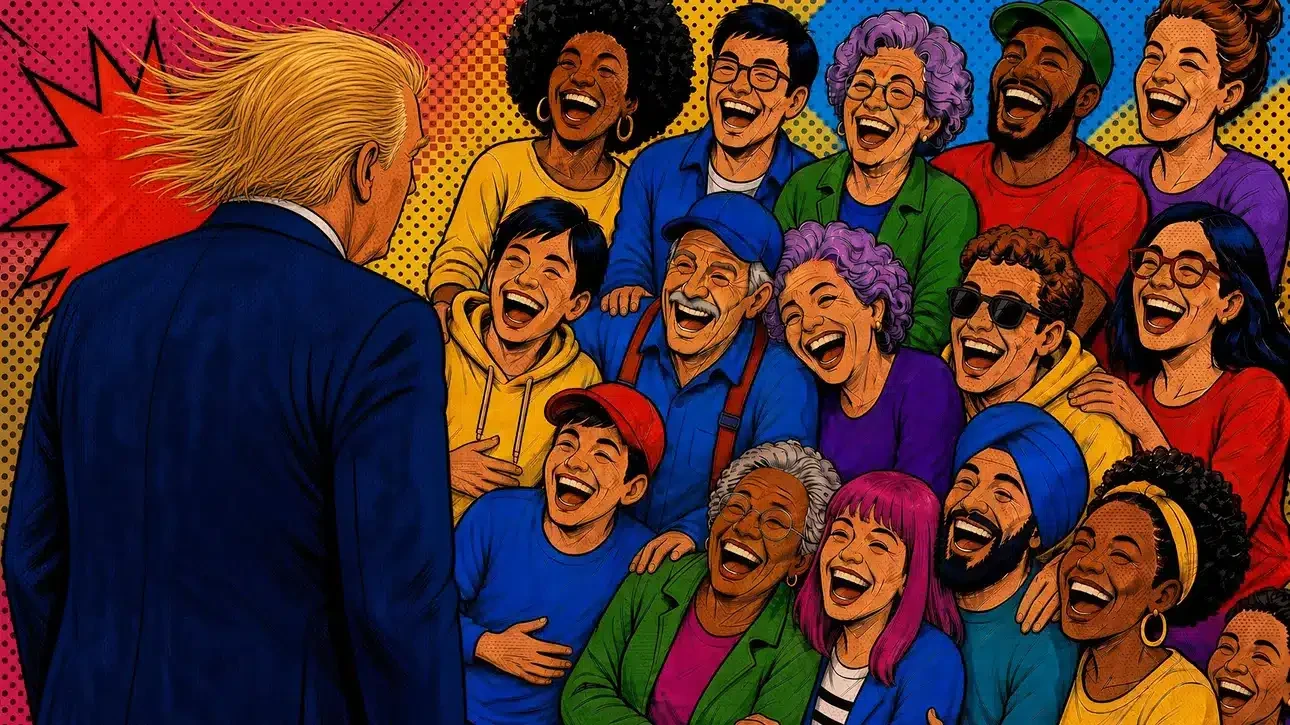
In an era where democratic institutions face unprecedented strain, the battle lines of modern politics are increasingly drawn not just in legislative chambers or judicial courts, but across the late-night airwaves. As democratic norms degenerate into autocratic tendencies, traditional political opposition—often hamstrung by institutional majorities and compromised judicial frameworks—has struggled to mount an effective counter-offensive. Into this vacuum of institutional power has stepped a uniquely resilient force: political satire.
From grassroots protesters donning inflatable frog costumes to prime-time television hosts skewering executive overreach, humor has emerged as a primary weapon against creeping authoritarianism. This dynamic crystalized in late 2025 during the high-stakes clash between the Trump administration and late-night titan Jimmy Kimmel. The subsequent suspension and triumphant return of Jimmy Kimmel Live! served as a watershed moment, exposing the fragile mechanics of state-sponsored censorship and demonstrating the potent economic and cultural pushback of an organized citizenry.
This report examines the deep historical roots of political humor, the cognitive incompatibility between authoritarianism and laughter, the degradation of traditional journalism that elevated comedians to civic watchdogs, and the detailed chronology of a censorship crisis that tested the limits of the First Amendment in modern America.
Detailed Chronology: The Anatomy of a Censorship Crisis
The standoff between the Trump administration and America’s late-night comedy infrastructure was neither sudden nor isolated; it was the culmination of a systematic campaign to eliminate dissenting cultural voices that threatened the illusion of executive infallibility.
The Prelude: Silencing Colbert and Pressuring Paramount
The architecture of this modern censorship push began to take concrete shape in mid-2025. Following a playbook reminiscent of historical autocracies, the administration leveraged corporate dependencies to purge critical voices. In July 2025, CBS’s parent company, Paramount, sought crucial government approval for a major business merger. Coincidentally or by design, the imminent cancellation of Stephen Colbert’s late-night vehicle was announced amidst these regulatory negotiations.
Emboldened by this soft victory, former President Trump set his sights on remaining critics, signaling that Jimmy Kimmel would be next on the chopping block. The administration recognized a vulnerability in the corporate-owned media ecosystem: networks dependent on federal licensing and merger approvals are inherently susceptible to political coercion.
The Catalyst: The Charlie Kirk Shooting and the September Monologues
The friction ignited into an open-flame crisis following the assassination of right-wing activist Charlie Kirk in September 2025. The event galvanized the MAGA movement, unleashing a tidal wave of fury and a desperate search for political retribution across right-wing information silos.
On September 25, 2025, Jimmy Kimmel used his monologues to dissect the political exploitation of the tragedy, warning viewers that the "MAGA gang" was aggressively hunting for scapegoats to score partisan points regardless of the facts. As predicted by media analysts, the far-right outrage machine immediately seized on the broadcast, demanding blood and corporate accountability.
The Regulatory Pounce and the "Offer You Can Don’t Refuse"
Seizing the moment, Federal Communications Commission (FCC) Chairman Brendan Carr executed a textbook regulatory shakedown. Fulfilling the administration’s blueprint, Carr threatened severe regulatory action against ABC and its parent conglomerate, The Walt Disney Company.
The pressure proved immediate and cascading:
- The Affiliate Pullout: Nexstar Media Group abruptly pulled Jimmy Kimmel Live! from its ABC-affiliated stations.
- The Corporate Capitulation: Facing simultaneous pressure over pending corporate mergers, Disney management instructed ABC to suspend Kimmel indefinitely.
Declaring the development "great news for America," Trump celebrated what he hoped was the permanent removal of his most persistent comedic thorn.
The Asymmetric Counter-Offensive: People Power Prevails
Unlike previous instances of silencing, the administration’s gambit against Kimmel triggered an unprecedented counter-offensive. The resistance did not originate in Congress; it erupted from the public square and the entertainment community at large:
- The Comedy Fraternity Unites: Competing networks and hosts immediately rallied around Kimmel, issuing vociferous condemnations of the suspension as a direct assault on free speech.
- Economic Retaliation: Empowered by decades of trust, the viewing public mobilized. Threats of massive consumer boycotts against Disney products materialized instantly, causing the company’s stock value to plummet.
- The Retreat: Realizing that the political cost of censorship far outweighed the benefits, the administration, Carr, Disney, and ABC retreated.
Within weeks, Jimmy Kimmel returned to the airwaves to record-breaking ratings, cementing his status as a national hero and demonstrating that corporate capitulation can be reversed through organized consumer power.
Supporting Context & Metrics: The Mechanics of Humor vs. Autocracy
To understand why authoritarian figures react with such visceral fury to comedians, one must examine the cognitive and historical mechanics of political satire.
The Historical Tradition of Subversive Laughter
Satirical humor has served as a social corrective since antiquity. In the 6th century BC, comic poets guided Athenian democracy, while medieval carnivals routinely ridiculed repressive rulers. In the American context, political cartoons provided the cultural momentum necessary to break free from British monarchical rule—a tradition spanning from Benjamin Franklin and Mark Twain to modern late-night satirists.
Cognitive Incompatibility: Why Dictators Fear Jokes
Scholar John Morreall observes that "[people] with a sense of humor can never be fully dominated." While fascism demands unthinking obedience, terror, and hero-worship, humor relies on critical thinking, the perception of incongruity, and moral clarity.
- The Antidote to Division: Authoritarianism seeks to divide populations through manufactured fear and scapegoating. Conversely, humor unites people through shared laughter based on common human values.
- The Threat to Narcissism: Aspiring autocrats project an aura of absolute perfection and superiority. Comedians puncture this fragile illusion. As historical precedents show—from Soviet restrictions on state-approved comedy to Nazi Germany’s "joke courts" that imprisoned citizens for naming pets after dictators—repressive regimes instinctively recognize that laughter corrodes absolute authority.
The Collapse of Traditional Journalism
The rise of late-night hosts as trusted civic watchdogs is directly tied to the failure of mainstream journalism. Unlike British models where journalists relentlessly hold politicians accountable, American journalism has largely succumbed to intimidation. Fearing exclusion from access-driven press pools, mainstream reporters routinely drop tough lines of inquiry when met with dismissive insults from figures like Trump.
This journalistic vacuum forced the public to turn to late-night satirists. As media scholar Geoffrey Baym argues in his analysis of The Daily Show, programs hosted by figures like Jon Stewart, Stephen Colbert, and Jimmy Kimmel offer a model of deliberative democracy. Through a "rhetoric of challenge," these satirists expose false equivalencies in objective journalism and challenge the ethical improprieties of politicians on moral rather than purely partisan grounds.
Official Statements & Institutional Responses
The 2025 censorship crisis generated intense debate among policymakers, media regulators, and industry leaders:
- The Administration’s Stance: Defending the regulatory pressure, FCC Chairman Brendan Carr maintained that broadcasters have a public interest obligation to maintain civic harmony, framing the actions against late-night hosts as necessary enforcement against reckless rhetoric.
- The Defense of Free Speech: In a joint statement following Kimmel’s suspension, the broader television academy and numerous independent journalists emphasized that "the weaponization of federal regulatory bodies to settle political grievances strikes at the core of the First Amendment."
- Corporate Reticence: Disney executives offered muted defenses regarding the initial suspension, citing "internal compliance with broadcasting standards," though financial disclosures later confirmed that consumer boycotts and sliding equity valuations forced an abrupt re-evaluation of corporate neutrality.
Future Outlook
The saga of Jimmy Kimmel’s suspension and reinstatement serves as both a roadmap and a cautionary tale for modern democracies. It proves that while autocratic figures will continuously probe for weaknesses in democratic guardrails—using regulatory threats, corporate mergers, and political intimidation to silence critics—the ultimate power rests with the citizenry.
As long as the public retains its consumer leverage and an unwavering commitment to free expression, the tools of corporate and state censorship can be blunted. Yet, the crisis also underscores the fragility of contemporary media independence. As aspiring authoritarians continue to test the limits of executive power, the resilience of late-night satire and independent journalism will remain indispensable. In a landscape dimmed by institutional failure, the jester’s shield continues to project the light of truth, reminding citizens that those who demand absolute obedience are, above all, deeply afraid of a good laugh.





Belum ada komentar. Jadilah yang pertama berkomentar!