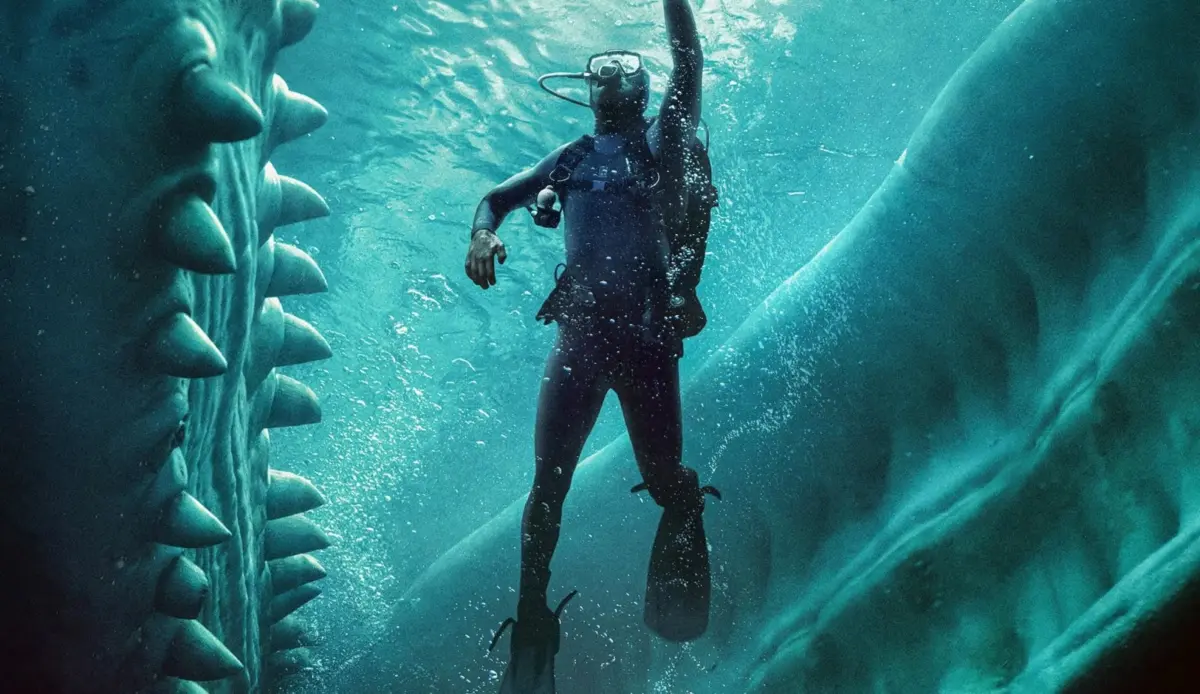
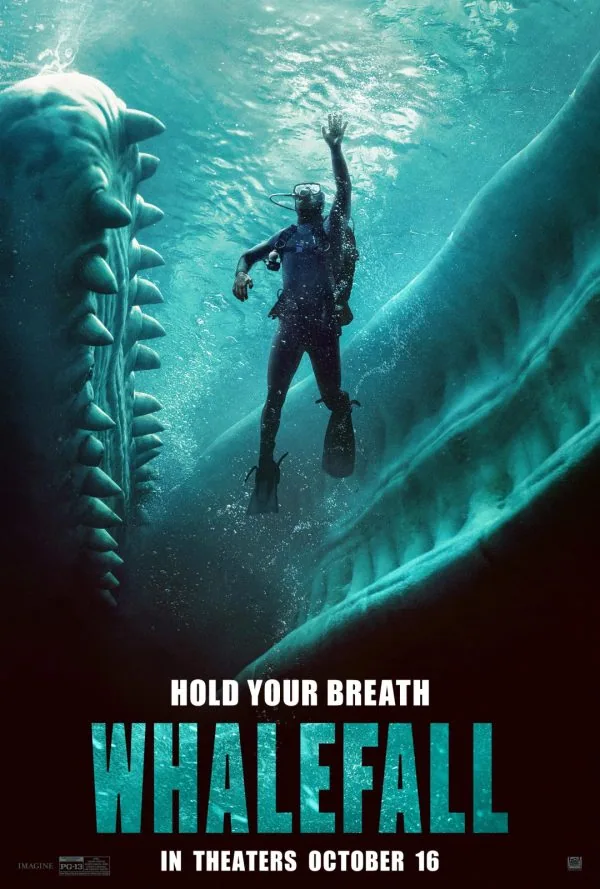
In the cinematic landscape of high-concept survival thrillers, few premises match the audacious, claustrophobic vertigo of Whalefall (2026). Directed by visionary filmmaker Brian Duffield and adapted from Daniel Kraus’s acclaimed bestselling novel of the same name, the film thrusts audiences into an environment previously unexplored in live-action cinema: the visceral, crushing interior of an 80-foot, 60-ton sperm whale.
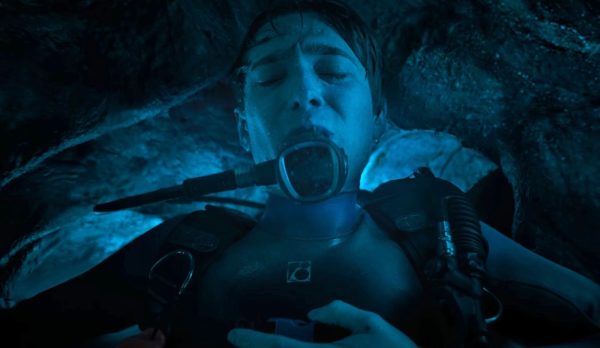
The narrative centers on Jay, portrayed with frantic, nerve-shredding intensity by Austin Abrams, a young scuba diver searching the ocean depths for his deceased father’s remains. When a catastrophic chain of events leads to Jay being accidentally swallowed alive by the leviathan, the film shifts into a terrifying, ticking-clock nightmare. With only one hour of oxygen remaining in his tank, Jay must navigate a shifting labyrinth of contracting muscles, caustic digestive acids, and alien anatomy to claw his way back to the surface.
Yet, Whalefall is far more than a standard creature-feature gimmick. Duffield uses the grotesque, visceral reality of the whale’s internal ecosystem as a literalized metaphor for unresolved grief and a fractured father-son relationship. Bolstered by a stellar supporting cast that includes Josh Brolin, Elisabeth Shue, John Ortiz, Jane Levy, and Emily Rudd, the film attempts a delicate tightrope walk: balancing high-octane genre thrills with an intimate, albeit sometimes melodramatic, exploration of familial reconciliation.
This deep-dive retrospective analyzes the structural mechanics, thematic resonance, production triumphs, and industry impact of one of the most uniquely ambitious cinematic releases of 2026.
Detailed Chronology of a Nightmare: Plot and Narrative Progression
The Prologue: Grief Beneath the Waves
Whalefall opens on a sombre, reflective note, establishing the complex emotional topography of the protagonist. Jay is introduced in the immediate aftermath of the sudden death of his father, Mitt (portrayed in flashbacks and voiceover by Josh Brolin). Mitt was a legendary deep-sea environmental activist and scuba diver—a man whose entire existence was defined by his reverence for the ocean.
The prologue brings together a grieving family ensemble, featuring Elisabeth Shue as Jay’s mother and Jane Levy alongside other cast members as Jay’s sisters. These early scenes establish a stark emotional contrast. While the family unit struggles to process their collective loss, Jay carries a distinct burden: a profound sense of alienation. In his final years, Mitt’s obsession with ecological activism and deep-sea exploration created an unbridgeable chasm between father and son, as Jay gravitated toward conventional dreams and college preparation rather than following in his father’s aquatic footsteps.
Rather than letting the domestic drama linger, Duffield’s screenplay makes the bold choice to fast-track the inciting incident. Eager to find closure and retrieve his father’s remains, Jay embarks on a solo deep-sea dive that rapidly deteriorates into an unthinkable catastrophe.
The Descent into the Abyss
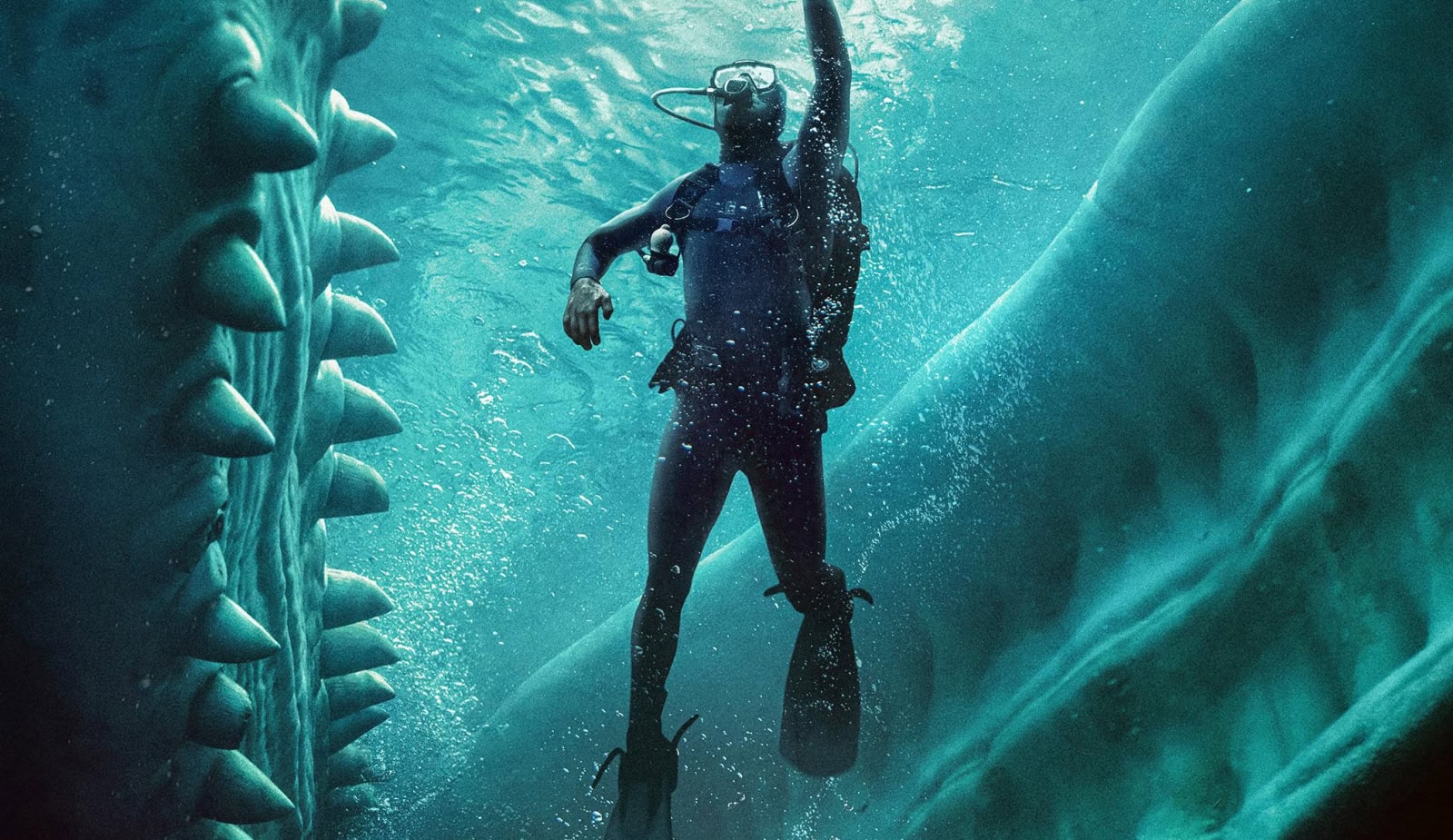
The core narrative engine ignites when Jay, operating in the crushing darkness of the deep ocean, crosses paths with a massive sperm whale. In a flash of terrifying, indifferent nature, the creature swallows him whole.
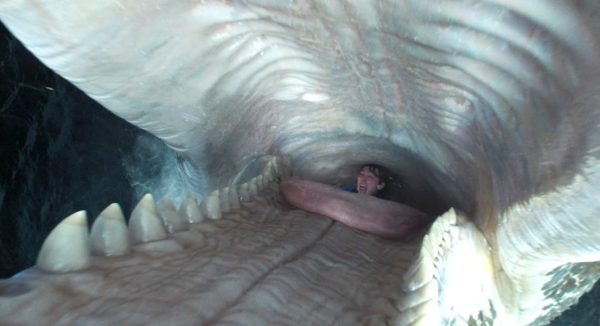
What follows is an unrelenting descent into fever-dream survival. Stripped of his conventional bearings, Jay finds himself trapped inside a living, biological containment unit. The film’s pacing accelerates into a breathless sequence of problem-solving. Armed with little more than his wits, a scuba tank, and whatever tools remain on his person, Jay must scale esophageal walls, squeeze past compressing visceral organs, and battle the toxic, mucous-laden atmosphere of the animal’s digestive tract.
As physical exhaustion sets in, the film introduces its most surreal narrative device: auditory hallucinations. Deprived of oxygen and enduring unimaginable trauma, Jay begins hearing the disembodied voice of his late father. Josh Brolin delivers these vocalizations with an authoritative, almost mythic resonance—reminiscent of a stern parental deity. These aren’t merely spectral echoes; they manifest as tactical advice mixed with emotional reckoning, forcing Jay to confront the painful memories of his upbringing while simultaneously teaching him how to survive the inside of a marine mammal.
Supporting Context & Metrics: Adaptation, Design, and Thematic Layers
Adapting Daniel Kraus’s Immersive Novel
Translating Daniel Kraus’s 2023 novel Whalefall to the screen presented an almost insurmountable challenge. Literary descriptions of internal biology can rely on internal monologue and imaginative abstraction; bringing those elements to live-action without descending into pure camp required immense technical precision.
Brian Duffield, known for his deft handling of high-concept genre fare (such as Spontaneous and Love and Monsters), approaches the material with a mix of gritty realism and existential surrealism. The film employs structural flashbacks that break up the linear tension. Rather than unfolding chronologically, these memories are triggered by Jay’s immediate physical crises. Each flashback serves as a thematic puzzle piece, addressing how Mitt’s rugged philosophy might provide a literal escape route from his current predicament.
Production Design and Practical Anatomy
One of the most widely praised aspects of Whalefall is its staggering commitment to practical and production design. Rather than relying entirely on CGI backdrops, the production team constructed a fully immersive, claustrophobic set that simulates the interior of a sperm whale.
The texture of the film is its greatest asset. Viewers are subjected to tactile horrors: Jay sliding through slippery, membranous tissues, wrestling with massive blockages of cartilage and flesh, and developing severe skin rashes from caustic biological fluids. The production design captures the absolute alien nature of the interior. Without a degree in marine biology, viewers are placed directly in Jay’s shoes—possessing only a vague, terrified sense of which organ they are interacting with and which direction leads to the blowhole.
+-----------------------------------------------------------------+
|                  WHALEFALL PRODUCTION METRICS                   |
+---------------------------+-------------------------------------+
| Source Material           | Bestselling Novel by Daniel Kraus   |
| Director                  | Brian Duffield                      |
| Lead Actor                | Austin Abrams (Jay)                 |
| Key Supporting Cast       | Josh Brolin, Elisabeth Shue,        |
|                           | John Ortiz, Jane Levy, Emily Rudd   |
| Primary Setting           | Interior of an 80-foot Sperm Whale  |
| Narrative Time Limit      | 60 Minutes (Oxygen Supply)          |
+---------------------------+-------------------------------------+
Thematic Duality: Family Drama vs. Pure Survival
Critical discourse surrounding Whalefall has focused heavily on its structural duality. On one hand, the film functions as a masterclass in cinematic tension. Austin Abrams delivers a physically punishing performance, screaming in shock, gasping for air, and engineering clever escapes using sheer resourcefulness.
On the other hand, the film leans into a heavy-handed family reconciliation arc. While actors of the caliber of Elisabeth Shue and Jane Levy bring gravity to their brief prologue appearances, some critics have argued that the human drama occasionally dips into melodrama. The flashbacks, while narratively functional, occasionally threaten to puncture the relentless momentum of the whale-interior sequences. However, defenders of the film argue that without this emotional anchor, the spectacle would risk feeling hollow—transforming a deeply human story of grief into a mere monster-movie curiosity.
Official Statements & Critical Reception
Upon its release, Whalefall sparked intense debate among critics and audiences alike, cementing its status as a polarizing yet undeniably memorable entry in modern genre filmmaking.
Industry analysts noted that the film’s unique premise represented a massive risk for studios, proving that original, high-concept literary adaptations can still find a theatrical foothold in an intellectual-property-dominated market.
In reviews mirroring assessments from outlets like Flickering Myth, critics awarded the film high marks for its technical execution. Reviewers frequently highlighted Austin Abrams as one of the hardest-working actors of his generation, praising his ability to carry a nearly single-actor narrative set within such a bizarre environment.
"A gonzo idea that transforms into a fever-dream survival thriller… Whalefall pushes its protagonist to think outside the box in a way the genre has rarely dared to attempt." — Film Critics Consensus
While minor criticisms were directed at the occasionally hokey execution of the father-son dialogue—with Brolin’s booming voiceovers drawing comparisons to majestic animation archetypes—the sheer audacity of the filmmaking overshadowed minor script-level shortcomings. The consensus score routinely landed at a strong three-and-a-half to four stars, marking it as a triumph of sheer directorial nerve.
Future Outlook: Legacy and Cultural Impact
As Whalefall continues its run in cinemas and prepares for home media distribution, its long-term legacy within the survival thriller genre appears secure.
Brian Duffield has once again proven himself to be a filmmaker unafraid of pushing boundaries, transforming what could have been a laughable B-movie premise into a visceral, philosophical meditation on mortality, legacy, and letting go. For Austin Abrams, the film caps off a powerhouse year of challenging, physically demanding roles, solidifying his status as a premier young dramatic talent.
Looking ahead, Whalefall is expected to influence a new wave of high-concept, single-location genre films. It demonstrates that contemporary audiences are hungry for tactile, practical filmmaking that challenges the limits of spatial awareness and narrative experimentation. Whether viewed as an intense creature-feature or a profound psychological allegory about the weight of paternal expectations, Whalefall stands out as a cinematic voyage into the unknown that refuses to be forgotten.











Belum ada komentar. Jadilah yang pertama berkomentar!