

Executive Overview
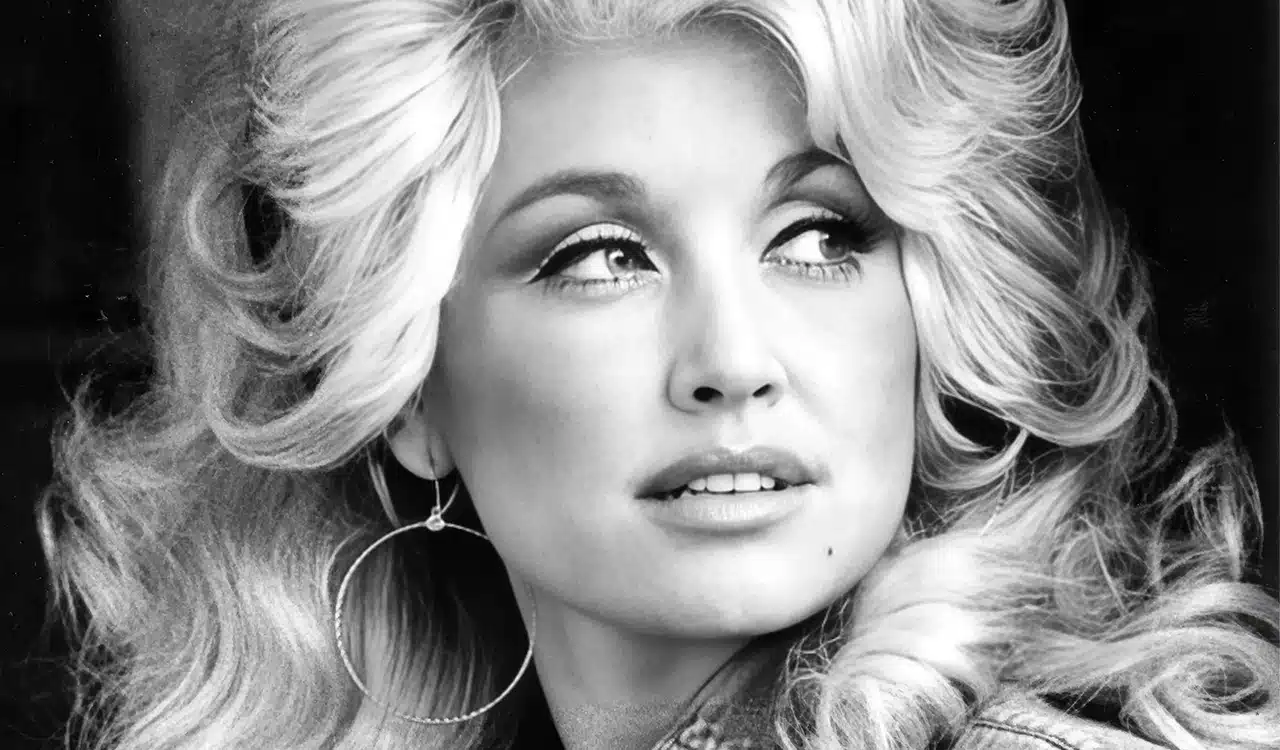
The passing of Dolly Parton leaves behind a monumental artistic footprint, anchored as much by her formidable songwriting and cultural ubiquity as by a theatrical filmography that is both surprisingly lean and deeply revealing. Across comedies, musicals, melodramas, and disembodied vocal contributions, her cinematic journey raises a singular, recurring question: How does Hollywood accommodate an artist whose most elaborate, carefully constructed character—Dolly Parton herself—was fully realized long before a movie camera ever turned in her direction?
Emerging from rural East Tennessee to global superstardom, Parton did not merely enter the entertainment industry; she authored its terms. When Hollywood finally sought to harness her star power, it encountered an auteur of her own image, a master of self-presentation who weaponized the visual shorthand used to caricature working-class Southern women and transformed it into an emblem of unassailable agency.
While film culture historically venerates actors who "disappear" into a role, Parton offered an alternative model. She refused to shed her signature persona. Instead, her cinematic career became a series of negotiations between the monumental architecture of her public identity and the specific demands of narrative fiction. The successes of her filmography—ranging from the office-place insurrection of 9 to 5 to the communal warmth of Steel Magnolias—succeeded precisely when filmmakers recognized her persona not as a costume to be mocked, but as a dynamic engine of dramatic conflict. Conversely, her missteps, such as the miscalculated machinery of Rhinestone, exposed the limitations of an industry that frequently mistook the dazzling visibility of her construction for creative simplicity.
Detailed Chronology: A Cinematic Retrospective
The Genesis of an Icon
Born in 1946 into an impoverished Appalachian family with twelve siblings, Parton’s early life was defined by the class memory, hardship, and resilience that would later saturate her songwriting. By 1967, she had secured national exposure on The Porter Wagoner Show, subsequently fighting for autonomy as an independent singer-songwriter. By the mid-1970s, timeless masterworks like "Coat of Many Colors," "Jolene," and "I Will Always Love You" established her extraordinary capacity to condense complex human emotions—autobiography, jealousy, erotic anxiety, and familial devotion—into concise, melodic structures.
Concurrently, Parton engineered her iconic visual identity: platinum wigs, rhinestones, hyper-exaggerated silhouettes, long acrylic nails, an unvarnished mountain accent, and a disarming penchant for self-deprecating, bawdy humor. This aesthetic was never an accidental byproduct of fame. It was a calculated subversion of patriarchal and class-based expectations. By the time Hollywood knocked on her door, Parton was already the undisputed sovereign of her primary art.
9 to 5 (1980): Subverting the Office Hierarchy
Colin Higgins’s 9 to 5 marked Parton’s triumphant cinematic debut as Doralee Rhodes, the secretary subjected to the predatory harassment of her misogynistic boss, Franklin Hart Jr. (Dabney Coleman). Initialized as a classic workplace farce alongside co-stars Lily Tomlin and Jane Fonda, the film cleverly grounds its comedy in stark labor politics and systemic gender inequality.
Doralee stands out as a triumph of casting because the narrative weaponizes real-world prejudices. Hart interprets her hyper-femininity as sexual availability, while her female peers initially mistake predatory attention for complicity. Parton navigates this tightrope with exquisite timing, preserving a disarming sweetness while the threat of harassment lands with genuine weight.
Furthermore, Parton’s contributions extended far beyond the screen. While on set, she famously composed the film’s title track, "9 to 5," by tapping her acrylic nails together to mimic the mechanical rhythm of a typewriter. The song translated workplace industrial noise into a chart-topping anthem, earning two Grammy Awards and an Academy Award nomination. In 9 to 5, Parton’s persona became the vehicle for a broader institutional critique, proving that her cinematic presence could anchor complex social themes.
The Best Little Whorehouse in Texas (1982): Spectacle Versus Substance
Reuniting with director Colin Higgins in The Best Little Whorehouse in Texas, Parton took on the role of Mona Stangley, the fiercely independent proprietor of a historic Texas brothel, opposite Burt Reynolds as Sheriff Ed Earl Dodd.
The film offered Parton a grand platform, notably featuring a stripped-back, emotionally resonant delivery of "I Will Always Love You" that momentarily paused the surrounding cinematic bustle. Mona was simultaneously a savvy businesswoman, a community caretaker, and a romantic lead. However, the film’s wider satire frequently favored televised moralism over exploring the interior lives of the women working at the Chicken Ranch.
While 9 to 5 used audience preconceptions about Parton’s body as a source of conflict, The Best Little Whorehouse in Texas occasionally risked treating her physical presence merely as the payoff. Despite earning a Golden Globe nomination, the film highlighted a persistent Hollywood temptation: packing so much "Dolly" into the frame that the character’s narrative authority was obscured by the star’s blinding wattage.
Rhinestone (1984): When Persona Becomes Parody
Bob Clark’s Rhinestone represents the nadir of Parton’s early film career. Pairing Parton’s country music star Jake Farris with Sylvester Stallone’s cynical New York cabdriver, Nick Martinelli, the film attempted a modern, rhinestone-encrusted spin on George Bernard Shaw’s Pygmalion.
Rather than exploring the mechanics of identity construction—a subject Parton was uniquely qualified to address—Rhinestone relied on lazy humiliation, using Stallone’s discomfort as the primary punchline. The film operated on the flawed assumption that an accent, sequins, and Southern colloquialisms were sufficient to construct an identity, reducing Parton’s profound self-invention to mere packaging. Critical pans matched box office struggles, underscoring a fundamental failure of imagination: the film mistook the high visibility of Parton’s artistry for artistic simplicity.
Steel Magnolias (1989): The Power of the Ensemble
Herbert Ross’s adaptation of Robert Harling’s Steel Magnolias returned Parton to an ensemble cast, placing her inside Truvy Jones’s bustling Louisiana beauty parlor alongside a powerhouse roster including Sally Field and Julia Roberts.
Parton approached Truvy with meticulous authenticity, training with local beauticians to understand the profession. In Truvy’s salon, hair, cosmetics, and gossip constituted genuine labor—a communal sanctuary where women processed grief, love, and survival.
Cinematographer John A. Alonzo’s camera preserved the salon as a collective space, allowing Parton to excel through reactive performance. Rather than demanding that the entire film halt for her entrances, Parton settled effortlessly into the social rhythm of the room. As she later noted, director Herbert Ross initially doubted her dramatic range, prompting Parton to remind him that he had hired Dolly Parton, and directing her was his job. Her performance proved that her cinematic efficacy did not require dominating the plot, but rather anchoring it with emotional intelligence.
Straight Talk (1992) and Joyful Noise (2012): Radio Waves and Choir Stalls
Barnet Kellman’s Straight Talk transformed Parton’s real-life conversational ease into a narrative about an accidental radio psychologist, Shirlee Kenyon. By stripping away visual extravagance and concentrating entirely on her voice, the film highlighted the core elements of her appeal: intimacy, confidence, and comic timing.
Two decades later, Todd Graff’s Joyful Noise paired Parton with Queen Latifah in a battle of wills over a Georgia church choir. While the film occasionally fell into familiar narrative traps, the electric comedic sparring between Parton and Latifah provided a masterclass in screen presence, proving that Parton required no introductory framing to command a scene.
Supporting Context & Metrics: Box Office and Critical Reception
| Film Title | Release Year | Domestic Box Office (Est.) | Critical Reception / Cultural Impact |
|---|---|---|---|
| 9 to 5 | 1980 | ~$103.3 Million | Critical and commercial triumph; title track won 2 Grammys and an Oscar nomination. |
| The Best Little Whorehouse in Texas | 1982 | ~$69.7 Million | Mixed-to-positive reviews; Golden Globe nomination for Parton; showcased her vocal versatility. |
| Rhinestone | 1984 | ~$21.4 Million | Critical failure; commercial underperformer; highlighted the limits of surface-level casting. |
| Steel Magnolias | 1989 | ~$83.8 Million | Critical and commercial success; praised for ensemble chemistry and grounded character work. |
| Straight Talk | 1992 | ~$21.2 Million | Moderate box office; praised for utilizing Parton’s natural conversational charisma. |
| Joyful Noise | 2012 | ~$31.1 Million | Mixed reviews; celebrated primarily for the dynamic onscreen chemistry with Queen Latifah. |
Official Statements & Industry Perspectives
Reflecting on her relationship with Hollywood, Parton frequently maintained a pragmatic, self-aware perspective regarding her cinematic utility. In various interviews throughout her career, she articulated a clear understanding of the transactional nature of the film industry:
"I’ve never pretended to be anything other than what I am. When Hollywood calls, they aren’t looking for a blank slate; they’re looking for Dolly. My job is to make sure that whatever character I’m playing has enough heart to make all those rhinestones worth looking at."
Industry peers frequently remarked on her acute professional discipline. Director Colin Higgins noted during the production of 9 to 5:
"Dolly works harder than anyone on that set. She understands the camera instinctively because she spent decades managing how the world perceives her. She doesn’t need to be taught how to hold a frame."
Future Outlook: The Indelible Blueprint
As film historians and cultural critics assess Parton’s enduring legacy, it becomes increasingly clear that her impact on cinema extends far beyond her physical performances on screen. Her later contributions—such as writing "Travelin’ Thru" for Transamerica (2005)—earned her a second Academy Award nomination, proving that her authorial voice retained its potency even when she remained entirely off-screen. Similarly, projects like the Netflix anthology series Dolly Parton’s Heartstrings and her foundational influence on films like Dumplin’ (2018) cement her status as a generative storytelling force.
Ultimately, Dolly Parton’s cinematic journey offers an alternative masterclass in screen performance. She resisted the traditional Hollywood imperative that an actor must erase themselves to achieve authenticity. Instead, she demonstrated that an iconic persona, when backed by genuine emotional intelligence and artistic rigor, can transcend the boundaries of the frame. Hollywood did not create Dolly Parton, and it was never quite able to fully contain her—leaving behind a cinematic blueprint defined entirely by agency, authorship, and unyielding self-creation.




Belum ada komentar. Jadilah yang pertama berkomentar!