

Executive Overview
The video game adaptation curse has long haunted Hollywood, yet cinematic vaults continue to mine interactive media’s most lucrative and culturally resonant properties. Entering the fray with a staggering $14 billion franchise legacy behind it, Capcom’s legendary fighting property returns to the silver screen in 2026 under the stewardship of director Kitao Sakurai.
Starring an eclectic, cross-industry ensemble cast—including Andrew Koji, Noah Centineo, Cody Rhodes, David Dastmalchian, and Curtis "50 Cent" Jackson—this new cinematic iteration attempts what the infamous 1994 Jean-Claude Van Damme vehicle could not: bridging the gap between high-octane martial arts spectacle and self-aware pop-culture comedy.
Rather than leaning strictly into poe-faced grimness, Sakurai’s Street Fighter embraces the inherent camp and kinetic energy of its source material. It functions as a hybrid creature, part hyper-serious anime adaptation, part live-action B-movie thrill ride.
While purists seeking a reverential, blow-by-blow tournament recreation might find themselves slightly disoriented by the narrative detours, casual viewers and action-comedy fans will discover an unexpectedly inventive, star-studded spectacle that manages to avoid a total knockout.

Detailed Chronology: From Pixelated Arcades to the World Warrior Tournament
The journey of Street Fighter from coin-op cabinets in smoky arcades to a multi-hundred-million-dollar cinematic tentpole is a testament to the enduring power of Capcom’s foundational fighting game. Released initially in 1987, it wasn’t until 1991’s Street Fighter II: The World Warrior that the franchise exploded into a global phenomenon, establishing archetypes that would define the fighting game genre for decades.
The 1994 Misstep and Decades in Development Hell
For over thirty years, Hollywood has attempted to crack the code of the World Warriors. The 1994 live-action adaptation directed by Steven E. de Souza, starring Jean-Claude Van Damme as Colonel Guile and Raul Julia as M. Bison, has since achieved legendary status as a piece of campy cinematic history, but it failed to satisfy fans or critics looking for faithful martial arts action.
Subsequent attempts to resurrect the franchise—including 2009’s critically reviled Street Fighter: The Legend of Chun-Li—proved that translating the esoteric lore and cartoonish physics of characters like Ryu, Ken, and Blanka into live-action was a monumental hurdle.
The 2026 Production Pipeline
When Capcom and studio executives greenlit the 2026 adaptation with director Kitao Sakurai at the helm, the production faced intense scrutiny. Casting announcements alone generated internet-wide fascination, blending traditional Hollywood actors (Noah Centineo, Andrew Koji, Callina Liang), professional wrestling icons (Cody Rhodes, Joe "Roman Reigns" Anoaʻi), musical heavyweights (Curtis "50 Cent" Jackson, Orville Peck), and combat sports champions (Alexander Volkanovski).
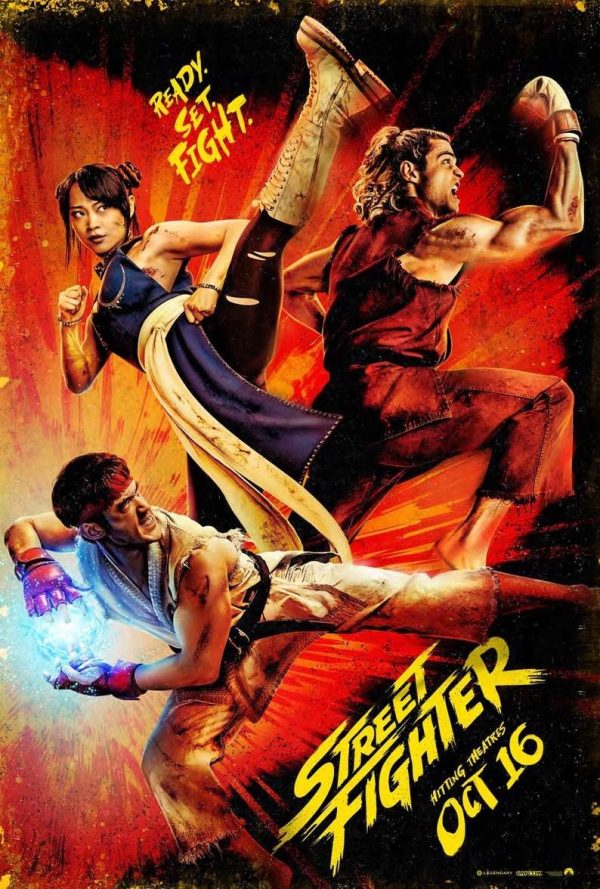
The narrative chronology of the 2026 film hits the ground running. The plot establishes a deep, lingering backstory regarding the fallout from the original World Warrior Tournament. Protagonists Ryu (Andrew Koji) and Ken (Noah Centineo) are forced out of their respective exiles and routines when Chun-Li (Callina Liang), operating under deep-cover U.S. government directives, recruits them for the newly announced World Warrior Tournament II.
As the tournament unfolds, a subterranean global conspiracy comes to light. M. Bison (David Dastmalchian)—wielding a scheme ripped straight out of classic villain playbooks—aims to harvest and harness the mystical power of the Hadoken directly from Ryu. Meanwhile, peripheral narrative threads, such as Jason Momoa’s feral portrayal of Blanka searching desperately for his mother, weave through the carnage, culminating in a sprawling, multi-continental collision of martial arts styles and explosive set pieces.
Supporting Context & Metrics: Breaking Down the Franchise Economy
To understand the weight riding on Sakurai’s shoulders, one must examine the staggering commercial metrics behind the Street Fighter intellectual property.
- Lifetime Franchise Revenue: Estimated at over $14 billion across arcade cabinets, home console ports, crossover titles, merchandise, and previous cinematic ventures.
- Core Cast Size: An expansive ensemble featuring over 15 prominent actors, athletes, and musicians.
- Directorial Approach: A stylistic synthesis combining live-action grit reminiscent of 1990s action cinema with vibrant, kinetic anime-inspired framing.
The Ensemble Cast Breakdown
The sheer scale of the 2026 film’s casting strategy is unprecedented for a fighting game adaptation. Rather than relying solely on dramatic actors, casting directors assembled a roster that mimics a real-life fighting circuit:
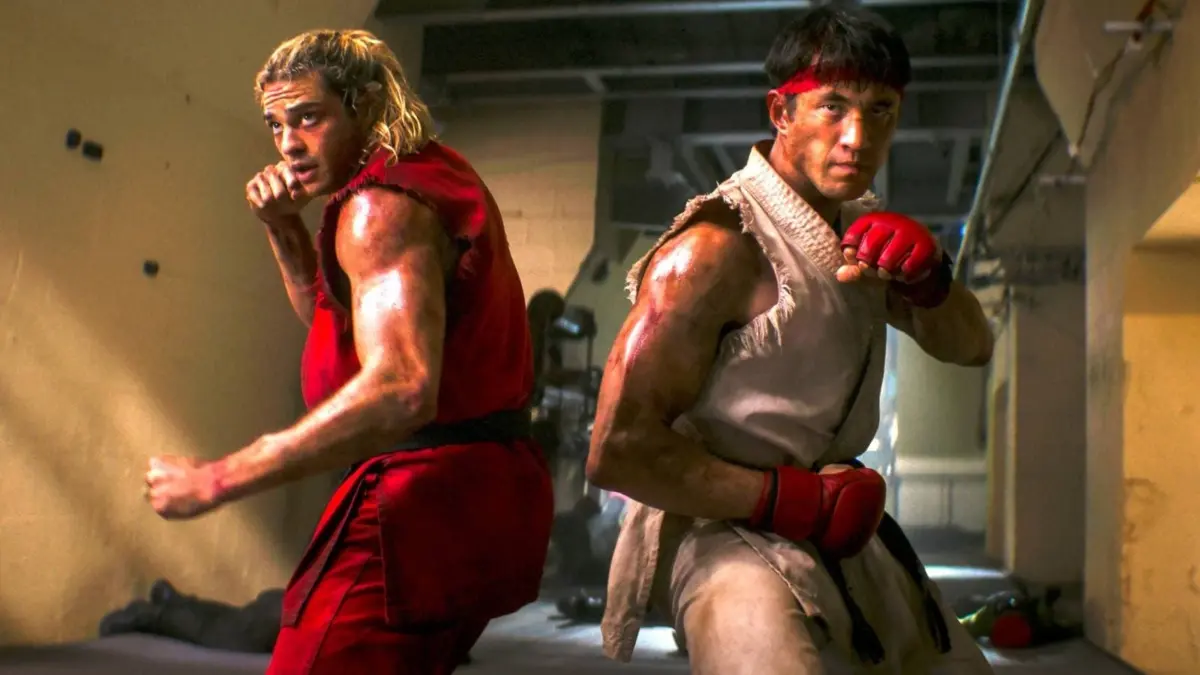
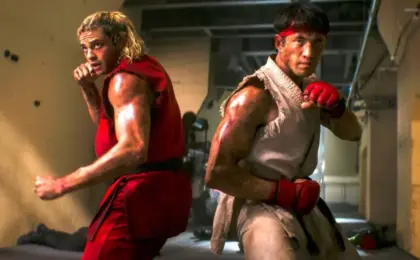
- The Core Duo: Andrew Koji brings a grounded, weary intensity to Ryu, serving as the stoic emotional anchor of the film. Conversely, Noah Centineo delivers a breakout comedic performance as Ken Masters, portraying the American martial artist with a lovable, air-headed bravado reminiscent of classic slacker comedies.
- The Enforcers and Antagonists: WWE superstar Cody Rhodes steps into the military boots of Guile, utilizing his natural charisma and zero-filter delivery to generate some of the film’s biggest laughs. David Dastmalchian trades typical prestige drama roles for a delightfully unthreatening yet unhinged M. Bison. Meanwhile, Curtis "50 Cent" Jackson anchors the criminal underworld as Balrog.
- The Wildcards: From Vidyut Jammwal and Olivier Richters to professional wrestling powerhouse Joe "Roman Reigns" Anoaʻi and UFC featherweight champion Alexander Volkanovski, the physical presence on screen is authentic, lending real-world combat credibility to the arena brawls.
Official Statements and Creative Vision
Speaking on the creative philosophy behind the adaptation, director Kitao Sakurai and key members of the production team emphasized the necessity of balancing reverence for the source material with the self-aware absurdity required to make a video game movie work in the modern cinematic landscape.
"You cannot approach a property like Street Fighter with complete, humorless stone-faced realism," noted an insider close to the production. "The characters throw fireballs from their hands, wear impossible amounts of spiked leather, and possess green skin. If you don’t lean into the joy of that silliness, you lose the audience immediately."
This ethos is reflected in the film’s tonal choices. Rather than attempting to sanitize the video game logic, the production leaned heavily into stylized set pieces that nod directly to arcade mechanics.
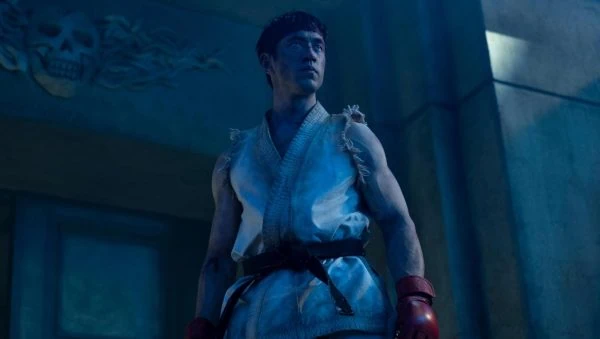
A standout sequence features a hotel suite showdown between Ryu and Ken. In a direct homage to peak Jackie Chan choreography, a passive Ryu refuses to engage with Ken’s aggressive, hyper-masculine fighting style, instead dodging and weaving away from every attack in increasingly hilarious and inventive ways.
Furthermore, the integration of distinct musical needle-drops—most notably the unexpected and recurring use of 4 Non Blondes’ iconic track "What’s Up"—signals a deliberate tonal distancing from gritty, humorless action epics, positioning Street Fighter as a pop-culture rollercoaster designed for maximum crowd-pleasing entertainment.
Future Outlook: The Blueprint for Future Video Game Universes
The release of Street Fighter in 2026 arrives at a critical juncture for Hollywood. With studios increasingly looking to establish interconnected cinematic universes based on interactive media, the box office and critical reception of Sakurai’s film will serve as a vital bellwether for Capcom’s broader multimedia ambitions.
Potential Sequels and Universe Expansion
Given the sheer volume of characters introduced in the 2026 film—many of whom receive brief, introductory screen time characteristic of a sprawling character selection screen—the narrative architecture is explicitly built for expansion. Characters like Balrog, Vega, Sagat, and Cammy leave ample room for sequels, spin-offs, and deep dives into individual lore arcs.
If Street Fighter secures a financial victory at the global box office, it could establish a new blueprint for ensemble-driven video game adaptations. It proves that audiences are willing to embrace tonal volatility—shifting fluidly between high-stakes government conspiracies, grounded martial arts drama, and high-energy comedy—provided the action choreography honors the legacy of the buttons they smashed in the arcades of decades past.
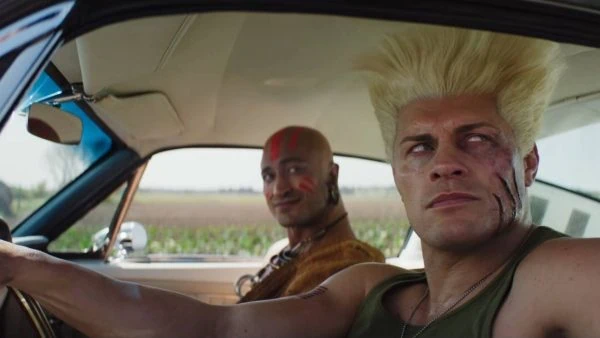
Ultimately, Street Fighter (2026) succeeds precisely because it stops trying to be a high-art masterpiece and instead commits to being a phenomenally fun, self-aware celebration of arcade culture. For fans and casual observers alike, it is an energetic ride that ensures the franchise’s cinematic legacy remains far from a K.O.






Belum ada komentar. Jadilah yang pertama berkomentar!