


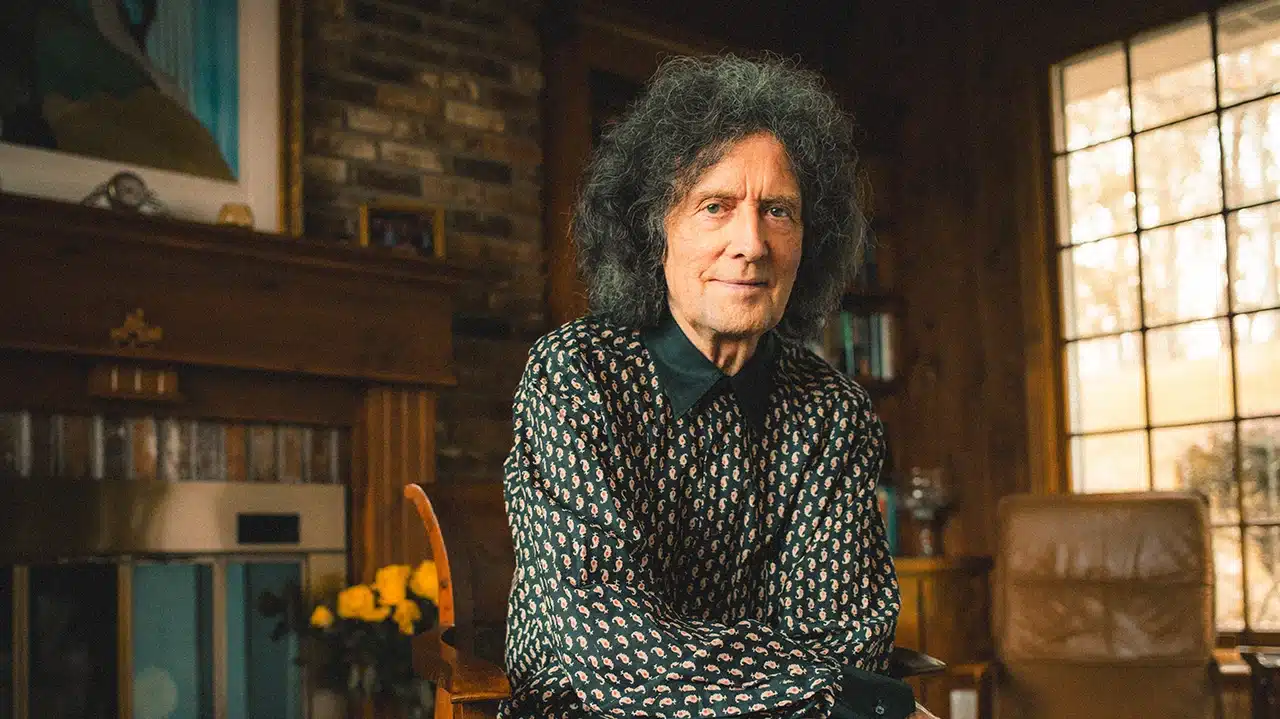
Approaching his landmark eightieth year, singer-songwriter Gilbert O’Sullivan remains a formidable, uncompromising figure in the landscape of popular music. Sitting comfortably in a luxurious Dublin hotel room—a keyboard within arm’s reach and Sky News humming silently on a television screen behind him—the legendary artist exudes the creative drive of a man half his age. Decades of living in Britain have done nothing to dilute his fierce pride in his Irish roots; a sentiment freshly underscored by his receipt of the prestigious "Freedom of Waterford City and County" in 2024.
This deep-rooted identity anchors his newest album, On the Record, a 13-track masterclass in organic songwriting and arrangement. Marked by sharp lyricism, timeless melodic sensibilities, and striking collaborations—including a fragile, emotionally resonant duet with Andrea Corr on "Is That You?"—the album proves that O’Sullivan’s creative fire is far from extinguished. Refusing to be pigeonholed by the expectations of an aging demographic, O’Sullivan continues to chart his own course, navigating the realities of a shifting music industry with the same dry wit, idiosyncratic instrumentation, and refusal to rely on digital trickery that defined his early-1970s heyday.
Detailed Chronology
The Formative Years and the Roots of an Identity
Born in Waterford, Ireland, O’Sullivan’s early life laid the groundwork for an extraordinary career in pop music. When his family moved to England during his youth, the transition sparked a lifelong negotiation between his adopted home and his native land. In the 1960s, while trying to break into the nascent British music scene, O’Sullivan bunked in a shared London bedroom with a piano that he could not afford to tune—costing a mere £10 at the time. That out-of-tune instrument inadvertently set a precedent: every piano he has since owned has been de-tuned by a semi-tone below concert pitch, lending his classic hits a distinct sonic warmth.
Before achieving global superstardom, O’Sullivan crossed paths with other future luminaries. In the mid-1960s, he teamed up with Rick Davies (later of Supertramp) in a band where O’Sullivan manned the drums and Davies played keys. Though financial pressures and safer career paths caused the rhythm section to bow out, O’Sullivan and Davies maintained a mutual respect. When O’Sullivan struck gold first with 1970’s era-defining hit "Nothing Rhymed," he returned the favor by bringing Supertramp onto Top of the Pops to mime and featuring Davies on his subsequent records, offering a crucial leg-up to his old friend.
Navigating the Digital Age Versus Organic Creation
As the decades progressed, O’Sullivan’s creative process solidified into a fiercely traditional methodology. While many legacy artists adapted to the digital age via file-sharing, Skype sessions, or remote tracking—methods utilized by contemporaries like Graham Gouldman of 10cc—O’Sullivan firmly rejects the modern assembly-line approach to recording.
Teaming up with acclaimed producer Ethan Johns (son of Glyn Johns) for On the Record, O’Sullivan favored an organic, almost entirely live-in-the-room approach. Rather than relying on digital manipulation, Johns selects a hand-picked ensemble of top-tier musicians who gather around O’Sullivan’s piano. They rehearse, track the basic rhythm section live, and layer minimal overdubs and vocals afterward. This commitment to raw, human interaction in the studio has injected a renewed sense of credibility and vitality into O’Sullivan’s late-career output.
Supporting Context & Metrics
The Mechanics of a Distinctive Voice
O’Sullivan’s vocal style has long been celebrated for its idiosyncratic charm, drawing comparisons to Bob Dylan—an artist whose unique, highly recognizable delivery heavily influenced the young songwriter. Discussing the mechanics of vocal production, O’Sullivan offers fascinating insights into historical recording techniques:
- Double Tracking: Recalling his work with George Martin and The Beatles, O’Sullivan notes that double tracking works best when starting with a weaker voice, creating a richer, more commercial texture. Famously adept at the technique, O’Sullivan could match his second vocal take precisely without the aid of headphones.
- Pitch Adjustments with Age: Addressing the realities of aging voices in rock—such as Paul McCartney and Rod Stewart dropping their pitch in later years to accommodate vocal wear—O’Sullivan notes that his own semi-tone lower piano tuning has naturally kept his vocal arrangements comfortable and grounded throughout his discography.
Thematic Landscape of On the Record
Far from dwelling on mortality, On the Record addresses broader societal anxieties, relationship dynamics, and cultural observations.
- "See Us Gone": Directly addresses the geopolitical tensions of Vladimir Putin’s war and the perilous nature of modern nuclear brinkmanship.
- "Growing Old Disgracefully": A tongue-in-cheek defiance of cultural marginalization. Rather than surrendering to the societal expectation that septuagenarians should quietly retreat to the garden, O’Sullivan and his generation of 1960s icons (including McCartney, The Who, and Bob Dylan) continue to tour, write, and challenge ageist stereotypes.
- Cultural Commentary: Tracks like "The Luck of the Irish" and "Divorce Irish Style" highlight his ongoing engagement with Irish sociopolitical themes, exploring complex cultural identities that rarely receive mainstream pop commentary.
Official Statements
Reflecting on his life, his music, and his contemporaries, Gilbert O’Sullivan shared several notable perspectives during our interview:
-
On His Connection to Ireland and the Freedom of Waterford:
"It’s my place of birth… It was a great honour to get the ‘Freedom of City’. I feel a great connection to the place."
-
On Collaborating with Andrea Corr:
"The last album I did three years ago, I had duets with Mick Hucknall and KT Tunstall… So, this time we had 13 tracks, and I was talking to the producer, and wondered: ‘Is there a duet here?’… Somebody said to me that Andrea was an option. So, we did… A really nice singer and person, Andrea."
-
On Defying the Expectations of Aging:

“’Growing Old Disgracefully’ is not autobiographical, but I am of this generation. We are sidelined, and we get the argument that we should be gardening, or whatever. That’s not me saying [it], but it has that attitude. I had the title pinned on the wall for months, and the song seems to go down really well onstage. We have T-shirts with the title written on them!”
-
On His Distinctive Vocal Delivery:
"Early Dylan was an influence for me because of the vocals—Lennon/McCartney for the songwriting, Dylan too for the subject matter, but also the voice. Dylan doesn’t have a great voice, but it’s distinctive, and I don’t have a great voice, but it’s distinctive. I think there’s something better because of that. A lot of people sing really well, but are they distinctive?"
Future Outlook
As Gilbert O’Sullivan approaches his eightieth birthday in December, his creative momentum shows zero signs of slowing down. With On the Record receiving widespread critical acclaim and re-establishing his collaborative relevance alongside artists like Andrea Corr and producer Ethan Johns, the songwriter is firmly positioned for an active future.
His upcoming live itinerary reflects a stripped-down, intimate approach designed to showcase his lyrical craftsmanship. Accompanied by longtime guitarist Bill Shanley, O’Sullivan’s live performances discard bloated arrangements in favor of direct, lyric-forward storytelling. Blending timeless anthems like "Alone Again (Naturally)" and crowd-pleasing staples like "Matrimony" with fresh cuts from On the Record, he continues to prove that his generation of 1960s musical pioneers is not fading quietly into the background.
Popular music owes a profound debt to Gilbert O’Sullivan—a songwriter whose melodic genius, lyrical wit, and unwavering artistic integrity remain entirely his own. As long as he is fit and healthy, the world will eagerly listen to what he has to say On the Record.






Belum ada komentar. Jadilah yang pertama berkomentar!