In the annals of 1950s cinematic horror, few releases occupy as uniquely eccentric a niche as Alex Nicol’s 1958 Gothic melodrama, The Screaming Skull. Released during a transformative era for the genre—sandwiched between the Technicolor monster features of American International Pictures (AIP) and the rising, crimson-soaked dominance of Britain’s Hammer Film Productions—The Screaming Skull attempted to carve out its own distinct territory. It combined psychological gaslighting, Southern Gothic claustrophobia, and an infamous, tongue-in-cheek marketing gimmick promising funeral insurance to any audience member frightened to death.
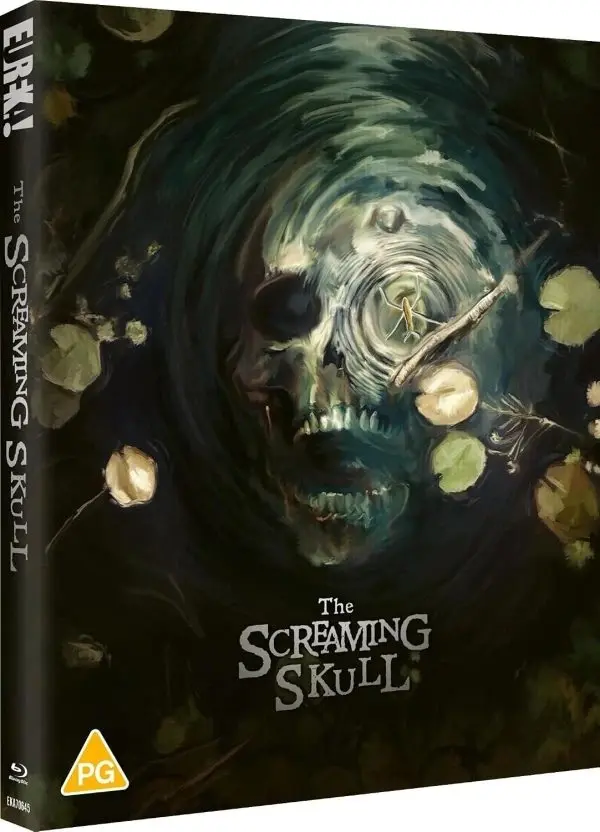
Nearly seven decades later, Eureka Entertainment has breathed new life into this minor cinematic curio with a lavish Blu-ray release under their Eureka Classics banner. Featuring contextual bonus materials, including an introduction by author and critic Stephen Laws and a scholarly video essay by film and literature expert Mary Going, this home video release provides a prime opportunity to re-examine the film. Far from being a lost masterpiece, The Screaming Skull is a fascinating cinematic time capsule. It boasts an ahead-of-its-time, nuanced depiction of female mental illness, anchored by Peggy Webber’s standout performance, even as it struggles under the weight of a predictable narrative and a laborious, sub-70-minute runtime.
Detailed Chronology: The Genesis and Plot of The Screaming Skull
The Gimmick and the Opening Salvo
The Screaming Skull famously begins with an audacious theatrical gambit: a portentous voiceover solemnly declaring that the film you are about to witness is so deeply terrifying that it "may kill you." To alleviate this mortal dread, the production company offered to pay for the funeral expenses of any unfortunate soul who literally expired from fright while watching the picture.
While this promotional stunt was transparently derivative of filmmaker William Castle’s legendary campaign for Macabre earlier that same year—where Castle famously took out a $1,000 life insurance policy for every ticket holder—it set a bold, brazen tone for an independent black-and-white feature. Yet, the hyperbole was entirely unearned. The film was never capable of inducing actual cardiac arrest, but its opening salvo demonstrated the desperate, highly competitive lengths to which 1950s independent horror distributors had to go to capture the public imagination.
A New Bride in a Haunted House
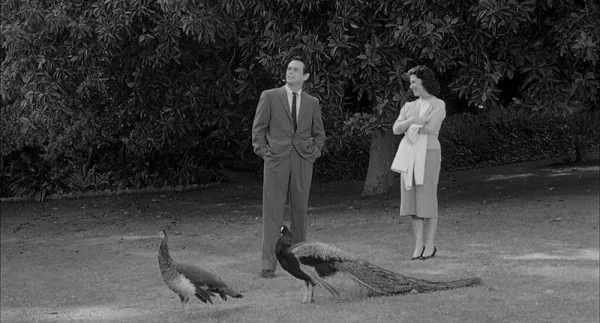
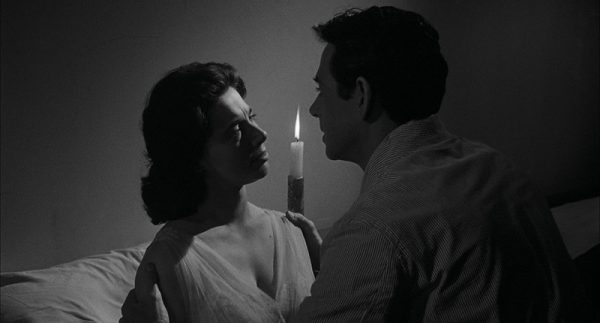
Directed by actor-turned-filmmaker Alex Nicol, the narrative unfurls in an eerie, isolated Southern mansion. The plot centers on Jenni Whitlock (Peggy Webber), a wealthy young woman recently married to Eric Hudson (John Hudson). The newlyweds move into the sprawling estate that Eric previously shared with his first wife, Marion, who tragically died after slipping, striking her head, and drowning in the estate’s garden pond.
Upon arrival, Jenni is introduced to Mickey (played by director Alex Nicol himself), the slow-witted, fiercely loyal gardener who harbored deep affection for Marion. Convinced that Marion’s restless spirit still haunts the grounds, Mickey takes an immediate, icy disliking to Jenni, actively rebuffing her earnest, kind-hearted attempts to bridge the social divide.
As the days pass, the atmosphere within the mansion sours. Viewers learn crucial backstory regarding Jenni’s fragile psychological state: she previously spent time in a sanitarium following the traumatic childhood event of witnessing her parents drown, and she is independently wealthy after inheriting their substantial fortune.
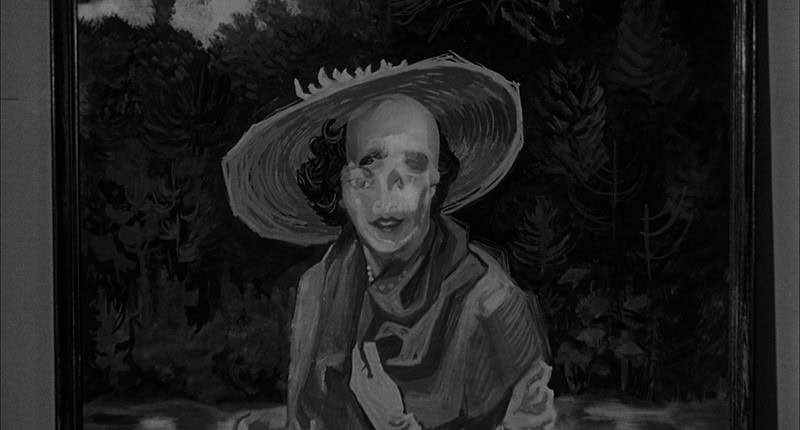
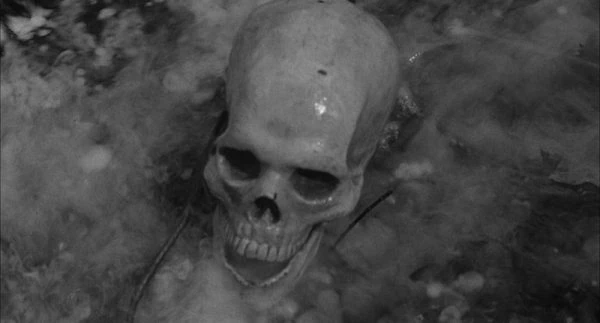
Soon, the haunting begins in earnest. Jenni is subjected to a series of uncanny phenomena—a disembodied skull appears in impossible locations throughout the house, accompanied by piercing screams echoing through the corridors in the dead of night. Terrified that her past psychological trauma is resurfacing, Jenni begs Eric to have her committed to an asylum once more. Eric, playing the supportive and soothing husband, talks her down. However, as external possibilities like Mickey playing malicious practical jokes are systematically ruled out, Jenni is left trapped in a horrifying psychological purgatory: Is she genuinely losing her grip on reality, or is Marion’s vengeful ghost actively trying to drive her insane?
Supporting Context & Metrics: Deconstructing the Production and Performance
Character Dynamics and Progressive Portrayal
Despite its narrative predictability—audiences familiar with Gothic tropes will deduce the plot’s true mechanics long before the halfway mark—The Screaming Skull succeeds brilliantly in its treatment of its central protagonist. Jenni Whitlock stands as a remarkable anomaly in 1950s horror cinema.
Historically, female characters suffering from psychological distress in mid-century thrillers were routinely portrayed as hysterical, irrational, or entirely passive vessels for male gaslighting. Jenni, by contrast, confronts her history of mental illness with startling candor. She discusses her time in the sanitarium openly and unashamedly, not only with her new husband but also with visiting acquaintances such as Edward Snow (Russ Conway), a local reverend, and his wife.
This level of frank introspection, combined with Peggy Webber’s radiant charm and infectious smile, elevates the material. Webber manages to make Jenni an intensely sympathetic figure, imbuing her interactions—particularly her patient, compassionate efforts to win over the hostile gardener Mickey—with a genuine emotional core that keeps the viewer engaged during the film’s slower stretches.
Pacing Pitfalls and Supporting Deficits
Regrettably, the surrounding elements of the production do not consistently match Webber’s performance. At a brisk runtime of just under 70 minutes, one might expect The Screaming Skull to move at a breakneck pace. Instead, the middle act feels curiously laborious, dragged down by a screenplay that relies on repetitive haunting sequences rather than escalating narrative momentum.
Furthermore, the supporting cast—while adequate—fails to achieve the depth or nuance brought by Webber. John Hudson’s portrayal of Eric walks the fine line between supportive spouse and calculating antagonist, but the script leaves him little room for dynamic exploration. Because the plot mechanics are telegraphed early on, the absence of red herrings or complex subplots means the film ultimately lacks the intellectual sharpness required to make its psychological mystery truly compelling.
Official Statements and Critical Reception
In evaluating the film’s legacy and its recent home video resurgence, contemporary film scholars and critics have weighed in on its place within genre history. Eureka Entertainment’s inclusion of supplementary academic material highlights the movie’s thematic ties to broader Gothic traditions.
In his exclusive introductory feature on the Eureka Blu-ray, author and critic Stephen Laws observes:
"While The Screaming Skull has often been unfairly dismissed as a mere footnote in 1950s B-movie history, it possesses an atmospheric texture that rewards patient viewing. It trades grand monster-movie spectacle for intimate, domestic psychological dread."
Adding to this scholarly appraisal, film and literature scholar Mary Going explores the lineage of Gothic tropes in her comprehensive video essay for the release. Going notes that the film utilizes the classic architecture of the haunted house not merely as a backdrop, but as an active participant in the protagonist’s internal fracturing:
"The Southern Gothic setting functions as an externalized psyche. The trapped water of the pond and the recurrent imagery of the skull are physical manifestations of repressed trauma, making the film far more psychologically ambitious than its promotional gimmicks suggested."
Despite these academic observations, general critical consensus remains measured. Review aggregators and retrospective critiques consistently categorize The Screaming Skull as a minor entry in the AIP catalogue—outshined by flashier, more ambitious contemporaries—yet acknowledge its undeniable atmospheric charm and unique historical footprint.
Future Outlook: Preservation and the Cult Reappraisal of B-Movie Classics
As physical media labels continue to exhaustively mine cinematic history for forgotten obscurities, the trajectory of films like The Screaming Skull offers valuable insight into modern film preservation. No longer relegated to scratchy public domain VHS tapes or late-night television filler, these low-budget independent features are increasingly receiving the boutique curation they arguably never received upon initial release.
The investment by companies like Eureka Entertainment in high-definition restorations and scholarly contextualization ensures that cinema’s minor historical artifacts are preserved for future generations of film historians, horror aficionados, and academic researchers. While The Screaming Skull may never challenge the undisputed heavyweights of 1950s horror for cultural dominance, its restoration cements its status as a worthy subject of study.
Looking forward, the ongoing rehabilitation of mid-century genre cinema suggests that other forgotten regional horrors and low-budget thrillers will continue to find appreciative audiences. By separating the historical marketing hyperbole from the genuine artistic merits embedded within the celluloid—such as Peggy Webber’s pioneering performance and the film’s moody, intimate cinematography—modern viewers can appreciate The Screaming Skull for what it truly is: an imperfect, charmingly earnest relic of a bygone era of cinematic showmanship.











Belum ada komentar. Jadilah yang pertama berkomentar!