

Executive Overview
In an era where democratic norms face unprecedented erosion, political resistance has undergone a profound psychological and tactical shift. When institutional checks and balances falter—compounded by a polarized legislature and a compromised judiciary—disillusioned citizens frequently pivot from despair to pragmatic defiance. Today, this resistance finds its most potent, disruptive expression not in traditional party machinations, but in the realm of political humor and late-night satire.
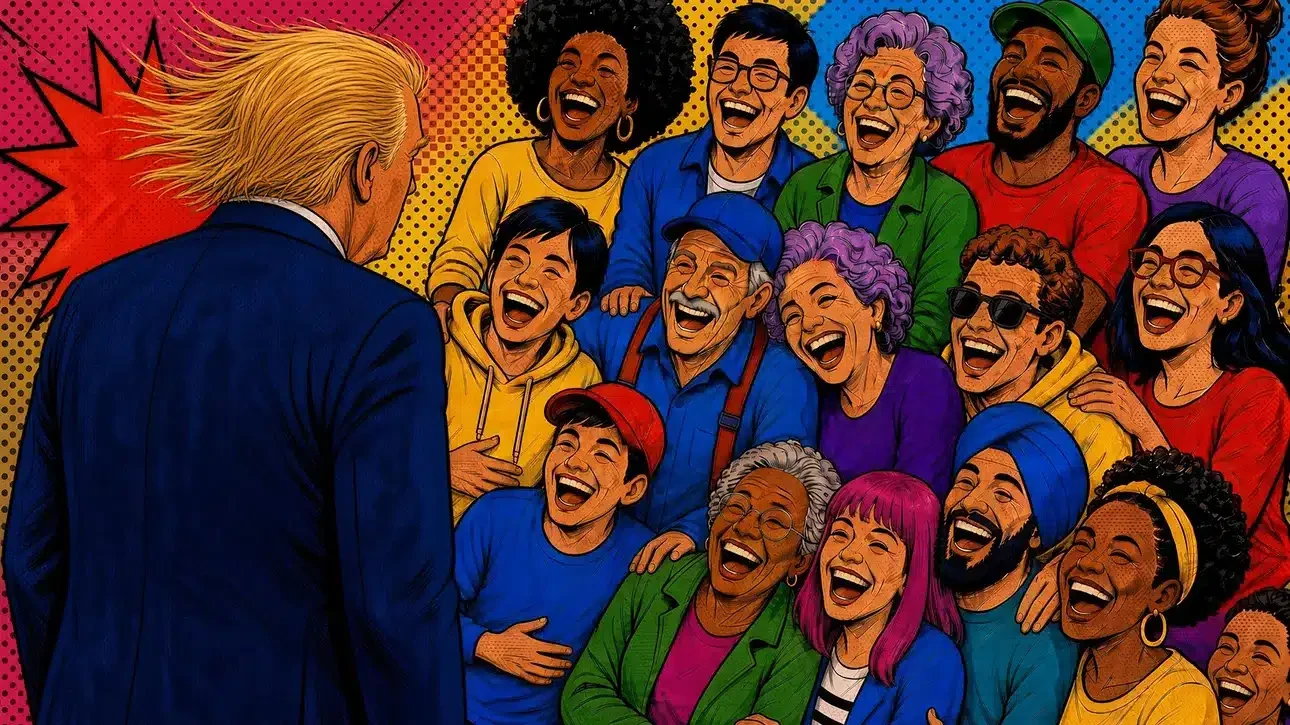
From grassroots protests featuring demonstrators in inflatable frog costumes to prime-time monologues that systematically dismantle authoritarian talking points, humor has emerged as the ultimate antidote to creeping autocracy. Historically, authoritarian regimes require an atmosphere of unyielding solemnity, unquestioning obedience, and manufactured fear. Satire shatters this illusion, exposing the fragility of aspiring dictators who mistake critique for existential threat.
The high-stakes clash between the second Trump administration and America’s premier late-night talk show hosts—culminating in the dramatic suspension and subsequent triumphant return of Jimmy Kimmel—underscores a stark modern reality: as traditional journalism struggles under the weight of access journalism and corporate consolidation, late-night comedians have stepped into the breach, functioning as the de facto collective conscience of the nation. This investigative report examines the historical lineage of political humor, the cognitive mechanics that make laughter kryptonite to authoritarianism, and the watershed moments that tested America’s commitment to the First Amendment.
Detailed Chronology: The Anatomy of a Censorship Crisis
The escalating conflict between the executive branch and late-night entertainment did not materialize in a vacuum; it represents the culmination of a systematic campaign to neuter critical cultural voices.
The Prelude: Silencing Colbert and Co-opting Networks
The administrative offensive against late-night television accelerated in mid-2025. In July, amidst delicate corporate merger negotiations requiring federal approval, CBS’s parent company, Paramount, announced the impending cancellation of The Late Show with Stephen Colbert. For an administration acutely sensitive to public ridicule, removing one of its most articulate critics served as an opening salvo. Buoyed by this corporate capitulation, the administration set its sights on remaining dissenters. "I hear Jimmy Kimmel is next," Donald Trump reportedly teased following the Paramount shakedown, signaling an emboldened approach to silencing critical media figures through regulatory leverage.
The Catalyst: The Charlie Kirk Shooting
The friction point arrived in September 2025 following the assassination of conservative activist Charlie Kirk. The tragedy ignited a firestorm within the MAGA movement, generating an intense thirst for political retribution. Seeking to capitalize on the tragedy, right-wing information silos immediately targeted cultural figures whom they accused of inciting hostility.
During his September 25 monologue, Jimmy Kimmel directly addressed the fallout, asserting that the "MAGA gang" was aggressively seeking political capital from the shooting regardless of the facts. The ensuing outrage was swift, weaponized by the administrative apparatus to exact punishment.
The Regulatory Pincer Movement
Leveraging the controversy, Federal Communications Commission (FCC) Chairman Brendan Carr swiftly entered the fray, threatening regulatory sanctions against ABC and its parent company, Disney. Simultaneously, Nexstar Media Group pulled Jimmy Kimmel Live! from its ABC-affiliated stations.
Caught between partisan regulatory pressure and pending corporate mega-mergers requiring federal sign-offs, Disney executives instructed ABC to halt broadcasts and suspend Kimmel indefinitely. In a public statement that echoed authoritarian consolidation, a triumphant Trump declared the move "great news for America," believing the comedy world’s most persistent thorn had finally been extracted.
The Asymmetric Backlash and Triumphant Return
The administration miscalculated the resilience of public commitment to free expression. In a textbook display of consumer power and asymmetric resistance, the backlash was immediate and severe:
- The Comedy Community Unites: Rival networks and fellow comedians rallied around Kimmel, issuing unyielding condemnations of the suspension.
- Consumer Boycotts: Millions of viewers mobilized, threatening sweeping boycotts of Disney products and services.
- Market Retaliation: Disney stock values plummeted sharply in the immediate wake of the announcement, turning the corporation’s financial vulnerability against executive overreach.
Recognizing the untenable economic and public relations damage, Disney, ABC, Carr, and the administration retreated. Kimmel returned to the airwaves to soaring ratings, cementing his status as a national hero and demonstrating that corporate compliance has its limits when public backlash is swift and unified.
Supporting Context & Metrics: The Mechanics of Satirical Resistance
To understand why authoritarian figures react with visceral fury to comedians, one must examine both historical precedent and the cognitive science of laughter.
Historical Lineage of Satirical Subversion
The weaponization of humor against tyranny spans millennia. From comic poets shaping Athenian democracy in the 6th century BC to medieval carnivals ridiculing repressive monarchs, satire has always provided a non-violent mechanism for popular dissent. In the United States, political cartoonists wielded profound cultural influence during the Revolutionary era, a tradition maintained by luminaries such as Benjamin Franklin, Mark Twain, and successive generations of broadcast satirists.
Cognitive Science: Why Humor Destroys Autocracy
Cognitive philosopher John Morreall observes that "[people] with a sense of humor can never be fully dominated." While fascism demands rigid ideological conformity, unthinking obedience, and the projection of infallible strength, humor relies on incongruity, humility, and the exposure of hypocrisy.
Authoritarians project an image of absolute superiority that resembles a house of cards; a single well-timed punchline collapses the illusion of omnipotence. As scholar Chaya Ostrower documented regarding prisoners in Nazi concentration camps, humor functions not merely as amusement, but as a vital survival mechanism—a cognitive escape hatch that preserves human dignity against hopeless circumstances.
The Journalistic Vacuum
The rise of late-night satirists as trusted news sources is directly proportional to the decline of traditional American journalism. Unlike counterparts in the United Kingdom, where political correspondents maintain aggressive, unyielding accountability standards, American journalists frequently capitulate to administrative hostility. Fearing exclusion from favored press corps pools, reporters routinely drop lines of inquiry following a dismissive insult.
Consequently, audiences have turned to late-night hosts not just for jokes, but for factual clarity and moral integrity. As media scholar Geoffrey Baym noted in his analysis of The Daily Show, modern satirists practice "discursive integration," offering a "rhetoric of challenge" that blends investigative critique with performance art. By interrogating both politics and mainstream journalism itself, shows hosted by Jon Stewart, Stephen Colbert, and Jimmy Kimmel model a robust, deliberative democracy centered on shared moral truths rather than partisan talking points.
Official Statements & Institutional Responses
The conflict surrounding the suspension of Jimmy Kimmel Live! generated intense reactions across the political and media landscape:
- The Executive Branch: Celebrating the initial suspension, administration representatives framed the regulatory scrutiny as a necessary check on broadcast irresponsibility. A statement released via social media characterized the action as a victory against "biased coastal elites abusing public airwaves."
- The FCC: Chairman Brendan Carr defended the agency’s posture by emphasizing the statutory obligations of broadcast licensees, maintaining that networks must adhere to community standards during periods of national mourning and political tension.
- The Entertainment Industry: In a joint statement coordinated across networks, prominent figures in late-night television denounced the suspension as an "alarming escalation of state-directed censorship that threatens the bedrock principles of the First Amendment."
- Disney/ABC Corporate Leadership: Following the swift market correction and plummeting stock valuations, corporate leadership issued a conciliatory statement emphasizing the company’s "long-standing commitment to diverse viewpoints and open dialogue," clearing the path for Kimmel’s reinstatement.
Future Outlook
The failed attempt to sideline Jimmy Kimmel serves as a profound stress test for American democratic institutions—and a definitive warning to aspiring authoritarians. It demonstrates that while corporate entities remain vulnerable to regulatory coercion, the ultimate sovereign power in a democracy resides with an engaged citizenry.
As the political landscape navigates ongoing polarization, the intersection of entertainment, journalism, and civic activism will remain a primary battleground. The events of late 2025 prove that as long as citizens retain their purchasing power, their commitment to free expression, and their capacity for collective laughter, authoritarian overreach will face an insurmountable cultural wall. The jester’s shield has proven resilient; so long as comedians continue to speak truth to power, the foundational illusion of autocratic infallibility will ultimately crumble.







Belum ada komentar. Jadilah yang pertama berkomentar!