

Executive Overview
Arriving concurrently with the splashy debut of Peacock’s prequel television series Crystal Lake, director Sean S. Cunningham’s foundational 1980 slasher classic, Friday the 13th, has received a brand-new, highly anticipated 4K Ultra HD Steelbook release. This timely physical media drop offers modern horror aficionados an irresistible invitation to connect the franchise’s latest televisual interpretations directly to the cinematic bedrock that started it all nearly half a century ago.
Originally conceived in the opportunistic wake of John Carpenter’s 1978 phenomenon Halloween, Cunningham’s low-budget indie feature has long since transcended its commercial origins. Over the span of 46 years, it has evolved from a calculated studio cash-grab into an undisputed cornerstone of the slasher subgenre, spawning an expansive multi-media empire, shaping pop-cultural lexicon, and altering the horror landscape forever.
Yet, as home video technology reaches unprecedented levels of clarity, the question remains: How does this aging indie slasher hold up under the unforgiving microscope of modern high-dynamic-range displays? Blending a comprehensive technical review of the new 4K transfer with a forensic look at the film’s production history, structural narrative choices, and cultural legacy, this analysis explores whether the legacy of Camp Crystal Lake remains sharp enough to draw fresh blood from collectors and newcomers alike.
Detailed Chronology & Narrative Anatomy
To truly understand the enduring impact of Friday the 13th, one must return to its meticulously paced, structurally unique narrative. Unlike many of its direct imitators—and certainly unlike its own hyper-serialized sequels—the 1980 original plays out much more like a traditional whodunit murder mystery than a straightforward endurance test.
The Original Sin (1958)
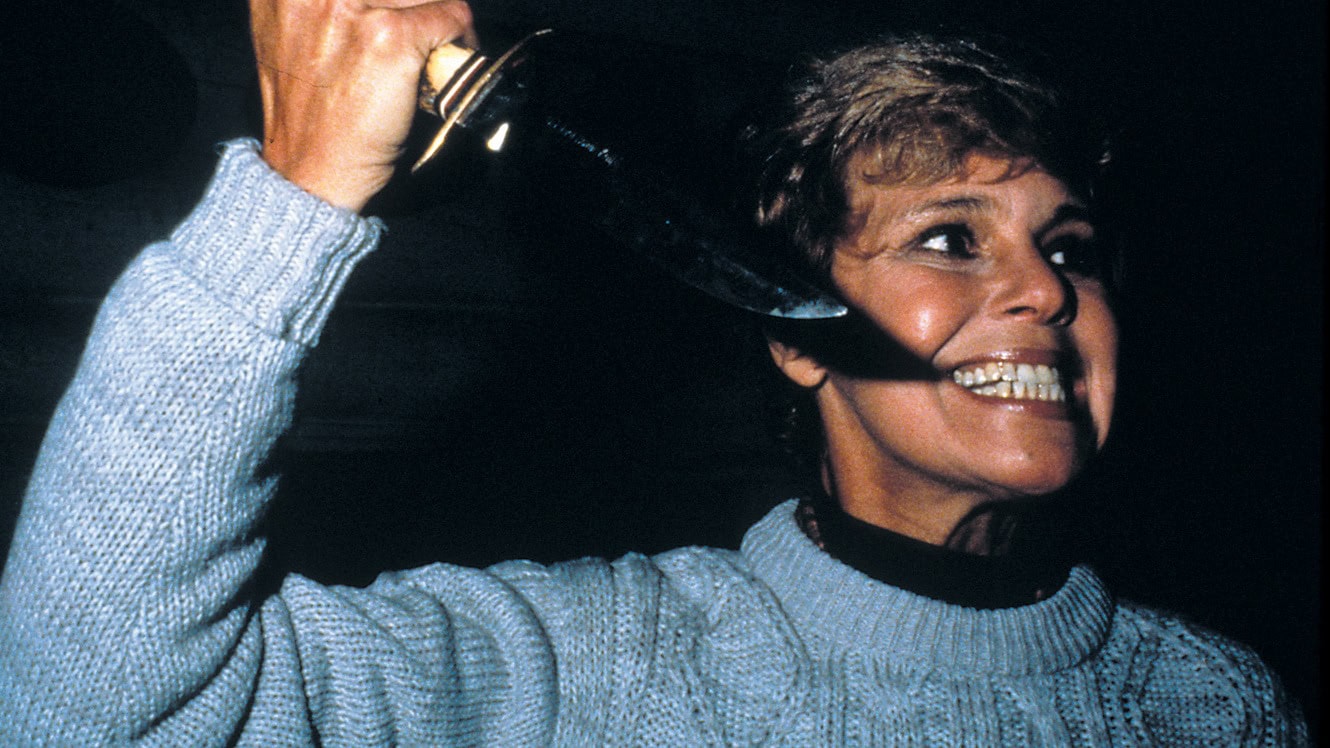
The film opens with a lingering, tension-soaked point-of-view (POV) shot that clearly tips its hat to Carpenter’s Halloween. Set in the summer of 1958 at the ill-fated Camp Crystal Lake, the sequence tracks two amorous camp counselors who slip away from the main camp grounds for an intimate tryst. Their stolen moments of romance are abruptly shattered when an unseen, relentless assailant brutally murders them in cold blood. This opening sequence establishes the foundational trauma of the narrative: a cursed stretch of wilderness tainted by human negligence and unimaginable violence.
The Return to Camp Blood (1979)
Fast-forwarding over two decades, the narrative shifts to 1979. A bright-eyed young counselor named Annie (played by Robbi Morgan) is hitchhiking her way to the newly christened Camp Crystal Lake. Her mission, alongside a fresh crop of enthusiastic teenage counselors, is to clear the brush, fix the cabins, and finally reopen the infamous summer camp for a new generation of children.
En route, Annie encounters stubborn local resistance. She receives ominous, prophetic warnings from paranoid townspeople—most notably the local doom-monger "Crazy Ralph" (portrayed unforgettably by Walt Gorney). Despite these chilling portents, Annie pushes forward, joining the rest of the crew under the watchful, optimistic eye of the camp’s new owner, Steve Christy (Peter Brouwer). Christy is vaguely aware of the camp’s dark, blood-soaked history, but he willfully dismisses the locals’ superstitions as small-town hysteria.
The Descent into Carnage
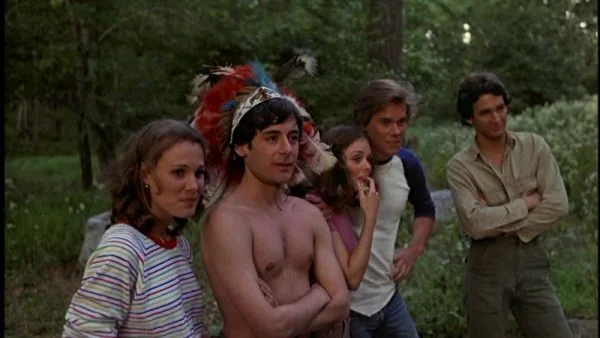
From this structural baseline, Friday the 13th diverges sharply from the established Halloween formula. In Carpenter’s film, the identity of Michael Myers is explicitly known from the opening frames. In Cunningham’s film, however, the audience is thrust into an atmospheric guessing game. The young counselors—including early career turns by Kevin Bacon, Adrienne King, and Jeannine Taylor—are systematically picked off one by one by an anonymous killer lurking in the shadows of the dense New Jersey woods.
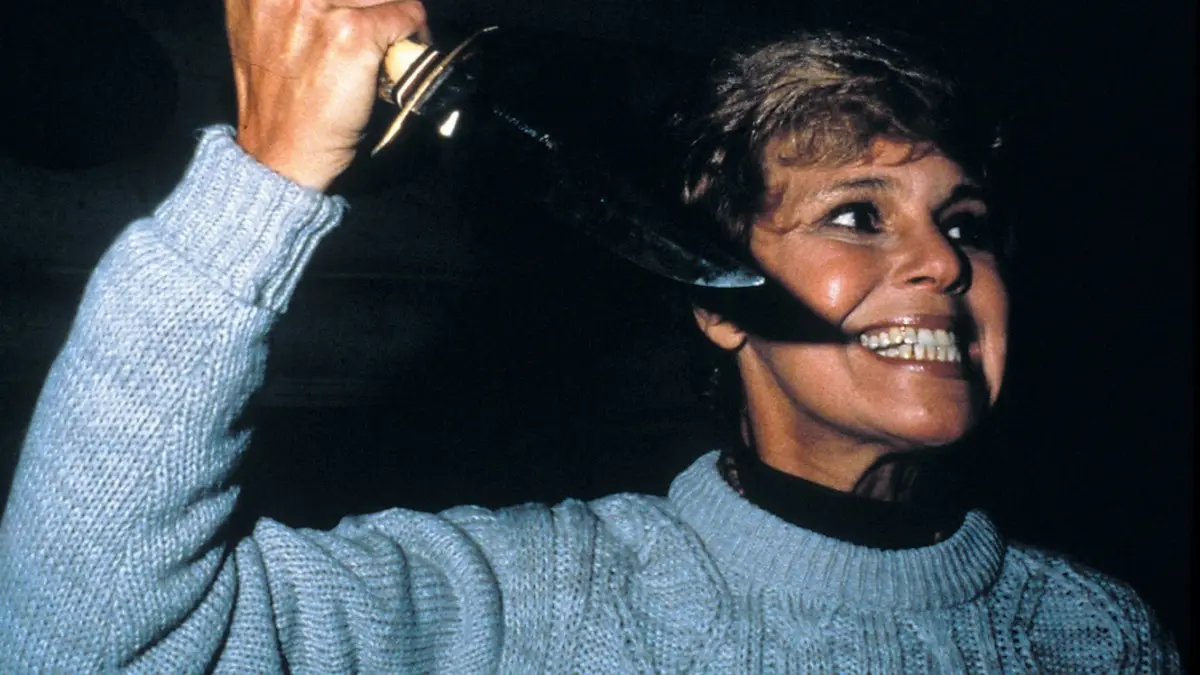
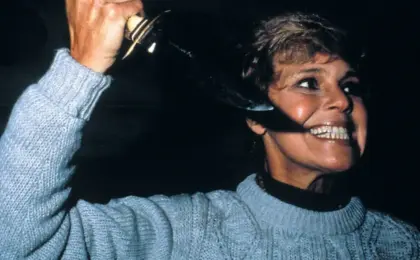
The ensuing kills introduced audiences to unprecedented levels of on-screen gore, courtesy of legendary makeup and special effects wizard Tom Savini. While the franchise would later pivot toward increasingly elaborate and inventive weaponry, the initial slayings carry a raw, visceral terror. This dread culminates in a shocking, unconventional third-act reveal that turns traditional slasher tropes on their head.
Supporting Context, Technical Metrics, and the 4K Transfer
Evaluating a 46-year-old independent film on a modern 4K Ultra HD disc requires balancing technical scrutiny with historical context. Shot on a modest budget with rudimentary equipment, Friday the 13th was never engineered to withstand the analytical scrutiny of HDR10, wide color gamuts, and massive home theater displays. Nevertheless, Paramount’s new 4K transfer presents a fascinating mixed bag of remarkable visual upgrades and inherent optical limitations.
Visual Fidelity and Color Grading
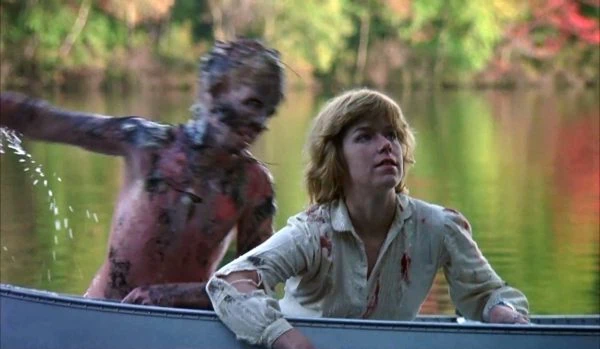
On the whole, the 4K transfer delivers a generally pleasing, highly cinematic presentation. The sun-drenched daylight scenes look remarkably fresh, vibrant, and tactile. The opening sequences featuring Annie navigating the local town, as well as the film’s harrowing climax with Alice (Adrienne King) drifting alone on a boat in the misty lake, showcase impressive fine-detail retrieval in the foliage, fabrics, and natural textures.
However, the transfer is noticeably darker than previous Blu-ray iterations. This intentional (or perhaps aggressive) grading is immediately apparent in the opening night sequence; the contrast is cranked to such a degree that the iconic yellow shirts worn by the 1958 counselors appear muted, muddy, and visually suppressed.
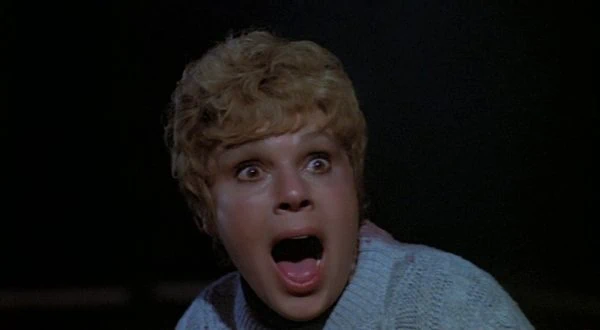
Interestingly, this increased darkness works to the film’s structural advantage during its terrifying second half. As a violent storm hits the camp, knocking out the power grid and plunging the grounds into pitch darkness, the murkier black levels heighten the oppressive atmosphere. The remaining counselors are forced to blindly navigate the shadows, and the gloomy transfer successfully immerses the viewer in their suffocating panic. When daylight finally breaks, the surrounding forestry and lakefront regain a breathtaking, crisp level of clarity.
The Savini Effects Under the Microscope
Tom Savini’s groundbreaking practical effects—such as the iconic throat-slashing and arrow-through-the-neck gags—suffer a double-edged sword effect from the enhanced 4K clarity. While the visceral impact remains intact, the ultra-high resolution exposes the mechanics behind the movie magic. The latex prosthetics used on certain actors for their death sequences occasionally fail to match their natural skin tones, making the joins and appliance seams painfully obvious.
Of course, neither Savini nor director Sean S. Cunningham could have anticipated their micro-budget exploitation flick being mastered in glorious 4K UHD back in the sweltering summer of 1979. Given its age and budget constraints, these minor visual artifacts are easily forgiven by discerning cinephiles.
Audio and Physical Packaging
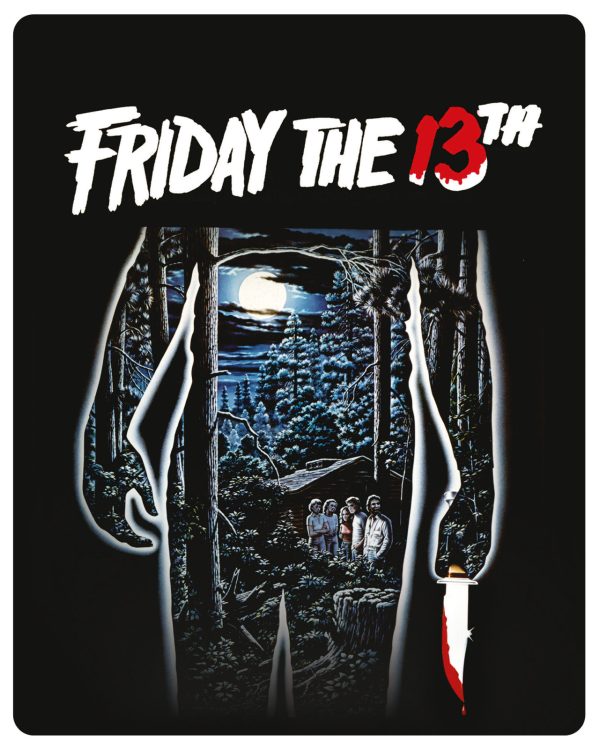
The release comes packaged as a stunning 4K UHD/Blu-ray combo pack housed in a collectible Steelbook featuring the film’s iconic, highly sought-after original theatrical poster artwork.
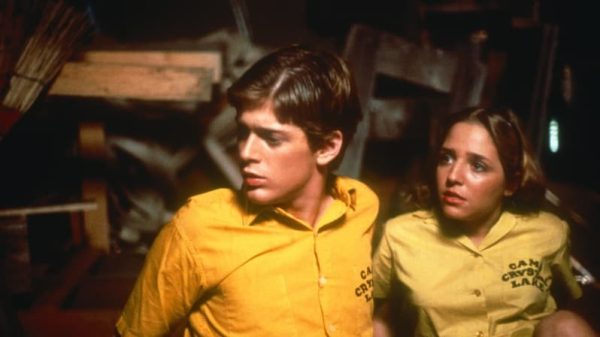
The accompanying Blu-ray disc utilizes previously mastered UK edition assets, meaning no brand-new special features have been minted for this specific package. However, legacy bonus features—including the comprehensive cast and crew audio commentary and several behind-the-scenes featurettes exploring Savini’s special makeup effects—provide more than enough archival depth for series newcomers and franchise completionists.
Official Statements and Industry Insights
Reflecting on the enduring legacy of the film, director Sean S. Cunningham has frequently spoken about the accidental nature of the franchise’s birth. In past retrospective interviews, Cunningham has candidly admitted that Friday the 13th was designed primarily as a business venture to capitalize on the financial success of John Carpenter’s independent triumph.
"We weren’t trying to invent a new cinematic art form," Cunningham noted during a 30th-anniversary retrospective panel. "John Carpenter proved that an independent horror movie could make serious money without a major studio backing it. We just wanted to make a scary movie that would keep drive-in audiences on the edge of their seats, pay off our investors, and hopefully launch our careers. The fact that people are still talking about it, buying steelbooks, and dissecting every frame nearly fifty years later is something none of us could have ever predicted."
Similarly, Tom Savini has often reflected on the sheer logistical challenges of executing the film’s gore on a shoestring budget, noting that the gritty, unpolished look of the practical effects contributed heavily to the raw, underground aesthetic that studios could never replicate in higher-budget studio productions.
Future Outlook: The Franchise Horizon
As the horror community digests this pristine 4K Steelbook release, the future of the Friday the 13th intellectual property has never looked more active—or more legally complicated.
For over a decade, the franchise was bogged down in a bitter, protracted legal battle between screenwriter Victor Miller and director Sean S. Cunningham over the U.S. copyright of the original screenplay. That legal cloud finally parted, clearing the runway for new expansions in the Crystal Lake universe.
With Peacock’s high-profile prequel series Crystal Lake officially underway under the creative stewardship of A24 and developer Bryan Fuller, the franchise is poised to dive deep into the tragic family history of Pamela Voorhees and her mutated son, Jason. This television expansion aims to flesh out the localized folklore hinted at in Cunningham’s original 1980 film, transforming throwaway lines of dialogue from Crazy Ralph and Steve Christy into expansive, serialized narrative arcs.
Furthermore, horror enthusiasts continue to clamor for a definitive, fully unified box set encompassing all twelve cinematic entries in true 4K UHD glory. While legal hurdles and music licensing issues have historically plagued the sequel catalog, the commercial success of this individual 4K Steelbook release proves there is an insatiable, multi-generational appetite for Camp Crystal Lake.
Final Verdict & Recommendation
Despite pacing issues in its slow-burning final act and occasional technical inconsistencies in its color grading, Sean S. Cunningham’s Friday the 13th remains an essential cinematic artifact. It captures lightning in a bottle—a snapshot of independent ingenuity meeting raw, predatory atmosphere.
For casual fans, the existing digital versions may suffice; however, for dedicated collectors and physical media purists, this 4K UHD Steelbook offers a distinct, visually immersive upgrade that honors the grimy, terrifying legacy of a true horror classic.
Flickering Myth Rating:
- Film: ★★★★☆
- Movie: ★★★★☆
(Written by Chris Ward)


Belum ada komentar. Jadilah yang pertama berkomentar!