

Executive Overview
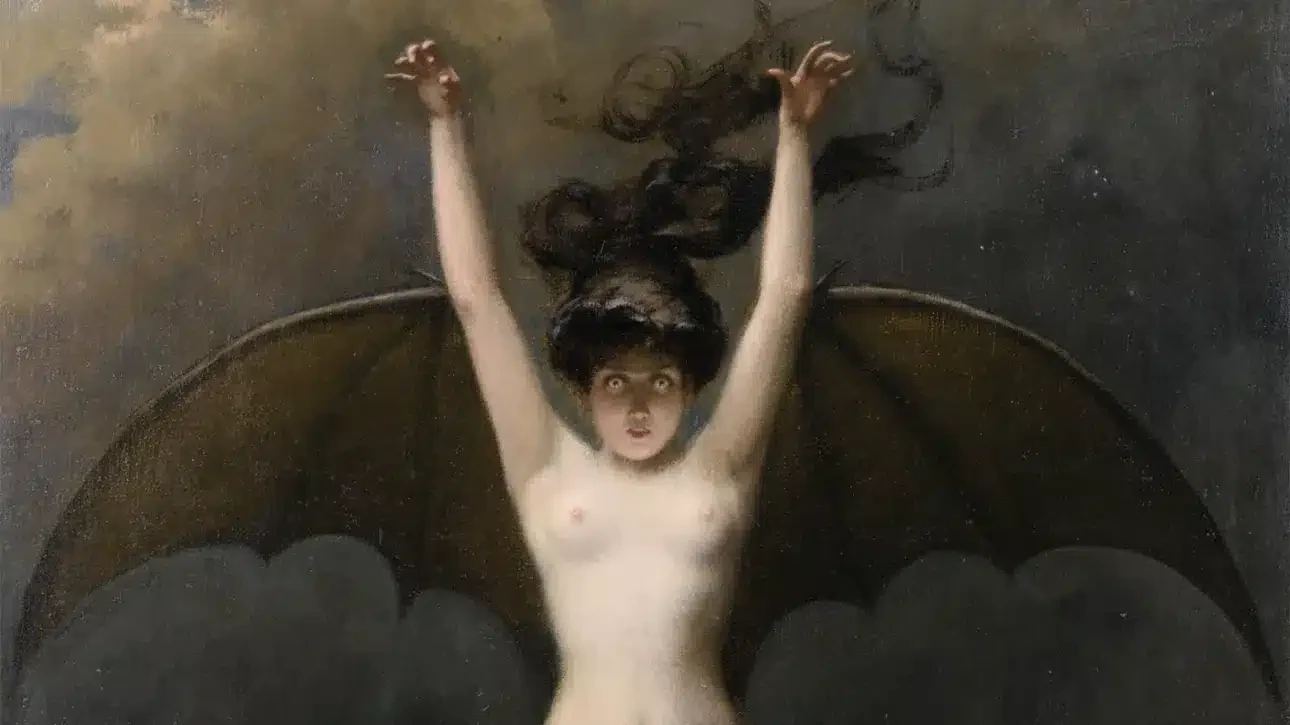
In the wake of sweeping legislative and judicial rollbacks targeting bodily autonomy—most notably the U.S. Supreme Court’s 2022 decision to overturn Roe v. Wade—scholar Eleanor Johnson embarked on a sweeping cultural archaeology. Her resulting book, Monstrous Bitch: A History of Terrifying Women, opens with a deliberate historical reversal. Rather than viewing contemporary attacks on female agency as isolated political anomalies, Johnson traces them backward through millennia of literature, folklore, and popular media. Her central thesis is as provocative as it is pervasive: patriarchal societies have historically weaponized storytelling to paint any woman who transgresses her prescribed societal role as a monster.
Spanning thousands of years, Monstrous Bitch examines how female power, sexuality, voice, and independence have consistently been coded as existential threats. From ancient Mesopotamian deities to 21st-century cinematic horror, Johnson documents a relentless cultural imperative to police the boundaries of womanhood. However, the book’s intellectual value extends far beyond a straightforward polemic. By navigating the tension between patriarchal oppression and genuine female agency, Johnson challenges readers to confront a complex paradox: while societies have repeatedly used horror and demonization to subjugate women, many of these female antagonists are complex, dynamic actors whose transgressive behaviors genuinely disrupt order.
As contemporary legal and social battles continue to redefine the boundaries of sex and gender across the globe—from American reproductive rights debates to legal definitions of womanhood in the United Kingdom—Johnson’s work arrives as a timely, urgent interrogation of how culture constructs the category of the "other." This investigation explores the structural trajectory of Monstrous Bitch, examining its historical claims, its critical limitations, and what its conclusions reveal about modern anxieties surrounding female power.
Detailed Chronology: From Ancient Goddesses to Modern Auteurs
To construct her sprawling history of female monstrosity, Johnson traces an evolutionary path across Western literature and performance arts. Her analysis demonstrates that while the fundamental fear of female autonomy remains constant, the specific nature of the threat has mutated across eras.
1. The Ancient World and Classical Antiquity: The Threat of Chaos and Infanticide
The historical pattern is established almost immediately in Mesopotamian mythology with Lamashtu, a demonic goddess banished from heaven after angering her father. Transformed into a wild, terrifying entity in the mortal world, Lamashtu’s animalistic depiction makes the label of "bitch" nearly literal. Johnson identifies in Lamashtu the foundational traits of the monstrous female: a disruptive voice, unbridled sexuality, physical wildness, and, most horrifyingly, a capacity for infanticide. Lamashtu threatens not merely men or political structures, but the continuity of the family and society itself.
As the historical narrative shifts to classical Greece and Rome, the nature of female antagonism evolves. In Greek tragedies, female threat remains tethered to the supernatural—the Furies are divine avengers, and Medea possesses both divine ancestry and magical capability. By contrast, Roman literature secularizes the monstrous woman, making her increasingly mortal and recognizable. This shift mirrors a historical reality: Roman society enforced particularly rigid legal and social subordination upon women, making domestic or social insubordination feel acutely dangerous.
2. The Medieval and Early Modern Eras: Witchcraft and Political Ambition
Christianity introduced a profound theological twist to the archetype of the female monster. While women remained firmly mortal, their supposed wickedness was increasingly attributed to external, supernatural evil—specifically, compacts with the Devil. This paved the way for the historical tragedies of the European witch trials.
By the Jacobean period, the boundary between human psychology and supernatural terror dissolved further. In works such as The Witch of Edmonton and William Shakespeare’s Macbeth, mortal women themselves became the primary source of horror. Lady Macbeth’s murderous political ambition demonstrates that a woman could deliberately cast aside traditional maternal and nurturing expectations to pursue sovereign power, turning her own psyche into a battleground of corruption.
3. The Gothic Turn: Erotic Appetite and Transgression
In the 18th and 19th centuries, the nature of the female threat underwent another transformation, pivoting away from infanticide and political regicide toward sexual autonomy. Gothic literature birthed the female vampire, a figure whose danger lay not in her disruption of lineage or motherhood, but in her unconstrained erotic appetite.
Sheridan Le Fanu’s 1872 novella Carmilla exemplifies this transition. Carmilla’s predatory, homoerotic attraction to young women transformed female sexuality into a dual source of Victorian fascination and dread. By drawing on literature outside the traditional Western canon, Johnson demonstrates that the history of female monstrosity was continually evolving at the literary margins, reflecting subterranean cultural anxieties that standard Victorian novels often repressed.
4. 20th-Century Cinema and the Rise of the Female Auteur
The journey of the monstrous woman culminates in 20th- and 21st-century Hollywood horror. Here, the female body itself becomes the primary site of horror, frequently manipulated by patriarchal institutions such as modern science, medicine, and psychiatry. Films like William Friedkin’s The Exorcist (1973) and Dario Argento’s Suspiria (1977) cemented the horror genre as a primary vehicle for exploring bodily transformation, loss of control, and reproductive dread.
Crucially, the 21st century has witnessed a profound reclamation of this archetype. In films like John Fawcett’s Ginger Snaps (2000), Karyn Kusama’s Jennifer’s Body (2009), and Robert Eggers’ The Witch (2015), the dynamic shifts. Protagonists like Thomasin in The Witch are no longer mere passive victims of patriarchal projection; they actively choose their monstrosity as a pathway to independence. The history that began with stories told about women by men ultimately transforms into a history of women telling stories about themselves.
Supporting Context & Metrics: The Mechanics of Misogyny and Marginality
To evaluate Johnson’s arguments effectively, it is necessary to examine the broader literary and cultural mechanisms she deploys. Monstrous Bitch relies heavily on the premise that horror as a genre is uniquely suited to diagnosing cultural neuroses. Because horror has historically occupied a marginalized space within academic and artistic hierarchies, it frequently articulates raw social anxieties that "respectable" art glosses over.
| Epoch / Genre | Primary Archetype | Nature of the Threat | Cultural Reflex / Mechanism |
|---|---|---|---|
| Ancient Mesopotamia | Lamashtu / Divine Outcasts | Infanticide, wildness, social chaos | Exclusion of female power from divine order; policing motherhood. |
| Classical & Roman | Medea / Mythic Figures | Divine fury, magic, mortal subversion | Reflecting anxieties over legal subordination and civil stability. |
| Early Modern / Jacobean | Witches / Lady Macbeth | Witchcraft, political ambition | Tying female agency to diabolical pacts or unholy sovereign desire. |
| Victorian Gothic | Carmilla / Female Vampires | Erotic appetite, transgressive desire | Pathologizing non-normative sexuality and female independence. |
| Modern Cinema | Possessed / Transformed Bodies | Medicalized deviance, bodily autonomy | Exploiting the female body through patriarchal science and psychiatry. |
| Contemporary Horror | Thomasin (The Witch) | Self-actualized monstrousness | Reclaiming agency; choosing damnation over fundamentalist subjugation. |
Johnson’s analytical framework successfully bridges centuries of disparate source material by anchoring them to a unified premise: the fear of the boundary-crosser. Women in these narratives are persistently defined by thresholds—between respectable and promiscuous, maternal and murderous, civilized and wild, victim and predator. What makes them "monstrous" is their movement across these lines.
Critical Perspectives: The Limitations of the "Patriarchy" Framework
Despite the compelling nature of Johnson’s historical arc, Monstrous Bitch encounters theoretical friction when it leans too heavily on "patriarchy" as an all-encompassing explanatory tool. Several cultural critics and literary historians have noted the analytical risks of flattening thousands of years of human history into a single narrative of male oppression.
The Danger of Circular Reasoning
A central critique of the book’s methodology lies in its potential for circularity. If every female antagonist in literature is categorized as a symptom of patriarchal anxiety, the specific literary and dramatic motivations of the characters risk being erased.
For instance, characters like Medea, Lady Macbeth, and Carmilla do not merely populate opposing sides of their narratives because their creators required a scapegoat to punish female ambition. They are enduring literary figures because they possess complex desires, intellectual agency, and psychological depth that generate genuine dramatic conflict. Reducing their literary function entirely to an expression of misogyny overlooks the intricate ways these texts interrogate power, morality, and human nature.
Historical Divergence vs. Continuity
Furthermore, Mesopotamian mythology, classical Athens, Imperial Rome, Christian Europe, Jacobean England, and modern capitalist societies did not share a unified conception of womanhood, reproduction, or individuality. Treating these distinct civilizations as uniform variations of a singular patriarchal system obscures the vast differences in how gender was constructed and performed across time and space. The anxieties that produced a Roman tragedy about a dangerous mortal woman were fundamentally different from the religious panics that fueled the European witch trials or the medical anxieties that shaped 20th-century cinematic horror.
Future Outlook: The Ongoing Evolution of Female Representation
As Monstrous Bitch demonstrates, the cultural obsession with policing female boundaries is far from a historical relic. The book’s release intersects with a volatile contemporary political and legal landscape where the definition of womanhood remains intensely contested.
In the United States, the post-Roe judicial landscape has revitalized debates over bodily autonomy, state control, and reproductive freedom, making historical allegories of female entrapment acutely relevant. Simultaneously, in regions like the United Kingdom, legal and social definitions of sex, gender identity, and the Equality Act have brought the linguistic and biological boundaries of "womanhood" to the forefront of public discourse.
What Johnson’s work ultimately reveals is that society has never possessed a single, settled, harmonious definition of what women are supposed to be. The "monstrous woman" is continually manufactured precisely because cultures repeatedly attempt—and fail—to enforce rigid behavioral boundaries.
Looking forward, the rise of female auteurs, writers, and creators who actively reclaim the monstrous archetype suggests that the narrative monopoly is fracturing. As women increasingly participate in authoring their own representations—both on the page and on the screen—the traditional dichotomy between the "oppressed victim" and the "evil monster" is being dismantled. The fundamental question first asked in antiquity remains active: what happens when a woman refuses to remain within the boundaries drawn around her? Johnson’s historical synthesis suggests that while society may still rush to label her a monster, the meaning of that monstrosity is finally being defined on her own terms.






Belum ada komentar. Jadilah yang pertama berkomentar!