

Executive Overview
In an era defined by hyper-growth, massive 50-person venture syndicates, and billion-dollar micro-funds chasing every algorithmic iteration, legendary Silicon Valley firm Benchmark continues to operate as a defiant outlier. Over its 31-year history, the firm has maintained a strict, unyielding adherence to early-stage craftsmanship. While industry rivals rush to super-size their deployment pace, Benchmark’s general partners maintain a deliberate cadence: sticking to just two or three new investments per partner each year.
Yet, even the most traditional titans must adapt. Following a rare structural pivot this past summer, Benchmark announced a staggering $2 billion across two new vehicles—marking only the second time in its three-decade history that it has deviated from its historically modest fund sizes. This includes an expansion into the growth-stage arena via a newly minted $1.25 billion fund.
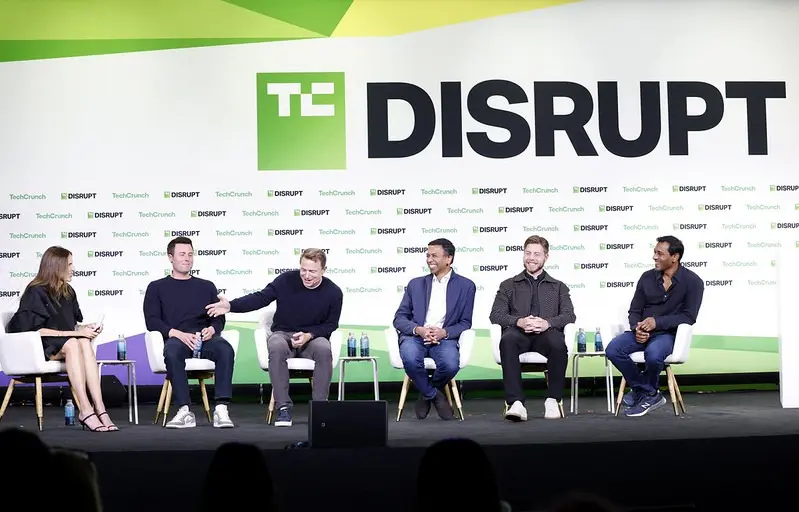
At TechCrunch Disrupt, Benchmark’s current five-partner roster—Peter Fenton, Chethan Puttagunta, Eric Vishria, Ev Randall, and Jack Altman—took the stage to demystify the firm’s inner workings. From their famous Monday meetings held entirely without agendas to their pragmatic perspectives on market volatility, AI hysteria, and the magnetic pull of San Francisco, the partners offered an unfiltered masterclass in venture capital resilience. This feature examines how Benchmark is scaling its balance sheet without compromising its soul, navigating the treacherous waters of artificial intelligence, and proving that small, highly aligned partnerships still hold the ultimate competitive edge.
Detailed Chronology: Evolution of a Venture Titan
To understand Benchmark’s current stance, one must look at how the firm has methodically evolved while aggressively protecting its foundational DNA. For two decades, Benchmark steadfastly maintained its core fund size at $500 million, a deliberate restraint that Peter Fenton now admits may have been tactical conservatism to a fault.
The Core and the Growth Pivot
"The craft that hasn’t changed is the core fund: working closely with founders at the beginning," Fenton explained on stage. "It’s usually a 10-to-15-year commitment, working shoulder to shoulder, and that doesn’t scale. There’s also been inflation. We held the core fund at $500 million for 20 years, and it has just inflated to be consistent with the existing economy, which we hadn’t done."
The introduction of the massive growth fund, however, represents a calculated expansion of the firm’s mandate. Historically, Benchmark’s early-stage focus meant walking away from breakout companies scaling into their later phases. According to Fenton, passing on those opportunities was "a fork in our eye," noting that past missed expansions cost the firm shots at 10x-to-1,000x returns.
When asked how the firm plans to deploy the $1.25 billion growth vehicle, Fenton emphasized a concentrated, high-conviction approach:
"I’d love for us to have… the agony and ecstasy of a concentrated portfolio. If the fund is successful, one or two investments will generate 90% of the returns. So I think it’s four to six, maybe seven to eight [investments]."
A New Generation of Partners
The firm’s operational philosophy has also absorbed fresh perspectives through recent additions. Ev Randall joined late last year following stints at Founders Fund, Bond, and Kleiner Perkins. Drawn early in his career to small partnerships that bypass Byzantine corporate hierarchies, Randall emphasized the importance of mutual admiration within a team. "With Benchmark, with the current crop of GPs, it was obvious that everyone liked each other and got along, but it went deeper than that. It’s a group that admires each other and learns from each other."
Jack Altman, who joined the partnership in February after previously raising a $275 million vehicle for his own firm in a single week, echoed this sentiment. Despite enjoying life as an independent operator, Altman realized that navigating an increasingly chaotic market required a collaborative think tank. "In a market this crazy, I don’t know how I’d feel, figuring it out on my own. Having a group of people who are so smart and focused and driven to learn it with and from has been awesome."
Supporting Context & Metrics: The Mechanics of a No-Agenda Partnership
Perhaps the most legendary element of Benchmark’s operational lore is its weekly Monday partner meeting, which famously runs without a fixed agenda.
The Art of the Agenda-Free Monday
When asked about this unstructured ritual, Eric Vishria described it as an organic continuation of a decades-long dialogue:
"It’s weirdly arbitrary, honestly. It’s an ongoing conversation. In a time of rapid change, you’re trying to figure out what’s becoming possible that wasn’t possible six months ago, and who’s bending light."
Rather than forcing conversations into rigid CRM software or formal voting matrices, the five partners rely on total fluidity. Chethan Puttagunta noted that the lack of structure provides critical space for reactivity. If an entrepreneur urgently needs help recruiting an executive or engineering a strategic partnership, the five partners can instantly place themselves at the founder’s disposal.
The Decision-Making Process: No Rules, Pure Alignment
Remarkably, Benchmark operates without formal rules regarding veto power. When queried about whether a single partner could kill a deal, Puttagunta confessed, "Nobody knows. We don’t have rules around it." Altman similarly admitted he was waiting to see how his colleagues would answer.
This absence of friction is enabled entirely by low investment volume. As Altman pointed out, if the firm backed 100 or 200 companies annually, a heavy CRM and rigid voting process would be mandatory. Because they limit their bets, the lack of bureaucratic structure becomes a massive asset.
Fenton added context to how deals are filtered:
"One of the differentiating aspects of our brand is we’re not so cocksure to come in and say ‘winner’ or ‘loser.’ It’s not Shark Tank… The occasional case where someone comes in who’s polarizing—the entrepreneurs feel that. If someone in the room doesn’t like you, we’re not a great partner."
Official Statements & Industry Insights
The Disrupt panel also tackled the heavy macroeconomic undercurrents shaping the technology sector, offering sharp pushback against prevailing media narratives and public market anxieties.
Debunking AI Hysteria and Market Volatility
Addressing concerns over a potential macroeconomic correction and the recent bankruptcy filing of interactive chatbot platform Character.AI, Ev Randall didn’t mince words about the modern information ecosystem.
"Macro is always a fool’s errand to predict with precision," Randall stated. Pointing out that Character.AI was essentially the hollowed-out corporate shell remaining after its founders were acqui-hired by Google, he criticized the media’s interpretation:
"Its Chapter 11 being read as an AI chill effect shows that the info environment for public equities in tech has been drawn so much into this, like, hyperactive X echo chamber."
Randall argued that the underlying fundamentals of the AI ecosystem remain robust. Companies are experiencing unprecedented organic demand, restricted primarily by a global compute shortage rather than a lack of solvent customers willing to pay high gross margins. The real pathology, according to Benchmark, is the extreme market volatility driven by unverified rumors and anonymous social media accounts.
The Heretical Bet on Cerebras
Providing a concrete example of the firm’s willingness to embrace polarization, Eric Vishria detailed Benchmark’s historic 2016 bet on AI chipmaker Cerebras during its seed round—a massive departure from the firm’s decade-long avoidance of hardware.
"The founders seemed good, they had a very simple thesis, and I didn’t understand most of the rest," Vishria recalled. On the eve of the partnership pitch, Peter Fenton warned Vishria that the investment flew in the face of everything he had learned in venture capital. By Monday morning, however, Fenton’s perspective had flipped entirely.
Fenton defended the unorthodox choice:
"Andrew and his co-founders are heretics. What they were saying was unorthodox, and you see it today… That’s exactly where we have to be as investors. If it’s consensus, why is there a startup?"
Reflecting on Cerebras’ subsequent public market fluctuations—where the stock priced at $185, spiked to $350, and later retreated back to $185—Vishria noted that public market volatility requires a "stomach of titanium." Comparing Cerebras’ chart to historic movements seen in CoreWeave, Datadog, DoorDash, and Amazon, Vishria emphasized that public market swings of 500% are par for the course during hyper-growth phases.
Future Outlook: The Pull of San Francisco and the Road Ahead
As the artificial intelligence revolution consolidates power, the geographic center of gravity has shifted decisively back to the San Francisco Bay Area. The panel weighed heavily on whether physical presence in Northern California remains a mandatory prerequisite for modern founders.
Jack Altman acknowledged that while exceptional companies can occasionally emerge elsewhere, San Francisco currently holds an insurmountable monopoly on localized talent, eager capital, and early adopters.
Peter Fenton reinforced this geographic inevitability with historical data:
"Historically, 90%-plus percent of the capital returns have come from companies founded here. There are beautiful stories outside that dense probability distribution… but the ecosystem effect that occurs when you have a successful company and that leads to a background of great executives and ambitious people—the bar of success gets raised."
Ev Randall closed the discussion by noting that even out-of-state founders are constantly migrating westward. Whether opening satellite offices or relocating entirely, entrepreneurs recognize that proximity to elite peers accelerates personal and professional growth.
Final Takeaway
As Benchmark enters its fourth decade, its balancing act will be closely watched across the venture capital landscape. By expanding its financial footprint through a larger core fund and a brand-new growth vehicle, the firm is testing whether its intimate, low-volume, zero-agenda philosophy can successfully scale to meet the multi-billion-dollar demands of the AI era. If their performance at TechCrunch Disrupt is any indication, Benchmark has no intention of losing its contrarian edge.







Belum ada komentar. Jadilah yang pertama berkomentar!