

Executive Overview
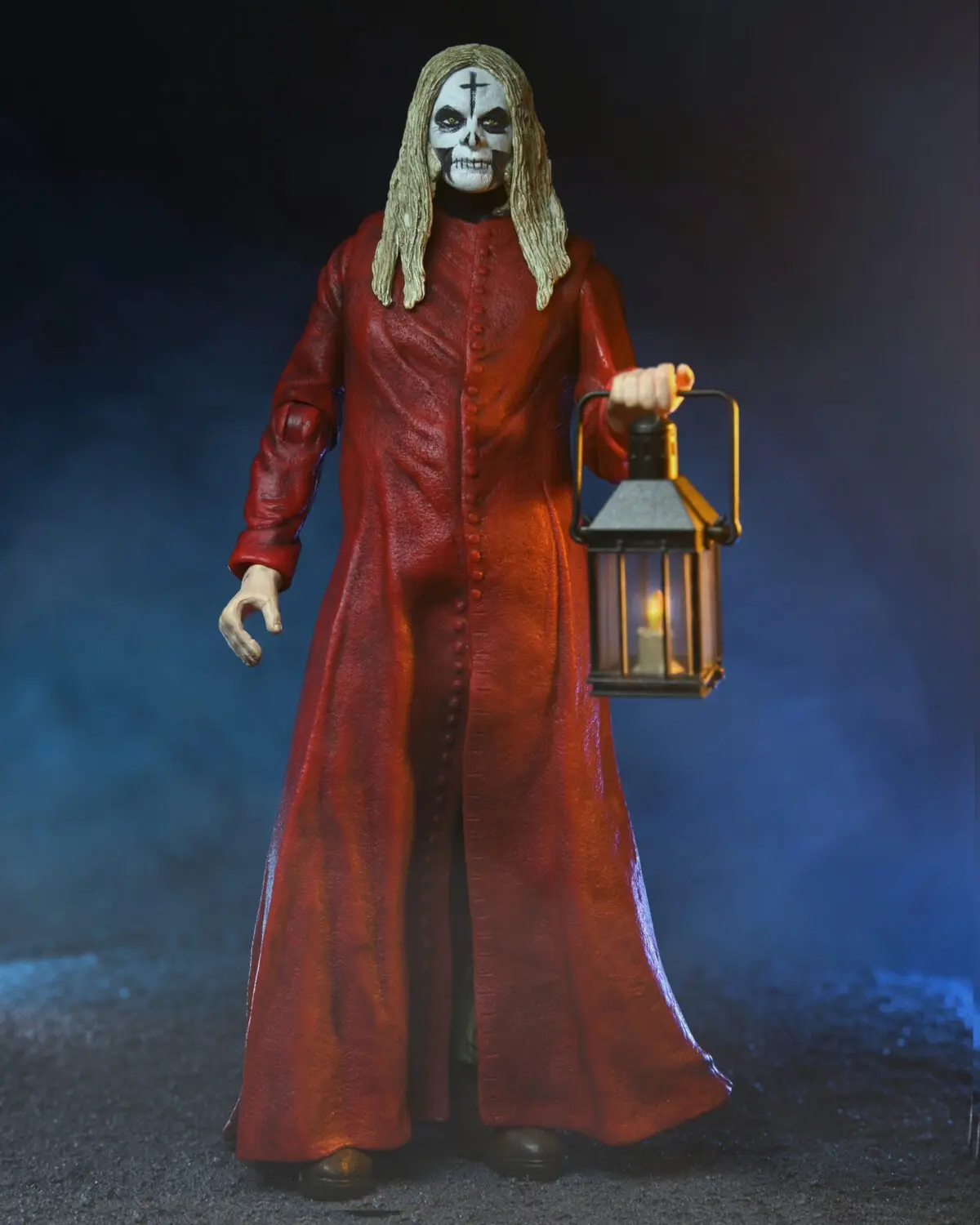
Two decades after gas, food, and murder officially entered the lexicon of modern cult cinema, Rob Zombie’s directorial debut, House of 1000 Corpses, continues to cast a long, blood-soaked shadow over the horror genre. To commemorate the milestone 20th anniversary of this cinematic descent into depravity, toy and collectible manufacturers have unleashed a wave of nostalgia-driven merchandise designed to satisfy the most dedicated devotees of the Firefly family. At the epicenter of this commemorative push is a meticulously crafted 7-inch scale action figure: Otis in his iconic Red Robe, featuring the character’s signature skull makeup, complete with essential accessories that harken back to the film’s most haunting atmospheric moments.
Released to the collector market in March 2024 under item number 39936 (UPC: 63448239936-1), this collectible represents far more than mere plastic and paint; it stands as a tangible artifact of a shifting paradigm in 2000s horror. When House of 1000 Corpses premiered in 2003, it polarized critics, baffled mainstream audiences, and ultimately sparked a counter-cultural movement that revitalized grindhouse aesthetics for a new millennium. Now, twenty years later, the appreciation for Otis B. Driftwood—portrayed masterfully by the late Bill Moseley—has evolved from niche obsession into mainstream horror royalty.
This in-depth investigative report explores the cultural footprint of House of 1000 Corpses, details the specifications and design integrity of the 20th-anniversary Otis action figure, examines the historical context of the film’s arduous production, and analyzes the future outlook of horror merchandising in an era increasingly driven by high-end nostalgia and collector-grade fidelity.
Detailed Chronology: From Troubled Production to Cult Phenomenon
To understand the cultural weight of the 20th-anniversary Otis action figure, one must first retrace the harrowing journey of House of 1000 Corpses itself. The history of Rob Zombie’s cinematic baptism is a Hollywood legend in its own right—a tale of studio battles, censorship board showdowns, and an uncompromising visionary fighting to bring his carnival-esque nightmare to life.
2000–2001: Conception and Universal Pictures
Long before he was an established auteur of horror, Rob Zombie was already a platinum-selling rock icon renowned for his theatrical, monster-movie-infused stage shows. Transitioning to film seemed a natural evolution, and in 2000, Universal Pictures greenlit his original script, originally titled House of 1000 Corpses. Drawing heavy inspiration from classic 1970s terror blueprints like The Texas Chain Saw Massacre and The Hills Have Eyes, Zombie envisioned a grimy, psychedelic descent into rural American madness.
Production began in the spring of 2001 on the Universal backlot, utilizing sets previously seen in classic television and film productions, modified to reek of southern Gothic decay. The casting process brought together a dream team of genre royalty and fresh faces: Sid Haig as the unforgettable Captain Spaulding, Sheri Moon Zombie as the hyper-sexualized Baby Firefly, Michael J. Pollard as Stucky, and Bill Moseley as the chillingly articulate, psychopathic Otis.
However, tension brewed almost immediately. Studio executives at Universal, expecting a standard R-rated teen-slasher film that could easily clear the box office, found themselves watching dailies that resembled a surreal, unhinged fever dream of graphic violence, dark humor, and relentless depravity.
2002: The Shelving and the Salvage
By early 2002, the relationship between Universal Pictures and Rob Zombie had reached a breaking point. The Motion Picture Association of America (MPAA) repeatedly slapped the film with the dreaded, commercial-death NC-17 rating, demanding sweeping cuts that Zombie argued would ruin the artistic integrity of the picture. Fearing a box-office disaster and facing mounting bad press regarding the film’s extreme tone—heightened by the real-world post-Columbine sensitivity toward violence in media—Universal officially dropped the film, shelving it indefinitely.
For nearly a year, House of 1000 Corpses lived in cinematic purgatory. Fans wondered if they would ever see the footage. Rumors swirled about bootleg VHS tapes and lost reels. However, Zombie tirelessly fought to buy back the rights to his film. Eventually, Lionsgate stepped in, recognizing the undeniable underground buzz surrounding the project. They acquired the distribution rights, allowing Zombie to complete his masterpiece largely uncompromised (though still operating under the shadow of the MPAA cuts).
April 2003: The Theatrical Release and Cultural Impact
On April 11, 2003, House of 1000 Corpses finally hit theaters across North America. Mainstream film critics savaged the movie, labeling it everything from "incoherent trash" to "an assault on the senses." Roger Ebert famously gave it zero stars, writing that it was "an exercise in frustration" that lacked any narrative coherence.
Yet, critics fundamentally misunderstood the assignment. House of 1000 Corpses was never intended to be a traditional narrative thriller; it was a sensory-overload funhouse ride, an homage to roadside attractions, drive-in shock cinema, and heavy metal iconography. Horror audiences understood this implicitly. Ticket sales proved that a massive, underserved demographic craved raw, unapologetic extremity. The film grossed over $12.6 million on a modest budget, instantly achieving profitability and transforming its core characters into modern horror icons.
2023–2024: The 20th Anniversary Resurgence
Two decades later, the cultural perception of the film has undergone a complete inversion. What was once dismissed as juvenile shock-art is now celebrated as a defining milestone of early 2000s American horror. The 20th anniversary triggered a wave of retrospective screenings, high-definition physical media releases, and—most importantly for collectors—high-end merchandise initiatives that culminated in the release of the Otis Red Robe action figure in March 2024.
Supporting Context & Metrics: The Anatomy of a Collector’s Item
The action figure market has evolved dramatically over the last twenty years. What began as basic, toy-aisle playthings aimed primarily at children has transformed into a multi-million-dollar industry catering to adult collectors who demand cinematic accuracy, premium articulation, and sophisticated packaging. The release of the 20th-anniversary Otis figure sits squarely at the bleeding edge of this collector-centric marketplace.
Product Specifications & Packaging Metrics
- Scale: 7-Inch (approx. 1:10 scale, fitting standard horror collector lineups).
- Character: Otis B. Driftwood (depicted in his striking Red Robe and intricate skull facepaint).
- Included Accessories: Custom book and detailed lantern.
- Packaging Type: Commemorative 20th Anniversary window box with bespoke front-flap and graphic design elements.
- Global Release Date: March 2024.
- Item Number: 39936.
- Universal Product Code (UPC): 63448239936-1.
The Significance of the Red Robe Variant
Within the lore of House of 1000 Corpses, Otis is characterized by his erratic shifts between calm, intellectual detachment and explosive, sadistic violence. The red robe variant immortalizes one of the character’s most visually striking and psychologically chilling appearances. Paired with his intricate white-and-black skull makeup—reminiscent of both traditional Day of the Dead imagery and theatrical black metal—the figure captures the precise intersection of horror and high art that Rob Zombie championed throughout the film.
Furthermore, the inclusion of the book and lantern accessories anchors the figure directly to the atmospheric, rustic dread of the Firefly family homestead. The lantern evokes the dim, oil-lit corridors where untold atrocities occur just out of frame, while the book hints at the twisted, esoteric belief system and historical obsessions of the family (such as their fixation on local urban legends like Dr. Satan).
Market Analytics: The Rise of Horror Collectibles
According to retail market analysts specializing in pop-culture memorabilia, the horror category has experienced exponential growth since 2020. Driven by nostalgia for late-90s and early-2000s cinema, collectors aged 25 to 45 are investing heavily in artifacts from their formative cinematic years.
Data compiled across specialty toy distributorships indicates that items tied to milestone anniversaries—such as the 20th anniversary of House of 1000 Corpses—outperform standard product runs by an average of 42% in pre-order volume. The window box packaging utilized for the Otis figure is a deliberate nod to this demographic; mint-in-box (MIB) collectors prefer the display capabilities of windowed packaging, which protects the asset while allowing for unobstructed visual appreciation of the figure’s paint applications and accessories.
Official Statements & Industry Perspectives
The longevity of House of 1000 Corpses and the enthusiasm surrounding the 20th-anniversary merchandise line have prompted reflections from the creators and actors who brought the nightmare to life.
Rob Zombie has frequently commented on the unexpected durability of his directorial debut. In a retrospective interview discussing the film’s legacy, Zombie remarked:
"When we made that movie, everybody told us it was career suicide. The studios hated it, the censors fought us every step of the way, and critics treated us like public enemies. But the fans got it instantly. They understood that we weren’t trying to make Citizen Kane; we were trying to build a dirty, loud, beautiful, terrifying carnival ride. To see people celebrating these characters twenty years later with figures, tattoos, and conventions—it proves that sincerity in horror always wins out over focus-grouped safety."
The late Sid Haig, whose portrayal of Captain Spaulding anchored the entire Firefly mythos, noted prior to his passing the profound impact the trilogy had on pop culture:
"Spaulding became a monster, but people loved him because he was honest about it. The fans of this movie aren’t just casual moviegoers; they’re a family. When you see someone walking around with an Otis or a Spaulding shirt, you know you’re part of the same twisted tribe."
Toy designers responsible for bringing the 20th-anniversary line to fruition have similarly emphasized the technical challenges and artistic rewards of translating live-action performances into sculpted plastic. Lead sculptors noted that capturing Bill Moseley’s manic facial expression through the complex layers of skull makeup required multiple digital sculpting iterations.
“Otis isn’t just a guy in a mask; he’s an actor performing at a very high, theatrical level of intensity,” noted a lead product developer for the release. “If you miss the maniacal glint in the eye, or if the drape of the red robe doesn’t fall with natural, heavy gravity, the illusion breaks. We spent months tweaking the sculpt to ensure that when a fan puts this figure on their shelf, they feel like Otis is staring right back at them, ready to recite Shakespeare or worse.”
Future Outlook: The Ever-Expanding Firefly Universe and Collectibles
As the dust settles on the 20th-anniversary celebrations of House of 1000 Corpses, the trajectory of both Rob Zombie’s cinematic universe and the high-end horror collectibles market points toward continued, aggressive expansion.
The Evolution of Collector Expectations
The success of the 7-inch scale Otis (Red Robe) figure underscores a broader shift in consumer demands. Today’s collectors are no longer satisfied with static statues; they demand dynamic articulation, meticulous paint detailing that honors cinematic lighting, and deep-cut accessories that reference specific scenes. Manufacturers are responding by utilizing advanced digital printing technologies for facial applications, ensuring that plastic action figures capture the exact likeness of actors down to the pores and sweat beads.
Looking ahead, industry insiders predict that the secondary market value for this specific 20th-anniversary release will appreciate steadily. Limited production windows, combined with the perennial popularity of the Firefly trilogy (House of 1000 Corpses, The Devil’s Rejects, and 3 From Hell), ensure that items bearing the official 20th-anniversary seal will remain highly coveted assets in horror collections worldwide.
Cinematic Legacy and Cultural Permanence
What began as an underground shock-fest has officially crossed the threshold into classic American horror folklore. The Firefly family—Otis, Baby, and Captain Spaulding—now sit comfortably alongside horror royalty like Michael Myers, Jason Voorhees, and Freddy Krueger in the pantheon of pop culture icons.
As new generations of horror fans discover the film via streaming platforms, physical media re-issues, and viral internet retrospectives, the demand for high-end memorabilia will only intensify. The 20th-anniversary Otis action figure is not merely a commemorative trinket for past glories; it is a monument to an uncompromising era of filmmaking that refused to be silenced, sanitized, or forgotten.
Stop by Captain Spaulding’s Museum of Monsters and Madmen—figuratively speaking, through the preservation of these incredible cinematic artifacts—and remember: the carnival never truly closes down. The blood keeps flowing, the records keep spinning, and Otis will always be waiting in his red robe to welcome you home.





Belum ada komentar. Jadilah yang pertama berkomentar!