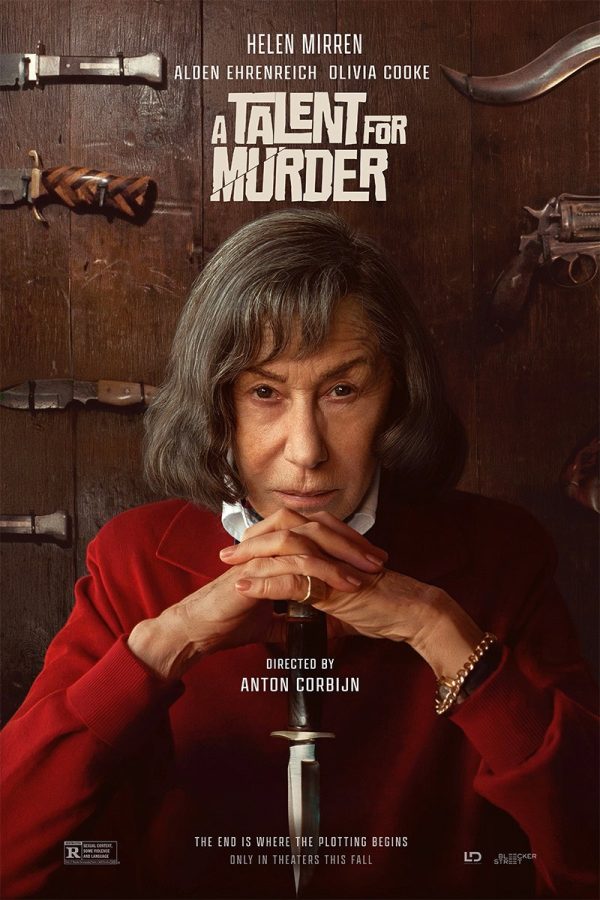
In the cinematic landscape of 2026, few releases have captured the imagination of thriller aficionados quite as sharply as Anton Corbijn’s A Talent for Murder. Adapted from Joanna Murray-Smith’s acclaimed stage play, the film merges biographical fiction with the dark, psychological undercurrents that defined the literary career of Patricia Highsmith. Starring Academy Award-winner Helen Mirren as a late-career, reclusive Highsmith living in Switzerland, the feature explores the razor-thin boundary between creative imagination and homicidal reality.
The narrative kicks into gear when Edward Ridgway, a young and ambitious editor from a prominent New York publishing house, is dispatched across the Atlantic. His mission: coerce the legendary, sharp-tongued author into penning one final installment for her iconic Ripley anthology. What follows is not merely a polite tug-of-war over book contracts, but an intense, high-stakes psychological duel. As Highsmith deconstructs Ridgway’s psyche, the lines between author and muse, fiction and reality, begin to dangerously blur. Supported by a stellar cast that includes Alden Ehrenreich, Olivia Cooke, Juliet Stevenson, James Faulkner, Brid Brennan, and Maddalena Vallecchi Williams, A Talent for Murder stands as a masterclass in meta-textual storytelling, dissecting the very mechanics of how we craft—and perhaps justify—the ultimate crime.
Detailed Chronology
The Catalyst: An Invitation to Exile
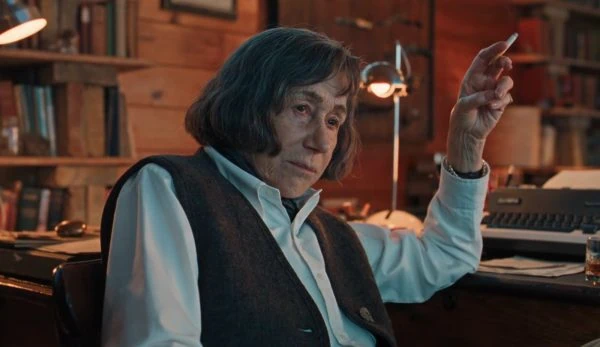
Set against the austere backdrop of the 1990s Swiss countryside, the film opens on Patricia Highsmith in her self-imposed twilight exile. Far removed from the bustling literary circles of New York and London, Highsmith has retreated into a fortress of misanthropy, surrounded by her cigarettes, her cats, and her memories of a storied career built on "beguilingly evil" protagonists.
Enter Edward Ridgway, portrayed with desperate earnestness by Alden Ehrenreich. Representing a New York publisher desperate to capitalize on the enduring cultural footprint of Tom Ripley—a character popularized across generations, most notably by Matt Damon in cinematic history—Ridgway arrives with a hefty advance and a singular mandate. He is tasked with reviving a literary franchise that its creator long considers exhausted.
The Verbal Battlefield
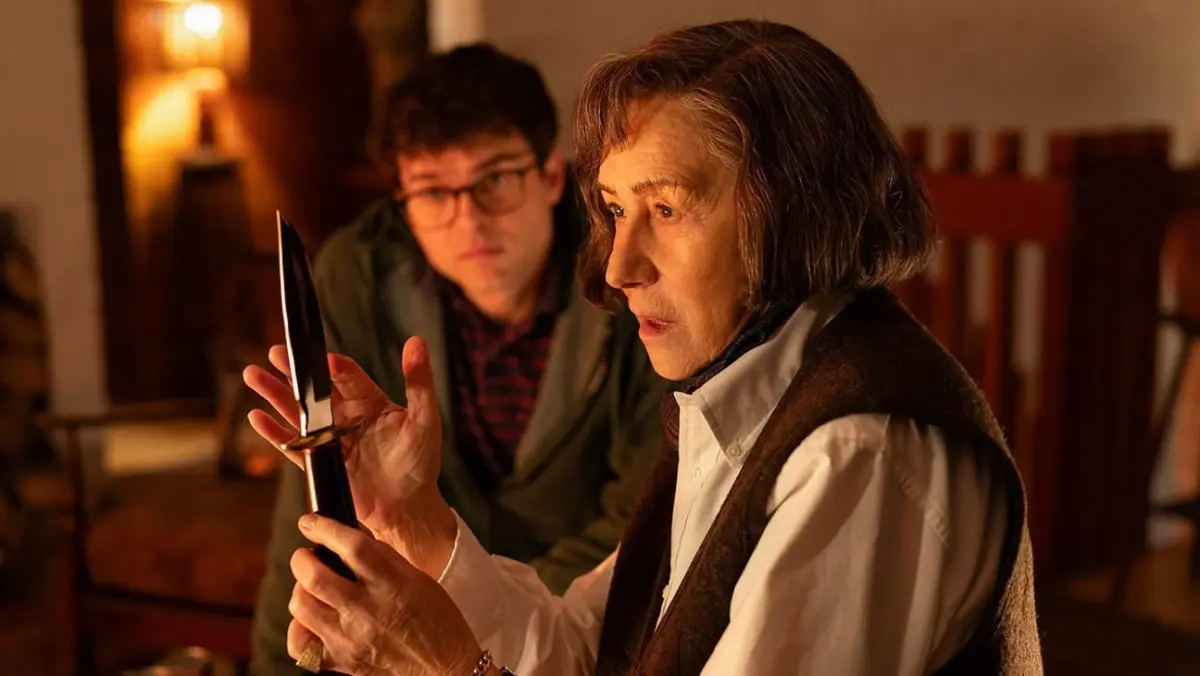
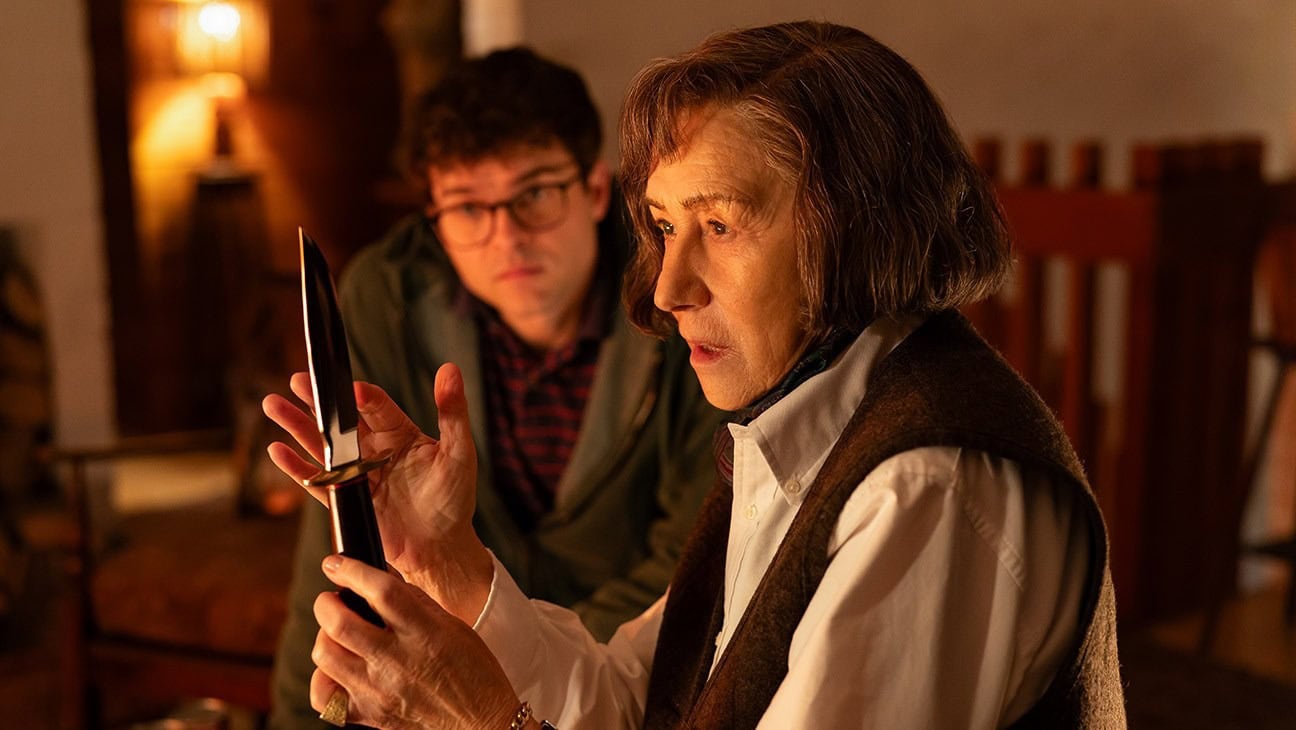
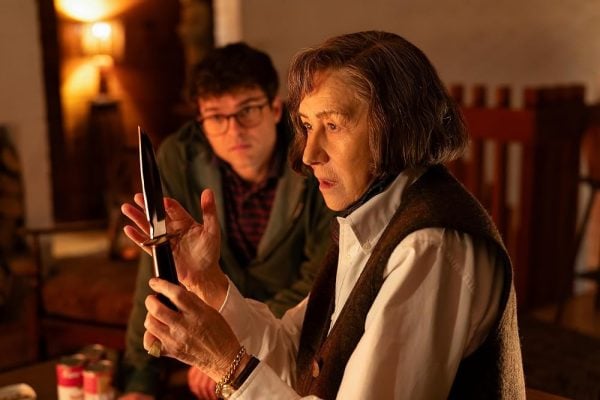
Upon his arrival at Highsmith’s isolated alpine estate, Ridgway steps straight into a verbal inferno. Helen Mirren delivers a masterclass in blistering indifference, deploying Highsmith’s trademark no-filter cynicism to immediately undermine the young editor’s confidence. Highsmith exhibits zero motivation to revisit her sociopathic anti-hero, openly mocking the commercial desperation of her American publishers.
The tension escalates when Ridgway, pushed to his breaking point by relentless verbal abuse, fires back, critiquing what he perceives as a recent decline in her literary sharpness. Rather than dismissing him, Highsmith’s interest is piqued. She recognizes in Ridgway a quiet, latent desperation—a hidden reservoir of ambition that mirrors the very characters she spent a lifetime inventing.
The psychological warfare soon shifts into fertile, dangerous collaborative territory. To break the ice and test Ridgway’s mettle, Highsmith challenges the young editor to share a narrative from his own life. Ridgway recounts a seemingly innocent encounter with a traveling train passenger named Clementine Balfour, portrayed with enigmatic allure by Olivia Cooke. Clementine is the presumptive heir to a substantial fortune, though her trajectory is currently blocked by her overbearing grandfather and aunt.
Seizing upon the setup, Highsmith begins to spin a web of hypotheticals, transforming Ridgway’s mundane anecdote into a calculated, airtight murder plot. Under the guise of a creative writing exercise, Highsmith pushes Ridgway to embrace his colder, more calculating instincts. As they outline the mechanics of the crime, the project takes on a psychosexual charge, particularly as the fictionalized narrative requires "Edward" and "Clementine" to grow dangerously close to successfully execute their targets. The boundary between who is authoring the plot and who is susceptible to it evaporates entirely.
Supporting Context & Metrics
The Highsmith Legacy in Modern Cinema
To fully appreciate the narrative weight of A Talent for Murder, one must examine the towering cultural shadow cast by Patricia Highsmith. Born in 1921, Highsmith established herself as a titan of suspense fiction, most famously introducing Tom Ripley in her 1955 masterpiece The Talented Mr. Ripley. Her work has continually fascinated filmmakers, inspiring cinematic touchstones such as Alfred Hitchcock’s Strangers on a Train (1951) and Anthony Minghella’s Oscar-winning 1999 adaptation of Ripley.
Anton Corbijn’s directorial approach draws deeply from this rich well of cinematic and literary history. Known for his visually striking, minimalist aesthetic in films like Control and The American, Corbijn treats Highsmith’s Swiss estate as a modern gothic chamber piece. The framing emphasizes isolation, shadows, and the claustrophobia of intellect, ensuring that every frame feels steeped in the psychological suspense of a lost Highsmith novel.
Cast Dynamics and Performances
The chemistry between Helen Mirren and Alden Ehrenreich anchors the film’s 100-minute runtime. Critics have noted that Ehrenreich delivers his finest performance since his collaborations with the Coen brothers, capturing Ridgway’s gradual erosion from a corporate suit into a willing participant in a murderous thought experiment.
Meanwhile, Olivia Cooke’s portrayal of Clementine Balfour injects the narrative with shifting layers of ambiguity. Because Clementine primarily exists within the story-within-a-story crafted by Highsmith and Ridgway, Cooke must walk a tightrope between playing a real person and embodying the idealized femme fatale of a master mystery writer’s imagination.
Official Statements
While promotional tours for A Talent for Murder have highlighted the collaborative synergy on set, director Anton Corbijn and his leading cast members have offered profound insights into the thematic underpinnings of the project during press briefings and festival Q&As.
Anton Corbijn on Directing the Meta-Narrative: "We weren’t interested in making a standard biographical film that checks off historical dates. Patricia Highsmith was an extraordinary observer of human darkness because she didn’t judge it—she interrogated it. Working with Joanna Murray-Smith’s stage play gave us a brilliant structural skeleton, but our goal on screen was to make the audience feel like they, too, were sitting across the table from Highsmith, wondering if she was sizing you up for a cup of tea or a shallow grave."
Helen Mirren on Embodying the Icon: "Playing Patricia is liberating because society trains women—and particularly female artists of a certain age—to be gracious, accommodating, and polite. Highsmith was none of those things. She was prickly, brilliant, unapologetically difficult, and deeply alive to the hypocrisy of the world around her. Finding the humor in her misanthropy was the key to unlocking her humanity."
Alden Ehrenreich on the Evolution of Edward Ridgway: "Edward starts out thinking he’s an apex predator of the corporate publishing world, only to realize he’s wandering through a cage of lions. His journey isn’t just about getting a signature; it’s about discovering that his own moral compass can be easily recalibrated if the right architect whispers in his ear."
Future Outlook
As A Talent for Murder rolls out across international box offices and streaming platforms throughout late 2026, industry analysts are projecting strong awards-season traction, particularly in categories recognizing adapted screenplay, lead actress (Helen Mirren), and supporting actor (Alden Ehrenreich).
While the film has drawn minor critiques for stretching its narrative arc slightly toward the conclusion—with a few reviewers noting that the climax features an extra twist or two too many—its overall reception has been overwhelmingly positive. It successfully revitalizes the psychological thriller genre by refusing to pander to simple moral binaries.
Looking forward, A Talent for Murder may well trigger a broader resurgence of interest in late-20th-century literary adaptations. By treating Highsmith not merely as a historical footnote, but as an active, menacing participant in the dark fantasies of her readers, Corbijn and his creative team have crafted a legacy piece that honors the queen of suspense while brilliantly subverting the very nature of storytelling itself.







Belum ada komentar. Jadilah yang pertama berkomentar!