

Executive Overview
In the ecosystem of vinyl collecting, provenance and presentation are paramount. Among the most coveted markers of a record’s pristine condition is the obi—the narrow, vertical paper band wrapped around the spine of Japanese LP releases. Far more than a mere strip of advertising, the obi functions as a talisman. For collectors scouring digital marketplaces like Discogs and eBay, the designation "with obi" implies not only that an artifact has been preserved in its original Japanese packaging, but that its owner treated the physical object with reverence. More often than not, an intact obi signals a glistening, unblemished disc waiting beneath the gatefold cover.
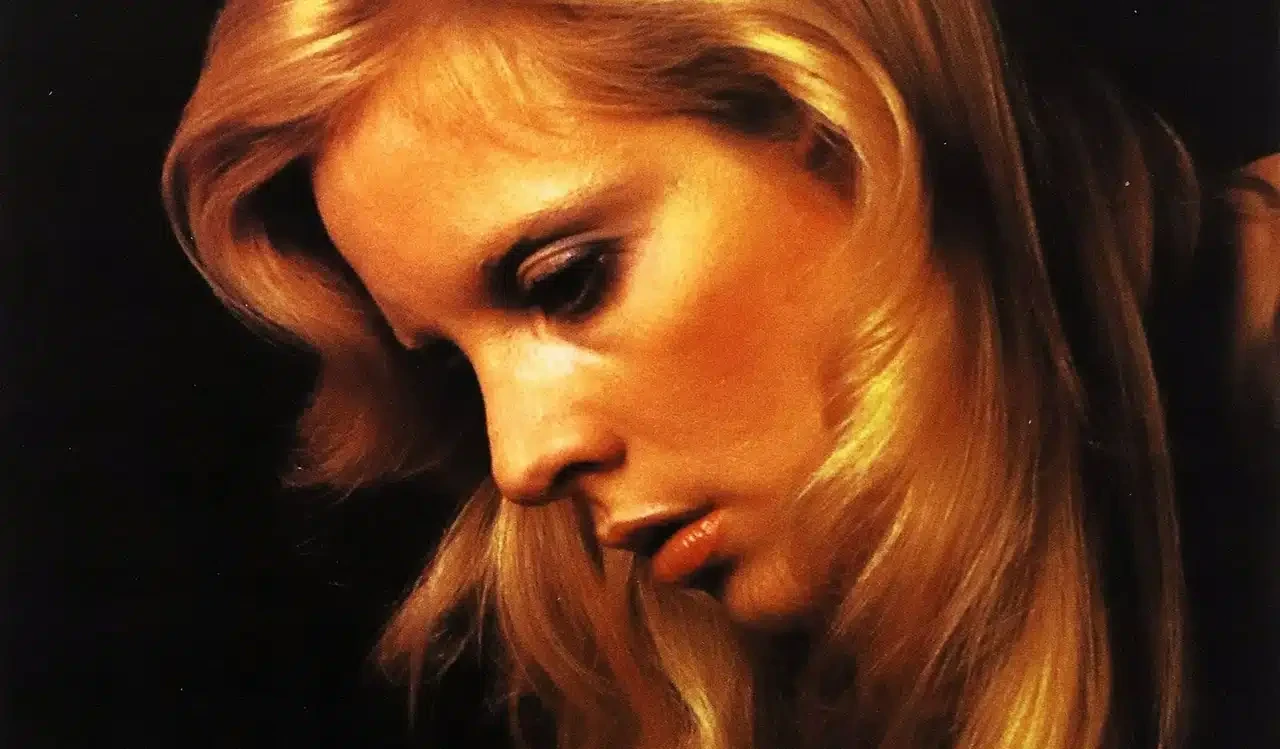
It was precisely one such artifact—a copy of French pop icon Sylvie Vartan’s 1974 release, La Reine de Saba—that recently surfaced at an unassuming, Japanese-themed secondhand entertainment store. Originally priced at $19 by a staff more notable for their organizational diligence than their musical expertise, the record had been marked down to a meager single U.S. dollar. For the price of pocket change, the acquisition offered entry into a fascinating intersection of European pop history, Japanese consumer culture, and transnational musicology.
Released well past the peak of the 1960s yé-yé movement that originally catapulted Vartan to stardom, La Reine de Saba represents a compelling paradox. In France, the mid-1970s mainstream pop landscape was growing increasingly saccharine, characterized by overripe arrangements and shifting sonic trends. Yet, across the globe in Japan, Vartan retained a fierce, unwavering following. This bespoke LP—tailored specifically for her Japanese audience—documents an artist stepping outside standard commercial constraints to curate a deeply personal, stylistic bridge between Parisian chanson, global torch songs, and emerging pop-rock idioms.
Detailed Chronology: The Evolution of a Transnational Masterpiece
To fully understand the gravity of La Reine de Saba, one must trace the historical lineage of its tracklist and the shifting topography of European pop culture from the post-war era to the mid-1970s.
The French-Japanese Connection and Face A: The Ballad Suite
Side A of the LP is constructed as a classic, cinematic ballad sequence, honoring the lineage of French chanson while drawing on international touchstones.
- “La Reine de Saba” (The Queen of Saba): The album opens with its title track, originally composed by French singer Michel Laurent as “Ma Reine de Saba” for his 1980s debut. Notably, Laurent also recorded a Japanese-language version of the song for his own 1974 Japanese LP release, highlighting a mutual cultural exchange between France and Japan during this period. Vartan’s rendition dusts off Laurent’s original framework, infusing it with a confident elegance and emotional urgency that elevates her status beyond a mere pop vocalist.
- “Love Is Blue” (“L’Amour Est Bleu”): Composed by André Popp with French lyrics by Pierre Cour, this melody achieved global fame via Vicky Leandros’s 1967 Eurovision entry and Paul Mauriat’s 1968 instrumental American chart-topper. Vartan’s version synthesizes these disparate elements, adding a subtle, proto-disco rhythmic propulsion that foreshadowed her full transition into disco later in the decade.
- “Hymne à l’Amour”: A monumental entry in French musical history, this track was originally written and recorded by Edith Piaf in 1949, with music by Marguerite Monnot. Vartan boldly enters Piaf’s legendary territory, utilizing her natural vocal power and a slightly deeper register to deliver a performance devoid of the original’s background chorus, punctuated by a dramatic closing drum roll.
- “Les Feuilles Mortes” (“Autumn Leaves”): With lyrics by Jacques Prévert and music by Joseph Kosma, this standard was made famous by Yves Montand in 1949. Vartan’s French-language interpretation balances an unadorned xylophone with soaring strings, anchoring a vocal performance characterized by a subtle, melancholic vulnerability.
- “The Music Played”: Originally recorded by English balladeer Matt Monro in 1968, this sweeping torch song is transformed in Vartan’s hands through baroque piano figures and a relentless orchestral whir, allowing the singer to sound truly stricken yet composed.
- “Les Moulins de My Coeur” (“The Windmills of Your Mind”): Michel Legrand’s cinematic masterwork (with French lyrics by Eddy Marnay) receives its sole rhythmic reinvention on the album, anchored by a lightly jazzy rhythm section that has since inspired contemporary electronic remixers to isolate and reframe Vartan’s somber vocal delivery.
Face B: Stylistic Shifts and Pop-Rock Eclecticism
While Side A establishes a cohesive, melancholic mood, Side B embraces the unpredictable stylistic fragmentation characteristic of 1970s conceptual pop albums.
- “Holidays”: Originally written by Michel Polnareff and Jean-Loup Dabadie for Polnareff’s Japan-exclusive 1972 album Polnareff à Tokio, Vartan’s cover offers a mellow, glam-rock gloss reminiscent of David Bowie’s Hunky Dory era, driven by crunchy acoustic and electric guitar interplay.
- “Rock’n Roll Man”: Written by Tommy Brown and originally recorded in French by Vartan’s then-husband Johnny Hallyday, this English-language B-side leans into a 1970s aesthetic comparable to Bobbie Gentry or Dusty Springfield, propelled by a small horn section and looping female backing vocals.
- “Ne Me Quittes Pas” (“If You Go Away”): Jacques Brel’s immortal lament returns the album to the sophisticated atmosphere of Side A, featuring elegant piano arrangements and a controlled vibrato that showcases Vartan’s interpretive maturity.
- “Bang Bang”: Sonny Bono’s 1966 composition—famously recorded by Cher, Nancy Sinatra, and in French by Sheila—is filtered through Vartan’s unique lens, combining Eastern European melodic melancholy with immaculate orchestration.
- “Dadou Ron Ron”: A playful, guitar-heavy restructuring of the Phil Spector-produced Crystal’s hit “Da Doo Ron Ron,” previously covered in French by Johnny Hallyday as “Da Dou Ron Ron.” Vartan’s boogie-infused version commits fully to the exuberant refrain.
- “Qui Saura” (“Who Will Know”): The album closes with a mellow, double-tracked acoustic pop arrangement modeled after Mike Brant’s 1972 original, leaving listeners with a lingering sense of introspective mindfulness.
Supporting Context & Metrics
To contextualize the commercial and cultural footprint of La Reine de Saba, several metrics regarding its release history and global distribution are vital:
- Release Timelines: While originally pressed for the Japanese market in 1974, the album saw a localized South Korean vinyl release in 1975 and a cassette issue in 1987. Despite persistent rumors of intermittent European reissues, the album did not receive a formal, widespread CD release in France and Japan until 2013.
- Secondary Market Valuation: Standard copies without an obi typically trade within modest brackets on platforms like Discogs. However, pristine editions complete with the original obi and gatefold insert command significant collector interest, transforming a record initially sold for under $20 into a sought-after international collectible.
- Cultural Crossover Impact: The inclusion of handwritten notes translated into Japanese within the gatefold—wherein Vartan expresses her explicit gratitude to her "Japanese friends" for their appreciation of la chanson—quantifies a deliberate international marketing and artistic strategy that predated modern globalized music distribution by decades.
Official Statements and Archival Artifacts
The intentionality behind La Reine de Saba is perhaps best captured in the physical liner notes accompanying the release. Within the gatefold cover, nestled alongside Japanese typography and promotional photography, sits a faithful reproduction of a handwritten message from Sylvie Vartan to her fanbase:
"Je sais que tous mes amis japonais aiment beaucoup ‘la chanson’. C’est pour vous que j’ai enregistré spécialement ce l.p. avec les plus belles chansons françaises et certaines autres que j’aime. J’espère que vous pourrez autant de plaisir à les écouter que moi à les enregistrer. Votre amie."
(English Translation):
"I know that all my Japanese friends are very fond of ‘la chanson’. It’s for you that I especially recorded this LP with the most beautiful French songs and some others that I like. I hope that you enjoy listening to them as much as I did recording them. Your friend."
This primary source document officially frames the album not as a casual contractual obligation, but as a dedicated cultural offering. By explicitly carving out a project designed to cater to the discerning tastes of Japanese listeners—who frequently embraced European vocalists overlooked by domestic markets—Vartan legitimized her role as a transnational ambassador of French culture.
Future Outlook: The Digital Preservation and Re-Evaluation of Niche Vinyl
As physical music markets continue to experience a renaissance driven by vinyl enthusiasts and digital archivists alike, releases like La Reine de Saba occupy a fascinating frontier. The album sits at the crossroads of analog preservation and digital curation.
In recent years, independent music producers and content creators—such as French YouTube archivist Sergio BR—have begun utilizing modern audio isolation techniques to construct unofficial remixes, such as extended 12-inch mixes pairing Vartan’s isolated vocal tracks with emphasized rhythm sections. This intersection of 1970s vinyl culture and 21st-century digital remixing ensures that archival pop artifacts will not remain static museum pieces.
Looking ahead, the valuation of pressings featuring unique regional packaging (such as the Japanese obi) is projected to rise as younger generations of music consumers seek out tangible connections to transnational pop history. La Reine de Saba stands as a testament to this phenomenon: a dollar-bin discovery that transcends its bargain-bin status to reveal a masterclass in cross-cultural artistic dedication, enduring vocal performance, and the timeless allure of the vinyl record.








Belum ada komentar. Jadilah yang pertama berkomentar!