

Executive Overview
Over a decade ago, the European League of Legends Championship Series (EU LCS) served as an indomitable crucible for the global esports ecosystem. It was an era defined by the thunderous roars of fans rallying behind iconic rosters like Fnatic, Counter Logic Gaming EU (CLG EU), and Moscow Five.
Amidst this golden age of burgeoning digital competition, a distinct, resonant voice helped codify the narratives of the matches: James O’Leary, universally recognized by his broadcast moniker, "Stress."
For years, O’Leary was a foundational pillar of the League of Legends European broadcast talent team, lending his analytical acumen and charismatic delivery to millions of viewers worldwide. However, following his retirement from the League of Legends professional casting circuit in late 2017, O’Leary transitioned into diverse creative avenues, including Germany’s independent wrestling scene and operational roles with organizations like Splyce and MAD Lions during the pandemic-era LEC seasons.
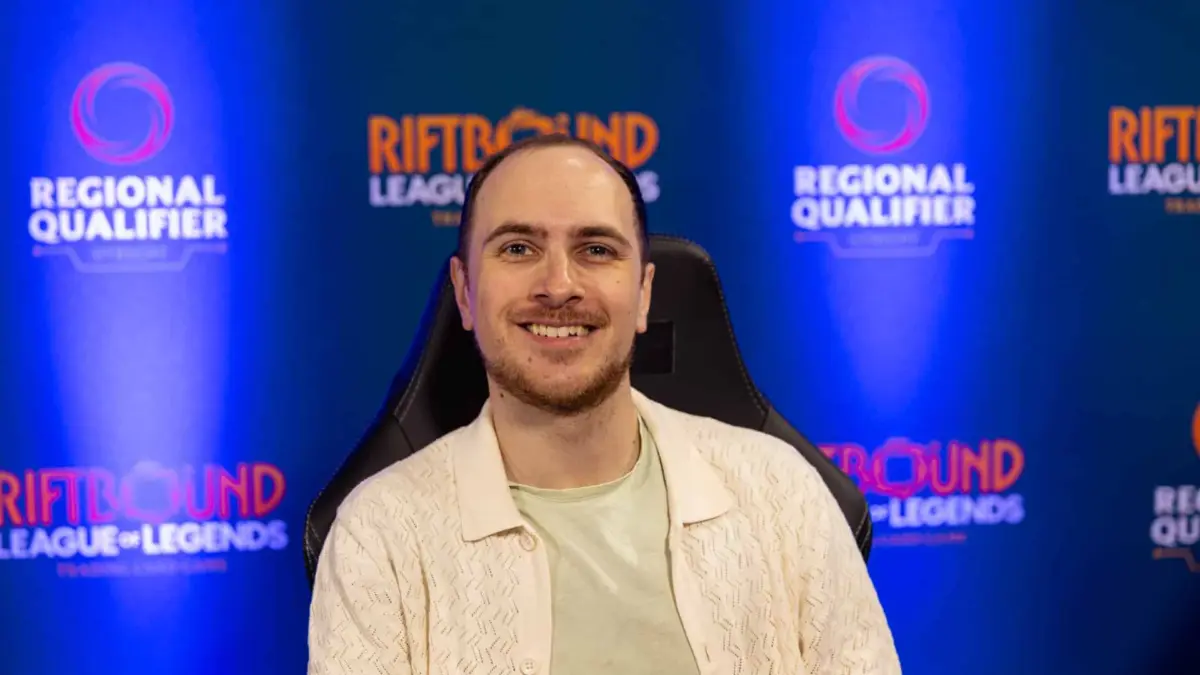
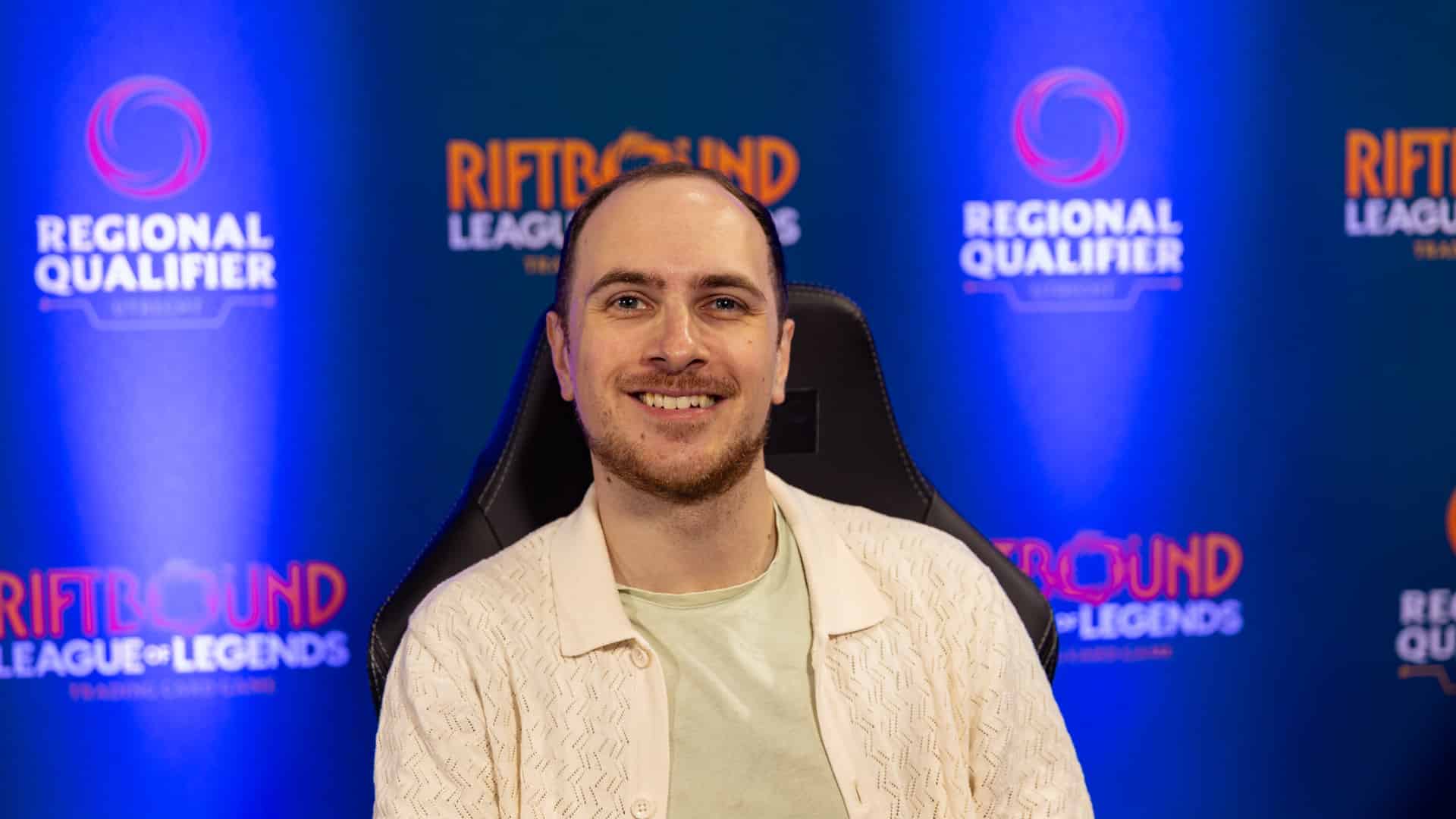
Now, O’Leary has returned to his competitive roots, merging two lifelong passions: the tactical depth of League of Legends and a decade-and-a-half-long devotion to trading card games (TCGs). With the explosive global launch and sustained competitive momentum of Riftbound, O’Leary has stepped beyond the caster’s desk and into the role of tournament organizer.
On August 15, 2026, he hosted a premier, community-driven Riftbound competition at the Dice Saloon in Brighton and Hove, England. In an exclusive interview with Esports News UK Senior Editor Craig Robinson, O’Leary pulls back the curtain on the triumphs, logistical hurdles, and philosophical differences between broadcasting a premier electronic sport and steering a grassroots tabletop ecosystem.
Detailed Chronology: The Evolution of a Broadcast Icon
To understand O’Leary’s current venture, one must trace a career defined by adaptability. Rising through the ranks of the British esports scene during an era when productions were scrappy and community-driven, O’Leary cemented his reputation through grit and endurance.
Reflecting on his early days in the industry, O’Leary recalled an infamous milestone from the 2013 Multiplay Insomnia festival (i48): "It reminds me of one of the first times I actually cast League itself, which was Insomnia. And I did a full day of solo casting, like 12 hours. It was a great day. I was right at the beginning of my career, and this kind of reminds me a little bit of this."
That trial-by-fire mentality prepared him for the hyper-professionalized landscape of the EU LCS and later the League of Legends European Championship (LEC). As a premier talent, O’Leary navigated the shifting tides of digital broadcasting until his departure from the Riot Games circuit in late 2017.
Instead of fading into obscurity, O’Leary diversified his professional portfolio. He spent time embedding himself in the German wrestling scene—a medium sharing structural DNA with sports entertainment broadcasting—before returning to esports operations with Splyce and MAD Lions.
The turning point for his latest professional chapter arrived with the emergence of Riftbound. Drawing on roughly 15 years of personal TCG experience, O’Leary quickly transitioned from casual player to active competitor, participating in events such as Regional Qualifiers (RQs) in Barcelona, Lille, and Utrecht—where he notably subbed in for fellow British LEC caster Medic.
Recognizing an underserved demand for high-caliber, locally rooted competitive events in the UK, O’Leary took matters into his own hands. Driven by the philosophy that a thriving competitive scene requires proactive community stewardship, he conceptualized and executed a bespoke tournament designed to elevate the player and spectator experience alike.
Supporting Context & Metrics: The Realities of Grassroots TCG Operations
While the surface-level narrative of a beloved caster launching a boutique tournament is inherently romantic, the administrative reality is a stark lesson in event logistics.
The Financial and Logistical Burden
When building an independent tournament, idealism must contend with the unyielding mechanics of business administration. O’Leary admitted that his initial approach to event coordination required a deliberate deceleration: "My ‘break things and move quickly’ brain did have to get slowed down a little bit by things. I don’t think people understand if you run an event on a tournament platform, then the tournament platform is dealing with tickets. You have to build in ticket overhead fees, booking fees, and platform management fees. And then as soon as you bring in an actual business, you’ve got to think about VAT and all these types of things."
These overhead costs frequently elude the casual observer, who might look at an entry fee and a full venue and assume massive profit margins. O’Leary debunked these misconceptions plainly: "Suddenly, the profit margins, when people see expensive entry tournaments and lots of people in them, and they go, ‘Wow, you just must be making so much money.’ It’s like, no, actually, it really is not so easy to do anything other than break even."
Value, Prizing, and Community Engagement
Priced at £45 per ticket, the Brighton event was meticulously budgeted to ensure equitable value distribution. Rather than skimming high margins, the entry cost directly underwrote operational expenses, a custom player swag package, and top-tier prizing.
Every attending competitor received an exclusive, custom-designed playmat realized in collaboration with community artist Saria (renowned for her bespoke Lillia legend artwork). For a market where standard playmats command £20 to £25 independently, the inclusion of a high-end, community-commissioned collectible fundamentally reframes the tournament value proposition.
Furthermore, the competitive incentive structure featured elite-tier prizes. The tournament champion secured a signed, unslabbed English-language Yasuo card sourced via the host venue, carrying an estimated secondary market value of approximately £850.
Despite the intense financial calibration required to make the numbers work, O’Leary successfully achieved his primary objective: delivering a premium tournament experience that left participants feeling valued, fostering organic community sentiment without compromising on quality.
Official Statements: Community Synergy and Collaborative Production
Running a multi-faceted tabletop tournament while simultaneously providing high-level live commentary is an impossible task for a solo operator. Fortunately, O’Leary did not have to walk the path alone. The Brighton event became a testament to community collaboration, drawing on a network of dedicated creators, production specialists, and veteran broadcast talent.
Among those lending their expertise was rising Riftbound creator DubbyCast, a familiar voice across community circuits like Runes and Rift and the Nations Clash. They were supported by MaskedSwan, an established broadcast hand from regional qualifier circuits, alongside graphic and technical production support from Rift Labs—a collective boasting both technical mastery and high-level competitive players. Additionally, veteran Magic: The Gathering commentator Will Hall stepped in to assist with broadcast architecture and equipment provisioning.
Reflecting on the collaborative spirit that brought the event to life, O’Leary emphasized his desire to expand these initiatives moving forward, noting via social media: "I want to do more UK events but the truth is there are a LOT of hoops to jump through to make them viable. I’ll be sure to post when I’ve got more coming up. I also want to do more collaborative commissioned playmats now that I’ve got this first run set up!"
Future Outlook: Casting Riftbound vs. League of Legends
Beyond the logistical mechanics of event organization, O’Leary’s return to the broadcast booth offers a fascinating psychological and analytical comparison: the fundamental differences between casting a team-based electronic sport and a 1v1 tactical trading card game.
The Predictability of the Rift vs. The Chaos of the Table
In traditional esports disciplines like League of Legends, broadcasts are characterized by structured preparation. Casters can study pre-scheduled matchups, analyze established champion pools, map out team tendencies, and construct cohesive narrative arcs days before going live.
Riftbound, by contrast, presents an environment of chaotic unpredictability. O’Leary highlighted the stark contrast in preparation dynamics: "Riftbound, I’ve got a room full of players. I have no idea who’s playing what from the majority of it. Like, I have maybe a list of 20 names that I’m watching out for for the tournament, and like a hundred more that I know of, familiar names that I’m keeping a track of. But then I randomly will end up casting like the best player in Italy against like somebody random from France. And I’m like, I have no idea who some of these people are and what they’re playing, but I have to live in this moment."
This volatility extends directly to deck archetypes. While League drafts offer observable trends, card games present hidden information and dynamic deck pairings that remain entirely opaque until the first cards are drawn.
As O’Leary noted: "Casting is always like you do 90% of the prep that you do, you don’t use. With this, it’s just like, I have no idea what story we’re telling when the camera goes live. Sometimes, I don’t even know what decks we’re doing when we go live, which is fun in its own right. It really forces you to actually fully pay attention to what is going on and not be bogged down with some of the logistics that go into doing a broadcast."
Navigating Hidden Information
Perhaps the most significant hurdle for a TCG caster is interpreting player decision-making through a veil of hidden information. In League of Legends, a sub-optimal play can be objectively critiqued because vision and team positions are transparent to the observer. In a 1v1 card game, external perspectives are severely limited.
"When you’re playing a 1v1 card game, it’s kind of impossible to know the line that the players you’re watching are following," O’Leary explained. "Because there’s so much hidden information, I as a player might be playing around my opponent having Punch First, but actually my opponent has Starcrossed in hand. And like the lines are totally different with very different results."
Contrast this with League, where “there’s an easy to see objectively correct thing and you can see what teams are doing and how their teamwork kind of plays out.”
The Path Forward for TCG Broadcasting
To bridge this analytical gap, O’Leary relies on a combination of rigorous personal reps, local paper play, and continuous archival study as new expansions reshape the meta. However, as the card pool expands with each successive set, absolute intellectual mastery becomes an impossibility.
Ultimately, O’Leary’s philosophy as a commentator has come full circle: "I have to completely channel just my intuition on the card game. […] I have to live totally in the moment."
As grassroots competitive scenes continue to swell across Europe and North America, pioneers like James O’Leary are proving that the soul of esports and competitive gaming does not rest solely on multi-million dollar arena stages. It thrives in local game stores, community-driven event spaces, and the shared passion of players and casters who refuse to wait for someone else to build the future.



Belum ada komentar. Jadilah yang pertama berkomentar!