

Executive Overview
The Yu-Gi-Oh! Official Card Game (OCG) ecosystem continually undergoes shifts as Konami introduces fresh archetypes and mechanics, redefining competitive horizons. In the upcoming booster series, code-named IMPH, Konami is set to expand the tactical boundaries of hybrid strategies by introducing the enigmatic "Ashtra" theme. Among the most anticipated reveals are two pivotal cards: Ashtrata Tamayori (IMPH-JP018) and Ashtrama Yoami (IMPH-JP039). These cards marry classic mechanics—such as Level 1 Tuner swarming, face-down position flipping, and recursive GY protection—with modern disruption and resource generation centered around Trap cards.
Ashtrata Tamayori acts as the foundational engine for the archetype. As a Level 1 FIRE Fairy Tuner monster with 0 ATK and 0 DEF, it belies its humble stats through explosive deck-thinning and positional disruption. Upon its Normal or Special Summon, it immediately recruits non-Tuner support directly from the deck while setting up defensive board states and locking down Extra Deck plays to strictly Level 1 Tuner-based Synchro Summons. Meanwhile, Ashtrama Yoami serves as the archetype’s formidable Level 8 WIND Spellcaster Synchro boss monster. Boasting 2400 ATK and 3000 DEF, Yoami acts as a bridge to search or set archetype-specific Traps upon entering the field or transitioning to the Graveyard. Furthermore, it wields a sweeping mass-bouncing effect tied to the accumulation of Traps in the GY, punishing opponents who fail to respect the long-term grind game.
This investigative report provides a comprehensive breakdown of these reveals. We will analyze the mechanics, strategic synergies, competitive implications, and community reactions surrounding Ashtrata Tamayori and Ashtrama Yoami. By dissecting their card text, stat lines, and overarching game design philosophy, duelists can better prepare for the structural shifts these cards will inevitably bring to competitive and casual tables alike.
Detailed Chronology: The Reveal and Technical Breakdown
The disclosure of IMPH-JP018 and IMPH-JP039 arrived via the official Yu-Gi-Oh! OCG X (formerly Twitter) account (@YuGiOh_OCG_INFO), sparking immediate analysis across digital forums, competitive discords, and content-creation platforms. The reveal sequence underscored Konami’s ongoing commitment to breathing fresh life into archetypes that leverage face-down mechanics, Graveyard resource management, and unorthodox Synchro pathways.
To fully understand the weight of these additions, we must examine the specific card texts, constraints, and operational loops provided by Konami’s design team.
Card Profile 1: Ashtrata Tamayori (IMPH-JP018)
IMPH-JP018 [Translated Name / Original Character Text Set]
Ashtrata Tamayori
Level 1 FIRE Fairy Tuner Effect Monster
ATK 0 / DEF 0
You can only use the (1) and (2) effects of this card's name each once per turn.
(1) If this card is Normal or Special Summoned: You can Special Summon 1 "Ashtra" non-Tuner from your Deck in Defense Position, then you can change 1 face-down card you control to face-down Defense Position [Editor's Note: Clarified as face-up monster to face-down Defense Position per standard wording], also you cannot Special Summon from the Extra Deck for the rest of this turn, except by Synchro Summon using a Level 1 Tuner.
(2) If an "Ashtra" and/or face-down card(s) you control would be destroyed by card effect, you can banish this card from your GY instead.
Mechanical Analysis of Tamayori
Ashtrata Tamayori is a textbook example of a modern starter card designed to mitigate brick hands while establishing an immediate field presence. Because it possesses 0 ATK and 0 DEF, it is immediately accessible via generic low-stat searchers, though its primary home will be within its own dedicated engine.
- The Summoning Trigger & Deck Recruitment: Effect (1) activates upon either a Normal or Special Summon. This flexibility ensures that the card retains its potency even when revived or cheated out via supplementary engine pieces. Upon resolution, it pulls any "Ashtra" non-Tuner directly from the Deck in Defense Position. This effectively achieves deck-thinning while guaranteeing material on board for subsequent plays.
- Positional Manipulation: Following the recruitment, Tamayori grants the player the option to change 1 face-up monster they control into face-down Defense Position. This interaction strongly hints at an overarching archetype mechanic that rewards keeping cards hidden or interacting with face-down states, potentially dodging targeted monster effects or activating flip-related synergies.
- The Extra Deck Restriction: To balance its powerful recruitment ability, Tamayori imposes a strict summoning restriction: for the rest of the turn, you cannot Special Summon from the Extra Deck except by Synchro Summon using a Level 1 Tuner. This channels the archetype down a very specific pathway, preventing generic multi-summon broken loops while directly telegraphing the necessity of Level 1 Tuner-centric compositions.
- Graveyard Protection: Effect (2) provides robust defensive utility. If an "Ashtra" card or any face-down card(s) you control would be destroyed by a card effect, you can banish Tamayori from your GY as a replacement effect. This protects your board from popular mass-removal options like Dark Hole, Raigeki, or targeted destruction effects, ensuring that your face-down setups survive into the opponent’s turn.
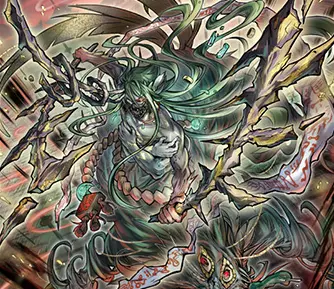
Card Profile 2: Ashtrama Yoami (IMPH-JP039)
IMPH-JP039
Ashtrama Yoami
Level 8 WIND Spellcaster Synchro Effect Monster
ATK 2400 / DEF 3000
Materials: 1 Tuner + 1+ non-Tuner monsters
You can only use the (1) and (2) effects of this card's name each once per turn.
(1) If this card is Special Summoned, or sent from the field to the GY: You can add to your hand, or Set, 1 "Ashtra" Trap from the Deck.
(2) If you have a Trap in your GY: You can return as many face-down cards on the field as possible to the hand, then if you have 5 or more Traps in your GY, you can return all cards your opponent controls to the hand.
Mechanical Analysis of Yoami
Ashtrama Yoami serves as the heavy-hitting Synchro focal point of the revealed wave. Requiring generic materials (1 Tuner + 1+ non-Tuner monsters), it is easily accessible within the archetype given Tamayori’s Level 1 Tuner requirement and the non-Tuner summoned from the deck.
- Flexible Trigger Conditions for Utility: Effect (1) triggers in two distinct scenarios: when Special Summoned, or when sent from the field to the GY. This grants incredible redundancy. Whether you are actively climbing into Yoami during your main phase or your opponent is forcing it off the board via removal, you are rewarded by searching or directly Setting an "Ashtra" Trap from your deck. Setting the Trap directly bypasses activation timing restrictions, allowing for immediate surprise disruptions during the opponent’s turn.
- Conditional Board Bounce: Effect (2) scales dramatically based on Graveyard setup. Requiring at least one Trap in your GY to activate, it allows you to return as many face-down cards on the field as possible to the hand. While this might initially sound counterproductive if applied to your own face-down cards, it synergizes seamlessly with the archetype’s likely propensity for flipping cards or reusing utility cards.
- The Ultimate Wipe Condition: The second clause of Effect (2) is a devastating win-condition: if you have 5 or more Traps in your GY, you can return all cards your opponent controls to the hand. Bouncing an entire board without targeting or destroying circumvents destruction-immunity, floating effects, and Graveyard-triggering threats. Achieving 5 Traps in the GY requires careful resource management, but the payoff is an almost insurmountable tempo swing.
Supporting Context & Metrics: The Meta Landscape of IMPH
To evaluate where Ashtrata Tamayori and Ashtrama Yoami fit within the broader ecosystem of the Yu-Gi-Oh! OCG, one must examine historical archetypal patterns and current competitive trends. Modern OCG metagames heavily favor decks that can establish multi-layered disruption while maintaining a robust resource loop.
Archetypal Synergy and Resource Management
The "Ashtra" archetype appears to be designed as a control-oriented mid-range strategy. By bridging the gap between face-down mechanics and Trap-heavy Graveyard accumulation, Konami is testing a design space reminiscent of past control decks like Subterror, Ghostrick, or Traptrix, but injected with modern Synchro speed.
- Stat Distribution Metrics:
- Tamayori: 0 ATK / 0 DEF (High searchability, fragile on board, relies on effect resolution).
- Yoami: 2400 ATK / 3000 DEF (Exceptional defensive wall, respectable offensive pressure, difficult to run over without specialized removal).
- Attribute and Type Diversity:
- Tamayori is a FIRE Fairy, making it eligible for support tied to those classifications.
- Yoami is a WIND Spellcaster, opening doors to generic Spellcaster or WIND-based tech options should duelists choose to experiment outside pure builds.
The Trap Economy
The true power of the "Ashtra" engine lies in its interaction with Trap cards. In a modern Yu-Gi-Oh! landscape where Traps are often criticized for being too slow, Konami has consistently experimented with archetypes that bypass this limitation by either activating Traps from the hand, setting them directly from the deck during the opponent’s turn, or utilizing GY thresholds to trigger massive payoff effects. Yoami’s requirement of 5 Traps in the GY transforms the graveyard into a secondary resource counter, turning every defensive hurdle into progress toward a total board wipe.
Official Statements and Community Reception
The release of the card texts via the official X account prompted immediate discussions across the global dueling community. While official commentary from Konami’s R&D team remains focused on localized product rollouts for the IMPH booster set, prominent content creators, regional tournament judges, and professional players have weighed in with early analysis.
Expert Insights and Community Chatter
Prominent community analysts have highlighted the versatility of Ashtrata Tamayori’s Level 1 Synchro lock. Because modern competitive deckbuilding often relies heavily on generic Extra Deck toolboxes (such as access to multi-attribute links or omni-negate level 8/10 synchros), locking the player into Level 1 Tuner synchro summons acts as a deliberate balancing lever.
However, clever deckbuilders have already begun theorizing about powerful Level 2, 3, 4, 5, 6, 7, 8, 9, 10, 11, or 12 Synchro monsters that specifically require a Level 1 Tuner. Since many high-tier Synchro monsters simply list "1 Tuner + 1+ non-Tuner monsters" or require specific non-Tuners while leaving the Tuner requirement open to any Level 1, Tamayori’s restriction is far less restrictive than it initially appears. Paired with Yoami—a Level 8 Synchro that fits neatly into standard numerical progressions—the archetype has access to a cohesive internal boss monster while retaining flexibility.
Furthermore, the defensive utility of Tamayori’s GY banishment effect has drawn praise. In formats dominated by targeted removal and sweeping destruction, having a non-engine-slot protection effect that triggers from the graveyard provides vital security for face-down setups.
Future Outlook: Implications for the OCG Meta and Beyond
As the release date for the IMPH booster set approaches, competitive duelists and collectors alike are looking ahead to how these cards will impact tournament play. Several key trajectories emerge from this preliminary analysis:
1. Hybrid and Pure Build Divergence
Players will likely test two distinct approaches to the "Ashtra" archetype:
- Pure Control Builds: Focusing entirely on maximizing Trap card activation, accelerating the GY count to 5+ as quickly as possible, and leveraging Yoami’s mass-bounce effect to close out games.
- Engine Splashes: Utilizing Tamayori as a compact engine package in decks that can capitalize on Level 1 Fairy support, face-down positioning, or graveyard protection without committing fully to the archetype’s Trap requirements.
2. Anticipation for Supporting Reveals
Ashtrata Tamayori and Ashtrama Yoami represent only a fraction of the IMPH set. The community eagerly awaits the reveal of the remaining "Ashtra" non-Tuners, additional Spell/Trap cards, and potential high-level support pieces. The effectiveness of Yoami’s 5-Trap threshold will heavily depend on how efficiently the remaining archetype cards can dump Traps into the Graveyard or set them directly from the deck.
3. Long-Term Viability
Control strategies in Yu-Gi-Oh! historically live or die by their speed and resilience against backrow removal (such as Cosmic Cyclone or Heavy Storm Duster). Because Tamayori protects face-down cards and Ashtra-designated assets from destruction, the archetype shows promise in weathering standard disruption. However, its susceptibility to non-destruction removal (like bouncing or banishing) will dictate its ultimate placement in the competitive tier list.
Conclusion
The unveiling of Ashtrata Tamayori and Ashtrama Yoami in the upcoming IMPH booster set signals an exciting new chapter for face-down and Trap-centric strategies in the Yu-Gi-Oh! OCG. By blending rapid deck-thinning, positional manipulation, recursive graveyard protection, and a devastating mass-bounce win condition, Konami continues to demonstrate its ability to innovate within established mechanical frameworks.
As further card reveals flesh out the "Ashtra" archetype, duelists are encouraged to monitor official channels and community platforms for updates. Whether you are a competitive grinder looking to break the next regional meta or a casual fan drawn to the aesthetic and strategic depth of Spellcaster and Fairy support, IMPH promises to deliver mechanics that reward careful planning, resource management, and tactical foresight. Stay tuned as we continue to track developments leading up to the official release of IMPH.





Belum ada komentar. Jadilah yang pertama berkomentar!