

Executive Overview
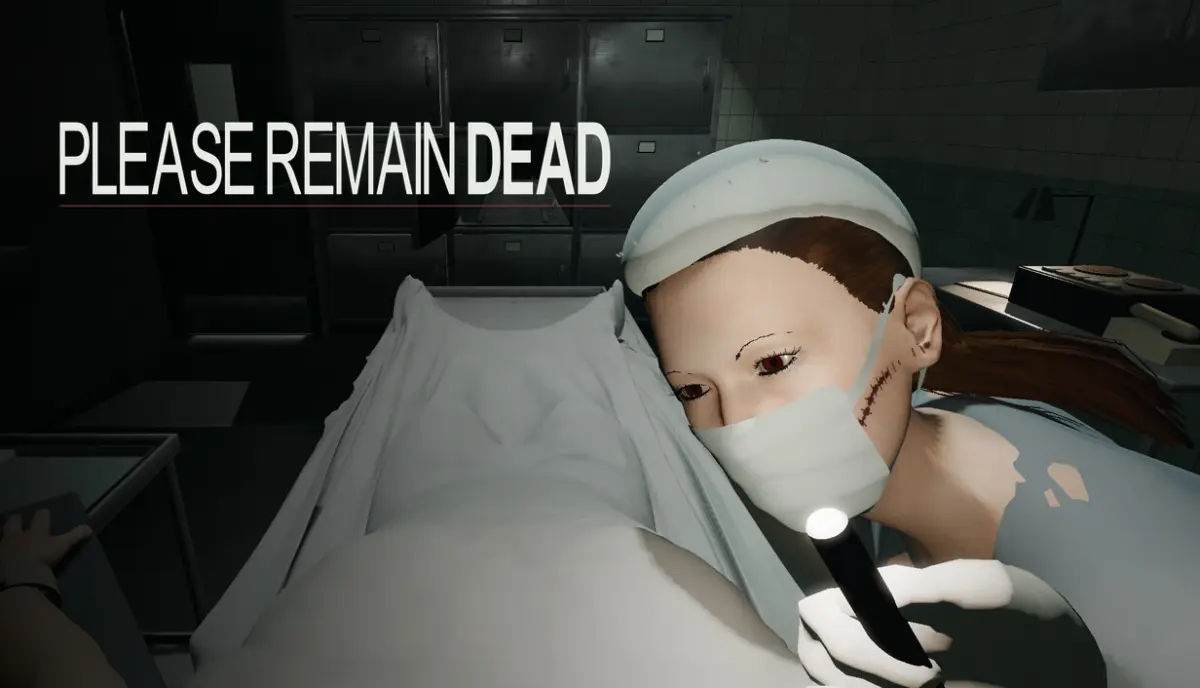
The landscape of independent horror gaming has long thrived on the philosophy of subtraction—stripping away high-end computational fidelity, cinematic polish, and mechanical safety nets to expose raw, unadulterated vulnerability. Yet, few recent releases have leaned into this austere philosophy with the unyielding conviction and psychological rigor seen in Please Remain Dead, developed by One Bit Horror. Released on October 21, 2026, for the PC platform via Steam, this title immediately established itself as a polarizing masterclass in atmospheric dread, forcing players to reckon not only with external terrors, but with the fragile machinery of their own perceptions.
From its initial storefront debut, Please Remain Dead signaled a departure from contemporary horror tropes that rely on jump scares, hyper-realistic gore, or power-fantasy combat mechanics. Instead, One Bit Horror has crafted an experience rooted deeply in psychological unease, environmental storytelling, and an oppressive, minimalist aesthetic. The game challenges traditional notions of player agency, casting the user into a liminal space where progress is constantly undermined by doubt, and every step forward feels less like a triumph and more like an encroachment into forbidden territory.
This comprehensive report explores the genesis, mechanical philosophy, narrative framing, and broader industry implications of Please Remain Dead. Drawing on early player reception, developer insights, and deep-dive analyses of the game’s structural design, we examine how One Bit Horror has managed to carve out a distinct space in an increasingly saturated market.
Detailed Chronology of Release and Reception
The trajectory of Please Remain Dead from an enigmatic concept to a fully realized Steam release is a testament to the quiet, deliberate pacing favored by its creators. While major AAA studios often rely on multi-year marketing campaigns filled with cinematic trailers, extensive vertical slices, and iterative beta tests, One Bit Horror chose a more muted, subterranean approach to the game’s rollout.
The Lead-Up and Launch (October 2026)
In the months leading up to October 21, 2026, murmurs within independent horror communities began to circulate regarding a mysterious PC project spearheaded by One Bit Horror. Cryptic screenshots, devoid of contextual text or overt gameplay hooks, surfaced across various forums and social media channels. These images—characterized by stark, high-contrast monochrome palettes, oppressive architectural geometry, and unsettling character silhouettes—sparked intense speculation among horror enthusiasts.
When Please Remain Dead officially launched on Steam on October 21, 2026, it did so with minimal fanfare, eschewing traditional press releases in favor of letting the atmospheric storefront page speak for itself. The initial wave of adopters encountered a title that defied immediate categorization. Unlike survival horror games that provide players with map systems, inventory management screens, or clear objective markers, Please Remain Dead stripped these safety blankets away entirely.
Community Reaction and Early Pacing
As players began to document their harrowing journeys through the game’s digital architecture, a distinct dichotomy emerged in the community reception.
- The Critics of Ambiguity: A subset of players initially struggled with the game’s deliberate refusal to offer hand-holding or clear directional cues. In an era where modern titles frequently utilize navigational aids, objective pointers, and autosave checkpoints, the sudden immersion into a world that demands absolute self-reliance proved jarring. Frustrations regarding trial-and-error progression and obscured objectives dominated initial forum discussions.
- The Champions of Immersion: Conversely, a passionate faction of horror aficionados praised One Bit Horror for recapturing the lost art of discovery. For these players, the lack of explicit guidance transformed the virtual space from a linear theme park into a genuine, living labyrinth. Every dimly lit corridor, muffled audio cue, and distorted visual artifact was scrutinized, turning gameplay into an act of archaeological excavation rather than mindless button-pressing.
By the end of its launch week, Please Remain Dead had cultivated a dedicated cult following. Streamers and content creators, drawn to the game’s hypnotic, anxiety-inducing loops, began broadcasting their playthroughs, amplifying the title’s reach through word-of-mouth recommendations and late-night digital investigations.
Mechanical Philosophy and Gameplay Mechanics
At the heart of Please Remain Dead lies a mechanical framework that deliberately subverts conventional game design loops. One Bit Horror has engineered an experience where every interaction carries psychological weight, and the interface itself becomes an antagonist.
The Weaponization of the Interface
In traditional game design, the user interface (UI) serves as a bridge between the player and the virtual world—a reliable dashboard providing health meters, ammo counts, and minimaps. Please Remain Dead weaponizes this concept by either severely curtailing or outright distorting UI elements.
Players find themselves navigating claustrophobic environments with little to no indication of their physical status. Is your character injured? You must infer it from subtle audio cues, labored breathing, or slight visual distortions. Are you running low on resources? The game forces you to physically inspect your environment, counting remaining items or gauging structural integrity through trial and error. This design choice strips away the sense of absolute control that players typically take for granted, fostering a palpable sense of dread.
Spatial Awareness and Sensory Deprivation
The game’s mechanics heavily emphasize sensory deprivation and acoustic manipulation. Sound design in Please Remain Dead is not merely an accompaniment to the visuals; it is the primary navigation tool and a source of constant psychological torment. Distant, unidentifiable mechanical whirs, rhythmic thuds, and sudden, abrasive static bursts punctuate the oppressive silence.
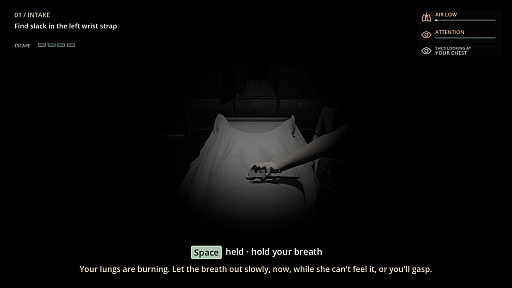
One Bit Horror utilizes spatial audio to disorient the player. Footsteps echo with unnatural resonance, making it impossible to determine whether a pursuing entity is directly behind you or three rooms away. This auditory paranoia forces players to constantly check their blind spots, managing limited attention spans and mental endurance.
Risk, Reward, and Psychological Attrition
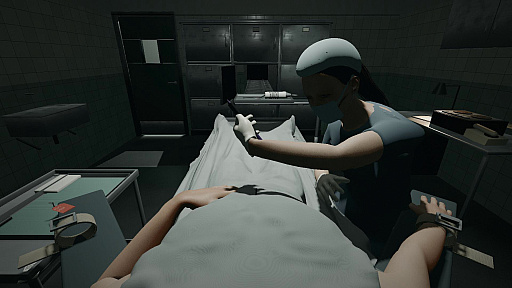
Unlike action-heavy horror titles where players can fight back against monstrous adversaries, Please Remain Dead encourages evasion, stealth, and psychological endurance. Direct confrontation is rarely a viable option; instead, players must observe enemy patrol patterns, memorize environmental blind spots, and time their movements with surgical precision.
However, the game introduces a cruel psychological twist: lingering too long in one place invites compounding dread, while rushing headlong into the unknown guarantees failure. This delicate balancing act forces players into a state of constant hesitation. The mechanics do not just test reflexes or problem-solving skills; they test emotional resilience.
Narrative Framing and Environmental Storytelling
Because Please Remain Dead eschews traditional exposition, text logs, and cutscenes, its narrative is conveyed almost entirely through environmental storytelling and subtext.
The Architecture of Despair
The world of Please Remain Dead is communicated through its decaying physical spaces. The architecture tells a story of abandonment, systemic failure, and psychological collapse. Every room feels heavy with unsaid histories. Peeling wallpaper, flickering fluorescent lights casting long, jagged shadows, and architectural anomalies that defy Euclidean geometry suggest a reality that is fracturing at the seams.
The protagonist’s journey is framed less as a heroic rescue mission and more as an inescapable descent into the subconscious. As players traverse these desolate corridors, subtle shifts in the environment—a door that was previously locked now standing ajar, furniture rearranged when the player’s back was turned—blur the line between objective reality and psychological projection.
Interpretive Depth and Player Agency
One Bit Horror leaves the overarching narrative deliberately ambiguous, inviting players to piece together the lore through fragments of visual data and atmospheric impressions. There is no definitive, spoon-fed conclusion. Instead, the game operates on the principle that the most terrifying monsters are those the human mind constructs to fill in the blanks.
This open-ended narrative framework has ignited vibrant discussions within the gaming community. Theories regarding the protagonist’s identity, the nature of the entity pursuing them, and the metaphysical state of the world itself continue to evolve as players comb through every pixel of the game’s code and visual design.
Supporting Context and Industry Metrics
To fully appreciate the impact of Please Remain Dead, it is essential to examine its position within the broader independent PC gaming ecosystem of 2026.
The Rise of "One Bit Horror" and Micro-Budget Auteurs
Over the past several years, the indie sector has witnessed a counter-movement against bloated development cycles and hyper-realistic graphics. Solo developers and micro-studios, operating under monikers like One Bit Horror, have demonstrated that profound emotional resonance and artistic impact do not require multimillion-dollar budgets.
By leveraging restrictive stylistic choices—such as monochrome aesthetics, low-poly geometry, and lo-fi audio sampling—these creators bypass the uncanny valley and tap directly into primitive human fears. Please Remain Dead stands as a prime example of this trend, proving that artistic vision and atmospheric discipline can outweigh sheer graphical fidelity.
Steam Visibility and Algorithmic Challenges
Releasing a title on Steam in 2026 presents significant hurdles, particularly for niche horror games that defy mainstream commercial appeal. With thousands of titles launching weekly, discoverability remains the single greatest challenge for micro-developers.
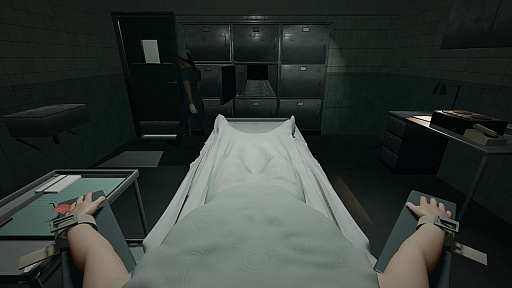
Despite these algorithmic hurdles, Please Remain Dead leveraged organic word-of-mouth momentum, creator-led streaming communities, and dedicated enthusiast forums to secure a stable foothold. The game’s ability to generate immediate, passionate discourse underscores the enduring appetite for challenging, uncompromising horror experiences that respect the player’s intelligence.
Future Outlook and Ongoing Support
As Please Remain Dead settles into its post-launch lifecycle, the community and development team are looking toward the future.
Developer Commitment and Community Engagement
One Bit Horror has maintained an active dialogue with its player base, monitoring community feedback, identifying friction points, and evaluating potential quality-of-life adjustments. However, the studio has emphasized that any future updates or expansions will remain strictly aligned with the game’s core artistic vision. There are no plans to "soften" the experience or introduce accessibility crutches that would dilute the oppressive atmosphere and uncompromising difficulty that define the title.
The Legacy of Uncompromising Horror
Looking ahead, Please Remain Dead is poised to leave a lasting imprint on the independent horror genre. By demonstrating that players are willing—and eager—to engage with titles that demand patience, discomfort, and intellectual participation, One Bit Horror has set a high watermark for atmospheric design.
As the industry continues to evolve, games like Please Remain Dead serve as a vital reminder of horror’s true purpose: not merely to startle, but to disorient, provoke, and linger in the dark recesses of the player’s mind long after the monitor has been powered down.






Belum ada komentar. Jadilah yang pertama berkomentar!