Since its original debut on the Super Nintendo Entertainment System (SNES) in 1990, F-ZERO has occupied a legendary, almost mythical status in the annals of video game history. As one of the foundational pillars of the "Mode 7" graphical revolution—a hardware-accelerated technique that allowed flat 2D backgrounds to be rotated and scaled to simulate pseudo-3D environments—Nintendo’s futuristic racing franchise captivated an entire generation of players. It established a blueprint for high-octane, velocity-obsessed arcade racing that few titles have ever truly replicated.
Decades later, the franchise’s enduring allure continues to captivate retro gaming enthusiasts, speedrunners, and archival researchers alike. Recently, a fascinating deep dive into the mechanical intricacies of F-ZERO has resurfaced within the community, courtesy of a detailed retrospective published by the retro gaming research collective "Yomi Yasumi" (よみやすみ連休リサーチ企画, Issue No. 20).
This comprehensive investigation focuses on a specific, high-stakes technical challenge: navigating through 5 consecutive circuits while meticulously preserving machine power and mastering razor-thin margins. By examining the meticulous strategies required to conquer F-ZERO’s punishing difficulty curve, this retrospective offers fresh insights into a game that defined an era of hardware innovation.
Detailed Chronology & Mechanics: The Genesis of Mode 7 Velocity
To fully understand the gravity of the F-ZERO challenge analyzed by Yomi Yasumi, one must look back at the technological landscape of the early 1990s. Released during a time when true polygon-based 3D graphics were still in their infancy and largely confined to expensive arcade cabinets or high-end Silicon Graphics workstations, home consoles relied on clever 2D tricks to simulate depth.
Nintendo’s implementation of Mode 7 on the SNES was nothing short of a watershed moment. By manipulating the mapping matrix of a background layer on a pixel-by-pixel basis, the console could rotate and scale flat bitmaps in real-time, creating the breathtaking illusion of a curving, undulating speedway stretching toward the horizon.
However, this technological wizardry came with strict hardware limitations. The SNES CPU had to shoulder an immense calculation burden to render the scaling and rotation effects smoothly while tracking up to 30 racer sprites simultaneously. Consequently, developer teams had to master the delicate balance between graphical fidelity and frame-rate stability. F-ZERO achieved this balance masterfully, providing an intoxicating sense of speed that made players feel as though they were strapped to the front of a rocket ship.
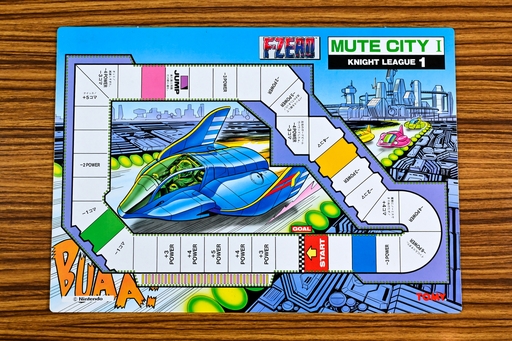
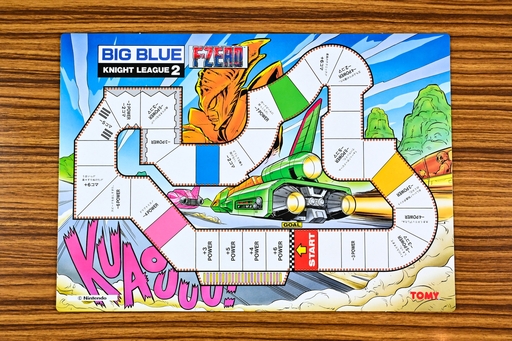
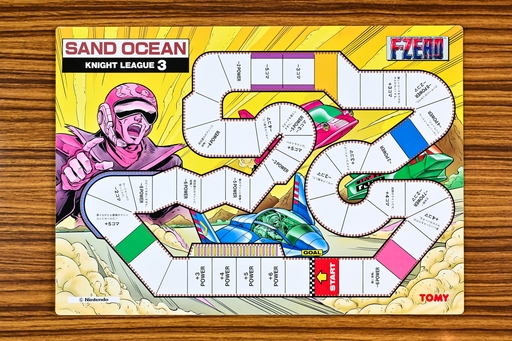
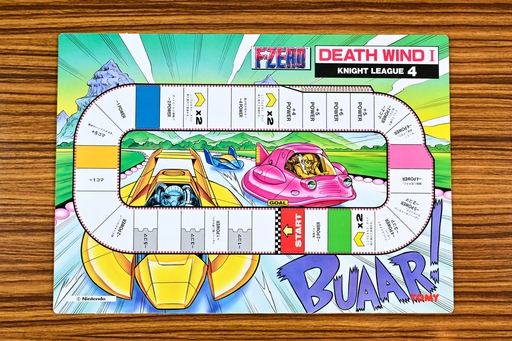
The core of the Yomi Yasumi retrospective centers around the ultimate test of endurance: clearing all five core circuits of the game in succession without experiencing a total machine failure (Retire). The circuits analyzed in depth include:
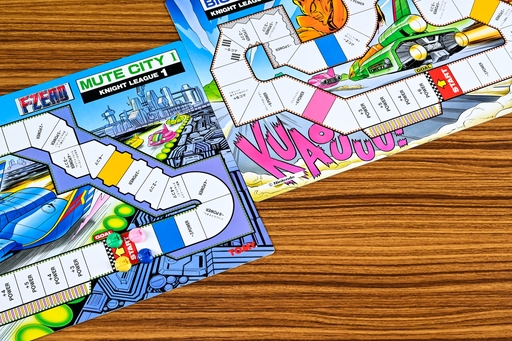
MUTE CITY 1 (Knight League)
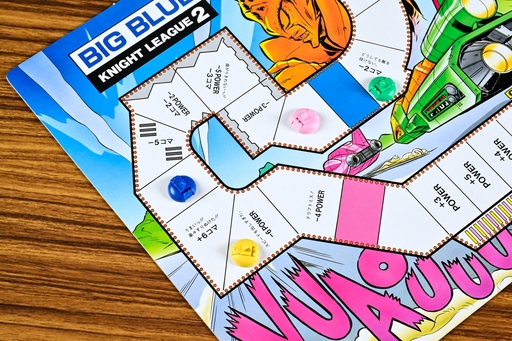
BIG BLUE (Knight League)
SAND OCEAN (Queen League)
DEATH WIND 1 (King League)
SILENCE (King League)
Each circuit introduces distinct environmental hazards, track layouts, and gravitational anomalies that test a player’s reflexes to their absolute limits.
Supporting Context & Metrics: Machine Management and Power Economy
In F-ZERO, driving fast is only half the battle; managing your machine’s structural integrity is what separates casual players from archival masters. Every vehicle in the game features a POWER meter that acts simultaneously as your shield, your health bar, and your fuel for high-speed boosts.
The Mathematics of Survival
The research conducted by Yomi Yasumi breaks down the exact algorithmic penalties associated with pilot errors and environmental hazards:
Wall Impacts: Minor scrapes drain minimal energy, but high-velocity collisions against track guardrails shave off significant chunks of the POWER gauge.
Super Jet (Boost) Utilization: Activating a Super Jet post-lap 2 grants a massive temporary velocity increase, but it demands a direct sacrifice of your vehicle’s structural integrity.
The Pit Area Mechanic: The only salvation for a battered vehicle is the Pit Area, located on the home straight of each track. Driving through the Pit restores a set amount of POWER per frame, but lingering too long can cost precious race positions.
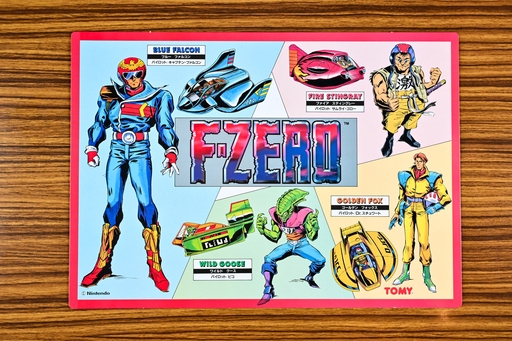
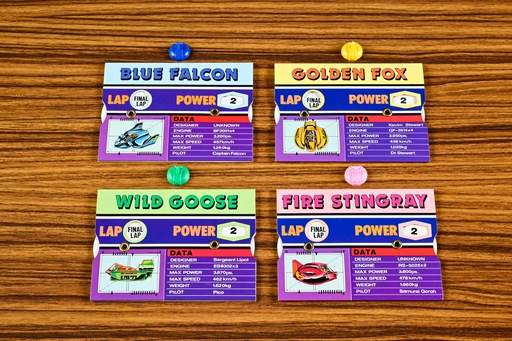
Different vehicles within the F-ZERO roster offer distinct risk-reward profiles. For instance, the Blue Falcon, piloted by Captain Falcon, offers a well-rounded balance of handling, top speed, and recovery rate, making it the ideal vehicle for consistency-focused runs. Conversely, heavier machines like the Golden Fox boast blistering acceleration and high top speeds but suffer from fragile armor, meaning a single mistimed drift can spell instant disaster.
Official Statements and Archival Insights
The Yomi Yasumi research team approached the project not merely as a nostalgic stroll down memory lane, but as an empirical study in human reflexes and computational constraints. According to their published findings:
"The architectural genius of F-ZERO lies in its unforgiving feedback loop. When you push a machine to its absolute performance ceiling across five consecutive circuits, the game ceases to be a simple racer—it transforms into an exercise in resource allocation, spatial memory, and split-second damage mitigation."
The report highlights how veteran players utilize advanced techniques such as "snaking" (rapid micro-adjustments of the steering inputs to squeeze extra velocity out of straightaways) and calculated wall-sliding to shave milliseconds off their lap times. However, these aggressive maneuvers drastically increase the risk of triggering a Retire state, forcing players to constantly evaluate whether the reward of a faster lap justifies the catastrophic depletion of their POWER meter.
Future Outlook: The Enduring Legacy of SNES Speed
As the video game preservation movement continues to mature, deep-dive analyses like the one provided in Yomi Yasumi Issue No. 20 play a vital role in documenting how players interact with classic software. While modern gaming offers ultra-realistic physics engines, ray-traced reflections, and boundless processing power, the pure, unadulterated adrenaline pump of F-ZERO remains remarkably distinct.
The retrospective concludes with a poignant observation: while many modern titles hold the player’s hand through automated checkpoints and generous health regenerations, F-ZERO demands mastery. It forces the player to learn every pixel of the track, memorize every rival’s AI pattern, and respect the fragility of their high-speed machine.
For those inspired by the Yomi Yasumi report to dust off their vintage hardware or fire up archival emulation setups, the message is clear: the pursuit of the ultimate lap time is an infinite journey. As long as retro gaming enthusiasts continue to analyze, dissect, and push the boundaries of 16-bit software, the spirit of F-ZERO will continue to race forward into the future.












Belum ada komentar. Jadilah yang pertama berkomentar!