

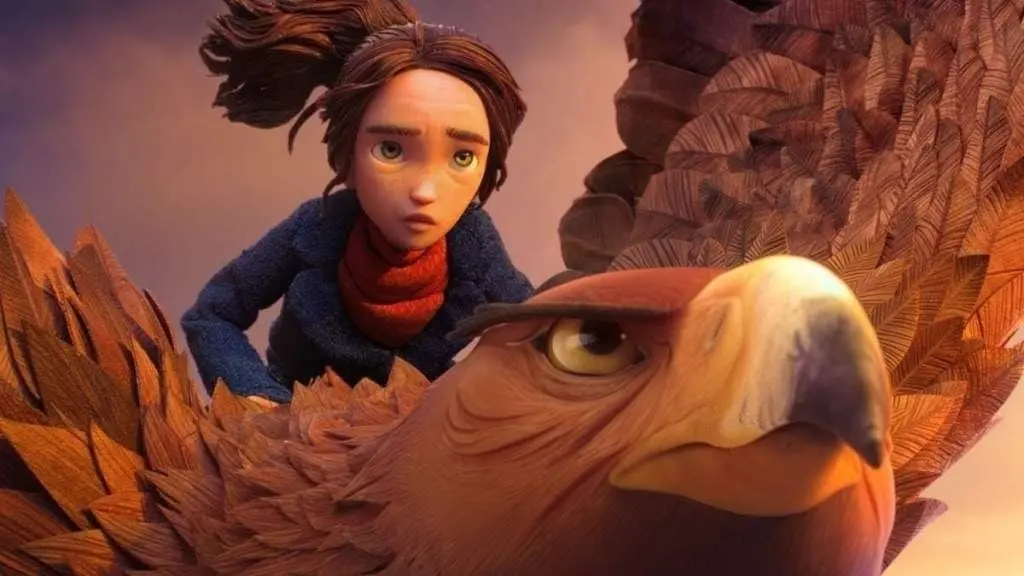
Laika, the celebrated stop-motion animation studio renowned for its tactile artistry and meticulous craftsmanship (Coraline, Kubo and the Two Strings), has returned with its most ambitious, breathtaking cinematic venture to date: Wildwood. Directed by Travis Knight and slated for release in 2026, the film adapts the beloved high-fantasy novel of the same name by Colin Meloy, with illustrations by Carson Ellis. Clocking in as the longest stop-motion animated feature ever produced, Wildwood is a monumental triumph of physical filmmaking that marries timeless storytelling with modern technical wizardry.
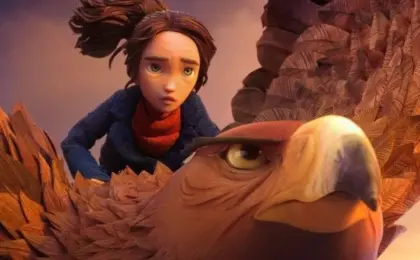
The narrative centers on Prue McKeel (voiced by Peyton Elizabeth Lee), a pragmatic young girl who stubbornly disbelieves in magic despite her father’s enchanting storybook readings to her infant brother, Mac (voiced by Arthur Knight). Alongside Curtis (voiced by Jacob Tremblay), a dorky classmate obsessed with Dungeons & Dragons, Prue is thrust headfirst into the titular, perilous magical forest after a murder of crows—led by a mysterious and grief-stricken woman named Alexandra (voiced by Carey Mulligan)—abducts baby Mac.
What follows is an epic, emotionally resonant quest through an exquisitely constructed fantasy realm populated by noble bandits, self-absorbed bureaucrats, anthropomorphic animal societies, and ruthless coyote soldiers. More than just a visual extravaganza, Wildwood explores complex themes of grief, bravery, familial devotion, and the crushing weight of fear. Boasting a star-studded voice cast, a sweeping musical score by Dario Marianelli, and a breathtaking third-act war sequence that rivals blockbuster live-action epics, Wildwood stands as a defining artistic milestone for Laika and a definitive rebuke of generative artificial intelligence in art.
Detailed Chronology: The Journey into the Unknown
Act I: The Disappearance and the Threshold
The film opens in a contemporary setting, grounding the audience in the quiet, mundane realities of its protagonists. Prue McKeel is a realist, grounded by the responsibilities of everyday life and unimpressed by the flights of fancy her father spins for infant Mac. Conversely, Curtis is the quintessential tabletop roleplayer, losing himself in the safe abstractions of Dungeons & Dragons.

This fragile equilibrium shatters when a terrifying murder of crows descends upon Prue’s home and makes off with baby Mac. Driven by a fierce, protective love, Prue gives chase, dragging a terrified Curtis into the overgrown, forbidden perimeter of the local woods. As the physical boundaries of the mundane world dissolve, the duo crosses the threshold into Wildwood—a lush, ancient, and deeply dangerous high-fantasy ecosystem.
Here, Curtis’s theoretical knowledge of fantasy tropes proves woefully inadequate. The sheer, palpable terror of a living, breathing magical realm strips away his heroic fantasies, forcing both children to confront genuine vulnerability. Prue, meanwhile, faces a stark reality: accept the impossible truth of the forest or lose her brother forever.
Act II: Navigating a Fractured Realm
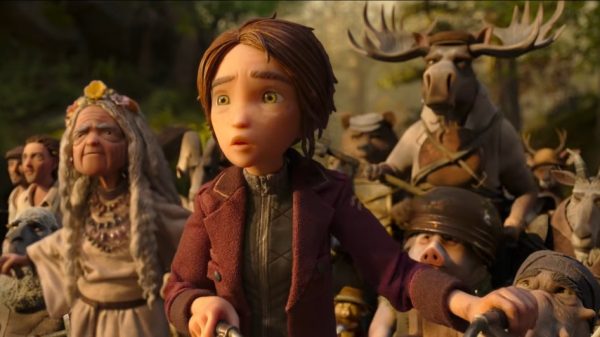
As Prue and Curtis journey deeper into Wildwood, the narrative expands to expose a sprawling sociopolitical and ecological tapestry. The forest is not merely a backdrop, but a living world fraught with conflict. The children forge uneasy alliances with an array of distinct factions, including a society of talking anthropomorphic animals that elevates world-building to unprecedented heights, and a band of noble, misunderstood outlaws who issue a stirring vocal call to arms.
The conflict in Wildwood stems from Alexandra, a grief-stricken governess who utilizes an army of ruthless coyote soldiers to execute a nefarious plot involving baby Mac. Alexandra’s motives, while born from a deeply personal and empathetic place of profound loss, manifest as cruel and unyielding. Through nuanced performances—particularly by Carey Mulligan—the narrative explores the grey areas between antagonist and protagonist, illustrating how unmanaged grief can warp the soul.

Parallel to this, smaller creatures and vermin serve as vital thematic anchors, symbolizing the quiet reservoirs of courage found in the smallest of beings. Curtis, in particular, learns to shed his cowardice, discovering that real heroism is not about having all the answers, but about pushing forward despite paralyzing fear.
Act III: The Climactic War and Resolution
The narrative culminates in a staggering third-act war sequence that ranks among the most visually astonishing set pieces ever committed to film. Merging thousands of meticulously handcrafted claymation models with state-of-the-art digital enhancement, Travis Knight orchestrates a battlefield spectacle of epic proportions.
The climax is driven by a relentless emotional propulsion, underscored by Dario Marianelli’s soaring score. Characters on both sides make ultimate sacrifices driven by an undying love for family. While the story occasionally hurries its pacing through exposition-heavy passages and a pair of significant flashbacks, the sheer emotional and visual magnitude of the finale eclipses any minor structural grievances. The resolution offers a bittersweet catharsis, cementing Wildwood not just as an adventure tale, but as a profound exploration of human endurance, love, and loss.
Supporting Context & Metrics
Production Scale and Technical Benchmarks
Wildwood redefines the outer limits of stop-motion animation. As the longest feature film ever produced in the medium, its production timeline spanned years of painstaking physical labor. Every set piece—from intricate manor escapes to suspended cages swaying precariously in mid-air—demanded thousands of hours of artisan labor.
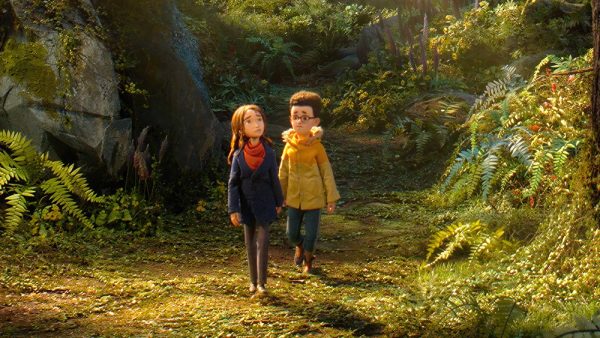
Laika’s commitment to tangible art is evident in every frame. While digital effects (CGI) were judiciously employed to expand the scope and handle complex elements like the massive war sequence, the soul of the film remains firmly rooted in traditional stop-motion craftsmanship. The character models, costumes, and miniature environments represent an apex of physical artistry.
Comprehensive Voice Cast
The film benefits from an embarrassment of vocal riches, featuring some of the most acclaimed actors working in film and television today:
- Peyton Elizabeth Lee as Prue McKeel
- Jacob Tremblay as Curtis
- Carey Mulligan as Alexandra
- Mahershala Ali
- Angela Bassett
- Awkwafina
- Jake Johnson
- Charlie Day
- Amandla Stenberg
- Jemaine Clement
- Maya Erskine
- Tantoo Cardinal
- Tom Waits
- Richard E. Grant
- Arthur Knight as Mac McKeel
- Ólafur Darri Ólafsson
- Blythe Danner
- Rob Delaney
- Marc Evan Jackson
- Len Cariou
Adaptational Lineage
The film is adapted from the acclaimed 2011 children’s fantasy novel Wildwood, written by Colin Meloy (frontman of the indie-rock band The Decemberists) and illustrated by Carson Ellis. The source material is heavily inspired by the Pacific Northwest’s dense, mythical landscapes, giving the story a distinct regional flavor that Travis Knight and screenwriter Chris Butler have faithfully translated to the screen while expanding its thematic maturity into PG-13 territory.
Official Statements & Industry Reception
While traditional press tours and promotional junkets have rolled out the film for preview screenings—including enthusiastic early receptions at major international festivals—the overarching discourse surrounding Wildwood centers on its artistic integrity.
Director Travis Knight has consistently emphasized Laika’s mission to preserve the human element in filmmaking. In an industry increasingly seduced by algorithmic shortcuts and digital automation, Wildwood serves as an uncompromising physical manifesto.
Critically, early responses have lauded the film as a masterpiece. Reviewers have praised its willingness to embrace darkness, brutality, and genuine emotional devastation, noting that it respects the intelligence of its audience by refusing to sanitize grief or human suffering. The film’s ability to balance intimate family trauma with grand-scale fantasy warfare has been singled out as its crowning achievement.
Future Outlook
The release of Wildwood in 2026 marks a watershed moment for Laika Studios. By successfully executing the longest and arguably most complex stop-motion film in cinematic history, the studio has raised the ceiling for what is possible in physical animation.
Industry analysts expect Wildwood to become a major awards-season contender, particularly in technical categories and Best Animated Feature races. More importantly, the film establishes a cultural touchstone for the ongoing debate over the value of human labor in art. As noted by early critics, the most resonant aspect of Wildwood is not merely the magic depicted within its fictional forest, but the undeniable, pulse-pounding proof that human hands, sweat, and imagination can still create miracles that generative artificial intelligence can never hope to replicate. Wildwood does not just argue that magic is real; it proves that true artistic creation is a magical act in its own right.


Belum ada komentar. Jadilah yang pertama berkomentar!