


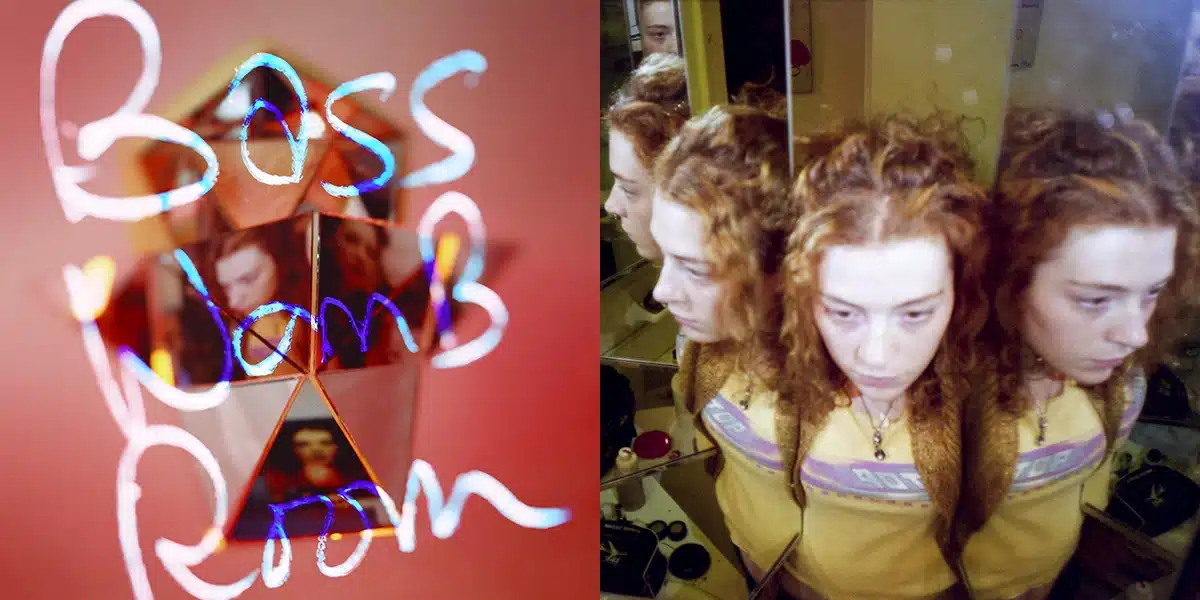
In the sprawling landscape of alternative rock history, few figures occupy a space as distinct and uncompromising as Melissa Auf der Maur. Famed globally for her powerhouse basslines and magnetic stage presence with 1990s heavyweights Hole and Smashing Pumpkins, Auf der Maur has consistently defied the predictable trajectories of commercial rock stardom. On September 4, she deepened that legacy of subversion with the release of BASS WOMB ROOM: My ’90s 4-Track Demos x Field Recordings.
Released via Envision, this sprawling, avant-garde sonic experiment collapses the boundaries between intimate songwriting and environmental collage. Far from a polished retrospective or a nostalgic victory lap of her golden era, BASS WOMB ROOM is a raw, jarring, and deeply experimental excavation. The album merges lo-fi cassette tape recordings from her most formative creative decade with idiosyncratic field recordings captured from the physical world.
The project finds Auf der Maur operating entirely without a safety net. Across its tracklist, conventional song structures are repeatedly dismantled, challenged, and rebuilt using unorthodox materials—ranging from the scurry of urban street rats and the hypnotic patter of rain on rooftops to archival space transmissions and stark feminist monologues. While the record is unapologetically challenging, requiring patience from even the most seasoned experimental music aficionados, it ultimately reveals an artist entirely comfortable in her own creative skin. It positions the listener not as a passive consumer of pop hooks, but as an active participant in an immersive, psychological, and acoustic journey.
Detailed Chronology & Track Analysis
To understand BASS WOMB ROOM is to trace a nonlinear journey through the vaults of the 1990s underground, filtered through the retrospective lens of an artist who values raw process over pristine product. The album acts as a sonic diary, capturing the erratic spark of inspiration that occurs when a musician is isolated with a four-track recorder and an uninhibited imagination.
The Opening Statements: From Reverb to Heartache
The record wastes no time establishing its uncompromising ethos. The opening piece, “Active Heart,” greets the listener with a tidal wave of heavy reverb. It is an intentionally abrasive introduction that stretches the patience of the listener and tests the limits of their eardrums, signaling immediately that conventional accessibility is off the table.
Fortunately, this sensory onslaught is immediately counterbalanced by the album’s second piece, “…And the Next Day.” A much more plaintive and vulnerable affair, the track relies on gentle acoustic guitar strums to ground the listener. The instrumentation acts as a physical extension of the artist’s body; one can almost visualize the blood rushing through the fingers pressing the wooden frets. The heartache embedded in the composition is palpable, elevated by a narrator desperately searching for a human companion to anchor an empty heart.
Urban Realism and Avant-Garde Collages
As the record unfolds, Auf der Maur leans heavily into the traditions of sound art, invoking the experimental spirit of Yoko Ono—specifically echoing the avant-garde collage techniques of Unfinished Music No. 2: Life with the Lions paired with the raw, post-trauma emotional weight of Fly.
On tracks like “In the Reflection,” everyday pop sensibilities are entirely discarded. The song incorporates the startling, unfiltered sounds of rats scurrying through a gutter, creating a visceral urban atmosphere that is as unsettling as it is evocative. Similarly, “Water Wars” functions primarily as an instrumental soundscape, pairing jangly, loose-limbed guitar lines with the ambient, pitter-pattering rhythm of rain striking a rooftop.
In a more literal nod to environmental sound, “Flesh Flush” captures the cascading roar of water rushing down a toilet bowl. While such an inclusion borders on the scatological, it underscores the album’s foundational philosophy: nothing in the sonic world is off-limits.
Spoken Word, Deconstruction, and Reinterpretation
The centerpiece of the album’s experimental narrative is “Is She Is.” Bolstered by backward-masked sonics and a hypnotic, revolving rhythmic core, the track serves as an overt structural experiment—much like the Beatles’ disruptive “Revolution 9” in 1968. The piece culminates in a striking spoken-word monologue: a visceral, unvarnished diatribe addressing the omnipresent fear and systemic power dynamics that men hold over women across the globe. It is a moment of profound feminist weight, anchoring the record’s abstract sonic architecture in socio-political reality.
Elsewhere, Auf der Maur takes a familiar touchstone and forces it through her stylistic funhouse mirror. Her bass-heavy arrangement of Bryan Ferry’s classic “Love Is the Drug” slows the tempo to a glacial crawl, transforming the sleek, seductive ballad into something far more sultry, moody, and stoic.
Fairy Tales, Space Odysseys, and Dissonance
The dialectic of light and shadow continues on “River’s Dream,” which opens with the innocent, youthful voice of a child reading a fairy tale. This gentle narration is wrapped in a chaotic cloud of rock instruments chipping, chiming, and colliding around the vocals. The resulting tonal dissonance elevates the craft, establishing a brilliant dichotomy of layers: light and shade, night and day, innocence and experience.
Perhaps the album’s most cinematic achievement is “Sea of Tranquility.” Anchored by a gorgeous, sweeping central melody, the track features Auf der Maur’s signature guitar work underscored by synthesized strings and vintage radio excerpts of an astronaut circumnavigating the Earth. The piece builds to a dramatic, strident final chord—a towering sonic statement that would have felt entirely at home on Giorgio Moroder’s synthesized Scarface soundtrack.
The Conclusion: Polarization and Pop Potential
As the journey nears its end, the record risks stumbling. “Skip a Beat” proves to be a polarizing choice for an album closer. Driven by gruff, heavy-handed drum beats and somewhat shoddy, Enya-esque vocal chants, it is a rare moment where the avant-garde execution falls short of its ambitions. It is bound to divide audiences, though even detractors must concede the sheer commitment poured into the performance.
Yet, immediately following this friction comes a tantalizing glimpse of alternative paths. “Fancy Piece” demonstrates that Auf der Maur still possesses an instinctively keen ear for infectious pop melody. It suggests that the songwriting bassist could easily pivot toward a more palatable, commercial venture in the future if she chose to temper the abrasive edges of BASS WOMB ROOM.
Supporting Context & Metrics
To properly contextualize BASS WOMB ROOM, one must look at the historical coordinates of Melissa Auf der Maur’s career. Emerging from the vibrant Montreal underground music scene in the mid-1990s, Auf der Maur achieved international renown as the bassist and backing vocalist for Hole, joining Courtney Love during the tumultuous post-Live Through This era. Her presence on the road during the touring cycles for Celebrity Skin (1998) cemented her status as a rock icon.
Following her tenure with Hole, Auf der Maur stepped seamlessly into the revolving lineup of Billy Corgan’s alternative rock behemoth, The Smashing Pumpkins, contributing to their expansive late-90s sonic architecture. In 2004, she launched her solo career with her critically acclaimed self-titled debut album, followed by 2010’s conceptual rock-opera and graphic novel project Out of Our Minds.
| Metric / Attribute | Detail / Description |
|---|---|
| Artist | Melissa Auf der Maur |
| Release Date | September 4 |
| Label / Distributor | Envision |
| Title | BASS WOMB ROOM: My ’90s 4-Track Demos x Field Recordings |
| Key Historical Associations | Hole, The Smashing Pumpkins, Solo Avant-Garde Projects |
| Primary Artistic Influences | Yoko Ono, Lo-Fi Cassette Culture, Cinematic Soundscapes |
The release of BASS WOMB ROOM arrives during a broader cultural renaissance for 1990s lo-fi artifacts. With streaming platforms and boutique vinyl labels feeding an insatiable consumer appetite for unpolished archival material, Auf der Maur’s decision to open her personal tape vaults aligns with a contemporary desire for authenticity over algorithmic perfection. However, unlike traditional demo compilations—which typically feature cleaned-up versions of future radio hits—Auf der Maur has curated a deliberate, jarring art-object that challenges the very notion of what a "demo" is meant to achieve.
Official Statements & Critical Reception
Critical reception for BASS WOMB ROOM has centered on its refusal to pander to nostalgia. Music critics and avant-garde theorists have noted that the album is fundamentally a study in process rather than product.
In promotional statements surrounding the Envision release, representatives for the artist emphasized that the project was never designed to chart on commercial radio or provide easy listening for casual rock fans. Instead, the collection is framed as a time capsule of unbridled creative experimentation—a direct window into the mind of a 1990s icon operating away from the corporate pressures of major-label boardrooms.
"Give the guitarist a plectrum, and they’ll riff; give the painter a brush, and they’ll draw. Give Melissa Auf der Maur a studio, and convention goes out the window," noted early reviews, highlighting how the artist continually dismantles expected song structures in favor of raw sonic textures.
Furthermore, the feminist undertones of the project have been widely praised by cultural commentators. The inclusion of spoken-word monologues addressing global patriarchal power dynamics transforms what could have been a purely self-indulgent archival exercise into a vital, politically resonant work. The album houses what critics have termed a "feminist apotheosis"—a persistent, haunting cry from within the mix calling for a fairer, more equitable world.
Future Outlook
As BASS WOMB ROOM: My ’90s 4-Track Demos x Field Recordings makes its way into the hands of devoted fans, avant-garde purists, and curious rock historians, it raises fascinating questions about Melissa Auf der Maur’s future creative output.
By proving that she can effortlessly pivot from abrasive, rat-infested soundscapes (“In the Reflection”) to pristine, commercially viable pop structures (“Fancy Piece”), Auf der Maur has demonstrated an enviable range of artistic dexterity. Industry analysts and musicologists suggest that this release acts as a psychological and creative clearinghouse—a way for the artist to purge her historical vaults and clear the slate for entirely new endeavors.
Whether BASS WOMB ROOM will inspire a wave of similar archival releases from her 1990s alt-rock peers remains to be seen. What is certain, however, is that Auf der Maur has successfully redefined her relationship with her own past. Rather than letting her formative 1990s recordings collect dust as nostalgic mementos, she has weaponized them to create something vital, challenging, and entirely unexpected.
In her relentless push to expand the boundaries of artistry, Melissa Auf der Maur has proven that the finished destination matters far less than the courage it takes to undertake the journey. Judging by the intricate, polarizing, and deeply rewarding sonic landscape of BASS WOMB ROOM, it has been quite the journey indeed—and one from which modern alternative music has much to learn.







Belum ada komentar. Jadilah yang pertama berkomentar!