

Executive Overview
For over thirty-five years, Wesley Stace has occupied a singular, albeit perpetually shifting, corner of the modern musical landscape. To veterans of the late-1980s and 1990s indie-rock boom, he is forever known by his sharp-witted moniker, John Wesley Harding—a nod to the classic Bob Dylan record that signaled a tongue-in-cheek reverence for folk-rock royalty, paired with an undeniably sharp, Costello-esque power-pop sensibility. Yet, reducing Stace to a relic of college-radio nostalgia drastically misreads an artist whose career defies simple categorization.
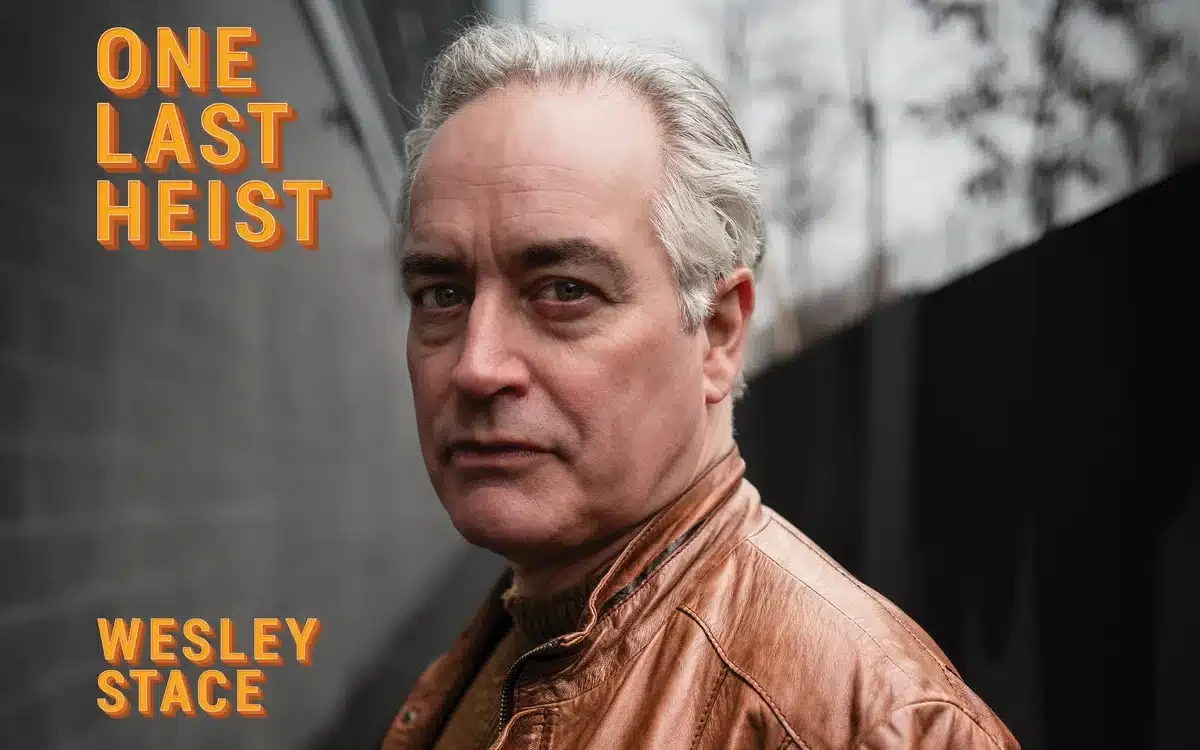
Over the decades, Stace has not merely maintained a career; he has methodically built a multifaceted creative empire. Beyond his extensive discography of literate, barbed-pop records, he is an acclaimed novelist, a distinguished university educator, and a restless stylistic chameleon. Following a formal return to his given name on 2013’s Self-Titled and his collaborative 2017 outing with The Jayhawks, Stace has entered a late-career artistic renaissance. This reinvention reached its sophisticated, cosmopolitan peak with his 2021 release, Late Style, and finds its definitive expression in his latest full-length record, One Last Heist.
Recorded in his adopted hometown of Philadelphia alongside composer, arranger, and multi-instrumentalist David Nagler, One Last Heist is a masterclass in modern sophisti-pop, breezy Latin rhythms, and classic singer-songwriter craft. Free from the isolating constraints of pandemic-era remote recording that hampered its predecessor, the new album captures the raw, spontaneous chemistry of a seasoned studio band playing live in real time.
This comprehensive deep-dive explores Stace’s extraordinary artistic evolution, dissects the genesis and production of One Last Heist, examines key tracks from the record, and assesses what this vibrant new chapter means for an artist who continues to rewrite the rules of mid-career longevity.
Detailed Chronology: From John Wesley Harding to the Philadelphia Renaissance
The Indie-Pop Vanguard (1988–1999)
Wesley Stace burst onto the international music scene in the late 1980s under the alias John Wesley Harding. Armed with an acoustic guitar, a biting, punk-informed intellect, and a knack for crafting instantly memorable power-pop melodies, he quickly drew comparisons to Elvis Costello, Marshall Crenshaw, and Nick Lowe. Albums such as 1990’s Here Comes the Groom and 1991’s critically lauded The Name Above the Title established him as a darling of the alternative press and a fixture of the intelligent pop underground.
As the decade progressed, Stace’s sound subtly evolved. He gradually shed the acoustic-punk urgency of his earliest work in favor of a richer, more traditional folk-rock palette. Throughout the 2000s, he maintained a steady, reliable output, touring extensively and cultivating a fiercely loyal fan base that appreciated his literate wordplay and dry, self-deprecating stage banter.
The Literary Interlude and Academic Pursuits
Unlike many of his peers, Stace’s creative ambitions were never restricted to the confines of a recording studio or tour bus. Expanding his literary horizons, he began writing acclaimed fiction under his birth name, publishing novels such as M3 (2007), Charles Palliser’s Ark (2009), By George (2010), and Wonderful Feeling (2013). His writing garnered praise for its historical depth, narrative complexity, and psychological acuity.
Simultaneously, Stace established himself within academia, teaching creative writing and literature at prestigious institutions including Princeton University and Swarthmore College. This parallel life as an academic and novelist infused his songwriting with an even greater level of literary gravitas, cementing his status as one of rock’s most articulate wordsmiths.
The Great Reconciliation and the Pivot to Sophisti-Pop (2013–2021)
In 2013, Stace officially retired his longtime moniker, releasing Self-Titled under the name Wesley Stace. This rebranding marked a psychological and aesthetic turning point. No longer hiding behind an alias, he embraced a more direct, autobiographical, and adventurous approach to his music. The transition was further underscored by collaborative projects, such as his 2017 partnership with alt-country pioneers The Jayhawks on Wesley Stace’s John Wesley Harding.
However, the most radical evolution of Stace’s career occurred when he crossed paths with composer, arranger, and multi-instrumentalist David Nagler. The result of their initial collaboration was 2021’s Late Style. The album introduced a cosmopolitan, cinematic sheen to Stace’s songwriting, seamlessly blending Latin rhythms, sophisticated jazz harmonies, plush soul arrangements, and warm country-pop textures. While Stace’s trademark satirical bite remained fully intact, it was now draped in the intoxicating musical atmosphere of a late-night cocktail lounge.
Supporting Context & Metrics: The Anatomy of ‘One Last Heist’
While Late Style established the blueprint for Stace’s new musical direction, its creation was severely hindered by the logistical hurdles of the COVID-19 pandemic. Forced to record in isolation across distant geographic locations, Stace and Nagler were unable to capture the elusive, organic interplay that comes from seasoned professionals locked into the same physical room.
One Last Heist was conceived as the realization of what Late Style was always meant to be: a live-in-the-studio "players’ record." Recorded in Philadelphia, the album prioritizes room to breathe, expressive instrumental solos, and an authentic esprit de corps.
Core Personnel and Instrumentation
The backbone of One Last Heist is a formidable core trio, complemented by a rotating cast of virtuosic guest contributors:
- David Nagler (Keyboards, Arranging): Serving as Stace’s musical co-pilot, Nagler provides the lush piano runs, Fender Rhodes chords, and intricate arrangements that define the record’s sophisticated atmosphere.
- Eddie Carlson (Bass): Carlson anchors the rhythm section with fluid, melodic basslines that bridge the gap between traditional folk grounding and upbeat jazz-pop syncopation.
- Stéphane San Juan (Drums): A world-class percussionist whose impressive resume includes collaborations with Brazilian legends Caetano Veloso and Marcos Valle, as well as art-rock icon David Byrne. San Juan infuses the tracks with effortless Latin grooves and driving, nuanced rhythms.
Around this core, the album features carefully curated guest appearances—occasional blasts of brass, shimmering string sections, subtle auxiliary percussion, and understated backing vocals that drift in and out like smoke.
Official Statements & Creative Intentions
To understand the artistic philosophy underpinning One Last Heist, one need only look to Stace’s own reflections on the recording process. In official press notes for the album, the artist elaborated on the stark contrast between the creation of Late Style and this latest release:
"We’d intended the previous album to be the most elegant record imaginable, but COVID was a scruffy time and much of it was recorded in isolation in far-flung locations, without the chemistry and esprit de corps of musicians playing together in real time in the same space. It just couldn’t be done how we wanted. So the prime motive here was to go one better, to arrange the songs first, then record them as a band, playing live in the studio."
Stace further emphasized that his goal was to deliver a musician’s record—one that encourages virtuosity without losing sight of the song itself:
"I wanted One Last Heist to be a ‘players’ record, allowing for expressive solos, and room to relax a little."
This commitment to live tracking and collaborative arrangement yields dividends across the album’s tracklist, ensuring that the sophisticated arrangements never feel overly clinical or sterile. Instead, they pulse with human warmth, spontaneity, and swing.
Track-by-Track Analysis: Wit, Sophisti-Pop, and Satire
One Last Heist is remarkable not only for its sonic cohesion but also for its thematic breadth. Stace traverses subjects ranging from the absurdity of mortality to the pitfalls of modern technology, all while maintaining a remarkably high standard of melodic craftsmanship.
1. "Hanging Up the Sickle"
Perhaps the ultimate synthesis of Stace’s lyrical wit and his new musical aesthetic, "Hanging Up the Sickle" finds the personification of Death contemplating retirement. Accompanied by a hip-shaking Latin beat, playful piano runs by Nagler, and sly pop-culture references—most notably rhyming "sickle" with Travis Bickle from Martin Scorsese’s Taxi Driver—the song balances existential dread with undeniable danceability:
"Now I am retiring / Which means somebody’s hiring…"
2. "Penelope"
Leaning heavily into classic sophisti-pop territory, "Penelope" is propelled by slick, understated rhythms and a breathy, evocative saxophone solo courtesy of Stuart Bogie. The breeze of the arrangement complements Stace’s relaxed delivery, proving that he is just as comfortable crafting breezy adult-contemporary pop as he is writing barbed folk-rock.
3. "Not My Speed"
Introduced by thick, resonant Fender Rhodes chords, "Not My Speed" showcases refined arrangements reminiscent of Burt Bacharach. The lush, enveloping harmonies wrap seamlessly around Stace’s hushed, intimate vocals, creating an atmosphere of quiet reflection.
4. "Get It in Your Fingers"
Maintaining the album’s energetic momentum, "Get It in Your Fingers" offers a burst of jazzy ebullience. Featuring the dazzling interplay of a well-heeled jazz combo, the track pairs a bright tempo with incisive social commentary, gently cautioning listeners against an over-reliance on digital convenience:
"Trusting your devices comes at a cost, / When the signal’s down, you know you’re gonna get lost."
5. "A Funny One"
A standout piece of warm, soulful AM-radio pop, "A Funny One" highlights Stace’s enduring prowess as a romantic songwriter capable of subverting traditional genre tropes while keeping his eye trained on broader societal absurdities.
6. "Thoughts and Prayers"
In a striking stylistic departure, Stace delivers a grand piano-led ballad titled "Thoughts and Prayers." Much like the finest satirical work of Randy Newman, the song adopts a biting persona, sarcastically siding with narrow-minded conservatives who find themselves on the wrong side of history. It is a devastatingly effective piece of musical social critique.
Future Outlook: Riding the Dead Horse into Tomorrow
The provocative title One Last Heist inevitably raises questions regarding Stace’s future intentions. Is the veteran artist signaling his impending retirement from the music industry, much like the weary Grim Reaper he sings about in "Hanging Up the Sickle"?
True to form, Stace refuses to offer a straightforward, unambiguous answer. Instead, he addresses the question obliquely through the album’s closing track, "Hello Dead Horse." In the song, a group of old companions gathers for one final, cynical cash grab:
"Hello Dead Horse / Can I ride you anew / I’ll whip you ’round the course / Without remorse / Cause it’s your fault too."
While the song’s imagery is characteristically tongue-in-cheek, the musical reality paints a very different picture. The sophisticated, jazz-infused sophisti-pop style that Stace has cultivated alongside David Nagler and his stellar backing band suits him spectacularly well. There is no audible fatigue in his voice, nor any sense of creative exhaustion in the arrangements.
If One Last Heist is indeed a heist, it is one where the perpetrators walk away with all the spoils—crafting an exquisite, timeless record that enriches an already legendary catalog. Far from a dead horse, Wesley Stace’s creative engine is running hotter and smoother than ever before. Fans and critics alike should expect many more miles out of this remarkable artist yet.









Belum ada komentar. Jadilah yang pertama berkomentar!