

Executive Overview
For centuries, the cultural archetype of the outlaw hero has provided a malleable canvas for Western storytelling. A figure like Robin Hood can lose his traditional innocence—shedding the bright, romanticized veneer of the greenwood—without alienating his audience. When
the cheering stops, the psychological gravity shifts toward the hero’s exhaustion, his acute self-disgust, and the tantalizing possibility that he might execute one final, decent act before the curtain falls.
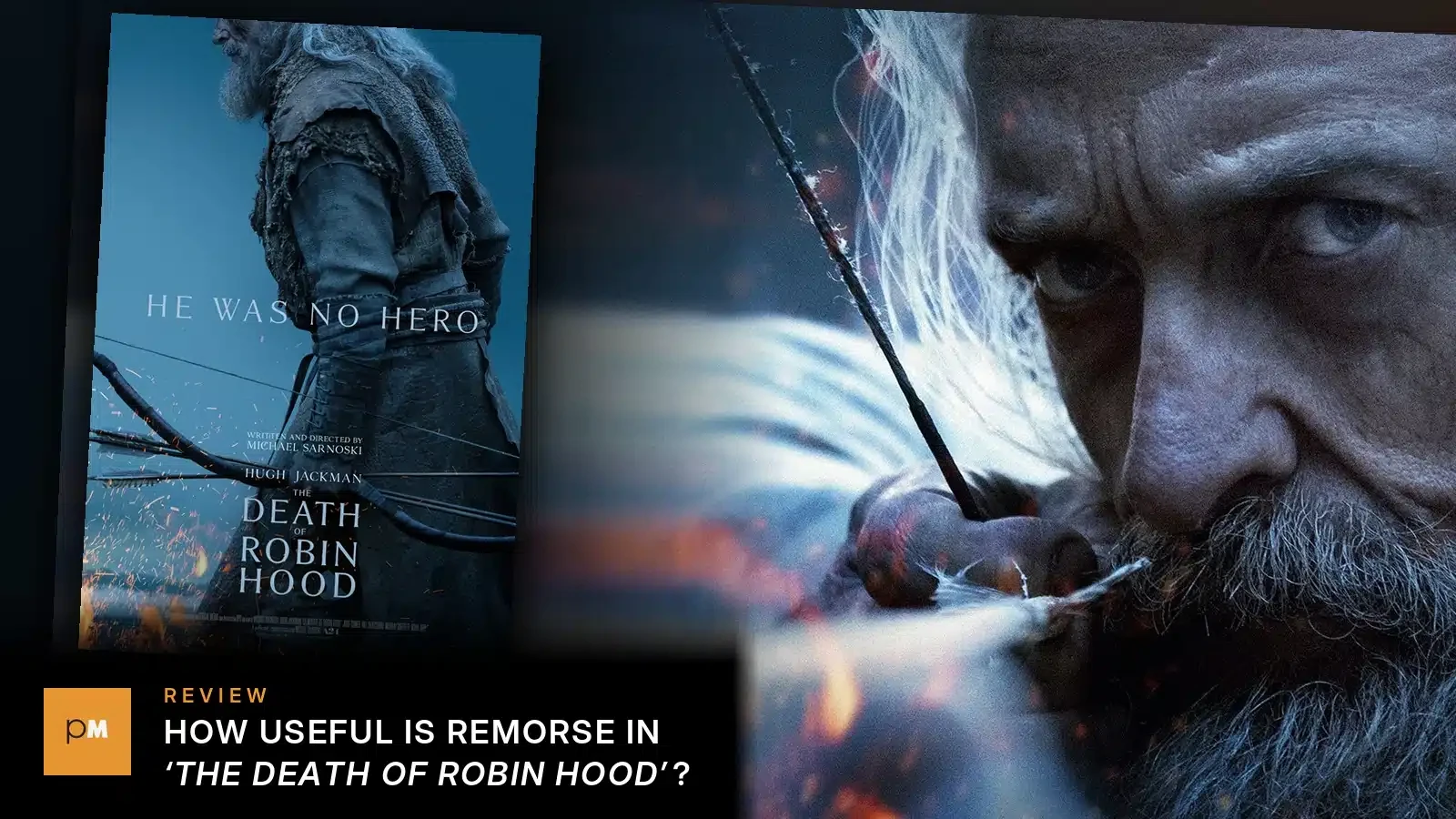
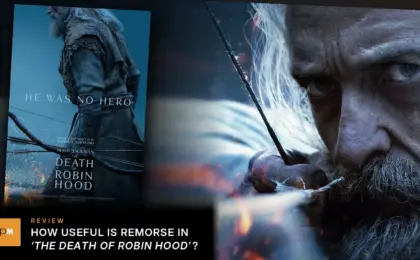
Director Michael Sarnoski’s upcoming psychological period drama, The Death of Robin Hood (slated for release via A24 in 2026), places this exact thematic pressure under a microscope. Starring Hugh Jackman as an aging, grievously wounded outlaw who seeks refuge at an isolated island priory, the film systematically dismantles the swashbuckling adventures historically attached to his name. Rather than leaning into easy nostalgia, Sarnoski examines an outlaw who dismisses his own exploits as fabrications. Yet, paradoxically, as he nears his final breath, he imparts a recognizable, sanitized Robin Hood legend to a young child.
This comprehensive analysis explores how The Death of Robin Hood re-evaluates the foundational myths of resistance, violence, and historical complicity. By juxtaposing the protagonist’s fading mythology against the concrete, unhealed trauma of those he has harmed—most notably embodied by Jodie Comer’s character, Brigid—the film challenges audiences to reckon with the human collateral left in the wake of folkloric heroism.
Detailed Chronology: Narrative Arc and Moral Reckoning
Arrival at the Priory of St. Clement
The narrative commences as a battered and broken Robin—traveling under the pseudonym Randolph—drifts toward the Priory of St. Clement. Far from the adulation of the merry men, he encounters a harsh reality populated by individuals whose lives were directly or indirectly fractured by his past campaigns. The priory demands mundane labor: tending orchards, caring for the sick, and practicing a quiet dependability that offers no applause.
It is here that the myth of the heroic outlaw collides with the domestic and emotional ruins he left behind. The film refuses to treat Robin’s remorse as a clean slate. Instead, it measures his suffering against the daily, persistent needs of the survivors.
The Confrontation with Guy of Gisborne
A critical turning point in the narrative arrives through a startling encounter with a dying man known simply as the Leper. This individual reveals himself to be Guy of Gisborne—the very adversary Robin purportedly beheaded in Middle English ballads such as Robin Hood and Guy of Gisborne.
When Robin initially denies Guy’s existence, Guy counters with precise, physical memory, recalling the exact moment Robin severed his ear. This discrepancy exposes the grandiosity of the outlaw’s self-mythology. A man whom Robin had effectively written off and misplaced inside his own legend has continued living a separate, enduring life.
Guy proposes an alternative to the Hollywood trope of redemption via a spectacular final deed: ordinary, unglamorous obligations extending across years of service that the audience will never witness. Furthermore, Guy urges Robin never to reveal his true identity to the prioress, Brigid. Doing so might relieve Robin of his guilt, but it would unfairly force Brigid to process the horrifying reality of the stranger she has nursed back to health.
Brigid’s Testimony and the Limits of Remorse
Brigid (played with devastating intimacy by Jodie Comer) offers a profound counter-narrative to Robin’s generalized confessions of sin. Where Robin speaks abstractly of endless curses and innumerable killings, Brigid remembers specifics. She recalls searching through the ashes of her home to find her husband curled protectively around their murdered children.
Sarnoski utilizes close-ups of Comer’s face to anchor the narrative in her unyielding perspective. Brigid’s testimony establishes that calling oneself a "monster" is often a rhetorical shortcut that leaves vital human truths unsaid. Her continued care as a healer does not equate to absolution; her professional vocation preceded Robin’s arrival, and her enduring grief remains entirely her own.
The Final Legend: Passing the Torch to Little Margaret
As his life ebbs away, Robin tells a final story to Little Margaret, an orphaned child of the farming family he and his men once attacked. He recounts the classic folklore: meeting Little John on a bridge, wrestling, falling into the river, and forging an unbreakable brotherhood.
While Robin briefly acknowledges that the outlaws stole silver rather than merely receiving it as a gift, he quickly reasserts the moral framework of his youth by emphasizing that they stole exclusively from "bad people." This final narrative act shields Margaret from inherited vengeance while simultaneously improving the memory of her father, Edward, who had assumed a false identity to build a family.
Yet, as Sarnoski cuts between Margaret’s eager face and Brigid’s watchful presence, the film highlights a persistent tension. The myth survives through a private relationship, even as the women in the room must live with the profound omissions of the tale.
Supporting Context & Metrics: The Evolution of an Outlaw
To fully appreciate Sarnoski’s cinematic intervention, one must examine how the Robin Hood legend has continuously mutated over centuries to reflect changing socio-political anxieties.
| Literary/Cinematic Work | Era / Release Year | Primary Focus / Evolution of the Legend |
|---|---|---|
| Robin Hood and Guy of Gisborne | Middle English Ballad | Emphasized visceral, unvarnished medieval violence (beheadings, facial mutilation) as baseline elements of heroic survival. |
| Robin Hood: A Mythic Biography (Stephen Knight) | 2003 (Academic) | Traced how the outlaw’s attributes accumulated across centuries to express shifting ideas about resisting oppressive authority. |
| Robin Hood: Myth, History and Culture (Nick Rennison) | 2012 (Academic) | Documented the historical malleability of the bandit narrative and its shifting justifications for lawlessness. |
| Robin and Marian (Richard Lester) | 1976 (Film) | Depicted an aging Sean Connery returning from war to a weary Marian, establishing precedent for an aging, mortal outlaw. |
| The Death of Robin Hood (Michael Sarnoski) | 2026 (Film) | Explores institutional guilt, survivor trauma, and the deliberate construction versus deconstruction of folk mythology. |
Scholars like Stephen Knight and Nick Rennison have long demonstrated that Robin Hood has never possessed a single, settled biography. The narrative has survived precisely by altering what it demands audiences admire. By incorporating the grim realities of medieval violence—such as the brutal encounters found in early ballads—Sarnoski aligns his film with deep historical roots rather than modern, sanitized cinematic adaptations. Furthermore, by building upon predecessors like Richard Lester’s Robin and Marian (1976), The Death of Robin Hood proves that an aging, mortal hero is not a novel concept, but rather a fertile ground for exploring the moral debt of violence.
Official Statements and Artistic Vision
Speaking on the conceptual framework of The Death of Robin Hood, director Michael Sarnoski has emphasized the necessity of stripping away the romantic haze that typically shields audiences from the true cost of insurrection.
"A hero can lose his innocence without losing his audience," notes production insight from the A24 release pipeline. "Once we stop cheering his victories, we become absorbed in his suffering. But the true reckoning is not found in how the hero feels about his sins, but in how the survivors must live in the architecture of his aftermath."
The thematic weight of the film relies heavily on the interplay between Hugh Jackman’s world-weary physicality and Jodie Comer’s grounded, unyielding emotional resilience. Comer’s character serves as the moral anchor of the production, directly challenging the notion that a perpetrator’s confession can neatly suture the wounds inflicted upon the innocent. By refusing to grant Robin the luxury of a clean, redemptive exit, the filmmakers assert that true accountability requires enduring labor rather than spectacular martyrdom.
Future Outlook: Cultural Impact and Legacy
As The Death of Robin Hood prepares to enter the cinematic landscape, its broader cultural implications are significant. In an era saturated with cinematic universes that endlessly recycle foundational myths with diminishing returns, Sarnoski’s film offers a mature, deconstructive counter-programming model.
1. Re-evaluating Cinematic Heroism
Blockbuster cinema frequently utilizes the "reformed killer" trope as a shortcut to audience sympathy, allowing violent protagonists to find redemption through a final, cathartic sacrifice. Sarnoski’s film actively resists this tidy resolution. By emphasizing that Brigid and young Margaret must continue living within the complex social and emotional reality left behind by Robin’s violence, the film challenges screenwriters and directors to account for the collateral damage of action tropes.
2. The Persistence of Myth in Private Spaces
The film’s poignant final scenes suggest that while public legends may be deconstructed, private storytelling remains essential for human survival. Margaret needs a narrative to process her father’s legacy and navigate a dangerous world of blood feuds. The Death of Robin Hood demonstrates that stories do not need to be factually pristine to offer comfort, even if those who bear the brunt of historical trauma—like Brigid—must silently shoulder the parts of the story that are deliberately left out.
Ultimately, The Death of Robin Hood transcends standard revisionist cinema. It honors the enduring power of folklore while refusing to let the storyteller escape his debts. As audiences digest this darker, more introspective chapter of the legendary archer, the cultural conversation around heroism, trauma, and accountability will be permanently enriched.

Belum ada komentar. Jadilah yang pertama berkomentar!