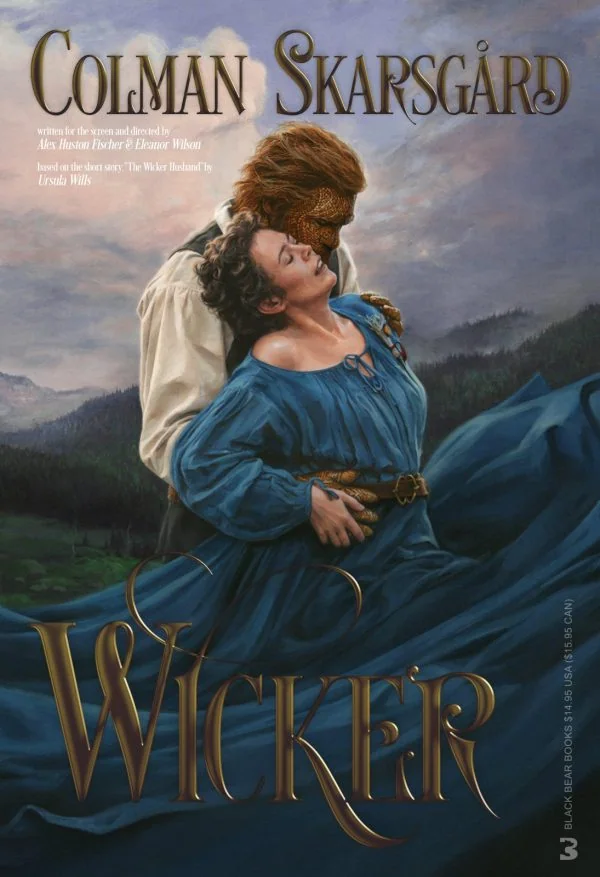
In the cinematic landscape of 2026, few releases have challenged genre boundaries quite as audaciously as Wicker, a fantasy-comedy fable written and directed by the visionary filmmaking duo Eleanor Wilson and Alex Huston Fischer. Adapted from a short story by Ursula Wills-Jones, the film presents a bizarre yet profoundly resonant allegory about gender dynamics, societal control, isolation, and the inherent human struggle to accept genuine affection.
Anchored by a powerhouse lead performance from Academy Award winner Olivia Colman and a remarkably physical turn by Alexander Skarsgård, Wicker transports audiences to an isolated, fictional seaside village defined by regressive customs. In this community, women are physically collared upon marriage, stripped of autonomy, and relegated to positions of subservience. Colman stars as the Fisherwoman—in this universe, characters are named strictly by their vocations—who exists on the absolute fringes of society. Routinely ostracized, mocked for her unkempt appearance, and deemed conventionally undesirable, she is a woman resigned to solitude until a bizarre local ritual inadvertently shifts the village’s delicate ecosystem.
When a fateful ceremony delivers a custom-crafted, handwoven husband into her life, the resulting social upheaval exposes the fragile, selfish inadequacies of the town’s men and forces the Fisherwoman on a transformative journey of self-discovery. Blending deadpan humor, sharp social satire, body horror, and poignant relationship drama, Wicker has emerged as one of the most provocative and visually arresting cinematic talking points of the year.
Detailed Chronology
Act I: The Ostracized Fisherwoman and the Village Rituals
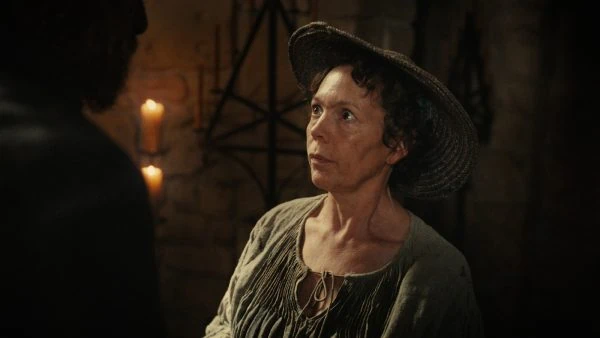
The world of Wicker is established early as a suffocating, hyper-traditionalist fishing hamlet where institutionalized misogyny is woven into the very fabric of daily life. Women are bound by literal collars upon entering matrimony, functioning primarily as domestic extensions of their husbands. Within this oppressive hierarchy, Olivia Colman’s Fisherwoman stands out simply by virtue of her permanent singlehood. She is the village pariah—unwashed, unkempt, and subjected to relentless microaggressions and insults regarding her hygiene and desirability.
Despite the systemic disadvantages facing married women, the village treats matrimony as the ultimate status symbol, governed by rigid, archaic traditions. Among these is a bizarre spin on the traditional bouquet toss, masterminded by the village Basket Weaver, played with delightful eccentricity by Peter Dinklage. In this community’s version, the Basket Weaver constructs a vessel filled with handwoven eggs that detonate into vibrant clouds of colored dust—resembling a darkly absurd, cringeworthy spin on a modern gender-reveal party.
The ceremonial toss goes disastrously awry for the town’s ruling class when the Fisherwoman is inadvertently declared the "winner." Mortified by the prospect of integrating her further into their social fabric—a horror shared vocally by Elizabeth Debicki’s Tailor’s Wife, who acts as a slavish mouthpiece for her husband and the village’s de facto leadership—the community reacts with disdain. Spurred by a mix of humiliation and mischief, the Fisherwoman decides to lean into the joke. She commissions the Basket Weaver to construct her the ultimate bespoke accessory: a perfect, handwoven man.
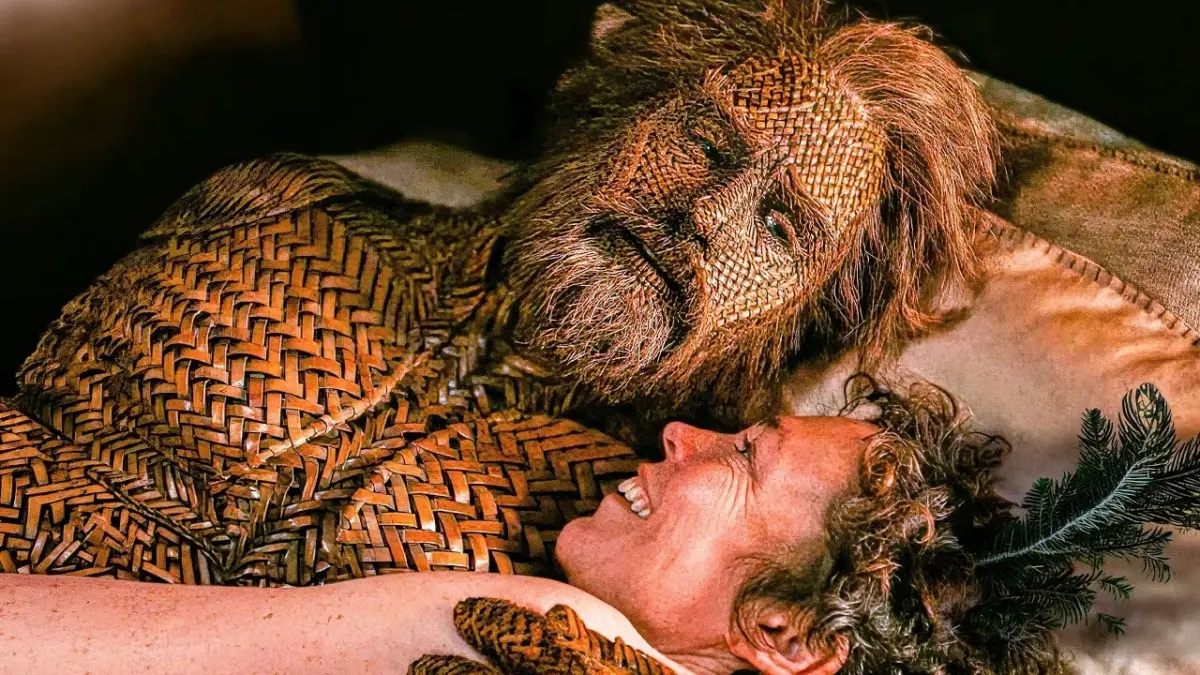
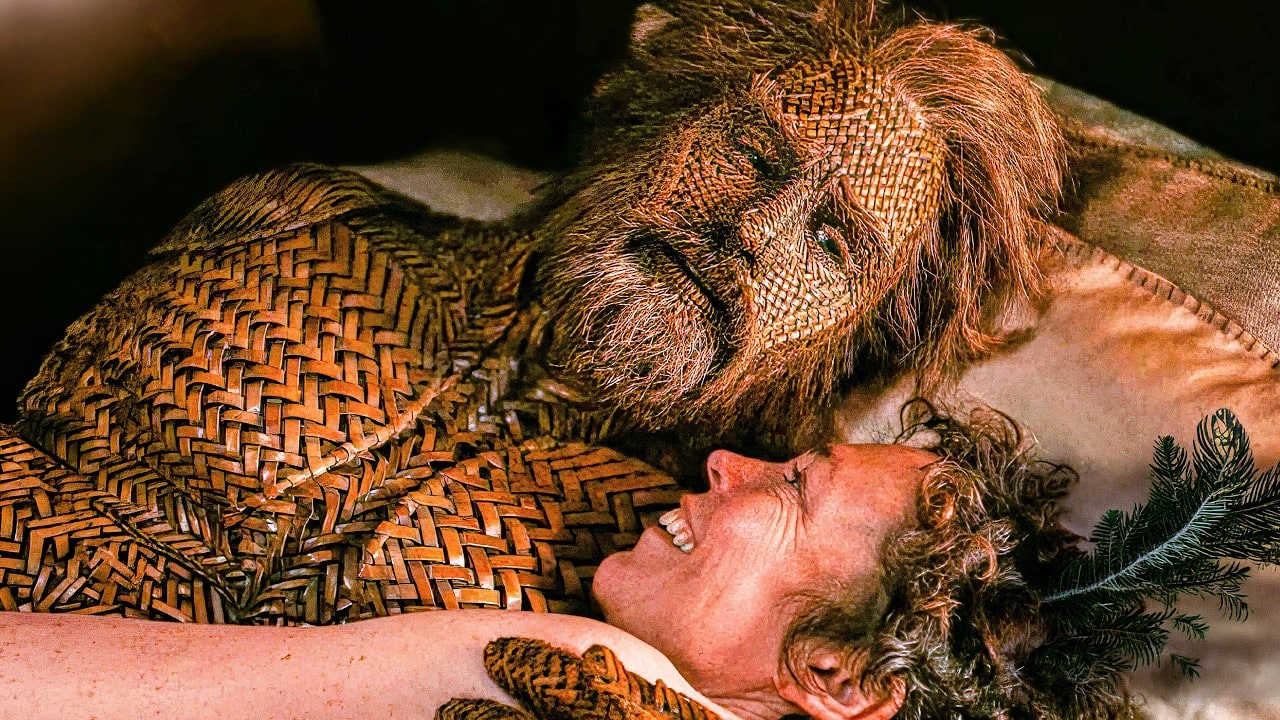
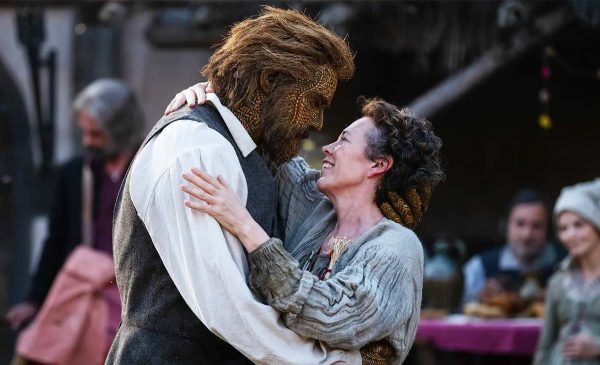
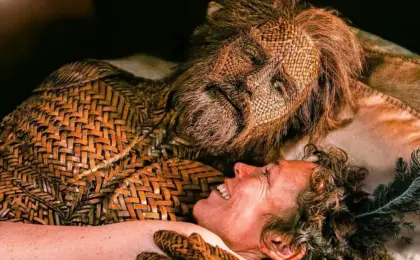
A month following the commission, the village is introduced to the Wicker Husband, brought to life by Alexander Skarsgård. Skarsgård’s performance is nothing short of a marvel, operating beneath layers of intricate makeup and practical creature effects that elevate the character from a simple sight gag into a genuinely evocative, grounded presence.
The Wicker Husband immediately surpasses all expectations—and shatters local norms. Unlike the lazy, complacent, and unmotivated men of the village, Skarsgård’s creation approaches domestic life with unwavering calm and tireless dedication. He repairs the Fisherwoman’s dilapidated house, tends to the overgrown garden without a single complaint, and, crucially, engages in intimate relations that prioritize her emotional and physical pleasure over his own ego. Speaking in a slowed-down, deliberate dialect and exhibiting boundless patience, the Wicker Husband becomes an impossible standard.
Naturally, it is not long before the village’s other wives take notice. The sheer contrast between the Wicker Husband’s attentive nature and their own husbands’ selfish shortcomings sparks a slow-burning wildfire of jealousy, introspection, and civil unrest.
Act III: Deconstruction, Body Horror, and Climax
As the narrative progresses past its initial high-concept premise, Wicker successfully avoids the trap of becoming a one-note sketch. Wisely navigating the transition from a short story to a feature-length runtime, Wilson and Fischer steer the film into increasingly bizarre and daring territory.
The humor gives way to a deeper exploration of psychological insecurity. For the Fisherwoman, who has spent a lifetime enduring incessant bullying and emotional abuse, receiving unconditional care triggers a profound internal crisis. As a poignant piece of dialogue in the film notes, “It’s easier to believe something bad than good,” leading her to grapple with self-sabotaging doubts about whether her newfound happiness is real or merely an engineered illusion. Was the Wicker Husband crafted simply to mirror her desires without true individuality?
As external pressures mount, the village’s patriarchal power structure feels increasingly threatened. The narrative escalates through unexpected detours into body horror, psychological tension, and outright violence. Peter Dinklage’s Basket Weaver steps out of his eccentric background role to function as a crucial moral compass during the film’s tense climax. Ultimately, Wicker dismantles the foundational values of the town stone by stone, leaving viewers with a complex meditation on what constitutes a truly healthy, equitable relationship.
Supporting Context & Metrics
Production Background and Adaptation
Wicker is based on a celebrated short story by author Ursula Wills-Jones. The transition from prose to the screen was spearheaded by the co-writing and co-directing team of Eleanor Wilson and Alex Huston Fischer, who previously earned acclaim for their distinctive storytelling styles. Produced against the backdrop of an increasingly saturated indie comedy market, the film stands out for its uncompromising tonal elasticity, refusing to be pigeonholed into a single genre box.
Star-Studded Ensemble Cast
While Colman, Skarsgård, and Dinklage command the screen, Wicker boasts an extensive and formidable supporting roster that enriches the fictional seaside village. The cast includes:
Elizabeth Debicki as the Tailor’s Wife
Marli Siu
Nabhaan Rizwan
Richard E. Grant
Kiell Smith-Bynoe
Gustav Lindh
Ella Bruccoleri
Ben Ashenden
Phil Daniels
Emily Lloyd-Saini
Scott Alexander Young
Anders Grundberg
Daniel Bellus
Critical Reception and Ratings
Upon its release, Wicker has polarized traditionalists while winning over adventurous cinephiles and critics. Esteemed critic Robert Kojder of Flickering Myth awarded the film a strong rating across the board, highlighting its daring execution:
Film Rating: ⭐⭐⭐ (3/5)
Movie Rating: ⭐⭐⭐ (3/5)
Critics have universally lauded the practical effects and makeup departments for engineering a believable, expressive physical counterpart for Skarsgård, as well as the film’s ability to balance laugh-out-loud dark comedy with sharp feminist critique.
Official Statements & Creative Vision
Speaking behind the scenes on the conceptualization of the film, directors Eleanor Wilson and Alex Huston Fischer emphasized their desire to subvert traditional romantic comedy tropes by introducing elements of magical realism and institutional critique.
"We weren’t interested in telling a simple story about a woman finding a boyfriend," the directors noted during early promotional junkets. "Wicker is an exploration of internalized worth. When you have been told your entire life that you are invisible, unlovable, and broken, the arrival of unconditional care doesn’t always feel like a blessing immediately—it feels like a paradox. We wanted to build a world that literalized the emotional baggage of gender roles and forced both the characters and the audience to question what it means to be ‘good’ in a partnership."
Olivia Colman, reflecting on her character’s arduous emotional trajectory, pointed to the liberation found in playing a character entirely unburdened by societal expectations of politeness:
"She doesn’t owe the village a smile, and she certainly doesn’t owe them an explanation for finding happiness on her own terms, even if those terms involve a man made entirely of plant fibers."
Alexander Skarsgård similarly discussed the unique physical demands of portraying the Wicker Husband, noting that communicating genuine emotional depth through a heavily stylized, non-human exterior required stripping his performance down to absolute stillness and micro-movements.
Future Outlook
As Wicker completes its theatrical rollout and expands into digital and physical home media markets—including specialized 4K Ultra HD releases—its legacy as a bold, unpredictable cinematic fable is already securing its place in contemporary pop culture.
The film’s commercial and critical performance signals a growing appetite for high-concept, genre-defying indie cinema that utilizes surrealism to dissect very real human anxieties. For directors Eleanor Wilson and Alex Huston Fischer, Wicker establishes them as major voices in modern satire, capable of drawing powerhouse performances from A-list talent while maintaining a fiercely independent artistic vision.
Looking ahead, industry analysts predict strong awards-season traction for the film’s below-the-line categories—specifically makeup design, practical effects, and production design—alongside potential recognition for Olivia Colman’s searing, vulnerable lead performance. Wicker has proven that storytelling rooted in folklore and absurdity can still hold a painfully accurate mirror up to modern society, ensuring that this peculiar seaside village will remain a frequent subject of cinematic analysis for years to come.








Belum ada komentar. Jadilah yang pertama berkomentar!