

Executive Overview
In the sprawling landscape of contemporary American cinema, few filmmakers possess the distinct topographical eye for New York City that James Gray commands. From his harrowing 1994 feature debut, Little Odessa, to the neon-drenched corruption of We Own the Night and the intricate familial anxieties of The Yards, Gray has consistently treated the five boroughs not merely as a backdrop, but as a living, breathing, and frequently predatory organism.
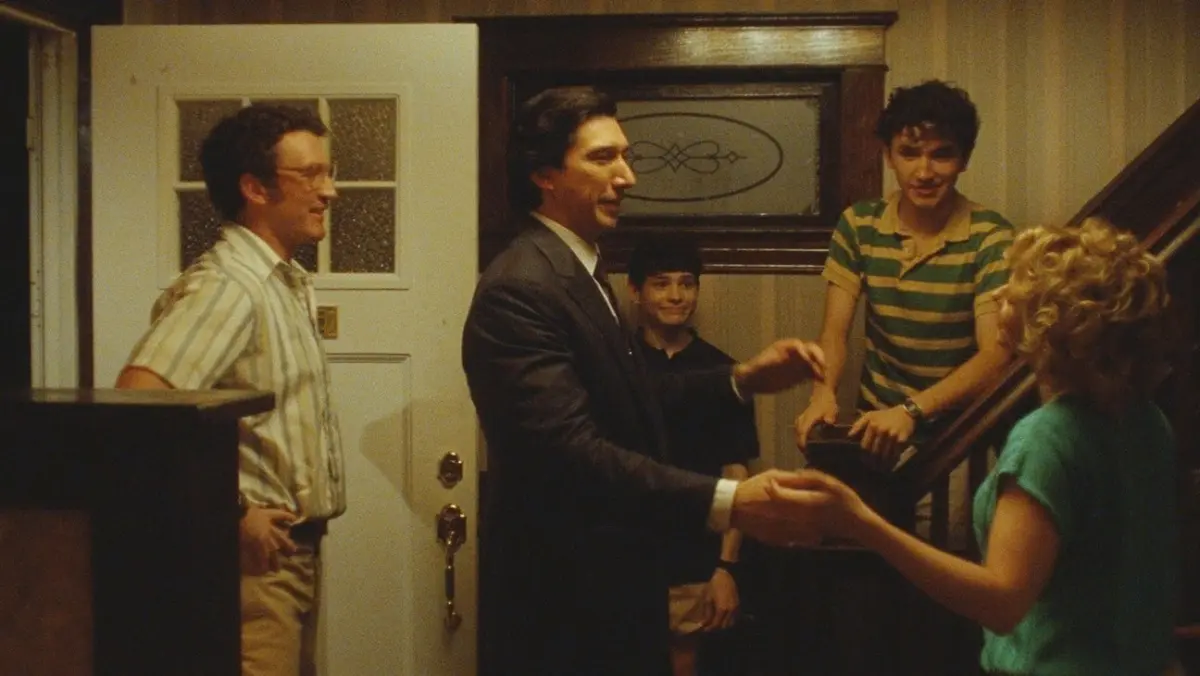
With his 2026 release, Paper Tiger, Gray returns explicitly to his crime-genre roots, weaving a tight, atmospheric thriller set during the sweltering, hyper-paranoid summer of 1986. Distributed by NEON, the film features a powerhouse ensemble cast anchored by Miles Teller, Adam Driver, and Scarlett Johansson.
At its core, Paper Tiger chronicles the descent of two brothers—Irwin (Teller) and Gary Pearl (Driver)—who chase the ever-elusive American Dream only to find themselves ensnared in a catastrophic Russian mafia enterprise. As the underworld syndicate’s shadow stretches over their daily lives, threatening the safety of Irwin’s children, the brothers’ lifelong bond is subjected to the ultimate stress test. In a world where institutional protection is thin and loyalty is a transactional commodity, the line between familial devotion and self-preservation blurs terrifyingly fast.
Rather than relying on unceasing, desensitized action sequences, Gray orchestrates a masterclass in tension architecture. The film delays gratification, stretching taut strings of suspense until the rare, visceral bursts of violence land with devastating impact. Supported by a deeply resonant and emotionally shattering subplot delivered by Johansson, Paper Tiger cements James Gray’s status as one of the definitive cinematic chroniclers of the American criminal experience.

Detailed Chronology of the Narrative and Production
The Roots of the Project and Gray’s Cinematic Evolution
To understand the tonal architecture of Paper Tiger, one must examine the trajectory of James Gray’s career leading up to 2026. Following his deeply personal, autobiographical coming-of-age drama Armageddon Time (2022), Gray sought to re-engage with the gritty underworld mechanics that defined his early career. However, his detour into historical epics (The Lost City of Z) and high-concept science fiction (Ad Astra) imbued his stylistic palette with a grander sense of scale and existential dread.
Paper Tiger acts as a bridge between these worlds. Set in the gritty, cracked-concrete reality of 1986 New York City—an era defined by socioeconomic fracture, soaring crime rates, and the encroaching rise of transnational organized crime syndicates—the film feels like a spiritual and thematic extension of Armageddon Time. It looks at the same societal rot, but through the barrel of a loaded gun.
The Pearl Brothers: Ambition Meets the Syndicate
The narrative engine of Paper Tiger ignites when Gary Pearl (Adam Driver), a former New York City police officer who traded his badge for the pursuit of private fortunes, approaches his brother Irwin (Miles Teller) with what sounds like the opportunity of a lifetime. Irwin, an industrious and straight-laced engineer, is struggling to carve out a secure existence for his family in an increasingly hostile urban economy.
Gary dangles the prospect of a lucrative consultancy job—one that promises to fast-track their financial security. What Irwin does not realize, and what Gary perhaps underestimates, is that the capital funding this enterprise originates deep within the labyrinthine channels of the Russian mafia.
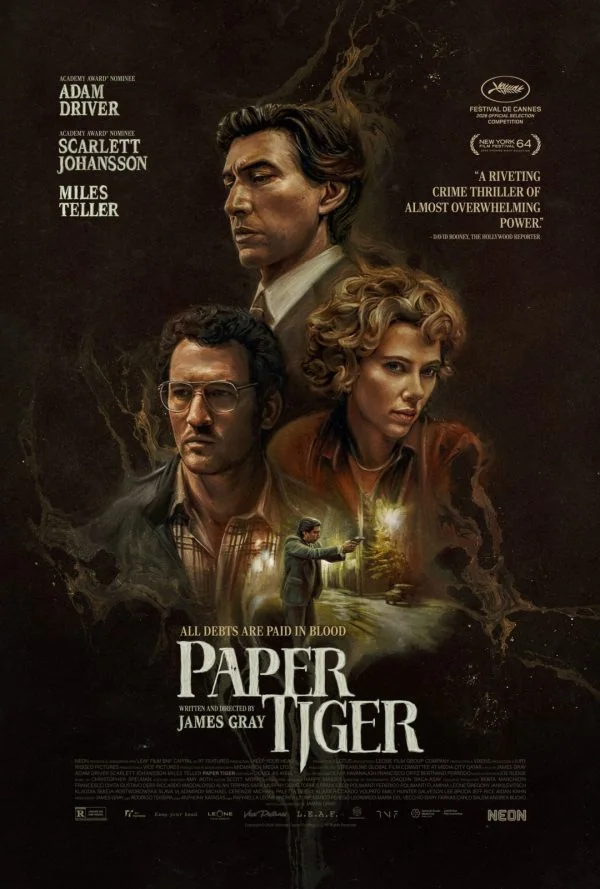
What begins as a series of high-stakes corporate meetings swiftly metastasizes into a waking nightmare. As the brothers attempt to navigate the demands of their dangerous associates, the syndicate’s terrifying methods breach the domestic sphere, putting Irwin’s children directly in the crosshairs. The narrative shifts from a slick entrepreneurial gambit into a desperate, claustrophobic fight for survival where every handshake carries the potential for treason.
Supporting Context & Metrics
Character Dynamics and Performance Analysis
The psychological friction of Paper Tiger is driven almost entirely by the brilliant counter-casting and electrifying chemistry between Miles Teller and Adam Driver.
- Miles Teller as Irwin Pearl: Teller plays Irwin with an agonizing, palpable vulnerability. Irwin is a man completely out of his depth—an engineer accustomed to building structures based on predictable physical laws, suddenly forced to construct survival strategies based on shifting moral quicksand. His primary motivation is parental protection, a desperation that makes him both dangerously reckless and heartbreakingly fragile.
- Adam Driver as Gary Pearl: Driver delivers a performance that subverts expectations. Eschewing the quiet, internal intensity of some of his previous brooding roles, Driver infuses Gary with a dangerous, magnetic charisma. Gary is protective yet deeply frustrated, carrying the heavy guilt of dragging his brother into the abyss. There is an underlying unpredictability to Driver’s portrayal that keeps the audience guessing: Is Gary a protective older brother acting out of love, or a compromised opportunist willing to sacrifice anything to save his own skin?
- Scarlett Johansson: Providing the emotional anchor of the film, Johansson steps into a pivotal role that elevates the narrative beyond a standard crime thriller. Her performance infuses the production with profound emotional depth, anchoring a heartbreaking subplot that underscores the human collateral damage left in the wake of the Pearl brothers’ ambitions.
The 1986 New York Aesthetic
The production design and cinematography of Paper Tiger capture a specific, unromanticized epoch of New York City history. The summer of 1986 was marked by blistering heatwaves, crumbling infrastructure, and a palpable sense of municipal decay. Gray and his cinematography team utilize desaturated palettes, harsh fluorescent lighting, and claustrophobic framing to trap the audience alongside the characters.
The city is rendered not as a tourist wonderland, but as an isolated island where help is a luxury few can afford. The absence of modern technological surveillance or swift communications further isolates the Pearl brothers, heightening the claustrophobia of their confrontation with the mob.
Official Statements and Critical Reception
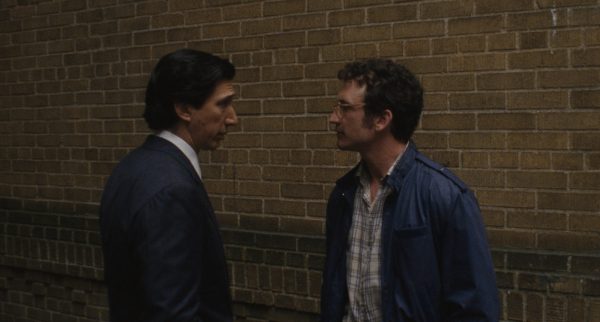
Industry response to Paper Tiger upon its late-2026 rollout has positioned it as one of the standout dramatic achievements of the year. Critics have universally lauded NEON’s distribution strategy, which has allowed the film to breathe in arthouse and prestige cinematic spaces before expanding to broader audiences.
Director’s Vision
In promotional interviews surrounding the film’s release, James Gray elaborated on his fascination with the intersection of family obligation and systemic criminality:
"When you look at the crime genre historically, the most compelling stories aren’t about the guns or the money; they are about the institutional pressures that force ordinary people into extraordinary, irreversible compromises. In 1986, New York was a pressure cooker. Gary and Irwin Pearl aren’t master criminals; they are regular guys trying to buy a piece of the American dream during a time when the price for that dream was rapidly inflating. The tragedy isn’t just that they got caught up with the wrong people—it’s that the system left them no other doors to walk through."
Critical Consensus
Reviewers have singled out the film’s pacing and stylistic restraint as its greatest triumphs. Writing for prominent cinematic outlets, critics noted that Paper Tiger avoids the exhausting sensory overload typical of modern blockbusters:
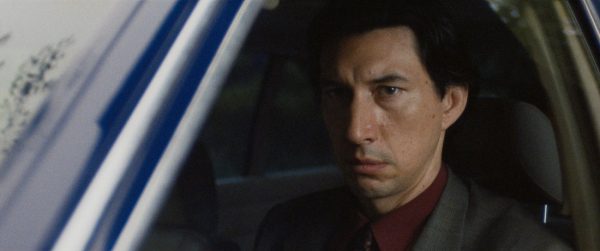
- "James Gray has constructed a pressure-cooker thriller that relies on psychological dread rather than hollow spectacle. The performances by Driver and Teller are career-best displays of fraternal friction."
- "By keeping the violence sparse and deliberate, Gray makes every confrontation feel lethal. Paper Tiger proves that classic, character-driven crime dramas are far from extinct when placed in the hands of a master."
Future Outlook
As Paper Tiger continues its theatrical run and heads toward upcoming awards season conversations, its cultural footprint is already solidifying. The film not only revitalizes the career-long thematic explorations of James Gray but also sets a new benchmark for prestige crime storytelling in the mid-2020s.
For Adam Driver and Miles Teller, the film represents a masterclass in dramatic interplay, proving their viability as a premier cinematic duo. Meanwhile, NEON’s backing of an uncompromised, adult-oriented crime drama demonstrates that audiences still hunger for intelligent, tense, and emotionally devastating cinema that treats its viewers with respect.
In a cinematic landscape often dominated by intellectual property and digital spectacle, Paper Tiger stands tall as a monument to traditional craftsmanship: a film built on the bedrock of sharp writing, phenomenal acting, and an uncompromising vision of human frailty under pressure.









Belum ada komentar. Jadilah yang pertama berkomentar!